

The best vegetables to grow in pots are not always the ones you would expect, and that is the good news for anyone gardening on a patio, balcony, or in a small yard. You do not need a vegetable plot to pick your own tomatoes, cut fresh salad leaves, or pull a handful of beans for supper. You need a container big enough for the job, decent compost, regular watering, and crops chosen to suit pot life rather than fighting against it.
Some vegetables genuinely thrive in containers. Peppers often do better in a warm pot against a sunny wall than in cold open ground, and salad leaves in a wide shallow tub can be cleaner and easier to pick than a row in the soil. Others need a bit of honesty: sweetcorn and sprawling pumpkins can be grown in very large containers, but they rarely earn the space they take up. This guide sticks to the crops that reliably repay the effort.
Size matters more than almost anything else. Most disappointing pot vegetables are not badly fed or badly chosen — they are simply in a pot that is too small, drying out by lunchtime and running out of root room just as the plant should be cropping. Give each crop below the container size suggested, keep on top of watering, and pot growing stops feeling like a compromise and starts feeling like a genuine advantage.
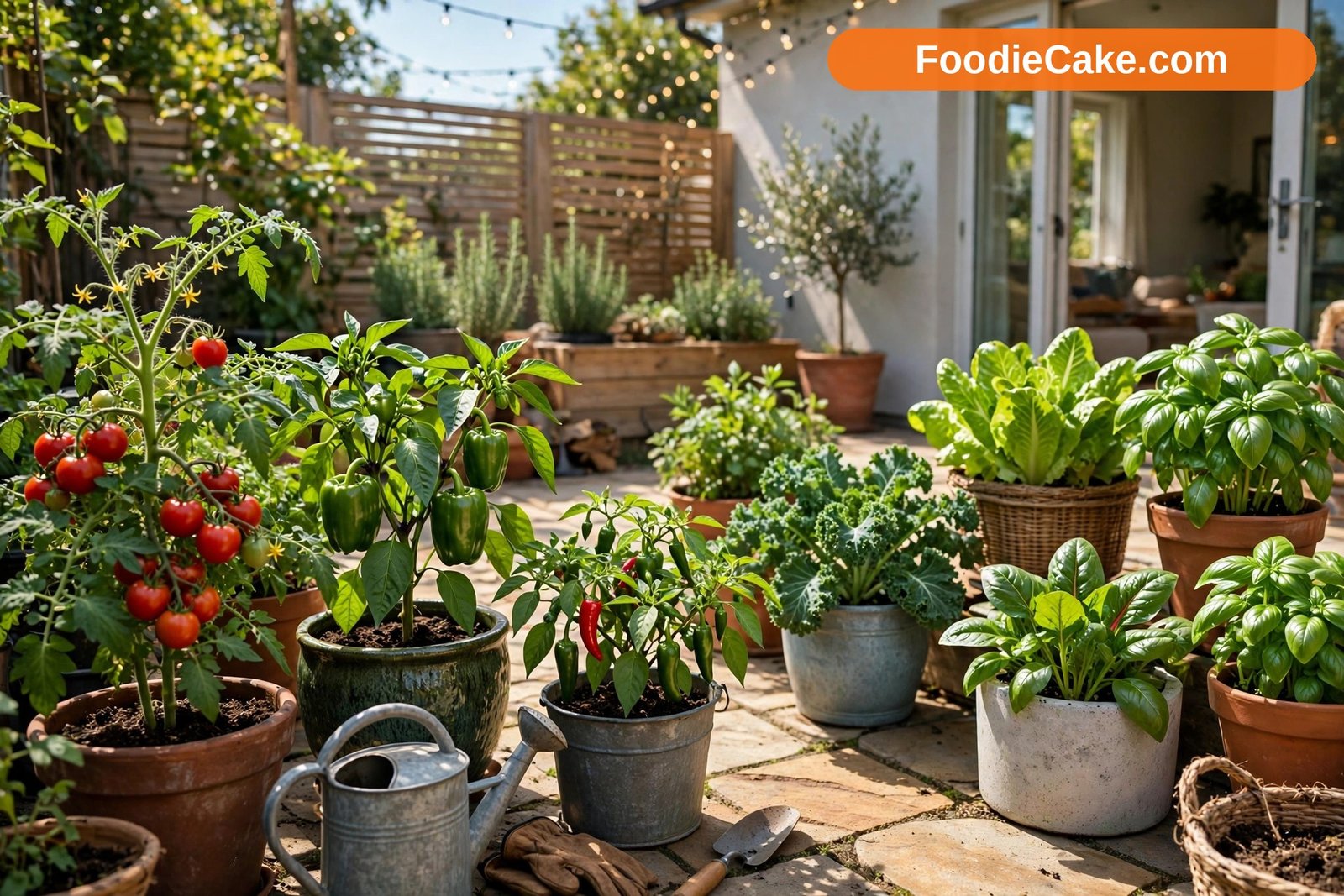
Before You Plant: Pots, Compost, and Water
Choose the biggest pot you have room for before you choose a fancy one. Plastic pots hold moisture best and are light to move; terracotta looks beautiful and suits herbs and Mediterranean crops, but it wicks water out through its sides and needs watering more often in hot weather; fabric grow bags are cheap, excellent for potatoes and tomatoes, and fold away in winter. Whatever the material, drainage holes are non-negotiable. A pot without them is a bucket, and roots sitting in stale water soon rot.
As a rough guide, think in litres as well as inches. A 10-litre pot, about 10–12 inches (25–30 cm) across, suits a single pepper or a small group of salads. Tomatoes, courgettes, and potatoes want 20–30 litres or more. Bigger volumes of compost dry out more slowly and buffer mistakes, which is why experienced container gardeners almost always say: fewer, larger pots beat lots of small ones.
Use a good peat-free multi-purpose compost, or a soil-based (loam-based) compost for long-season crops such as tomatoes and peppers, which holds water and nutrients more steadily. Ordinary garden soil in a pot compacts, drains poorly, and brings weed seeds with it, so it rarely works well on its own. If you are new to this, reading how to start a container garden will walk you through setting up your first pots, drainage, and watering routine before you sow a seed.
Watering is the daily bargain of pot growing. Compost in a pot can go from moist to dry in a single hot, windy day, so check with a finger pushed an inch into the surface rather than guessing from the top. Water thoroughly until it runs from the drainage holes, preferably in the morning. Once fruiting starts, most crops below also appreciate a weekly liquid tomato feed at the label rate.
1. Tomatoes: The Container Classic
If you grow only one vegetable in a pot, make it a tomato. A plant ripening in the sun a few steps from the kitchen is a different thing from anything bought in a packet, and tomatoes take to containers remarkably well provided the pot is generous and watering is steady.
Give each plant at least 20 litres, and 25–30 litres is better — a pot roughly 14–16 inches (35–40 cm) across. Bush (determinate) varieties are the easiest for pots because they stay compact and need no pinching out: try ‘Tumbling Tom’ spilling from a large basket or tall pot, ‘Maskotka’ for small, sweet fruit on a tidy plant, or ‘Totem’ for an upright bush on a small patio. If you have room for a cane or a support against a wall, cordon varieties such as ‘Gardener’s Delight’ and ‘Sungold’ crop heavily from a big pot, but they need tying in and their side shoots removed through the season.
Plant deeply, burying the stem up to the first true leaves, because tomatoes root along the buried stem and a deeper root system copes better with a pot’s ups and downs. Keep watering even: irregular watering, where compost swings from dry to soaked, is the usual cause of split skins and blossom end rot, the dark leathery patch that appears on the base of the fruit. In zones 5–8, start plants indoors or buy young plants and move them outside only after the last frost, because a single cold night can check a tomato badly.
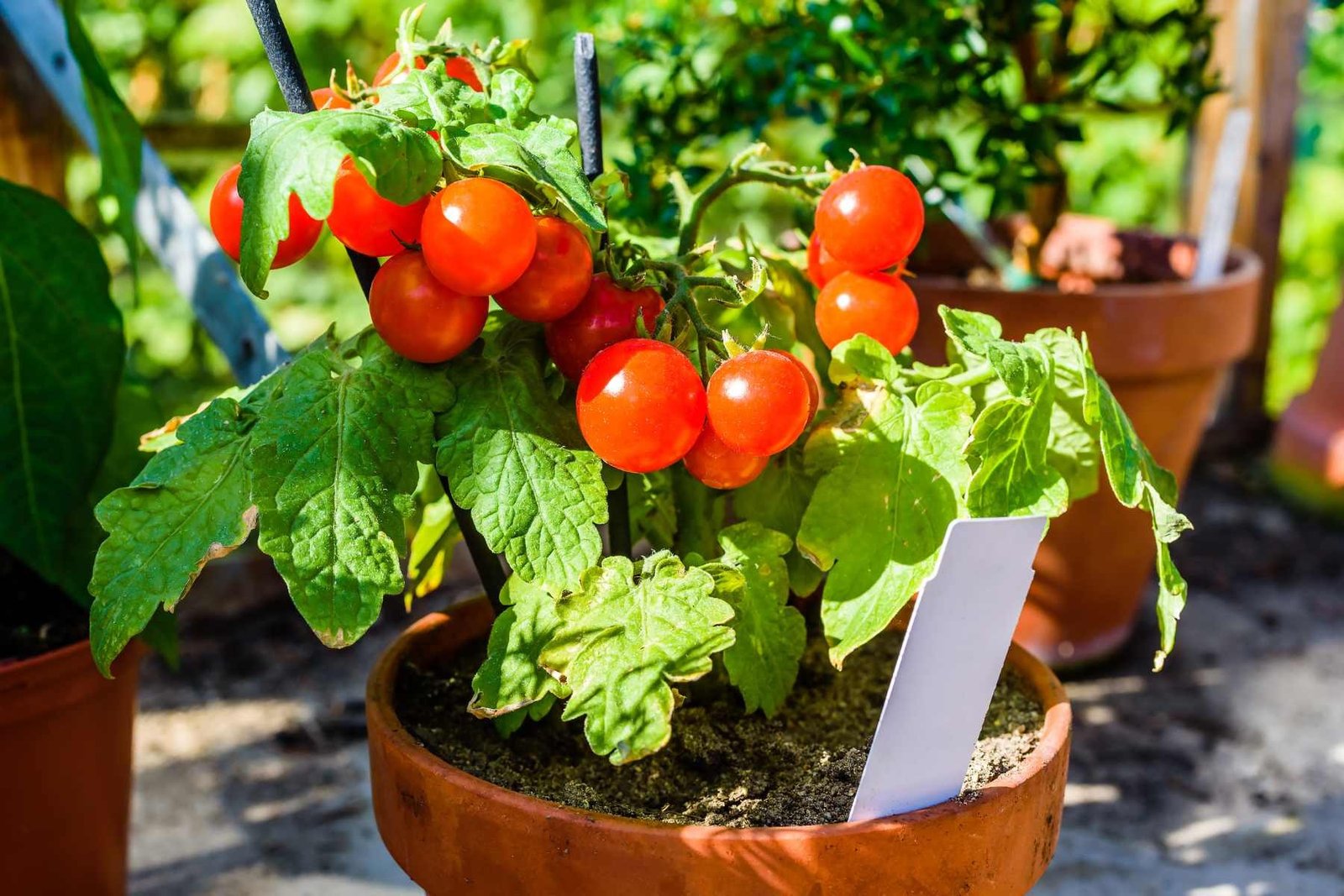
2. Peppers and Chillies: Made for a Warm Pot
Sweet peppers and chillies are natural container plants. They come from warm climates, their roots enjoy the extra warmth a sun-baked pot provides, and their compact, branching habit means a single plant sits happily in a 10–15 litre pot, about 12 inches (30 cm) across. On a sunny patio in zones 6–9 they can be outstanding; in cooler areas a spot against a south- or west-facing wall, or a greenhouse or conservatory, makes a real difference.
For sweet peppers, look for varieties bred to ripen reliably in shorter seasons, such as ‘California Wonder’, ‘Gypsy’, or ‘Lunchbox’ snacking peppers, which produce lots of small, sweet fruit. Among chillies, ‘Apache’ is a compact, productive favourite for pots, ‘Prairie Fire’ stays small enough for a windowsill, and ‘Hungarian Hot Wax’ gives medium heat on a slightly larger plant. Detailed feeding and overwintering advice can be found in how to grow peppers in containers, which is worth reading before your first sowing.
Sow early. Peppers are slow to get going and need a long season, so in zones 5–7 they are usually sown indoors in late winter to early spring and kept warm to germinate. Do not rush them outside: wait until nights are reliably mild. Support the plant once fruit sets, because a well-loaded pepper can become top-heavy, and pick fruit regularly — the more you pick, the more the plant tends to produce.
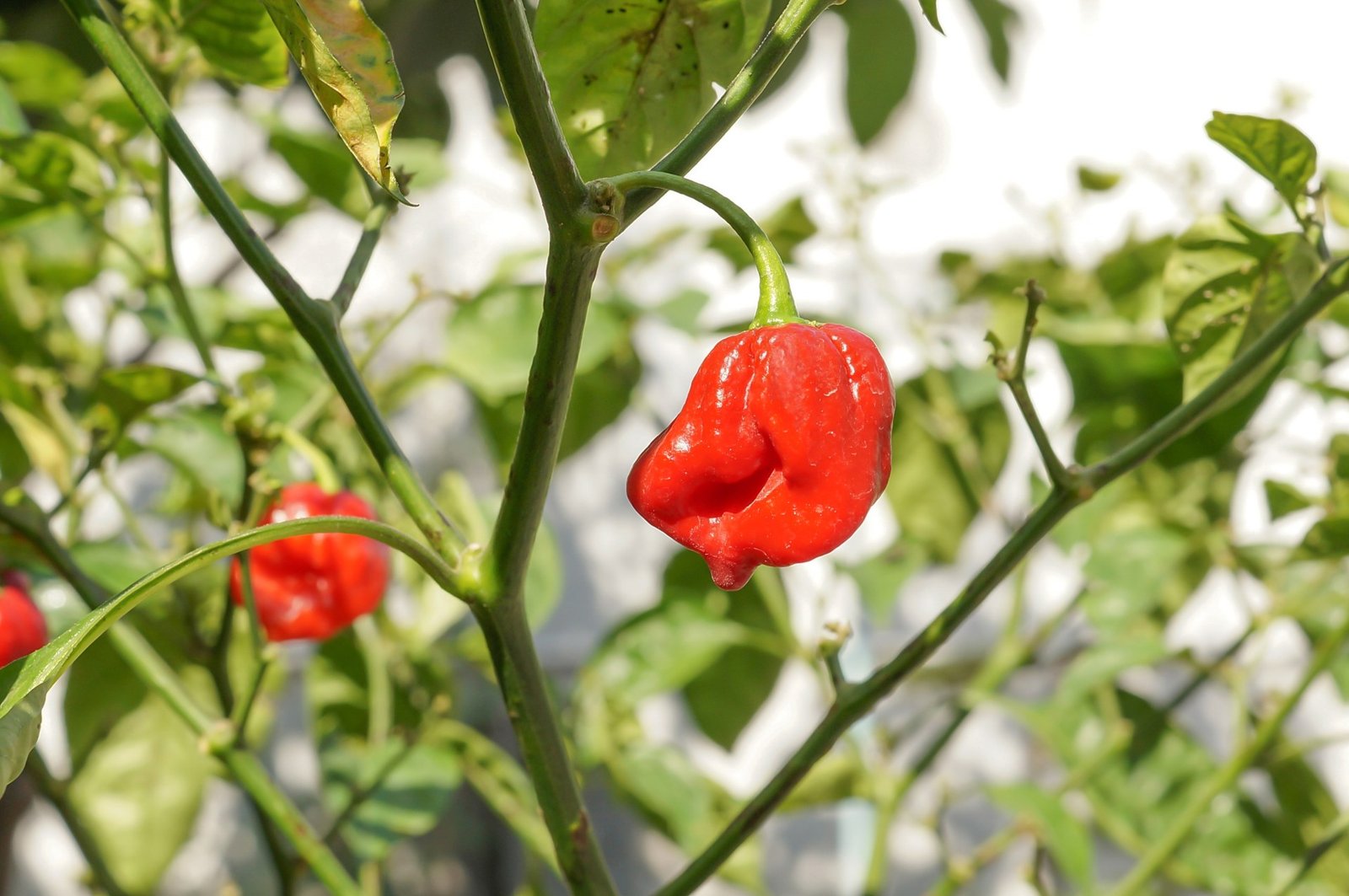
3. Dwarf French Beans: Quick, Easy, and Generous
Beans belong on almost every list of pot-friendly vegetables, but choose the right type. Climbing French and runner beans will grow in a very large pot with tall supports — 30 litres or more, with canes or a wigwam firmly anchored — yet dwarf French beans are far simpler for most patios. They form neat bushes about 18 inches (45 cm) tall, need no support, and start producing surprisingly quickly.
A 15–20 litre pot, roughly 12–14 inches (30–35 cm) across, holds three to four dwarf plants comfortably. Reliable varieties include ‘Tendergreen’, ‘The Prince’, and ‘Purple Teepee’, whose purple pods are easy to spot against the leaves and turn green when cooked. Sow seeds directly into the pot once the weather is warm — beans resent cold, wet compost and germinate poorly in it. In zones 5–8 that usually means sowing outdoors from late spring, with a second sowing a month later to extend the harvest.
Beans fix nitrogen in their roots, but in a pot they still need regular water, especially once flowers appear. Dry compost at flowering time is the commonest reason for blossom dropping without pods following. Pick pods young and often, while they are still slender and snap cleanly; left to get fat and stringy, the plant decides its job is done and slows right down.
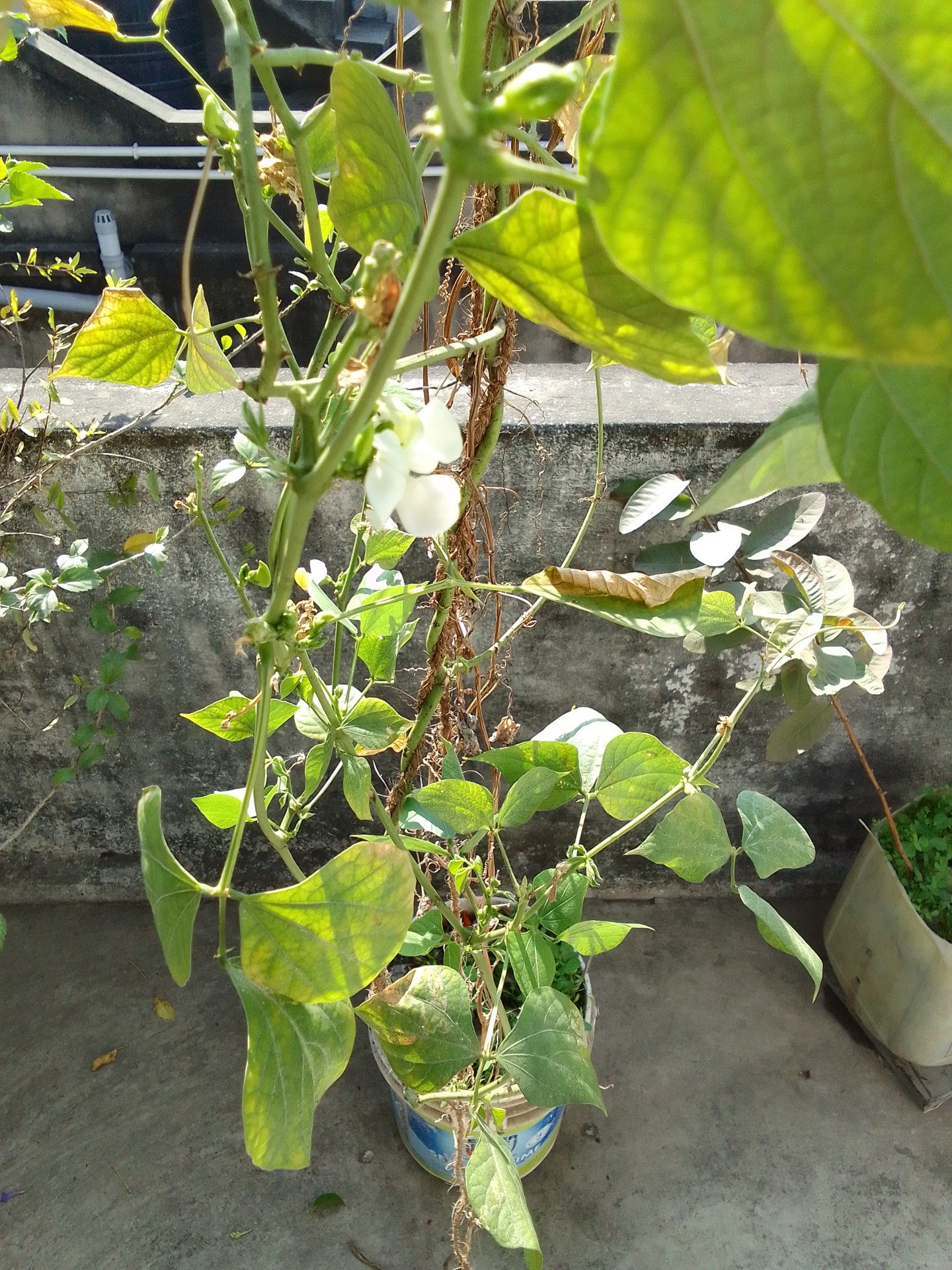
4. Salad Leaves and Lettuce: The Fastest Harvest
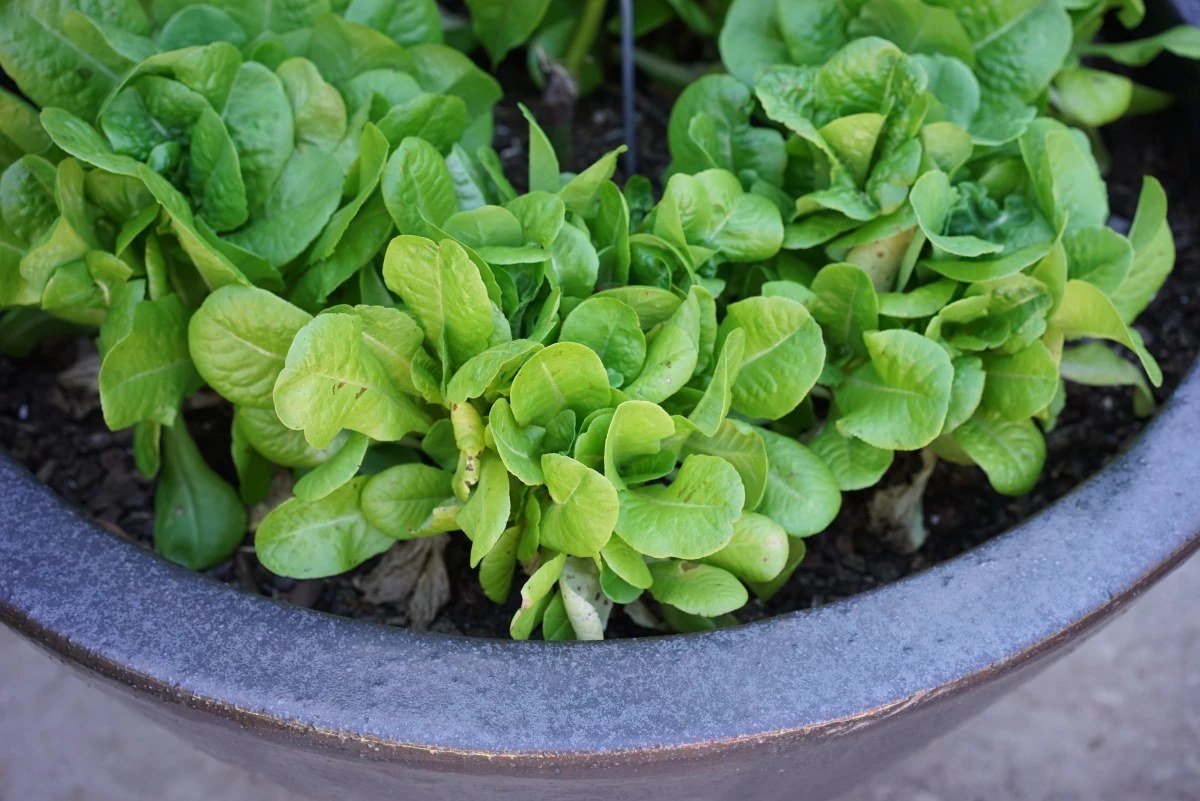
If you want a return within weeks, start with salads. Lettuce and mixed salad leaves have shallow roots, modest appetites, and a tolerance of smaller containers that deep-rooted crops do not. A wide, shallow container — even 5–8 litres, 12–16 inches (30–40 cm) wide but only 6–8 inches deep — can keep a small household in cut-and-come-again leaves for months.
Loose-leaf varieties suit pots best because you pick outer leaves as you need them and the plant keeps growing from the centre. Try ‘Saladin’ or ‘Lollo Rosso’ for frilly, colourful leaves, or buy a mixed packet of cut-and-come-again leaves and sow it thinly over the surface. A pinch of seed every two or three weeks in a spare corner of a pot gives a steady succession instead of one glut followed by nothing.
Position matters in summer. Salads bolt — run to flower and turn bitter — in heat and drought, so in the hottest weeks move the pot where it gets morning sun and afternoon shade, and never let it dry out completely. In zones 5–8 you can sow outdoors from early spring under a cover, and keep sowing into early autumn; a pot brought onto a sheltered step or into a cold frame extends the season at both ends. Harvest in the morning when leaves are crisp, and take only what you need.
5. Courgettes (Zucchini): One Plant, One Big Pot
A courgette plant is a generous, slightly sprawling beast, and one plant is honestly enough for most households. In a pot it needs commitment: at least 25–30 litres, ideally a container 16–18 inches (40–45 cm) across, filled with rich compost and kept consistently moist. Given that, it will reward you from midsummer until the first frosts.
Choose varieties bred for containers or smaller spaces if you can. ‘Patio Star’ and ‘Defender’ are productive on more manageable plants, while trailing types can be allowed to spill over the edge of a tall pot or grow bag rather than fighting for upright space. Feed weekly once flowering starts and water at the base, not over the leaves, to reduce the white powdery mildew that courgettes are prone to in late summer.
Pick fruit small and often — at 4–6 inches (10–15 cm) long they are at their best, and regular picking keeps new flowers and fruit coming.
6. Carrots, Radishes, and Beetroot: Roots in Containers
Root vegetables grow perfectly well in pots as long as the container is deep enough and the compost is light and stone-free — stones and lumps are what make roots fork. For carrots, choose shorter or round varieties in pots under 12 inches deep: ‘Paris Market’ produces round, almost golf-ball roots made for shallow containers, while ‘Nantes 2’ suits a deeper pot of 12 inches (30 cm) or more. A 10–15 litre deep pot sown thinly can give a surprisingly good bunch of sweet, clean carrots.
Radishes are the fastest vegetable here — often ready in four to six weeks in warm weather. ‘French Breakfast’ and ‘Cherry Belle’ are reliable, and because they grow so quickly they can be sown between slower crops in the same large pot and harvested before those crops need the space. Sow little and often, because a whole pot of radishes ready in the same week is more radish than anyone needs.
Beetroot is equally at home, and you get two harvests from one plant: the roots, and the young leaves in salads. ‘Boltardy’ is the variety generations of gardeners rely on for reliability. Thin seedlings so each root has a couple of inches to swell into, keep the pot evenly moist, and pull roots at golf-ball to tennis-ball size, when they are sweetest.
7. Potatoes in Bags and Big Containers
Potatoes may sound like a crop for an allotment, but they are one of the most successful pot vegetables of all, precisely because the harvest is so satisfying to tip out. A 30–40 litre grow bag or a pot at least 14–16 inches (35–40 cm) across suits three seed potatoes. First early varieties such as ‘Pentland Javelin’ and salad types such as ‘Charlotte’ are excellent choices, cropping before space and late-season problems build up.
Plant seed potatoes about 6 inches (15 cm) deep in compost in early spring, once shoots appear cover them with more compost, and keep earthing up until the bag is nearly full — the new tubers form along the buried stems, so depth directly affects your harvest. Water generously, especially as tubers swell, and feed with a balanced liquid feed or tomato feed.
When the foliage yellows, tip the whole bag into a wheelbarrow and rummage for the tubers — no digging, no fork spearing through the best ones. It is the closest gardening gets to a treasure hunt.
Practical Tips for Growing Vegetables in Pots
Group pots together. A cluster of containers creates a slightly more humid microclimate, loses less water than isolated pots in the wind, and makes watering with a can or hose quicker and harder to forget. In a heatwave, moving the group a step into lighter shade for a few days can save salads and young plants.
Use pot feet, bricks, or small blocks under containers so drainage holes stay clear of the ground. A pot sitting flush on paving can actually drain badly, because the holes seal against the surface. In winter, that same lift helps stop pots freezing solid to the ground and cracking.
Feed little and often rather than rarely and heavily. Nutrients wash out of pots with every watering, which is why even rich compost runs out of steam after about six weeks. A weekly liquid feed during the main growing and fruiting season, at the strength on the label, keeps pot crops growing steadily.
Mulch the surface of big pots with a layer of gravel, straw, or extra compost. It slows evaporation, stops compost splashing onto leaves when you water, and keeps the surface roots cooler. For tomatoes and courgettes on a hot patio, this small step noticeably reduces how often you need to water.
Common Mistakes When Growing Vegetables in Pots
Using pots that are too small is the mistake behind most failures. A tomato in a 5-litre pot may survive, but it will need watering twice a day in summer and will crop poorly. When in doubt, go a size up — roots, water, and nutrients all run out in a small pot long before the season does.
Forgetting drainage, or standing pots permanently in water, comes next. Saucers help in a heatwave, but a pot left sitting in a full saucer week after week has effectively lost its drainage. Empty saucers after heavy rain and after the plant has had a day to drink in hot weather.
Skipping feeding is very common, because plants look fine for the first few weeks on the nutrients in fresh compost. Then growth yellows and slows, fruit stays small, and the problem gets blamed on the variety. Hungry crops in pots — tomatoes, peppers, courgettes, potatoes — need regular feeding once they are established; the pot holds only what you put into it.
Inconsistent watering causes a cluster of familiar problems: split tomato skins, blossom end rot, bitter bolted lettuce, and bean flowers dropping. Pots cannot smooth out neglect the way open ground can. A simple routine — check every morning in summer, water thoroughly, check again on very hot evenings — prevents most of it.
Finally, overcrowding. Seedlings look tiny, so it is tempting to fit six plants where two belong. Crowded pots dry out faster, shade themselves, and invite mildew in still, damp foliage. Thin bravely and respect the spacings for the crop, not the size of the seedlings today.
Frequently Asked Questions
What is the easiest vegetable to grow in a pot?
Salad leaves and radishes are the easiest starting point: they are fast, shallow-rooted, and forgiving of smaller containers. Dwarf French beans and bush tomatoes follow close behind once you can give them a generous pot and a steady watering routine.
How often should I water vegetables in pots?
In summer, expect to water most pots once a day, and large fruiting plants such as tomatoes and courgettes sometimes twice on hot, windy days. Check the compost with a finger rather than watering to a fixed schedule — weather, pot size, and plant size change the answer from day to day.
Can I use garden soil in pots?
On its own, usually not well. Garden soil compacts in a container, drains unevenly, and may contain weed seeds and soil-borne problems. A peat-free multi-purpose or soil-based compost is a safer main fill; you can mix in a little garden soil or homemade compost in a large pot, but let bagged compost do most of the work.
How big should a pot be for tomatoes?
Aim for at least 20 litres per plant, and 25–30 litres is better — roughly a 14–16 inch (35–40 cm) pot. Bush varieties can manage at the smaller end of that range; cordon varieties grown up a cane produce a bigger plant and repay the biggest pot you can give them.
Which vegetables can grow in shade in pots?
Full shade suits very few vegetables, but leafy crops are the most tolerant. Lettuce, salad leaves, spinach, and herbs such as parsley and mint can crop usefully in partial shade, especially in summer when shade protects them from bolting. Fruiting crops such as tomatoes, peppers, and beans need the sunniest spot you have.
Can I grow vegetables in pots through winter?
In milder zones, hardy crops such as broad beans, garlic, kale, and overwintering salad leaves can grow in pots through winter, especially in a sheltered spot. Growth is slow in low light, though, and pots freeze faster than the ground, so move containers against a wall and be ready to protect them in hard frosts.
Final Thoughts
Pot growing is not a second-best version of a vegetable garden — for peppers on a hot patio, clean salads within reach of the kitchen, and potatoes tipped out of a bag with no digging, it is often the better version. Choose crops that suit containers, give them a pot with real room in it, and keep faithfully to the watering can.
Start small this season: one big pot of tomatoes, one of dwarf beans, and a wide tub of salad leaves will teach you the rhythm of watering and feeding faster than any book. Next year you will know exactly which pots earned their place — and your patio will be well on its way to feeding you.
[…] to harvest. If you are comparing container crops, you will find carrots far less demanding than the best vegetables to grow in pots such as tomatoes or sweet peppers, which need regular feeding to crop well — carrots reward […]