

A south- or west-facing garden that bakes all day is sometimes treated as a problem to be solved, but gardeners who know the best plants for full sun gardens see it very differently. That bright, warm plot is prime territory for lavender, coneflowers, sunflowers, and a whole cast of tough, generous plants that actually sulk in shade. Choose plants that evolved for open, sunny places and they will not merely survive your sunniest border — they will flower harder, grow sturdier, and need less fussing than almost anything else in the garden.
The mistake is rarely the sun itself. The mistake is putting the wrong plant in it: a fern, a hosta, or a thirsty annual wilting in a spot where a yarrow or a sedum would be perfectly content. Or it is planting a genuine sun-lover and then undermining it with rich, soggy soil, shallow watering, and no help through its first settling-in season. Sun-loving plants are tough once established, not invincible on day one.
This guide walks through reliable choices that earn their place — with honest notes on height, bloom season, hardiness zones, and watering for each — plus how to handle the two classic full-sun situations, the hot dry spot and the main flower border, and how to help new plants establish so they can look after themselves afterwards.
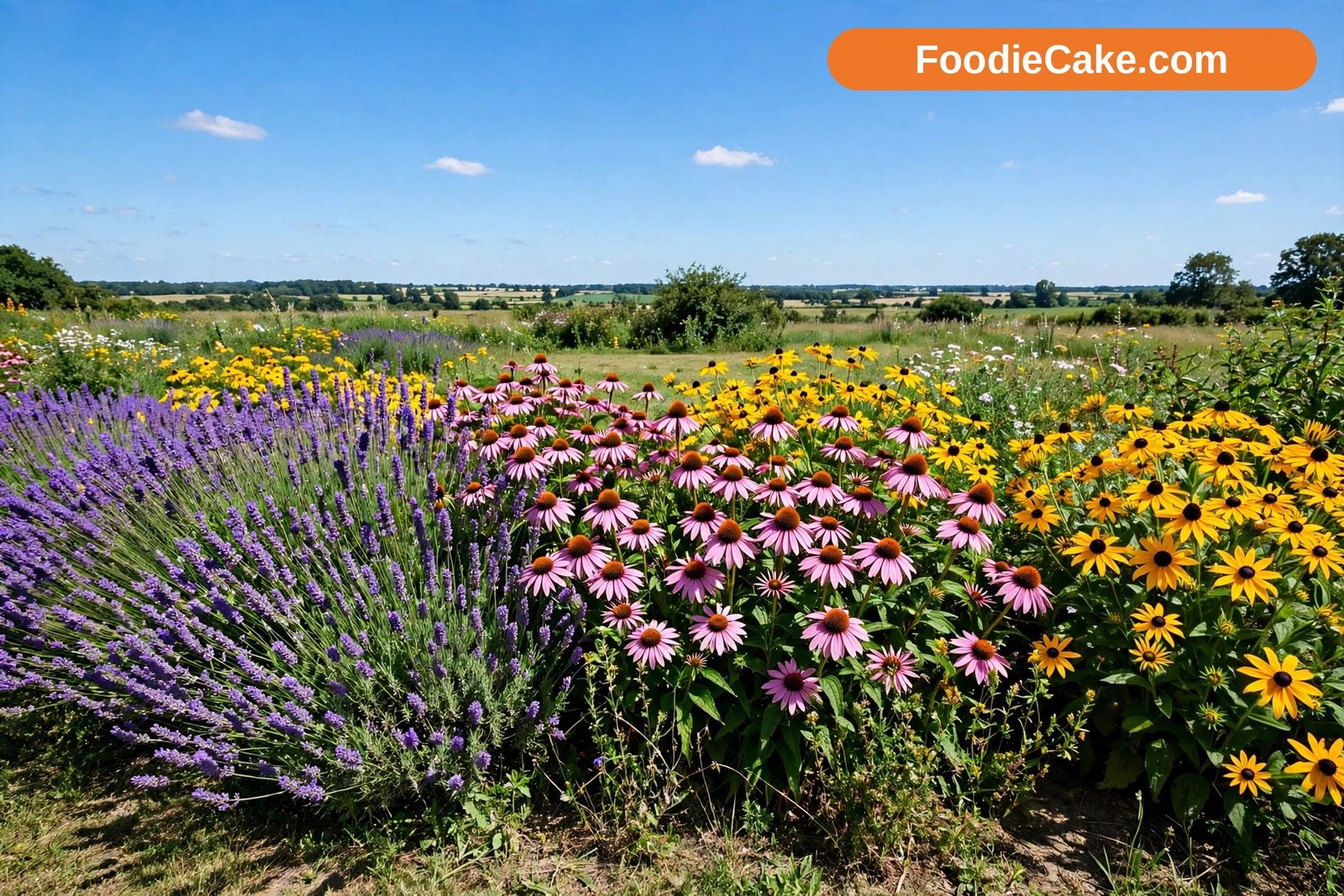
What “Full Sun” Actually Means
On plant labels and seed packets, “full sun” has a specific meaning: at least six hours of direct, unfiltered sunlight a day, and for many of the plants in this guide, eight hours or more is even better. Six hours of gentle morning sun is not quite the same as six hours that include the fierce early-afternoon peak, and most sun-lovers strongly prefer the second version — sun that includes the middle of the day is what keeps them compact and flowering freely.
Less than six hours counts as partial sun or partial shade, and plants that need full sun will tell you about it if you short-change them. They stretch towards the light and become leggy, they flower sparsely or not at all, and floppy stems that should stand on their own end up needing support. Lavender in too little sun is a classic example: grey, open, barely flowering, and prone to rotting in winter wet because it never bakes dry the way it wants to.
Why Sun-Lovers Thrive Where Other Plants Scorch
Most full-sun plants come, originally, from open habitats: prairies, steppes, Mediterranean hillsides, dry meadows, and coastal cliffs. They carry the adaptations to match. Silver or grey foliage, like lavender’s and yarrow’s, reflects harsh light. Small, narrow, or waxy leaves lose less water than big soft ones. Deep taproots — coneflowers and gaillardia have them — reach moisture far below the sun-baked surface. Some, like portulaca, store water in fleshy leaves and stems.
This is why matching the plant to the place matters so much more than any amount of aftercare. A plant adapted to bright, dry, open ground will struggle in rich, damp shade no matter how kindly you treat it, and a woodland plant will bleach and crisp in a sun trap no matter how often you water. Get the match right and gardening in full sun becomes some of the easiest gardening there is — especially once you understand which plants also count among the best drought tolerant plants for gardens, because those are the ones that will carry a hot border through a dry summer with the least help from you.
The Best Flowering Plants for Full Sun
The plants below are proven, widely available, and forgiving. Zones are USDA hardiness zones; always treat them as a guide, because a sheltered city garden can behave a zone warmer than an exposed rural one, and winter wet kills some of these plants more readily than winter cold does.
Lavender (Lavandula angustifolia and hybrids)
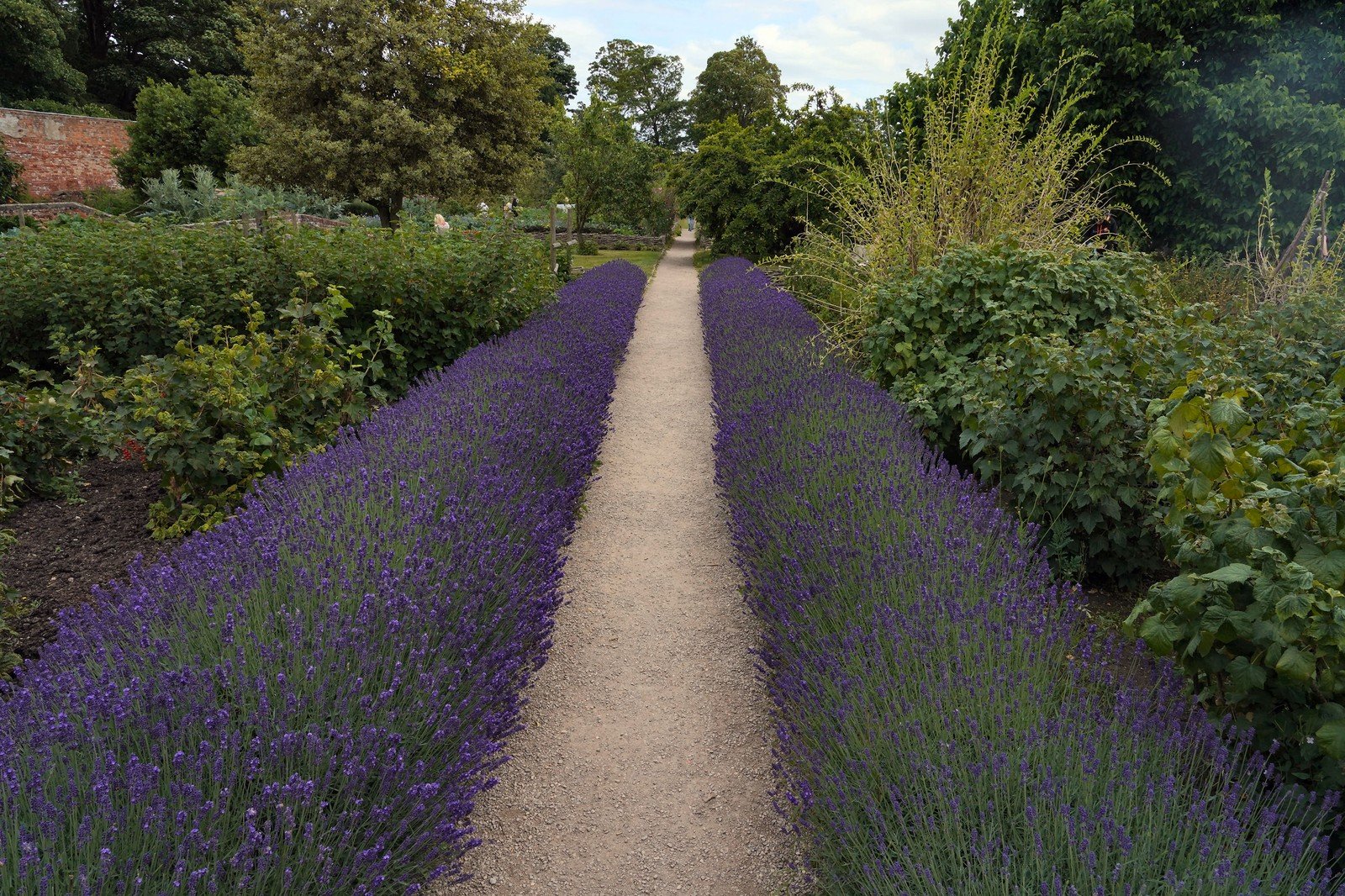
Lavender is the plant people picture in a sun-drenched garden, and it earns the image: mounds of grey-green foliage topped with fragrant purple flower spikes that bees work from morning to evening. Height is typically 45–90 cm (18–36 inches) depending on variety, with compact types like ‘Hidcote’ and ‘Munstead’ at the smaller end and the lavandin hybrids such as ‘Grosso’ growing larger and looser. Bloom runs from early to mid-summer, longer if you shear the spent spikes promptly. English lavenders are generally hardy in zones 5–9; lavandins are a touch less cold-hardy, usually zones 6–9. Watering needs are low once established — lavender actively dislikes wet roots, so plant it in sharp-draining soil, never feed it richly, and water deeply but rarely during its first season only.
Echinacea (Coneflower)
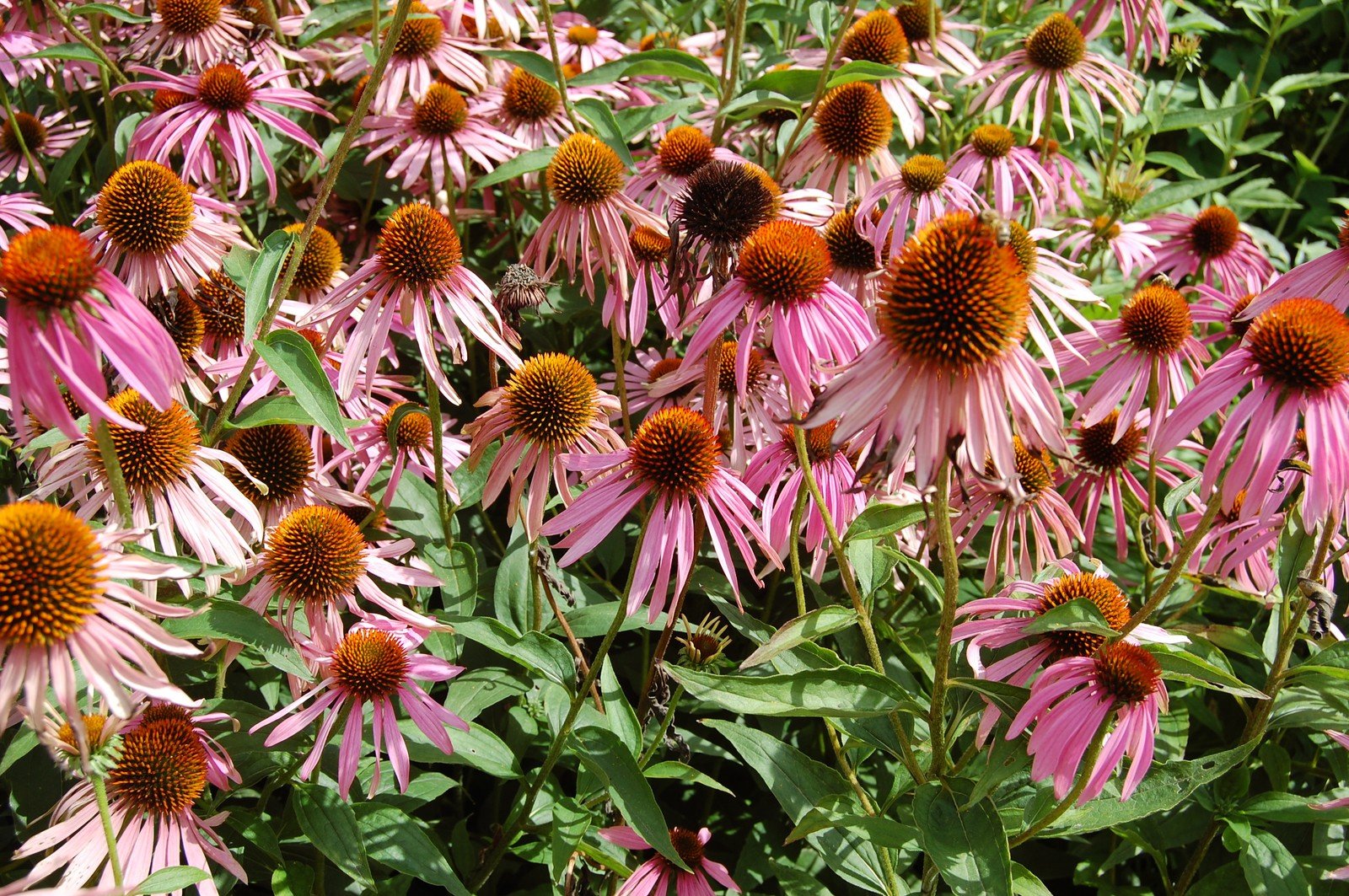
Echinacea purpurea and its many hybrids bring bold, daisy-like flowers with prominent central cones, in purple-pink, white, and now oranges and yellows too. Plants grow 60–90 cm (2–3 feet) tall, bloom from mid-summer into early autumn, and the seed heads feed finches if you leave them standing into winter. Most are hardy in zones 3–9 or 4–9 depending on the variety, making coneflowers one of the best options for cold-climate sun gardens. They like a little more moisture than lavender — water regularly in the first season and during prolonged drought thereafter — but they still demand decent drainage and will sulk in heavy, waterlogged clay unless you improve it with grit and organic matter.
Rudbeckia (Black-Eyed Susan)
If you want uncomplicated gold from mid-summer to the first frosts, rudbeckia is your plant. Rudbeckia fulgida ‘Goldsturm’ is the classic: 60–75 cm (24–30 inches) tall, hardy in zones 3–9, covered in golden-yellow flowers with dark centres for weeks on end. It spreads gradually into a generous clump, which is a virtue in a big border and something to watch in a small one. Rudbeckia is moderately thirsty compared with the real drought specialists — it establishes best with regular watering in year one and appreciates water in a long dry spell — but it asks for nothing else: no staking, no fussing, and only an optional tidy-up in spring.
Salvia (Perennial Sage)
Perennial salvias, especially Salvia nemorosa types like ‘Caradonna’ and ‘May Night’, give you upright spikes of deep violet-blue from late spring into summer, and a second flush if you cut the first one down promptly. Height is usually 45–60 cm (18–24 inches). Most nemorosa types are hardy in zones 4–9. They pair beautifully with roses and grasses, flower best in lean-ish soil, and need only moderate water: regular while establishing, then occasional deep watering in drought. Deadheading is the one job that genuinely pays with salvias — five minutes with snips buys you weeks more colour.
Yarrow (Achillea millefolium)
Yarrow is close to indestructible in a hot, sunny, poor-soil spot where fussier plants give up. Flat heads of tiny flowers in white, yellow, pink, and terracotta sit above ferny foliage on plants 45–90 cm (18–36 inches) tall, blooming from early summer and repeating if deadheaded. Hardy in zones 3–9, it thrives on neglect: lean soil, little water once established, and no feeding — rich soil and generous watering actually make it flop and spread aggressively. Divide clumps every few years to keep them vigorous, and give yarrow room or a spot where its enthusiasm is welcome.
Sedum / Stonecrop (Hylotelephium and Sedum)
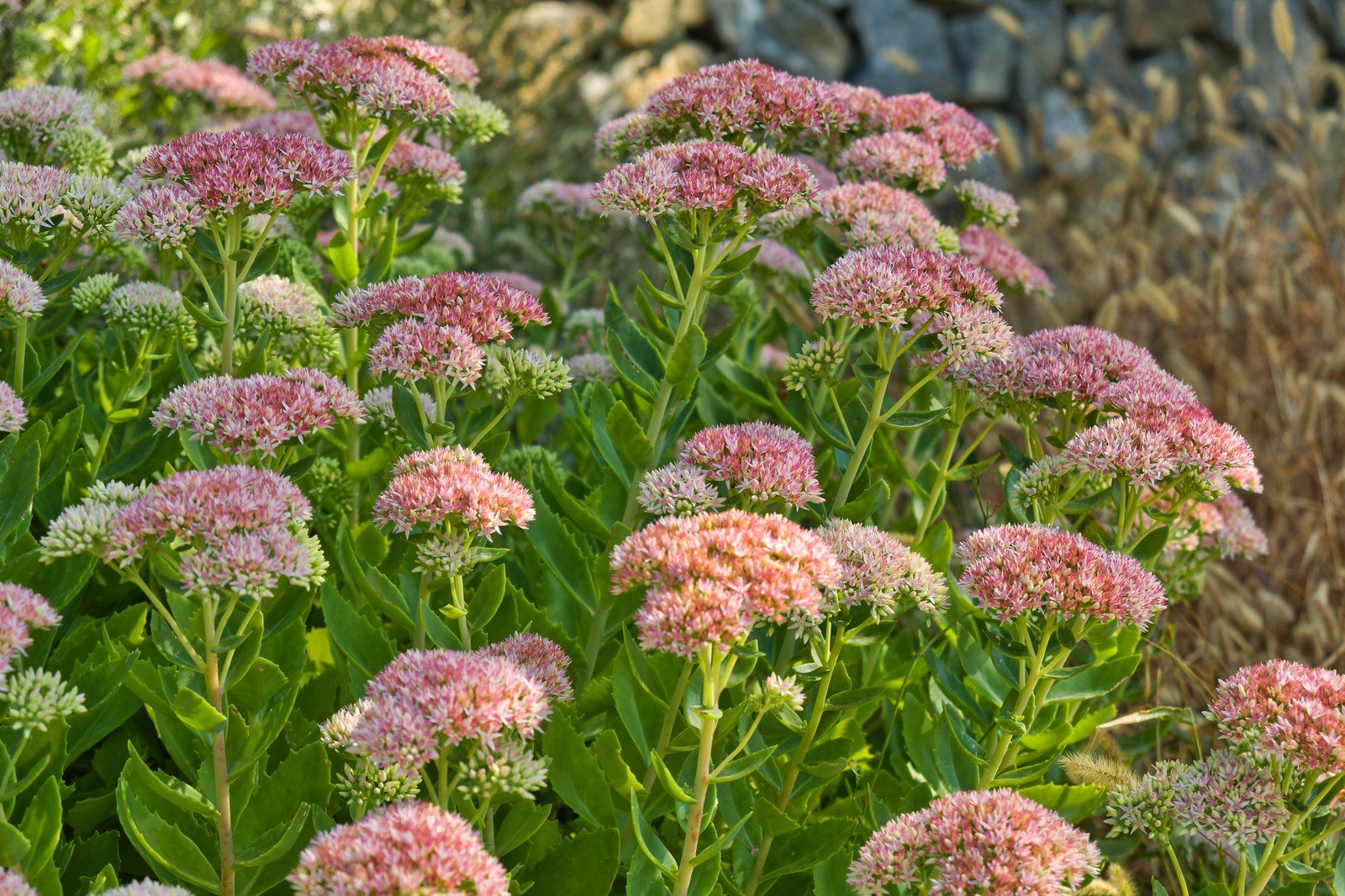
The upright border sedums, now often listed as Hylotelephium, such as ‘Autumn Joy’ (Herbstfreude), provide fleshy foliage all season and flat heads of dusty-pink flowers in late summer and autumn, exactly when many borders run out of steam. They grow 45–60 cm (18–24 inches) tall and are typically hardy in zones 3–9. The low, creeping stonecrops are ground-cover versions of the same idea for edges, walls, and gravel. All of them store water in their leaves, so watering needs are minimal after the first few weeks — overwatering and rich, wet soil are the usual causes of failure, not drought. Leave the dried flower heads standing over winter for structure and for the frost to decorate.
Portulaca (Moss Rose)
Portulaca grandiflora is the answer to the hottest, driest, most unpromising strip in the garden — the sun-blasted edge of a driveway or the top of a wall. This low annual, just 10–15 cm (4–6 inches) tall, opens jewel-bright flowers in pink, orange, yellow, red, and white on sunny days all summer long. It is not frost-hardy and is grown as an annual in all but zones 10–11, but it often self-seeds lightly. Sow or plant it after all frost risk has passed, in the poorest, best-drained soil you have, and water sparingly: portulaca in rich, damp soil is a contradiction that ends in rot.
Gaillardia (Blanket Flower)
Gaillardia brings hot colours — red rings, orange, and yellow — on plants 30–60 cm (12–24 inches) tall that flower from early summer until frost if you deadhead them. Varieties like ‘Arizona Sun’ suit smaller spaces and containers. Most perennial types are hardy in zones 3–10, though they can be short-lived, especially in wet winter soil; sharp drainage extends their life considerably. Gaillardia has a deep root system for its size, shrugs off heat and drought once established, and asks only for sun, drainage, and a regular tidy of spent blooms. In zones where winters are wet, treat it as a plant you may replant every few years rather than a permanent fixture — it often self-seeds enough to replace itself.
Coreopsis (Tickseed)
Coreopsis gives you airy mounds of small daisy flowers, classically clear yellow, over a very long season from early summer into autumn. Threadleaf types (Coreopsis verticillata, including ‘Moonbeam’ and ‘Zagreb’) form neat, ferny clumps 30–45 cm (12–18 inches) tall; grandiflora types are a little taller and bolder. Hardiness is commonly zones 3–9 or 4–9 depending on type. Coreopsis is drought-tolerant once established, tolerant of poor soil, and reliably attractive to pollinators. Shear the whole plant lightly after the first flush to encourage a fresh mound of flowers, and divide every few years to keep it vigorous.
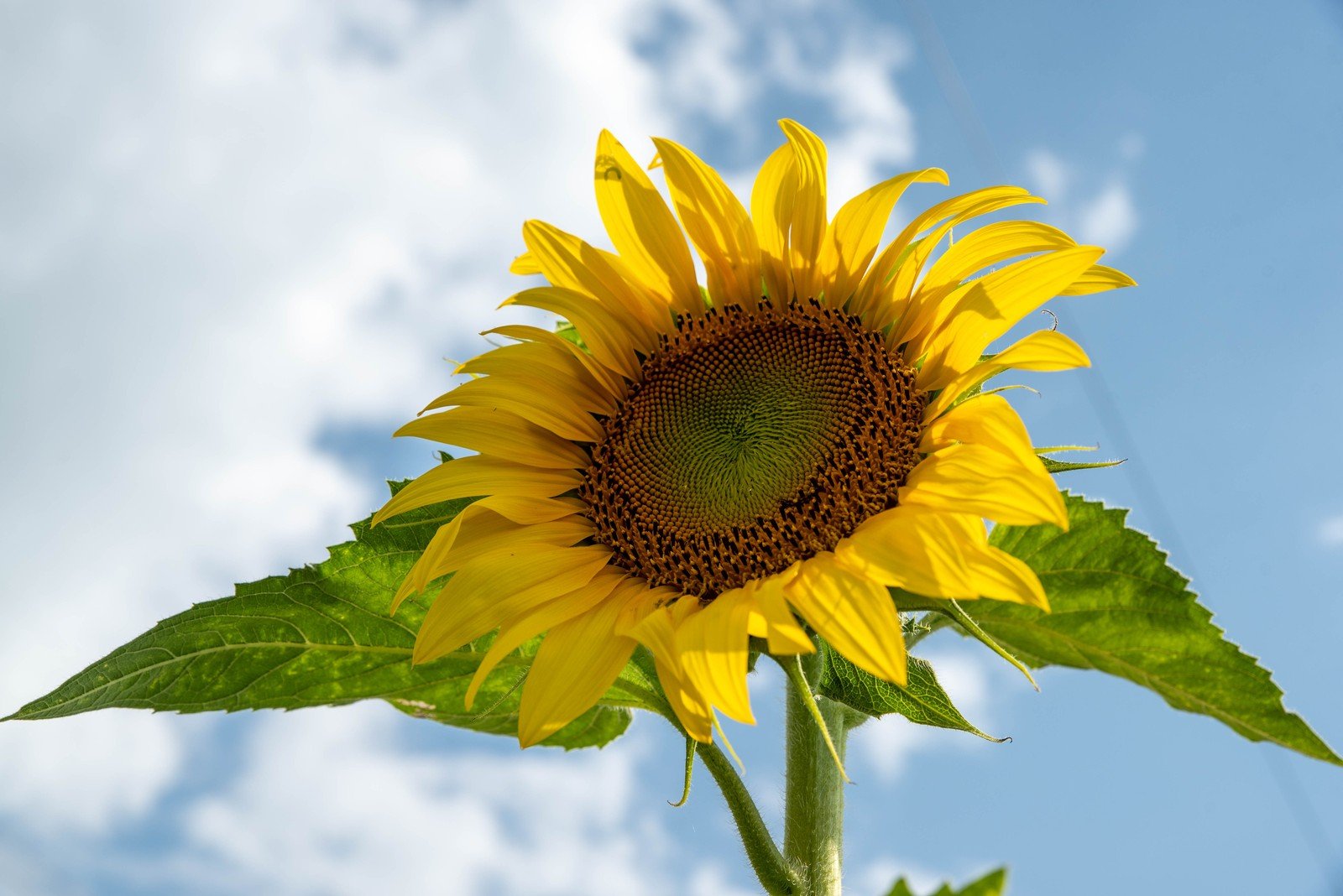
Sunflowers (Helianthus annuus and perennial types)
Nothing announces a sunny garden like a sunflower. Annual sunflowers range from knee-high varieties around 45 cm to giants over 3 metres (10 feet), with the classic ‘Russian Giant’ and branching, multi-headed types like ‘Soraya’ giving very different effects. They flower in mid- to late summer, are grown as annuals in every zone, and need a genuinely sunny position — a sunflower in shade is a tall, sad apology. Watering is the one real demand: big sunflowers are thirsty and hungry while they are growing fast, so water deeply in dry spells and give tall varieties a sturdy stake or a sheltered spot before they need rescuing in a storm.
Sun-Loving Herbs That Belong in the Same Border
Two herbs deserve a place in any full-sun planting, because they want exactly the same conditions as lavender and look entirely at home beside it. Rosemary is an evergreen Mediterranean shrub with fragrant, needle-like leaves, growing 60–120 cm (2–4 feet) or more in mild areas, with pale blue flowers in late spring. It is reliably hardy in zones 8–10, and in zones 6–7 it often survives in a sheltered spot with perfect drainage, or can be grown in a pot and brought under cover for winter. Thyme forms low, spreading mats 15–30 cm (6–12 inches) tall, with tiny pink or white summer flowers that bees love; most culinary types are hardy in zones 5–9. Both herbs need sharp drainage, lean soil, and restraint with the watering can once established — the sunny, gravelly edge of a border or a herb bed against a warm wall suits them perfectly.
A Brief Note on Vegetables in Full Sun
Vegetables are outside the main scope of this list, but it is worth knowing that the great majority of them are full-sun plants too. Tomatoes, peppers, courgettes (zucchini), beans, and sweetcorn all need six to eight hours or more of direct sun to crop well, and a sunny vegetable plot is one of the most productive uses of a bright garden. The difference is water: unlike the drought-adapted ornamentals above, fruiting vegetables need regular, generous watering and richer soil to produce their harvest. Keep the two regimes separate in your mind — the dry border and the vegetable patch are both sunny, but they are watered very differently.
Hot, Dry Spots Versus Main Borders
Not all full sun is equal, and sorting your plants by thirst is the simplest way to succeed. The hot, dry spot — against a south-facing wall, in gravel, at the top of a slope, in thin soil over rubble — is a specialist habitat. Give it the true drought specialists: lavender, sedum, portulaca, yarrow, gaillardia, rosemary, and thyme. These plants evolved for exactly this, they resent being cosseted, and grouping them together means you can water the whole area rarely and deeply, or barely at all once they are established.
The main flower border, with deeper, better soil and a little more retained moisture, is where the moderately thirsty sun-lovers belong: echinacea, rudbeckia, salvia, coreopsis, and sunflowers. They still want full sun, but they will use — and reward — the slightly kinder conditions with bigger, longer displays. Keeping thirsty and drought-loving plants in separate groups, sometimes called hydrozoning, saves water and prevents the classic error of rotting a lavender by watering it every time you water the rudbeckia beside it. Gardeners in genuinely hot regions go further still, choosing from dedicated lists of the best plants for hot climates, where heat tolerance through the night, not just at midday, becomes part of the selection.
Practical Tips for Helping Sun Plants Establish
The first season decides everything. A plant described as drought-tolerant earns that description as a mature plant with a deep root system; the pot-grown youngster you bring home has roots the size of the pot and needs regular water until it has grown out into the surrounding soil. Water deeply and thoroughly at planting, then keep watering deeply once or twice a week in dry weather through the first summer — deep and infrequent watering trains roots downwards, while daily sprinkling keeps them at the surface where they bake.
Mulch is your second-best tool, after the watering can. A 5–8 cm (2–3 inch) layer of bark, compost, or gravel over the soil around new plants cuts evaporation dramatically, keeps roots cooler, and suppresses the weeds that would compete for water. Gravel or grit mulch suits lavender, sedum, and the Mediterranean herbs best, because it also keeps their crowns dry; organic mulch suits the border perennials. Keep any mulch a few centimetres clear of stems and crowns to prevent rot.
Prepare the soil before you plant, not after. Most sun-lovers care more about drainage than richness. On heavy clay, dig in coarse grit and generous organic matter, or plant on a slight mound or in a raised bed so water moves away from crowns in winter. On very thin, sandy soil, the opposite applies: add organic matter to give roots some moisture to find. Avoid heavy feeding in either case — sun plants pushed with rich fertiliser grow soft, leggy, and thirsty, the opposite of what you planted them for.
Common Mistakes in Full Sun Gardens
Planting shade-lovers in sun is the most fundamental error, and it is usually a labelling or optimism problem: a hosta, fern, astilbe, or hydrangea placed in a baking border will bleach, curl, and scorch no matter how much you water it. Move those plants to the shade they evolved for, and fill the sunny ground with plants from this list that will thank you for the same spot.
Shallow watering creates shallow roots. A daily dribble wets only the top centimetre or two of soil, so roots stay at the surface, where a single hot day can kill them. Water less often but soak the ground properly each time, so moisture reaches 15–20 cm down and roots follow it. Then, as plants establish over their first season, gradually stretch the interval between waterings.
Skipping mulch is a false economy. Bare soil in full sun loses moisture fast, bakes hard, and grows weeds at championship speed. Five centimetres of mulch changes all three of those things at once, and it is a one-afternoon job that pays back for the whole season.
Ignoring drainage rots more sun plants than drought ever kills. Lavender, sedum, gaillardia, and rosemary that sail through a dry summer routinely die in a wet winter, sitting in cold, airless soil. If water stands on your border after rain, fix the drainage, plant on mounds, or choose the more moisture-tolerant sun-lovers — echinacea, rudbeckia, and coreopsis forgive imperfect drainage far better than the Mediterranean specialists do.
Frequently Asked Questions
How many hours of sun counts as full sun?
Six or more hours of direct, unfiltered sunlight per day, ideally including some around midday. Many strong sun-lovers, including lavender, sedum, and portulaca, do even better with eight hours or more. If a spot receives fewer than six hours, treat it as partial sun and choose plants labelled for that instead — a full-sun plant in five hours will usually grow, but it will be leggier and flower less.
What is the toughest plant for a really hot, dry spot?
Sedum, portulaca, yarrow, and lavender are the usual survivors in the harshest spots — gravel, wall bases, thin soil over rubble — provided the drainage is sharp. Sedum and the creeping stonecrops are probably the most forgiving of all, since their fleshy leaves store water. Even these plants need regular watering through their first few weeks while their roots establish; toughness is a property of the established plant, not the newly planted one.
Can I grow these plants in colder zones?
Many of them, yes. Echinacea, rudbeckia, yarrow, sedum, and coreopsis include types hardy to zones 3–4, which covers very cold winters. The Mediterranean plants are the limiting factor: lavender is generally reliable in zones 5 and warmer (with sharp drainage), and rosemary is a zone 8 plant outdoors, grown in pots and sheltered in colder areas. Always check the zone range of the specific variety, and remember that winter wet is as deadly as winter cold for the drainage-lovers.
Why is my lavender grey, woody, and barely flowering?
The usual causes are too little sun, soil that stays too wet, overfeeding, or a combination of all three — plus, often, a lack of pruning. Lavender wants six-plus hours of direct sun, lean and sharply drained soil, and an annual trim after flowering to keep it compact; never cut back into bare old wood, which often will not reshoot. In zones at the cold edge of its range, a hard winter can also damage it, so choose hardier English lavender types like ‘Hidcote’ or ‘Munstead’ there.
Do full sun plants need fertiliser?
Mostly, very little. The majority of plants in this guide evolved in lean soils and flower best without rich feeding; excess fertiliser produces soft, leafy growth at the expense of flowers and can make plants flop and need more water. A spring mulch of compost is enough for the border perennials, and the Mediterranean herbs and lavender are best left unfed beyond that. Sunflowers and vegetables are the exceptions — both are hungry and benefit from richer soil and regular feeding while they crop or climb.
When is the best time to plant a sunny border?
For hardy perennials, spring is the most forgiving time in most zones: the soil is warming, roots have the full season to establish, and you can water through the first summer. Early autumn also works well in zones 6 and warmer, where the soil stays warm after the air cools. Tender annuals such as portulaca, and sunflower seedlings, go out only after the last frost in your area.
Final Thoughts
A full-sun garden is not a hardship to be managed; it is the natural home of some of the most beautiful, fragrant, and wildlife-friendly plants you can grow. Start with the honest definition — six or more hours of direct sun — then match each plant to the moisture your soil actually offers: lavender, sedum, yarrow, and portulaca for the hot, dry ground; echinacea, rudbeckia, salvia, and coreopsis for the deeper border soil; rosemary and thyme along the warm edges; and sunflowers wherever you want pure summer exuberance.
Help everything through its first season with deep watering, a proper layer of mulch, and soil prepared for drainage rather than richness, and from the second year onwards your sunniest border should be the lowest-maintenance, longest-flowering part of the garden. That baked, bright patch other gardeners complain about will be the one you would not trade for anything.