

If you are looking for the best companion plants for tomatoes, you have probably heard some bold claims: plant this beside your tomatoes and pests will vanish, yields will double, and the fruit will taste sweeter. The truth is quieter than that, but it is still very much worth your time. Good companions can help shade the soil, bring in pollinators and helpful insects, make better use of the space between your plants, and in a few cases genuinely make life harder for certain pests. What they cannot do is perform miracles — and a guide that promises miracles is not doing you any favours.
Tomatoes are hungry, thirsty, sprawling plants that dominate any bed they grow in, so the companions that suit them best are the ones that either stay low, grow at a different depth, flower at the right moment, or simply enjoy the same sunny, well-fed conditions without getting in the way. Chosen well, a tomato bed stops being a row of lonely plants in bare soil and becomes a small, busy community where almost every gap is doing something useful.
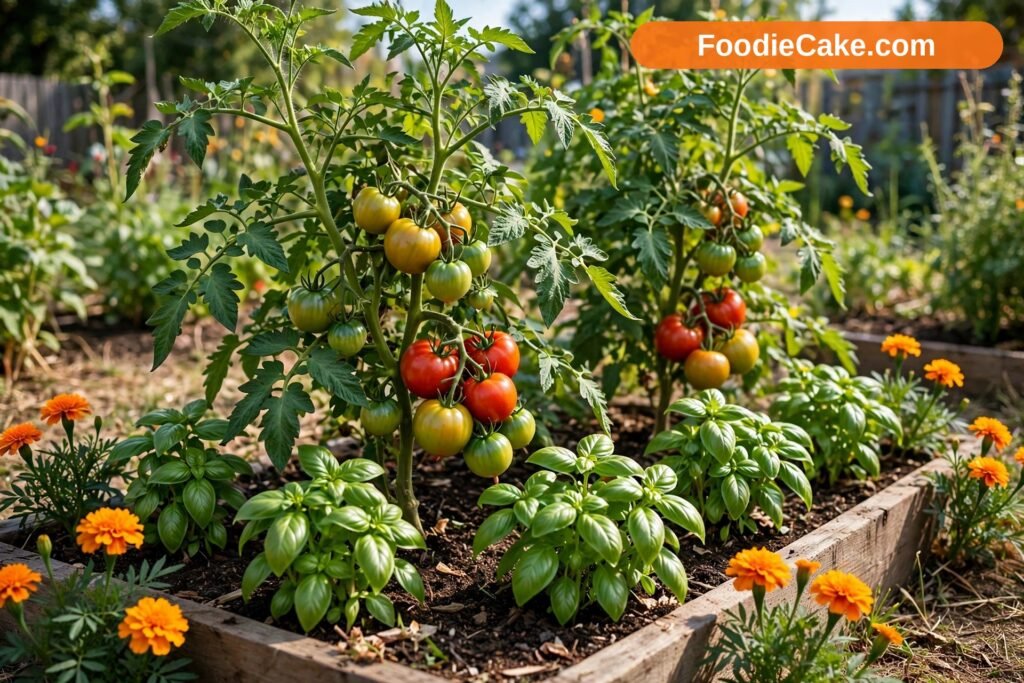
What Companion Planting Is, and What to Honestly Expect
Companion planting simply means growing certain plants near each other because the combination is thought to work better than growing each one alone. Sometimes the benefit is physical and obvious: a low carpet of lettuce shades the soil under a tomato plant, keeping it cooler and slowing evaporation, while the tomato’s leaves return the favour by shading the lettuce in hot weather. Sometimes the benefit is about insects — strong-smelling or nectar-rich flowers may confuse, distract, or feed the creatures moving through your bed. And sometimes, if we are honest, the benefit is mostly tradition: pairings handed down through generations of gardeners because they grow well side by side and look and taste right together.
It helps to sort the claims into three rough groups. The first group is solid common sense that needs no study to back it up: plants with different root depths compete less, low ground cover keeps soil moist, and flowers that bees love will bring more pollinators into the patch. The second group is plausible and widely reported by experienced gardeners, but hard to prove precisely — things like aromatic herbs muddling the scent trail that pests use to find your tomatoes. The third group is folklore that has hardened into “fact” through repetition, such as the idea that one herb planted nearby will noticeably change the flavour of a tomato. Enjoy those pairings if you like them, but do not rely on them.
The most honest expectation is this: companion planting is one gentle tool among several, not a replacement for the basics. A well-companioned tomato that is under-watered, under-fed, planted too close to its neighbours, or left unpruned in a damp corner will still struggle. Companions work best on top of good care, not instead of it. If you are still getting the basics in place, start with a solid grounding in how to grow tomatoes at home and treat everything in this article as the helpful extra layer it is meant to be.
The Best Companion Plants for Tomatoes
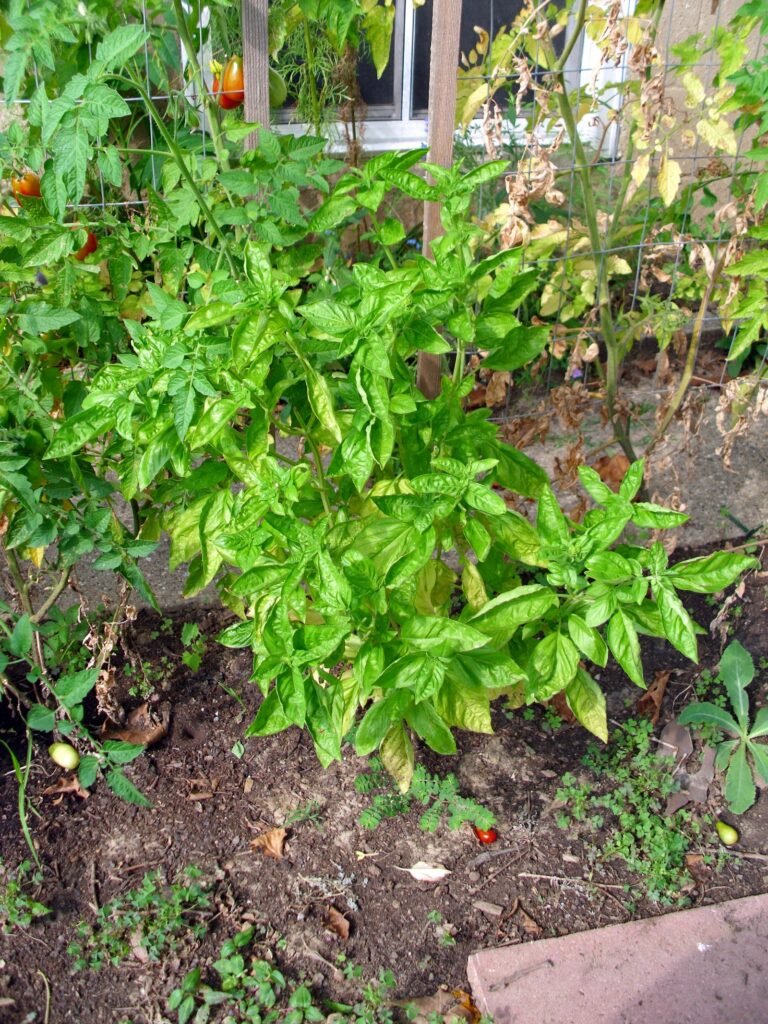
Basil: The Classic Partner
Basil is the most famous tomato companion of all, and it earns its place even if you strip away the folklore. The two plants love the same conditions — full sun, warmth, regular water, and rich soil — so neither is compromising for the other. Basil stays low and compact, filling the space around the base of the tomato plant where it shades the soil a little and helps hold moisture, without competing for the light the tomato needs higher up.
The traditional claims go further: basil’s strong scent is said to confuse or repel some of the flies and other pests that home in on tomatoes by smell, and some gardeners swear the pairing improves the tomatoes’ flavour. The pest-confusion idea is plausible — a bed that smells of many things is harder to navigate than a bed that smells of one — but treat it as a gentle nudge rather than a shield, and treat the flavour claim as a pleasant story rather than a promise. The pairing that is beyond dispute is in the kitchen: the plant that grows beside your tomatoes is the one you will want on top of them at harvest, and having both within arm’s reach on a summer evening is reason enough.
Marigolds: Colour With a Purpose
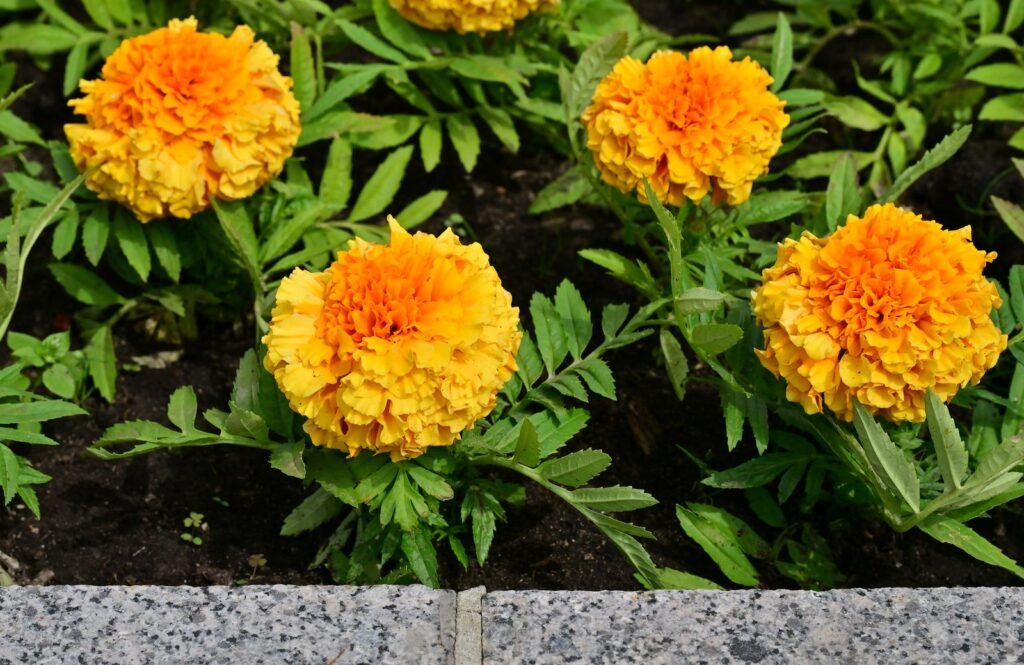
French marigolds are the cheerful workhorses of the companion-planting world, and their bright orange and yellow flowers along the edge of a tomato bed are more than decoration. Their blooms draw in hoverflies and other small beneficial insects whose larvae feed on aphids, and their long flowering season — often from early summer until the first frosts — keeps that supply of nectar and pollen going when your tomatoes need it most.
Marigolds are also the companion most often linked to nematodes, the microscopic worms that attack roots in some soils, and here honesty matters. The evidence relates mainly to certain marigold varieties whose roots release compounds into the soil as they grow, over a full season, in the ground the marigolds actually occupy. A single marigold popped in beside a tomato in May is unlikely to transform nematode-infested soil by July. Grown densely in a bed for a season before tomatoes follow, or as a long-term edging, they may genuinely help where nematodes are a known problem. For most gardeners, though, the realistic benefits are the insects they attract, the ground they cover, and the sheer cheerfulness of them.
Carrots: Quiet Workers Underground
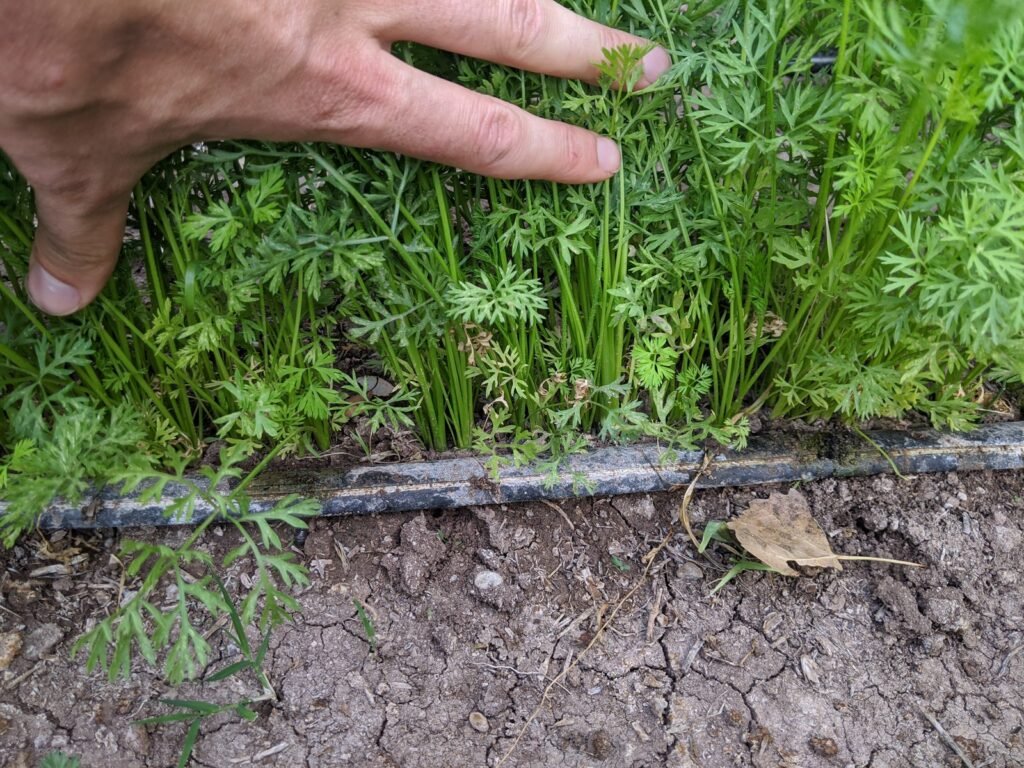
Carrots pair with tomatoes in a way that happens mostly out of sight. Tomato roots spread wide and relatively deep, while carrots send a single slender root straight down through the gaps, so the two crops draw on the soil at different levels and compete far less than you might expect from plants sharing a bed. As carrots push down, they also loosen the soil immediately around them, and when you pull them, the channels they leave behind help air and water move through the bed.
Onions, Garlic, and Chives: The Allium Family
Onions, garlic, shallots, and chives all carry the pungent scent of the allium family, and that scent is the heart of their reputation as companions. The theory, widely reported by gardeners even if it is difficult to measure neatly, is that a background smell of onion makes the whole bed smell less purely of tomato, which may make it slightly harder for scent-guided pests to find their target. What is certain is that alliums are undemanding neighbours: their roots are shallow and modest, their growth is upright and narrow, and they take up very little of the light, water, and food your tomatoes need.
Chives earn a special mention because they flower. Left to bloom, their purple pom-pom heads are excellent for bees and hoverflies, and the plants are perennial, returning year after year at the edge of a bed with almost no attention. Just deadhead them before they set seed unless you want chives popping up in every crack of the path for a decade. Garlic planted the previous autumn sits happily at the edge of a tomato bed and is usually lifted around midsummer, freeing its space just as the tomatoes hit their stride.
Lettuce: Living Mulch in the Shade
If there is a gap under your tomato plants in midsummer, lettuce is one of the smartest things to put in it. Lettuce is shallow-rooted, quick, and — crucially — happier in light shade during hot weather than it is in blazing sun, where it bolts and turns bitter. The tomato canopy gives it exactly that shade, while the lettuce leaves cover bare soil, keep the surface cool, and reduce the splashing of soil onto lower tomato leaves when you water or when it rains, which matters because several tomato diseases spread in splashed soil.
Sow small amounts every couple of weeks under and between the plants rather than one big batch, and pick the outer leaves as you need them. Cut-and-come-again loose-leaf varieties suit this job best. By the time the tomatoes are being stripped of their lower leaves for airflow in late summer, the lettuce season under them is naturally winding down anyway.
Borage: A Magnet for Bees
Borage is the companion to choose if pollination is your worry. Its starry blue flowers refill with nectar remarkably quickly after a bee visits, which keeps bees returning to the same small area again and again — and a bee working your borage is a bee that will also work your tomato flowers, which need that buzzing visit to set fruit well. The flowers are edible, with a mild cucumber taste, and look wonderful scattered over the salads your tomatoes are destined for.
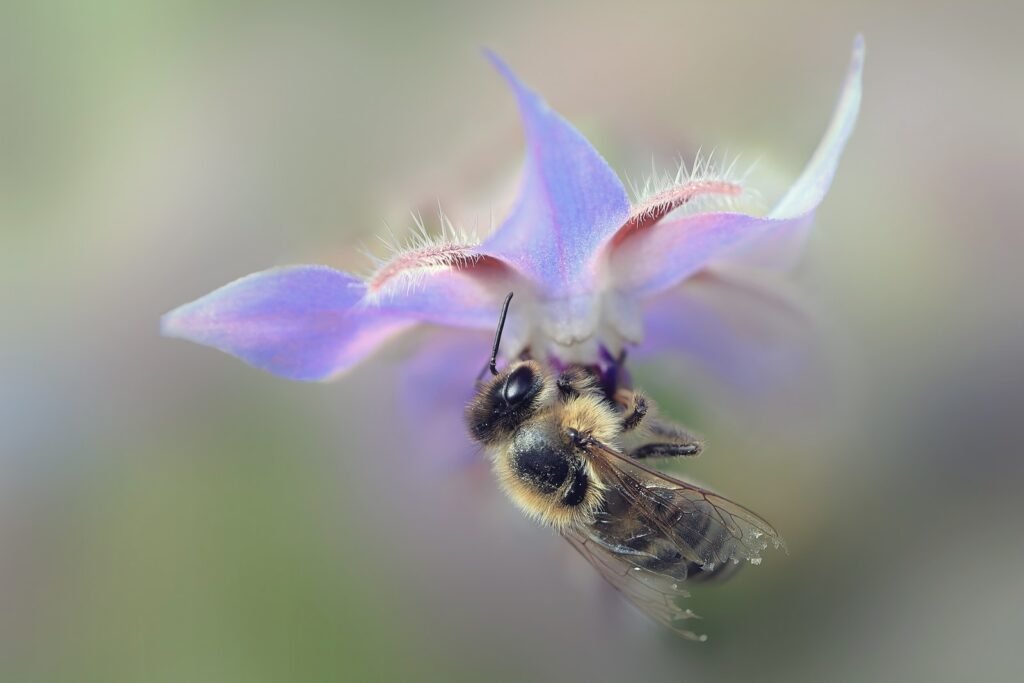
Two honest warnings. First, borage is a big, sprawling, slightly bristly plant, so give it a corner or an end of the bed rather than squeezing it between tomatoes where it will elbow them for space. Second, it self-seeds with real enthusiasm. Many gardeners consider this a gift — free plants every year, forever — but if you like a tidy, controlled bed, pull up the seedlings you do not want while they are small, or deadhead before the seed drops.
Nasturtiums: The Willing Sacrifice
Nasturtiums play a different role: they are a trap crop. Aphids, particularly blackfly, often find nasturtiums at least as attractive as the crops you are protecting, and will colonise a nasturtium happily while leaving neighbouring plants comparatively alone. The arrangement only works if you accept the deal — the nasturtium is supposed to get infested. Check it regularly, and when a stem is thick with aphids, snip it off and bin it, taking a crowd of pests with it. What you must not do is plant a trap crop and then ignore it, because a neglected nasturtium eventually becomes an aphid nursery that spills over onto everything else.
Keep a little distance, too. Nasturtiums scramble and sprawl, and a plant that starts as a neat mound in June can be climbing through your tomato foliage by August, tangling stems and trapping damp air where you least want it. Plant them at the edge of the bed or the corner of a pot group, let them trail outward, and trim back any stems that head for the tomatoes. As a bonus, the flowers and young leaves are edible and peppery, and few plants flower more generously for less effort.
Asparagus: The Old Classic
Asparagus and tomatoes are one of the oldest recorded companion pairings, and the traditional reasoning runs both ways: tomatoes are said to repel the asparagus beetle, while asparagus is said to discourage certain soil pests that trouble tomatoes. As with much of the old lore, the tidy two-way story is hard to prove, but the pairing works on plain practical grounds. Asparagus is a perennial that does its cropping early, in spring, before tomatoes are even planted out. Its feathery foliage is tall but light and airy, casting little real shade, and once the asparagus season ends, the space and light fit neatly around a tomato season that is just beginning.
Peppers: Good Neighbours, With One Caution
Sweet and chilli peppers make natural bedfellows for tomatoes. They want the same things — sun, warmth, shelter, regular watering, and decent soil — they grow to a manageable size that will not shade the tomatoes out, and growing them together makes feeding, watering, and general care simple because one routine suits the whole bed.
The caution is real, though: peppers and tomatoes are close relatives in the nightshade family, which means they share many of the same diseases and some of the same pests. If blight or another disease takes hold of one, the other is an easy next stop, and problems can build up in soil where nightshade crops follow each other year after year. None of this means do not grow them together — most gardeners do, successfully — but it does mean rotating the whole group to a different bed each year, spacing for airflow, and removing sickly plants promptly rather than hoping they recover.
What Not to Plant Near Tomatoes
A short list of plants genuinely earns its distance. Fennel is the clearest case: it is famously unfriendly to most vegetables, its roots and foliage release compounds that many plants dislike, and in return almost nothing does fennel any good either. It is also tall, feathery, and keen to self-seed. Grow it in its own corner, well away from the vegetable beds, and enjoy it there.
Sweetcorn is a poor neighbour for a different reason: it shares some significant pests with tomatoes, including the corn earworm, which is just as happy eating a tomato fruit as a corn cob. A stand of sweetcorn also casts moving shade and drinks heavily at exactly the height of summer. The two crops are not enemies, but planting them apart makes pest watching much simpler.
Potatoes are the most important one to keep away. They are close tomato relatives and share the same devastating disease: late blight. Blight that starts on potato foliage can move to tomatoes with miserable speed in a wet summer, and vice versa. Keeping the two crops in different parts of the garden — and rotating both — is one of the few companion-planting rules that is close to non-negotiable. Give them distance, and never compost blighted material from either.
Brassicas — cabbages, kale, broccoli, and their relatives — come with a debated reputation. You will read confident claims in both directions: that brassicas stunt tomatoes, and that they grow perfectly well together. The fairest summary is that both are heavy feeders with big appetites, so side by side they compete hard for food and water, and whichever is planted second tends to sulk. It is competition rather than poison. If space forces them together, feed and water generously; if you have a choice, give each its own bed and save yourself the argument.
Spacing and Airflow: The Rule That Outranks All Others
Every benefit in this article disappears if your companions crowd your tomatoes. Tomato diseases — blight above all — thrive in still, damp air and on foliage that stays wet for hours after rain or watering. A tomato plant hemmed in by basil, marigolds, lettuce, and a enthusiastic nasturtium may look abundant, but if air cannot move through it, you have built a disease incubator with flowers on it.
Keep the area immediately around each tomato stem reasonably clear, prune out the side shoots on cordon varieties, and strip the lowest leaves as the season goes on so air can circulate at the base. Companions belong in the gaps, at the edges, and under the canopy — not packed against the stem. Water at the base of the plants rather than over the foliage, ideally in the morning, and keep the generous spacing your tomato variety asks for even if it means planting two fewer companions. Companion planting should fill spare space, never steal needed space. For the wider picture on keeping pests and diseases at bay without reaching for chemicals first, our guide to how to control garden pests naturally works through the options in a sensible order.
Practical Tips for Companion Planting With Tomatoes
Start with two or three companions, not nine. Basil at the base, marigolds along the edge, and lettuce underneath is a complete, manageable scheme for most beds. You can add borage or nasturtiums the following year if you have the room and the appetite for more.
Plant companions at the right moment for the companion, not just the tomato. Basil goes in only when nights are mild; lettuce sown in a heatwave sulks; marigolds planted out too early get checked by cold. A companion that never thrives does nothing for anybody.
Common Mistakes Gardeners Make
The biggest mistake is overcrowding, and it has already been mentioned once in this article on purpose. Gardeners plant tomatoes at the right spacing, then fill every gap until the bed is a jungle, and then wonder why blight arrived in August. Leave air room. A slightly emptier bed with healthy plants outproduces a stuffed one nearly every time.
The second mistake is planting the wrong relatives nearby — potatoes above all, and fennel anywhere near the vegetable beds at all. These are not matters of opinion or fine margins; they are the two pairings most likely to cause genuine harm, so check them before you check anything else.
The third is expecting companions to replace pest control entirely. Marigolds and basil may tilt the odds, but aphids, caterpillars, and blight will still visit a companion-planted bed. Gardeners who believe the companions have everything handled stop checking their plants — and regular checking, especially under leaves, is what actually catches problems while they are still small.
Finally, do not let companions shade out young tomatoes. A vigorous neighbour planted too close in May, when the tomato is small, can set it back for weeks. Give tomatoes the sunny centre of the bed and companions the supporting roles, and add the pushier plants like borage and nasturtiums once the tomatoes are tall enough to hold their own.
Frequently Asked Questions
What is the very best companion plant for tomatoes?
If you have to pick one, basil is the safest answer: it wants the same conditions, stays compact, shades the soil at the base, smells wonderful, and is the ingredient you will reach for at harvest anyway. Marigolds run it close for flower power and sheer usefulness to insects. Most gardeners end up growing both.
Do marigolds really protect tomatoes from nematodes?
Only partly, and with conditions. The effect is linked to compounds released by the roots of certain marigold varieties growing in the soil over a full season, which suggests a dense planting grown in the bed for months does more than a single plant beside a tomato. They are still worth growing for the beneficial insects they attract — just do not treat them as a guaranteed cure for a nematode problem.
Can I grow tomatoes and potatoes in the same bed if I am careful?
It is strongly discouraged. Both crops suffer from late blight, and the disease moves between them easily in wet weather. Careful spacing reduces many risks in gardening, but this is one where distance and rotation are the real protection. Keep them in different beds, ideally in different parts of the garden.
How close should I plant companions to my tomatoes?
Close enough to share the bed, far enough to breathe. Low companions such as basil and lettuce can sit around thirty centimetres from the stem, at the edge of the plant’s canopy, while bigger or trailing plants like borage and nasturtiums belong at the ends and edges of the bed. If you cannot push a hand easily between the plants at soil level, they are too tight.
Will companion planting improve the flavour of my tomatoes?
There is no reliable evidence that any companion changes a tomato’s flavour in the ground. Flavour comes from the variety, the sunshine, the soil, and how you water. Basil improves the flavour of tomatoes on the plate, which is where the famous pairing truly earns its reputation.
Final Thoughts
The best companion plants for tomatoes are not magic, and that is fine. Basil and marigolds at the base, lettuce in the shade underneath, carrots and alliums in the gaps, borage for the bees at the end of the bed, and a nasturtium standing guard at the corner — together they make a tomato bed that is fuller, livelier, better covered, and more visited by helpful insects than bare soil and lonely plants ever are. Keep potatoes and fennel at a distance, guard your spacing and airflow fiercely, and keep up the basic care the plants actually depend on.
Start simple this season, watch what happens in your own garden, and build from there. Companion planting rewards gardeners who observe — and few crops repay observation like a tomato ripening in the sun with basil at its feet.