

After a long, grey winter, there is nothing quite like the first real flush of colour in the garden, and choosing the best flowering plants for spring is how you make sure that moment actually arrives. Spring flowers do not happen by accident. Most of them were planned months earlier, tucked into the soil in autumn, or coaxed through the cold as hardy perennials and early annuals that can shrug off a frosty night. Once you understand that timing, spring stops feeling like luck and starts feeling like a season you have designed.
The lovely thing about spring is how much choice you have, even in a small space. You can fill borders with tulips and daffodils, edge a path with primroses and violas, tuck forget-me-nots under shrubs, or fill pots by the front door with pansies that flower for weeks. Some spring plants give you a brief, spectacular burst and then quietly disappear until next year. Others, like wallflowers and lungwort, bridge the gap towards early summer and keep pollinators fed when they need it most.
This guide walks through the most reliable spring bulbs, perennials, annuals, and blossom shrubs, with honest notes on when to plant them, where they grow best, and what to expect in different climates. In zones 5–8, most of the plants here are straightforward. In colder zones you may need to plant a little later or choose later-flowering varieties, and in warmer zones 9–10 some bulbs need a period of chilling before they will perform well. Wherever you garden, the principle is the same: plant in layers, stagger the flowering times, and you will have colour from the first mild days right through to the start of summer.
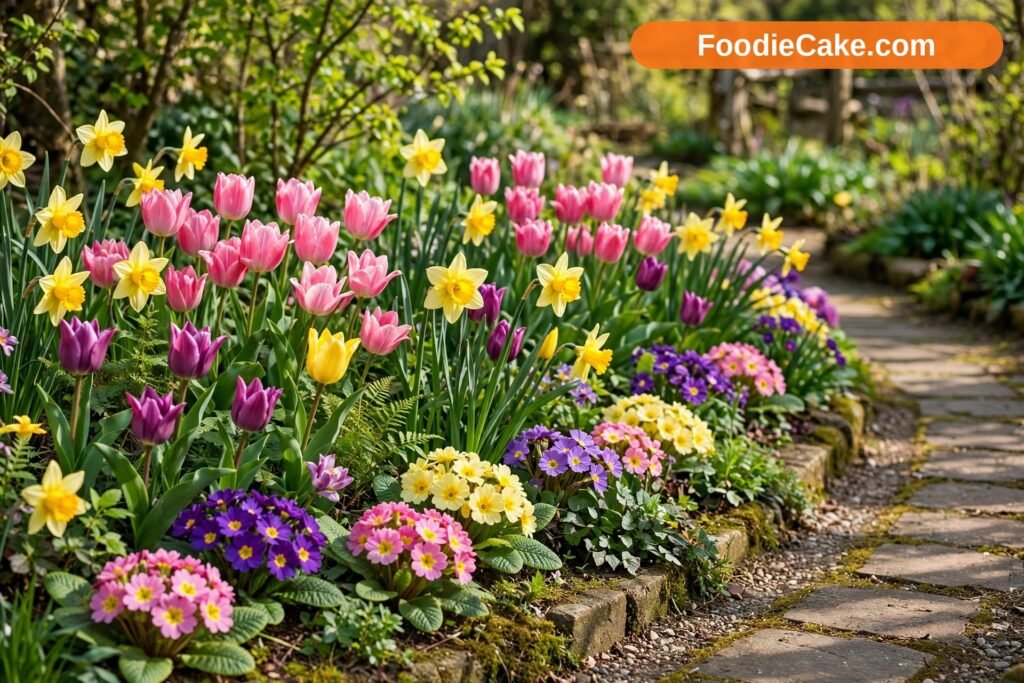
Spring Bulbs to Plant in Autumn
If you want flowers in March, April, and May, the work starts the previous autumn. Spring bulbs contain almost everything the flower needs inside the bulb itself, which is why they can push up through cold soil so early. Plant them while the soil is still workable but the weather has cooled, usually from September to November in zones 5–8, a little earlier in colder areas and a little later where winters are mild. A good rule is to get bulbs in at least a few weeks before the ground freezes hard, so roots can settle before winter locks in.
Daffodils are the backbone of almost every spring garden, and for good reason. They are forgiving, long-lived, and largely ignored by deer and rodents, which cannot be said for tulips. Classic yellow varieties such as ‘King Alfred’ types still earn their place, but there are softer options too: white ‘Thalia’ with its delicate, nodding flowers, pale lemon ‘W.P. Milner’ for small spaces, and fragrant multi-headed types like ‘Geranium’ for cutting. Plant daffodils about three times as deep as the bulb is tall, in sun or light shade, and leave the foliage to die back naturally for at least six weeks after flowering. That untidy period is not wasted time — the leaves are refilling the bulb for next year.
Tulips give you the sharpest colours and the most formal shapes. Single early tulips flower first, followed by Triumph types, then the tall Darwin hybrids and elegant lily-flowered varieties in late spring. ‘Apeldoorn’ and other Darwin hybrids are among the most likely to come back for several years, especially in well-drained soil. Many modern tulips, though, are best treated as a one- or two-season display, particularly in heavy clay or in warmer zones where they do not get enough winter chill. In zones 9–10, pre-chilled bulbs planted in midwinter often give the most reliable show. Plant tulips a little deeper than the packet suggests if you hope they will return, and always in soil that does not sit wet through winter, or the bulbs will rot before they ever flower.
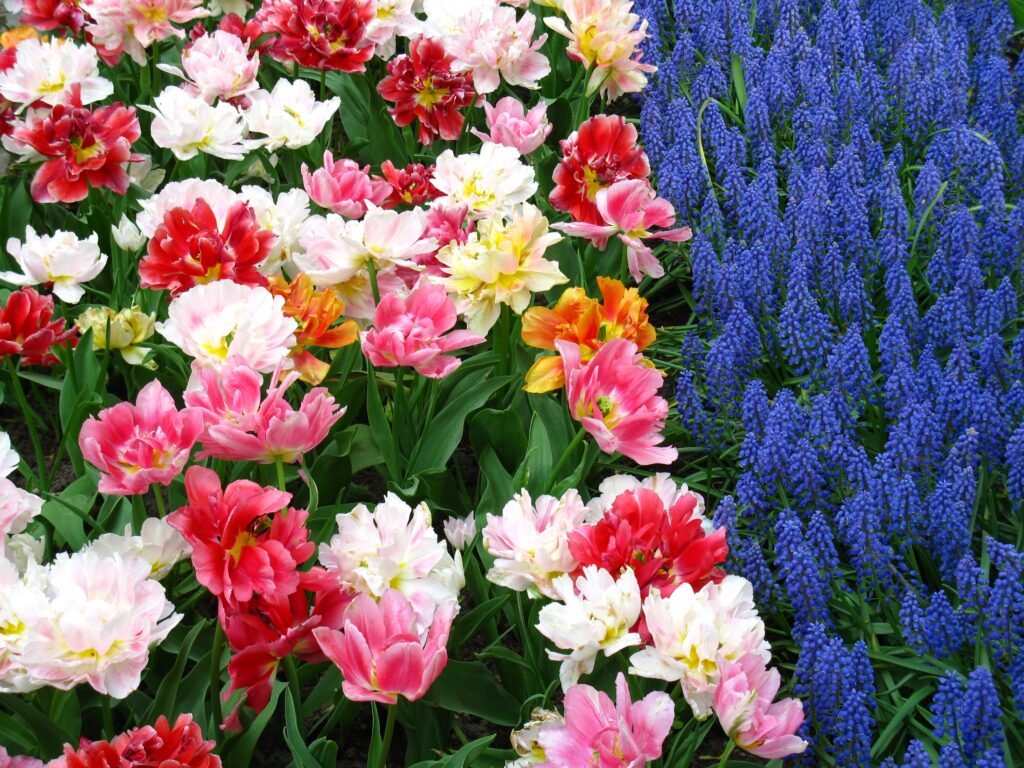
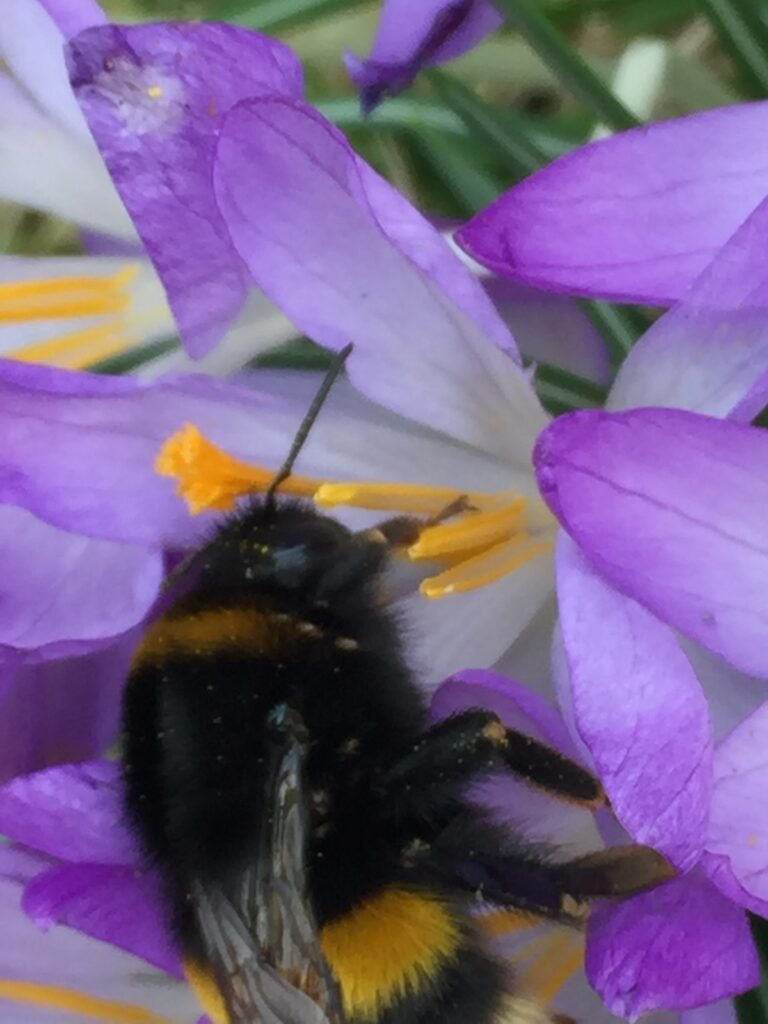
Do not overlook the smaller bulbs, because they are often the first to appear and the easiest to naturalise. Snowdrops push up as early as late winter, sometimes through frost, with simple white bells that look best in drifts under deciduous trees. Crocuses follow close behind in purple, gold, and white, opening wide on sunny days and feeding early bees. Grape hyacinths, or muscari, send up tight spikes of blue that pair beautifully with tulips and last well in pots. Siberian squill, glory-of-the-snow, and winter aconites all belong in this early group too. Plant these small bulbs in generous handfuls rather than lonely singles — spring always looks more generous in groups.
Hyacinths deserve a special mention for scent. A few bulbs near a doorway or in a pot you pass every day will perfume a whole corner of the garden in April. They are dense, formal, and short-lived compared with daffodils, and the heavy flower heads sometimes need a little support in wind. Grow them where you will actually smell them, replace them every few years as the spikes loosen, and do not be disappointed when the second-year flowers are smaller. That is normal hyacinth behaviour, not something you did wrong.
Early Perennials That Return Every Year
Bulbs give spring its fireworks, but perennials give it staying power. These are plants that die back or rest over winter and return, often a little stronger each year, filling the gaps between bulb displays and carrying interest forward once the tulips fade. Many early perennials also cope better with shade than bulbs do, which makes them invaluable under trees and along north-facing walls.
Hellebores are among the earliest and most valuable of all. Lenten roses, mainly hybrids of Helleborus × hybridus, flower from late winter into mid-spring in shades of white, plum, dusky pink, and near-black, with speckled and double forms if you like something fancier. They prefer partial shade and soil that does not dry out completely, and once settled they dislike being moved, so choose the spot carefully. Cut away the old, tatty leaves in late winter so the flowers show cleanly, and let seedlings appear if you want free plants — they will not come true to the parent colour, but that variety is part of the charm.
Primroses and polyanthus bring cheerful, low colour to edges, pots, and damp shade. The common primrose, Primula vulgaris, has soft yellow flowers and a quiet woodland feel, while polyanthus types raise their flowers on stems in bolder reds, blues, and yellows. They like moisture-retentive soil and will sulk in a hot, dry border, so save them for cooler spots or spring pots you water regularly. Divide crowded clumps after flowering to keep them vigorous. In warmer zones, treat primroses more as cool-season plants and give them afternoon shade, because heat ends their display quickly.
Lungwort, or Pulmonaria, is a workhorse for shade that too many gardeners overlook. Its spotted leaves look good long after the flowers finish, and the flowers themselves, often opening pink and ageing to blue on the same plant, are a magnet for early bees. Varieties such as ‘Blue Ensign’ and ‘Sissinghurst White’ are reliable and tidy. Cut the foliage back after flowering if it looks mildewed in a dry summer, and fresh leaves will follow. Lungwort pairs well with hostas, ferns, and spring bulbs poking up through it, which makes it a useful groundcover plant rather than just a flower.
Brunnera, sometimes called false forget-me-not, does a similar job with heart-shaped leaves and clouds of tiny blue flowers in mid-spring. The silver-leaved variety ‘Jack Frost’ lights up a shady corner and holds its looks into autumn. Aubrieta is the opposite kind of plant: a sun-loving, low spreader for walls, rockeries, and the tops of retaining edges, smothered in purple, mauve, or pink flowers in spring. It needs sharp drainage and a haircut after flowering to stay compact. Bleeding heart, now classified as Lamprocapnos spectabilis, adds arching stems of pink-and-white hearts in late spring and prefers cool, moist shade. It often goes dormant in summer heat, so plant something leafy beside it to fill the space.
If you are just starting out, combining a few of these perennials with some easy flowers to grow for beginners gives you a border that returns each year without needing to be replanted from scratch every season. That mix of permanent planting and simple seasonal colour is what makes a spring garden feel established rather than improvised.
Reliable Spring Annuals and Biennials for Instant Colour
Perennials take time to settle, and bulbs must be planted months ahead. Annuals and biennials fill the gap when you need colour now, or when you moved house in February and missed the autumn bulb season entirely. Some are sown the previous year and overwinter as small plants, while others are bought as young plants in spring and settle in quickly once the worst frosts have passed.
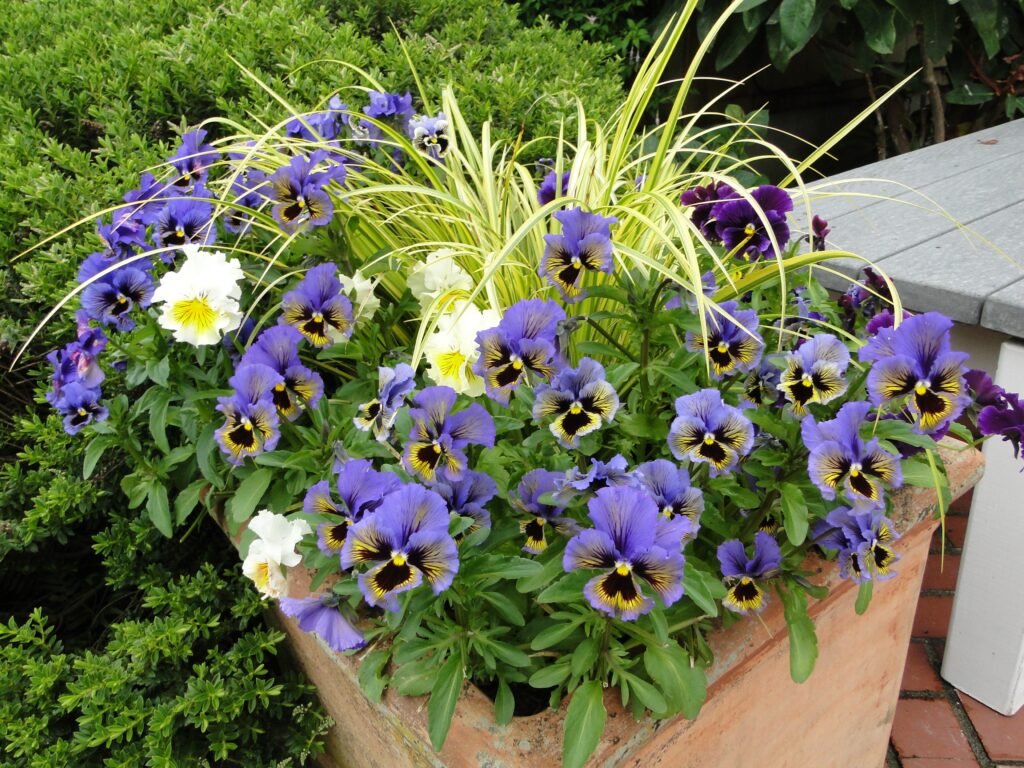
Pansies and violas are the dependable answer for pots, window boxes, and border edges. Violas have smaller flowers but often more of them, and both will flower through mild spells in winter and then surge in spring. They prefer cool weather, so in zones 8–10 they are at their best in late winter and early spring before the heat arrives, while in zones 5–7 they can carry on much longer with regular deadheading and watering. Remove faded flowers to keep new buds coming, feed pots lightly, and do not let containers dry out completely. A pansy that has wilted flat on a sunny morning often recovers by evening after a good drink, but repeated drying shortens its life.
Wallflowers are technically short-lived perennials or biennials, usually grown by sowing in late spring or early summer for flowers the following spring. That wait is worth it. Few spring plants match a wallflower for scent on a warm afternoon, and the colour range, from burnt orange and crimson to soft yellow and purple, suits both cottage borders and formal pots. ‘Cloth of Gold’ and ‘Blood Red’ are old, trusted names, and there are longer-lived perennial types such as ‘Bowles’s Mauve’, which flowers for months, though it may not survive a hard winter in colder zones. Plant wallflowers in sun and well-drained soil, pinch out the tips of young plants for bushiness, and accept that the biennial types are finished after flowering.
Forget-me-nots sow themselves so happily that many gardeners only ever plant them once. Their soft blue haze in April and May is the perfect foil for tulips, softening stiff bulb displays and hiding fading bulb foliage. Sow in summer for the following spring, thin the seedlings where they land thickly, and pull out the plants once they set seed and turn scruffy — by then the seed for next year is already in the soil. Sweet William, stocks, and Canterbury bells are other classic biennials worth the patience, giving scented, cottage-style flowers in late spring if sown the year before.
For a quicker result, hardy annuals such as calendula, cornflowers, and nigella can be sown in autumn in mild areas for earlier flowers, or in early spring where winters are hard. Calendula in particular earns its place: bright, unfussy, good for cutting, and cheerful in a pot by the kitchen door. None of these plants is demanding, but all of them reward decent soil preparation. A border that has been forked over, cleared of perennial weeds, and enriched with compost will always outgrow one where seedlings were scattered onto compacted ground and left to fend for themselves.
Shrubs and Small Trees for Spring Blossom
Flowers at eye level change the whole feel of a spring garden. A single blossom shrub or small tree gives height, scent, and a sense of occasion that low planting cannot match, and many of them flower before their leaves fully open, which makes the display look even more dramatic. If you only have room for one, choose it for your soil and space rather than for a photograph you saw, because a happy shrub will outflower a struggling one every year.
Forsythia is often the first shrub to announce spring, covering bare stems with bright yellow bells in early spring. It is tough, fast-growing, and easy, sometimes too easy — give it room, and prune it straight after flowering by cutting out some of the oldest stems at the base. Prune it in winter and you simply cut off the flowers you were waiting for. Flowering currant, Ribes sanguineum, follows with hanging clusters of pink or red flowers that bees love, though some people dislike the scent of its leaves, so plant it where you pass rather than where you sit. Lilac comes later in spring, with heavily scented purple, white, or pink panicles. Lilacs prefer sun, neutral to alkaline soil, and good air flow, and they flower best after a cold winter, which is why they can disappoint in very mild zones 9–10.
Magnolias are the showstoppers. Magnolia stellata opens white, starry flowers on a compact bush suited to smaller gardens, while the saucer magnolias, Magnolia × soulangeana types, make small trees with goblet flowers in pink and white. Their weakness is late frost, which can brown open flowers overnight, so a sheltered spot out of a frost pocket helps, and morning sun directly on frozen petals makes damage worse. Camellias flower from late winter into spring in shades of red, pink, and white and need acidic, moisture-retentive soil and shelter from cold winds — in alkaline soil they turn yellow and miserable, so grow them in pots of ericaceous compost if your soil does not suit them.
Ornamental cherries range from clouds of pale pink on street-sized trees to neat columnar forms for small plots. ‘Kanzan’ is bold and double, flowering quince offers coral and red flowers on a thorny shrub that suits a wall, and amelanchier, or serviceberry, gives delicate white blossom, edible berries for birds, and good autumn colour in one small tree. For many small gardens, amelanchier is honestly the best value of the lot. Crab apples deserve the same praise: varieties such as ‘John Downie’ and ‘Evereste’ give spring blossom, summer shade, and autumn fruit for jelly or for the birds, all with very little fuss once established.
Planning a Sequence So Something Is Always in Flower
The most common spring disappointment is not a lack of flowers. It is everything flowering at once for ten glorious days, followed by six weeks of green. The fix is sequencing: choosing early, mid-season, and late-spring plants so the display rolls forward instead of peaking and collapsing. Think of it in waves. Snowdrops, crocuses, and hellebores start the season. Daffodils, hyacinths, and forsythia carry the middle of early spring. Tulips, wallflowers, and flowering cherries take over in mid-spring. Then lilac, alliums, and the first early perennials close the season and hand over to summer.
Layering helps as much as timing. Plant bulbs underneath perennials so the perennial foliage grows up and hides the bulbs’ dying leaves. Put tulips through a carpet of forget-me-nots, daffodils behind emerging hostas or daylilies, and small bulbs in lawn edges or under shrubs where a little untidiness does not matter. In pots, layer bulbs at different depths in the same container — late tulips deepest, daffodils above them, crocuses or muscari near the top — and you will get weeks of flowers from one pot. Gardeners often call this a bulb lasagne, and it works best in a deep container with free-draining compost and a position in sun.
Colour planning matters less than people fear. Spring colours are naturally harmonious, and soft yellows, blues, pinks, and whites rarely clash in the fresh spring light. The combinations that sing are usually simple: blue muscari under pink tulips, white daffodils with blue brunnera, purple aubrieta tumbling over a wall above yellow primroses. If you love bolder colour, let wallflowers and tulips do it in one bed rather than scattering strong colours everywhere. Also plan for what follows. A border built only for April looks empty by June, so weave in plants chosen as flowers that bloom all summer and your spring stars will have company once their moment passes.
Keep a simple note of what flowered when in your garden. Dates shift with the weather — a mild winter can bring everything forward by two weeks, and a cold spring can hold bulbs back — but after one or two seasons your own notes will be more useful than any chart, because they describe your soil, your shade, and your frost pockets, not an average garden in an average year.
Planting and Care Basics for Spring Flowers
Most spring plants fail for ordinary reasons: planted too late, too shallow, in soil that stays waterlogged, or in more shade than they can tolerate. Get the basics right and even inexpensive bulbs and bedding plants will reward you. Start with drainage. Bulbs in particular will rot in standing water, so on heavy clay, work in grit or coarse compost, plant on a slight mound or in raised beds, or choose plants that enjoy moisture, like primroses and lungwort, for the wettest spots.
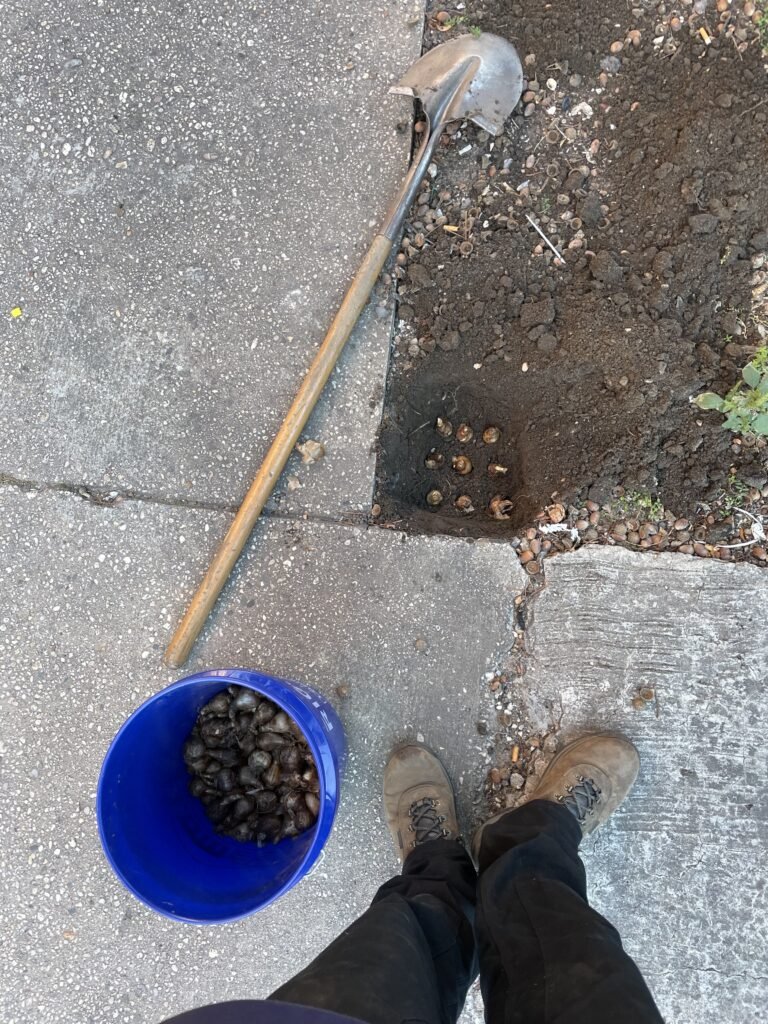
Depth matters for bulbs. As a guide, plant a bulb two to three times as deep as it is tall, with the pointed end facing up. Too shallow and tall tulips and daffodils flop or get dug up; too deep and small bulbs may struggle to emerge. Spacing can be closer than packets suggest for a fuller display, especially in pots, as long as bulbs are not touching. Water after planting if the soil is dry, then let autumn and winter rain do most of the work.
Feeding should be modest and well timed. A general fertiliser or a handful of compost worked into the soil at planting helps perennials settle, and a liquid feed for pots keeps pansies and other container plants flowering. Avoid heavy nitrogen feeds that push soft leaf at the expense of flowers. For bulbs you want to keep, feed as the flowers fade and leave every leaf in place until it yellows — removing green bulb foliage is the surest way to get blind, flowerless bulbs the following year.
New perennials and shrubs need watering through their first dry spells, even though they will be drought-tolerant later. Mulching with compost or bark after planting keeps moisture in, suppresses weeds, and improves the soil as it rots, but keep mulch away from the crowns of plants that dislike winter wet, such as aubrieta. Deadhead annuals and repeat-flowering plants regularly, support tall tulips and hyacinths in exposed gardens if they lean, and watch for slugs on young, soft growth in mild, wet springs. Hellebore leaves, primrose flowers, and emerging hosta shoots are all on the slug menu, so check in the evening and act early rather than after the damage is done.
Practical Tips for a Longer, Better Spring Display
Plant more bulbs than you think you need, in fewer places. Ten tulips dotted singly around a border disappear; ten in one drift look like a deliberate, generous planting. The same goes for crocuses and muscari, which only make an impact in groups.
Buy bulbs early in the season while they are firm and fresh, and plant them promptly rather than leaving the bag in a warm shed until December. If planting is delayed, keep bulbs cool, dry, and ventilated. Soft, mouldy, or shrivelled bulbs rarely recover.
Use pots to cheat the season. Containers by the door can be planted densely, moved into view at their peak, and whisked away when they finish. A pot of tulips in full flower placed into a gap in the border is a perfectly respectable gardening trick, and nobody needs to know.
Sow and plant for the bees as well as for yourself. Single, open flowers on pulmonaria, crocuses, flowering currant, and fruit blossom are far more useful to early pollinators than tightly double blooms they cannot get into. A mix of both gives you the show and the wildlife value.
Take photographs at the peak and make notes straight away. By autumn, when it is time to order and plant bulbs again, you will have forgotten exactly where the bare patch was in April, and the photos will tell you precisely where the new daffodils need to go.
Common Mistakes and Problems, and How to Avoid Them
Planting bulbs too late is the classic error. Bulbs planted into frozen or waterlogged midwinter soil root poorly and flower late, short, or not at all. If you do find a forgotten bag in January and the bulbs are still firm, plant them anyway — a late, modest flower is better than a wasted bulb — but treat it as a rescue, not a plan.
Cutting bulb foliage off too early comes a close second. The tidy instinct is understandable, but those leaves are next year’s flower being made. Knot them, fold them, hide them behind perennials if you must, but do not remove them while they are still green and working. Six weeks after flowering is the usual minimum before tidying.
The wrong plant in the wrong place causes most of the rest. Camellias and magnolias browned by frost were often planted in a frost pocket or where early sun hits frozen flowers. Tulips vanishing after one year are usually in wet soil, in too much shade, or in a warm climate without enough chill. Primroses crisping in a sunny border wanted moisture and shade. Before blaming the plant, check the match between the plant and the spot — moving a perennial in autumn fixes more problems than feeding it ever will.
Overcrowding and neglect show up slowly. Daffodil clumps that flower less each year are often congested and benefit from lifting, dividing, and replanting after the foliage dies down. Perennials such as pulmonaria and brunnera also thicken into tired clumps over several years; a division every few years, in spring or autumn, restores their energy. Finally, watch for squirrels and mice digging up fresh bulbs, especially tulips and crocuses. A layer of chicken wire or coarse grit over the planting area, removed once shoots are up, deters most raiders without harming the plants.
Frequently Asked Questions
What are the easiest spring flowers to grow?
Daffodils, crocuses, muscari, snowdrops, pansies, and violas are among the easiest. Daffodils in particular plant once and return for years in most soils and are rarely eaten by animals. If you want instant colour with almost no planning, pots of violas bought in flower in early spring are hard to beat.
When should I plant spring bulbs?
Plant most spring bulbs in autumn, from September to November in zones 5–8, before the ground freezes. Tulips are often planted a little later than daffodils, once the soil has cooled, which helps reduce disease problems. In warmer zones 9–10, plant pre-chilled tulips and hyacinths in midwinter for the best results.
Which spring flowers come back every year?
Perennials such as hellebores, primroses, lungwort, brunnera, and aubrieta return each year, and so do many bulbs, especially daffodils, snowdrops, crocuses, and muscari. Tulips are less predictable — Darwin hybrid types are the most likely to return, while many modern varieties are grown as a shorter display.
What spring flowers are best for pots?
Tulips, hyacinths, muscari, pansies, violas, and primroses all do well in pots. Layering bulbs at different depths in one deep container gives the longest display. Use free-draining compost, make sure the pot has drainage holes, and water during dry spells, because containers dry out much faster than borders.
Which spring plants are good for bees?
Choose single, open flowers that bees can reach. Crocuses, lungwort, flowering currant, muscari, hellebores, and fruit blossom are all valuable early food sources. Avoid relying only on tightly double varieties, which look showy but often offer little nectar or pollen.
Final Thoughts
A good spring garden is really a gift you send to your future self. You plant bulbs on a damp autumn afternoon when nothing is flowering, you tuck in wallflower seedlings in summer, you divide a primrose when you would rather sit down — and then, months later, on the first mild morning of the year, the garden pays you back all at once.
Start with the reliable core: daffodils and crocuses for bulbs, hellebores and lungwort for shade, pansies and wallflowers for colour and scent, and one blossom shrub if you have room. Add the plants that caught your eye this year, note what worked, and build on it next autumn. Spring rewards that steady, layered approach more than any single expensive plant, and within a couple of seasons you will have a display that starts earlier, lasts longer, and feels unmistakably yours.