Easy Flowers to Grow for Beginners
The easy flowers to grow for beginners share a few kind qualities: they germinate without fuss, they do not demand perfect soil, and they keep blooming even when you forget about them for a week. If you have never grown flowers before, that forgiveness matters far more than having the rarest or most fashionable plant in the border.
You also do not need a big garden. Most of the flowers in this guide will grow happily in a sunny bed, a border next to a fence, or pots on a patio and doorstep. A few packets of seed, a bag of compost if you are using containers, and a watering can will get you started. Flowers ask for less from the kitchen-garden side of you and give something different back: colour for months, food for bees and butterflies, and stems you can cut and bring indoors.
Begin where you are. Choose two or three flowers from this list, sow them at the right time for your area, and learn how they behave in your soil and weather. One successful season teaches you the basics, sowing, watering and deadheading, that apply to almost every flower you will grow afterwards. Confidence, like compost, builds up quietly layer by layer.
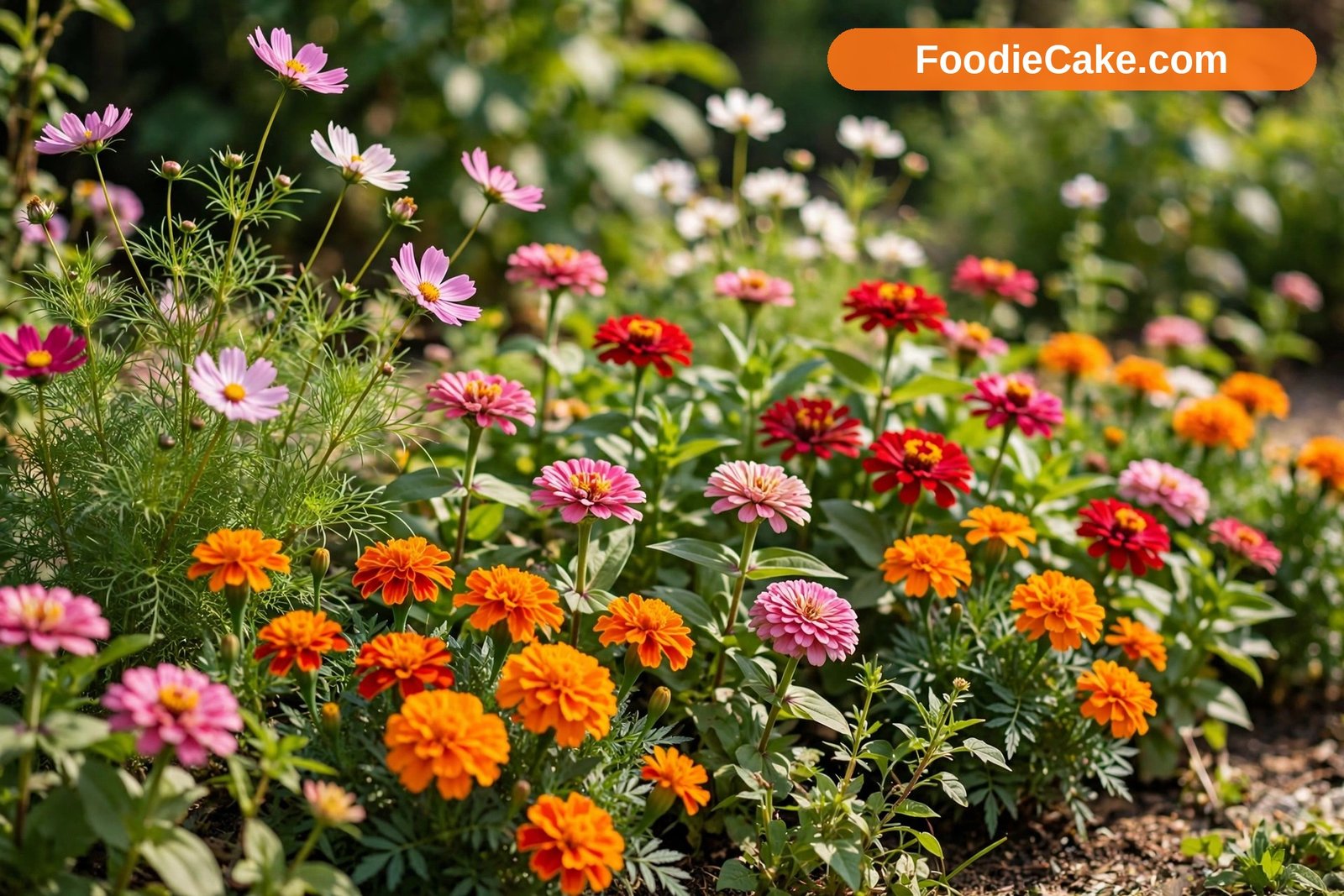
Before You Sow: Three Decisions That Shape the Whole Season
Every flower in this guide will forgive a beginner, but three small decisions made before you sow will decide whether your first season feels easy or feels like a fight. They take ten minutes, and they save a summer of corrections.
The first decision is annual or perennial. Annuals grow, flower, set seed and finish all in one season. Marigolds, zinnias, cosmos and sunflowers are annuals. Their great advantage for a beginner is speed and generosity: sow in spring and you will have flowers the same summer, often for months. If something goes wrong, nothing long-term is lost, and you can try a different flower in the same spot next year. Annuals are also inexpensive, because a single packet holds enough seed for far more plants than most gardens need.
Perennials come back year after year once they are established. Geraniums in pots, properly called pelargoniums, are often treated as summer annuals in cold climates but can be kept for years under cover. True hardy perennials take a little more patience, because many flower lightly in their first year while they build roots. They reward that patience by asking for very little later on. For a first flower garden, annuals are usually the better starting point, perhaps with a few pots of geraniums alongside. They show you results quickly, fill gaps in existing borders, and let you experiment with colour without commitment.
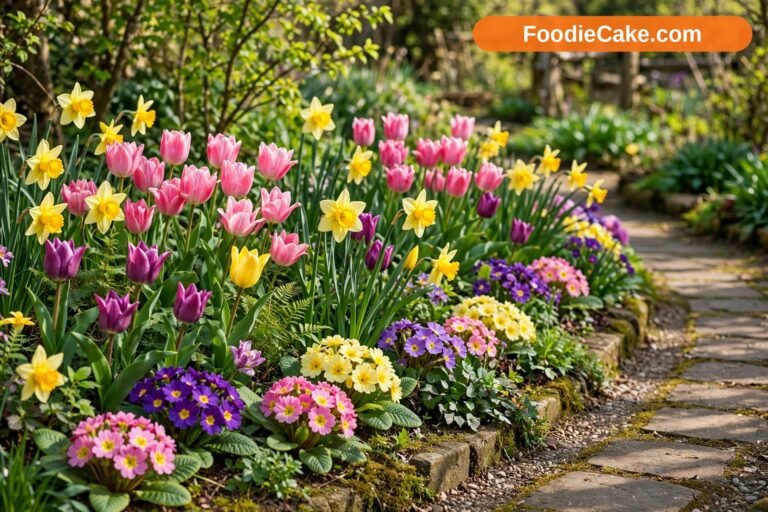
One more distinction helps: hardy annuals tolerate frost and can be sown directly outdoors, sometimes even in autumn in mild areas. Half-hardy annuals, such as zinnias and marigolds, dislike frost and are sown indoors or outdoors only after the weather warms. The packet will tell you which type you have, and it is worth believing it. If you are planning a spring display, it is worth looking at the best flowering plants for spring to see which early flowers pair well with the summer annuals in this guide.
The second decision is where the sun falls. Six or more hours of direct sun is the difference between sturdy, floriferous plants and thin ones that lean and disappoint. Watch your garden for a day before you sow, and note where the sun lingers. That sunny patch is where the marigolds and zinnias belong. If your only space is partly shaded, lean on calendula and nasturtiums, and accept slightly fewer flowers with good grace.
The third decision is pots or ground. Nearly all of these flowers suit pots and containers, which is ideal if you garden on a patio, a balcony, or land you do not own. Petunias and geraniums were made for pots. Compact zinnias such as the Profusion series, French marigolds, nasturtiums, dwarf sunflowers and calendula all grow well in containers of decent size with drainage holes and regular watering. Nothing needs to be dug in permanently, and a pot garden can move with you.
Meet the Eight: A Flower-by-Flower Field Guide
Each flower below is widely available, well tested in ordinary gardens, and honest about its needs. The details on sowing, sun and bloom time will help you place them where they will thrive rather than merely survive. Read the whole list once, then pick your two or three.
Marigolds
Sow or transplant: Either — start indoors for earlier flowers, or direct sow after frost. Sun: Full sun. Bloom period: Late spring or early summer until the first frost.
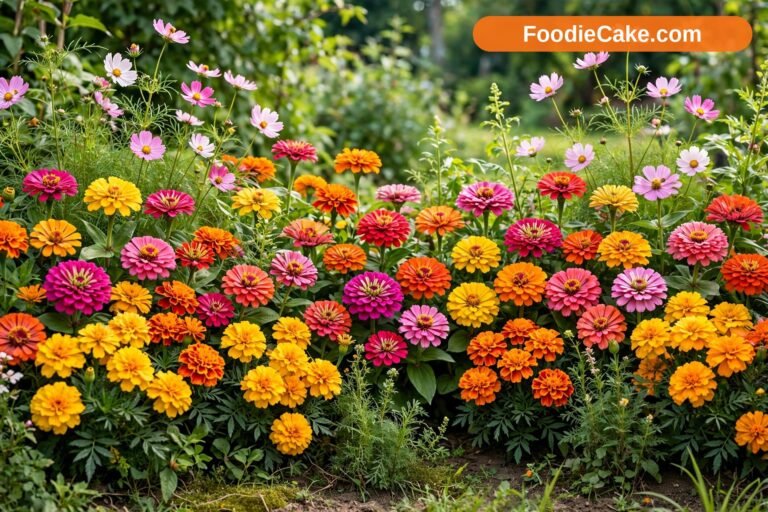
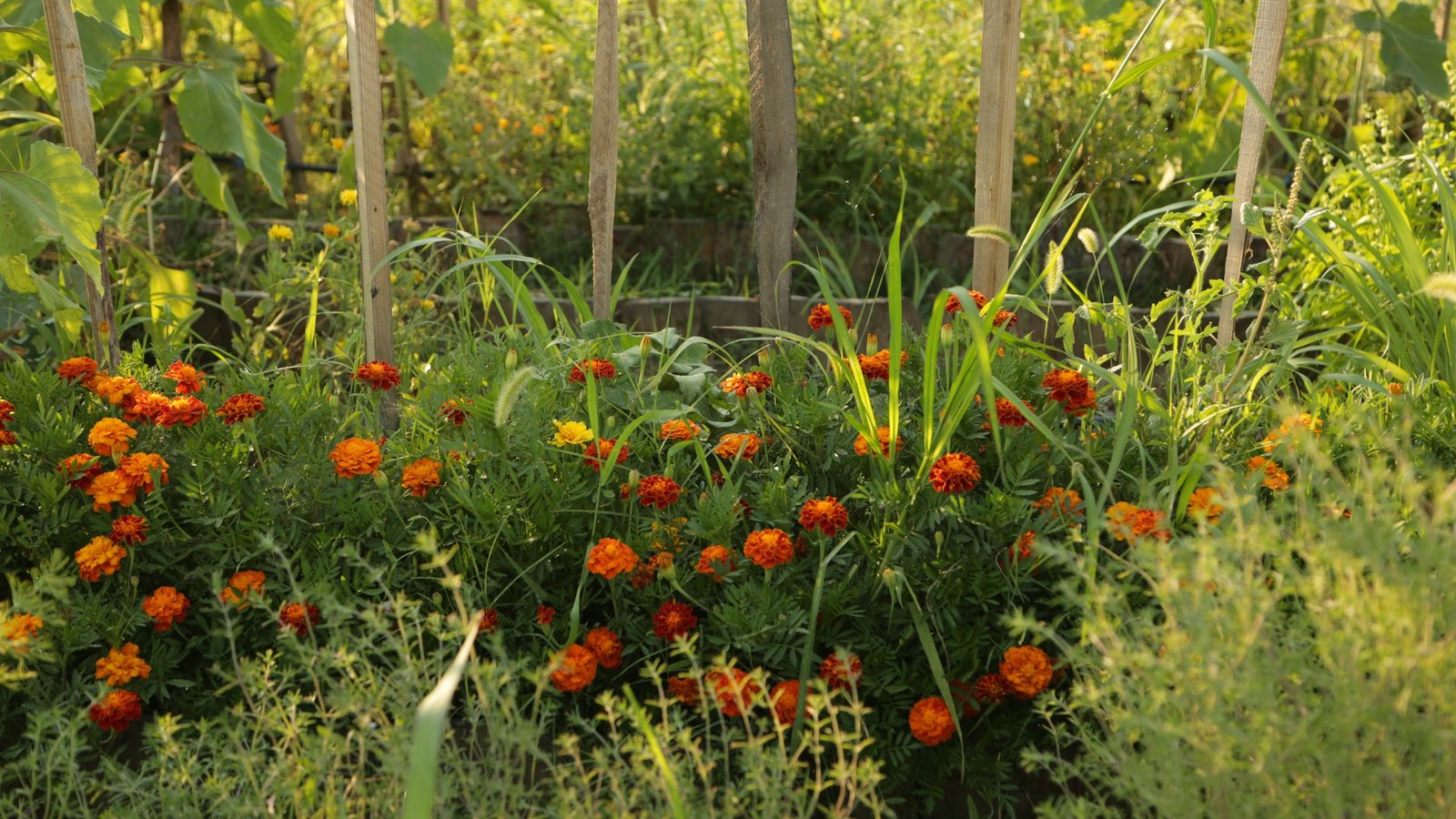
French marigolds such as ‘Bonanza’ and ‘Durango’ are compact, bushy plants covered in orange, yellow and red flowers about 20–30 cm tall. African marigolds such as ‘Inca II’ are taller, with big, pompon blooms. Both are among the most dependable flowers a beginner can grow. Seed is large enough to handle easily and germinates in about a week in warmth.
Start seed indoors in March or April in zones 5–8, or sow directly outdoors after your last frost. Plant transplants at the same depth they were growing in the pot and space French types about 20 cm apart. Marigolds tolerate poor soil surprisingly well and actually flower better if they are not overfed, so go easy with fertiliser. Water at the base during dry spells until plants are established, then only in prolonged drought. Deadhead spent flowers regularly to keep new buds coming, although many modern varieties drop their petals fairly cleanly. Their strong scent is said to discourage some pests around vegetables, and while they are not a magic shield, they are cheerful and useful neighbours in a mixed garden.
Zinnias
Sow or transplant: Best direct sown, though transplants work if handled gently. Sun: Full sun, with air movement. Bloom period: Early summer until frost.
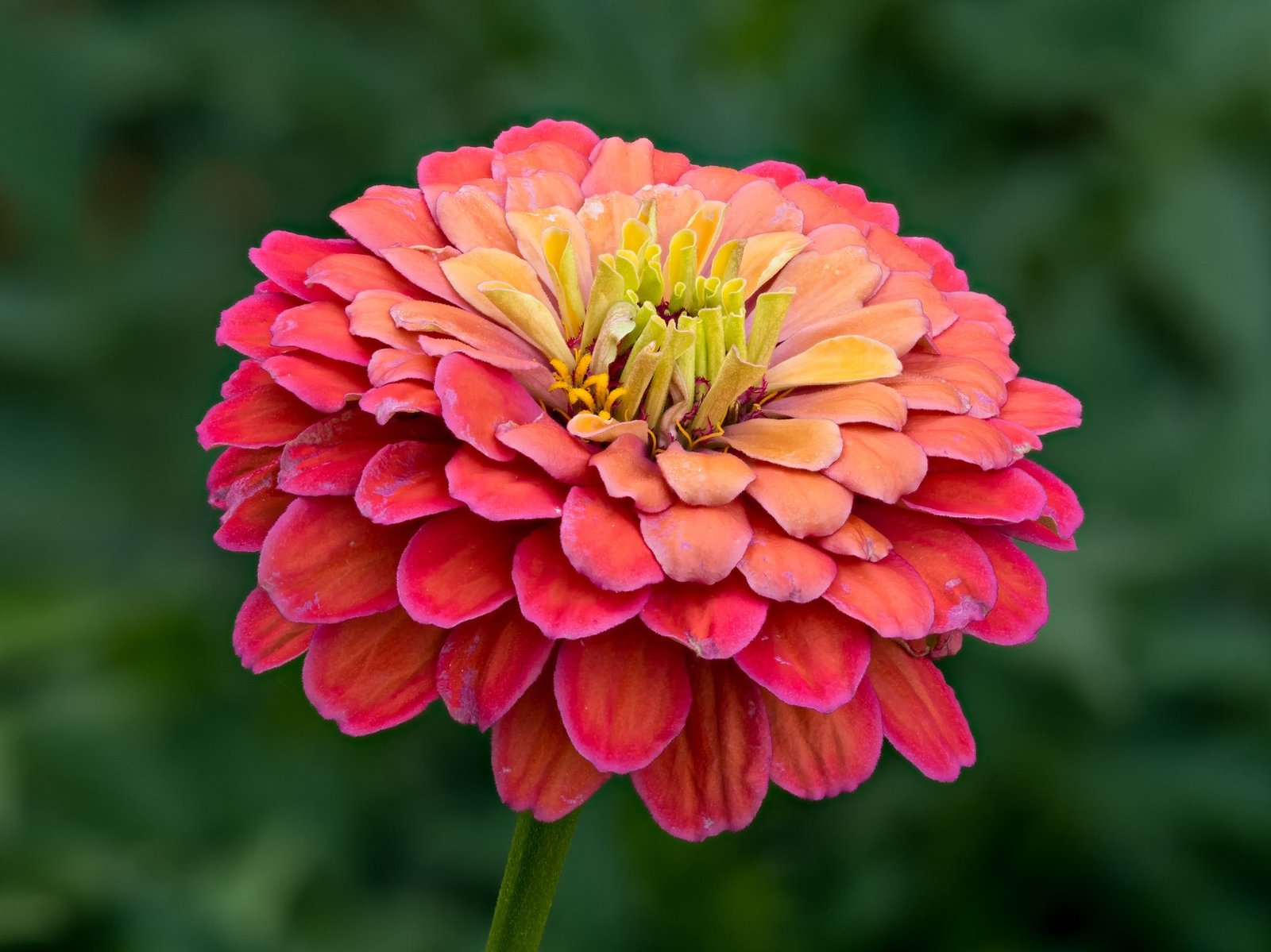
Zinnias are the cut flower of the beginner garden: bright, upright, and produced in such quantity that you can fill a vase and barely notice the difference in the border. ‘State Fair’ grows tall, around 75–90 cm, and suits the back of a bed. ‘Profusion’ and ‘Zahara’ are compact series bred for disease resistance and neat mounds of flowers, and they perform well in pots.
Zinnias dislike cold and root disturbance, so in zones 5–8 direct sow after all frost danger has passed and the soil feels warm, usually in May. In zones 9–10 you can sow earlier and sometimes again in midsummer for autumn flowers. Sow seed about 5 mm deep and thin seedlings to 25–30 cm apart, because crowded zinnias are prone to powdery mildew. Water the soil, not the foliage, and water in the morning. Deadhead by cutting the stem down to the next pair of leaves or branching point. With zinnias, deadheading and cutting for a vase are the same job, and both encourage more flowers. Butterflies visit them constantly on sunny days.
Cosmos
Sow or transplant: Direct sow is easiest. Sun: Full sun. Bloom period: Midsummer until frost.
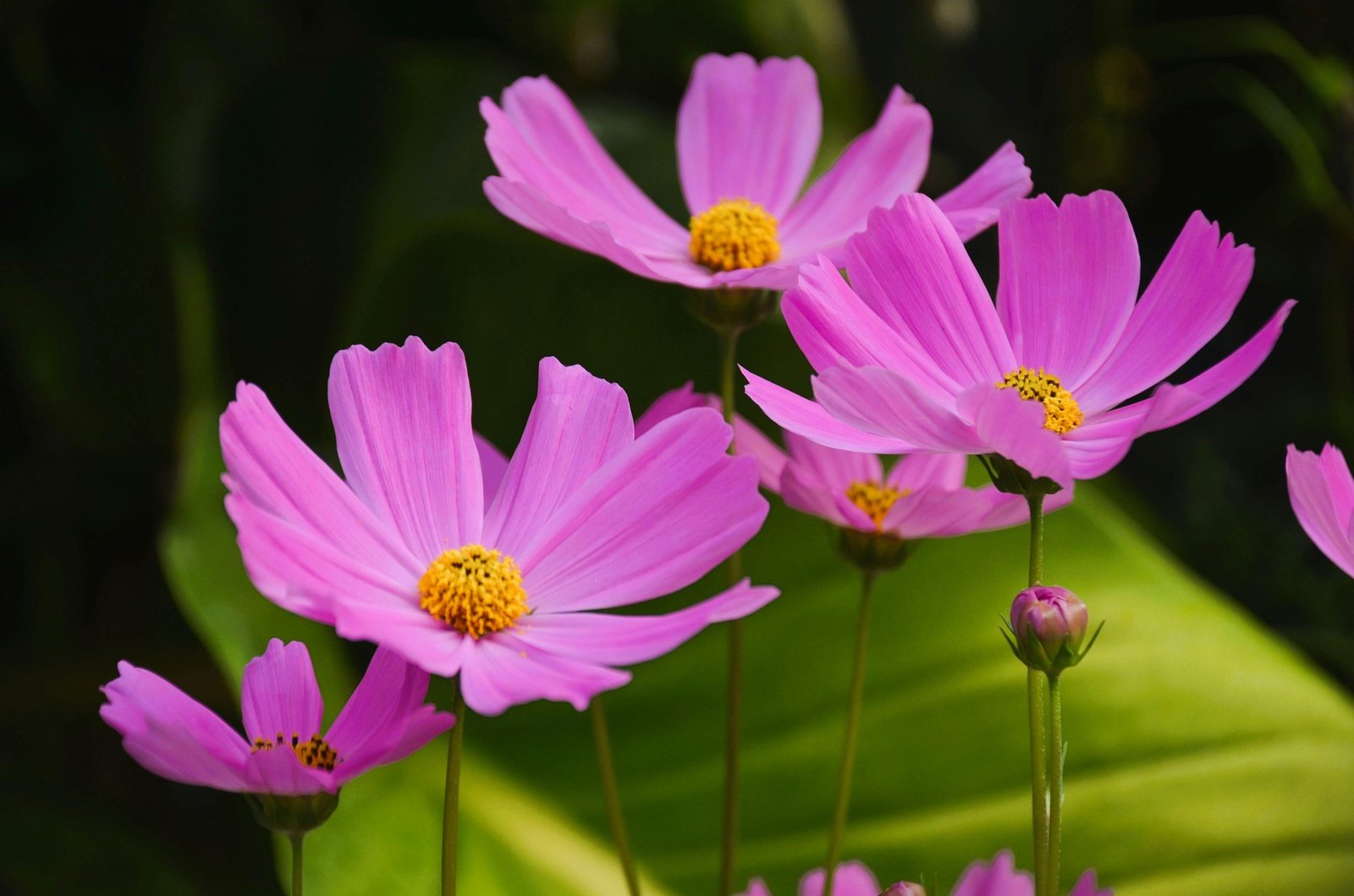
Cosmos may be the most forgiving flower on this list. ‘Sensation’ mixes pink, rose and white flowers on feathery foliage that reaches 90–120 cm. ‘Sonata’ is a shorter mix, around 60 cm, better for smaller beds and windy sites. The seeds are long, slim and easy to sow, and seedlings have distinctive ferny leaves that are simple to recognise among weeds.
Direct sow outdoors from April to June in zones 5–8, after hard frosts are over, scattering seed thinly and covering lightly. Cosmos actually prefers soil that is not too rich. In heavily fed ground it produces masses of leaves and few flowers, so skip the fertiliser and save it for hungrier plants. Once established, cosmos tolerates dry conditions well; water young seedlings, then step back. Tall varieties may need a few stakes or the support of neighbouring plants in exposed gardens. Deadheading extends flowering, though leaving a few late flower heads to set seed often gives you free plants next year if the seed falls where it lands. Few flowers give so much height and movement for so little effort.
Sunflowers
Sow or transplant: Direct sow where they are to flower. Sun: Full sun, all day if possible. Bloom period: Mid to late summer, depending on variety and sowing date.
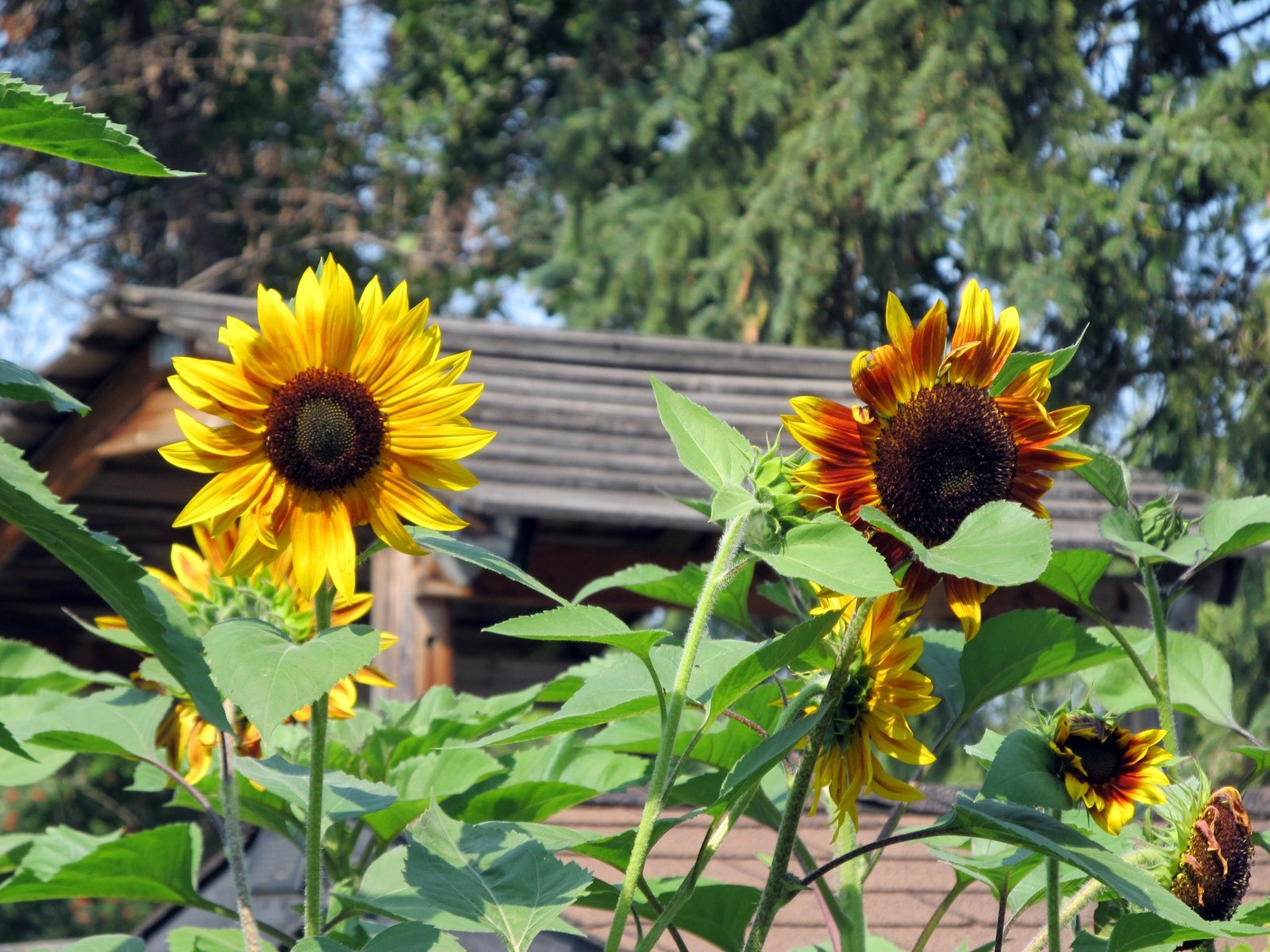
A row of sunflowers against a fence is one of the great pleasures of a summer garden, and children who will not weed a carrot bed will water a sunflower with devotion. The classic ‘Russian Giant’ can pass 2.5 metres in good soil. Branching varieties such as ‘Autumn Beauty’, in warm shades of yellow, bronze and mahogany, produce many smaller flowers over a longer period. For pots and small gardens, dwarf types such as ‘Teddy Bear’, with fluffy double flowers, stay under 60 cm.
Sow directly outdoors in April or May in zones 5–8, pushing two seeds about 2.5 cm deep at each spot and removing the weaker seedling later. Sunflowers grow a long taproot and resent being moved, which is why direct sowing usually beats transplants. Protect young seedlings from slugs and birds, both of which consider them a delicacy. Water deeply in dry weather while plants are growing fast, and stake tall plants early in windy areas. Deadheading does not apply to single-stemmed giants, so let the heads ripen and the birds will thank you, but branching types keep flowering longer if faded blooms are removed. If you want flowers that carry on right through the season, pairing sunflowers with the best flowers that bloom all summer is a good way to plan a border with no dull weeks. Sunflowers are also among the annuals that pollinators love most: in a four-year University of Minnesota Extension study of more than 30 annual flower varieties, sunflowers were among the nine flowers that attracted the most pollinators, and the study is a useful guide if you want your first garden to feed bees as well as please your eye.
Nasturtiums
Sow or transplant: Direct sow. Sun: Full sun to light shade. Bloom period: Early summer until frost.
Nasturtiums are cheerful, fast, and almost entirely unbothered by poor soil. Trailing varieties such as ‘Alaska’, with cream-splashed leaves, spill beautifully from hanging baskets and raised beds. Bush varieties such as ‘Jewel Cherry Rose’ form neat mounds for edging. The big, round seeds are easy for small hands and stiff fingers alike, and germination is quick in warm soil.
Direct sow outdoors in April or May, about 2 cm deep. The seeds germinate better with some darkness around them, and soaking seed overnight in water can speed things up. Like cosmos, nasturtiums flower best in lean soil; rich feeding gives you a jungle of leaves and very few of the red, orange and yellow trumpet flowers you wanted. Water during long dry spells, but established plants cope with neglect. There is no need to deadhead, although picking flowers for salads, they are peppery and edible, as are the leaves, keeps plants tidy. Watch for blackfly on the stems later in summer; a firm jet of water knocks most of them off, and they rarely do lasting harm.
Calendula
Sow or transplant: Direct sow; it often sows itself in later years. Sun: Full sun to partial shade. Bloom period: Late spring to autumn, and earlier in mild areas.
Calendula, often called pot marigold, is a hardy annual with daisy-like flowers in shades of orange, apricot and yellow. Varieties such as ‘Indian Prince’, with dark centres, and the softer ‘Snow Princess’ show how much range there is beyond plain orange. The curved, rough seeds are distinctive and easy to handle, and seedlings shrug off light frost that would kill a zinnia.
Sow directly outdoors in March or April for summer flowers in zones 5–8, or in August and September in zones 8–10 for flowers in late autumn and the following spring. Calendula is one of the best choices for gardeners who want early colour without a greenhouse. Space plants about 25 cm apart and water until they settle in. Deadhead regularly if you want a neat, continuous display; plants that are left alone will self-seed, which many gardeners welcome and some find a little too enthusiastic. Mildew can mark leaves in late summer. Removing affected leaves and giving plants space to breathe usually keeps it in check. The petals are edible and are traditionally used to add colour to salads and rice.
Petunias
Sow or transplant: Buy young plants or sow indoors — the seed is tiny. Sun: Full sun. Bloom period: Late spring until frost.
Petunias fill pots, baskets and window boxes with colour like few other flowers can. Trailing types such as the Surfinia and Wave series are bred to cascade and to recover quickly after rain. Grandiflora types have the biggest flowers but mark more easily in wet weather, so for a first attempt the trailing and multiflora types are the safer bet.
The seed is dust-fine and needs light to germinate, which makes petunias the one flower on this list where buying healthy young plants is genuinely the easier route for most beginners. If you do sow, do it indoors in February or March, on the surface of damp compost, and plant out after frost. Set plants about 25–30 cm apart in borders, or three to a large basket. Petunias are hungry and thirsty in containers: water daily in hot weather and feed weekly with a balanced liquid fertiliser. Deadheading is the main chore. Older varieties turn sticky and need faded flowers picked off, stem and all; many modern trailing types shed more cleanly. By late summer, trailing plants can look leggy, so trim them back by a third, feed them, and they usually flush again with flowers within a fortnight.
Geraniums (Pelargoniums)
Sow or transplant: Buy young plants, or take cuttings from existing ones. Sun: Full sun to very light shade. Bloom period: Late spring until frost outdoors; almost all year indoors.
The plants sold everywhere as geraniums are pelargoniums, and they are among the most rewarding pot plants a beginner can own. Zonal types have rounded leaves with a darker horseshoe marking and upright clusters of red, pink, salmon or white flowers. Ivy-leaved types trail and suit baskets and window boxes. Scented-leaved varieties may have plainer flowers but leaves that smell of lemon or rose when brushed.
Buy plants in spring and set them out after the last frost in zones 5–8; in zones 9–10 they can live outdoors all year. Use a gritty, free-draining compost in pots and let the surface dry between waterings. Pelargoniums rot in soil that stays soggy, and they flower better for being slightly on the dry side. Feed every two weeks during the flowering season. Deadhead whole flower stalks at their base, not just the faded petals, to keep plants neat and productive. Before the first autumn frost in cold zones, bring a favourite plant indoors to a bright windowsill, water sparingly over winter, and take cuttings in spring. It is one of the easiest and most satisfying propagation projects for a new gardener.
From Packet to Border: Sowing and Planting Out, Week by Week
Good timing prevents most early disappointments. In zones 5–8, hardy annuals such as calendula and cosmos can be sown outdoors in spring once the soil can be worked, while half-hardy annuals such as marigolds, zinnias and petunias must wait until after the last frost, or be started indoors a few weeks earlier. In zones 9–10, spring comes sooner and summers are hotter, so sowing earlier, and for some flowers choosing spots with a little afternoon shade, gives plants time to establish before heat arrives. In zones 3–4, indoor starting matters most of all, because the outdoor season is short.
Prepare the ground simply. Clear weeds, break up the surface with a fork, and rake it to a crumbly texture. Seeds need contact with damp soil, so water the drill or patch before sowing if the weather has been dry. Sow at roughly the depth the packet suggests. A useful rule is about twice the seed’s own width, and label every row. Labels feel fussy on sowing day and invaluable three weeks later when everything green looks the same.
For indoor sowing, use clean pots or trays and fresh seed compost. Sow thinly, cover according to the packet, and keep trays somewhere warm and bright. A clear lid or a sheet of glass holds moisture until germination; remove it as soon as seedlings appear. The most common indoor problem is leggy seedlings reaching for light, so move trays to the brightest windowsill you have and turn them a quarter turn each day.
Whether you grew your plants or bought them, harden them off before planting out. Put them outside for a few hours on the first day, then a little longer each day for about a week, so leaves adjust to wind and direct sun. Plant in the evening or on a cloudy day, water the hole, firm the soil gently around the roots, and water again. A mulch of compost or bark, kept just clear of the stems, then slows weeds and keeps moisture in while your plants settle.
If you want to check your timing against a regional calendar, the University of Minnesota Extension’s flower pages collect their seasonal guidance and plant guides in one place, and their Upper Midwest home gardening calendar shows the recommended timing for flower and vegetable gardens through the year: Flowers | UMN Extension. Even if you garden far from Minnesota, seeing how one extension service lays out a season is a useful model for planning your own.
Six Questions Every First-Timer Asks
Which flower is the absolute easiest for a first try?
Cosmos and calendula are probably the most forgiving. Cosmos can be direct sown after hard frosts, needs poor-to-average soil, little feeding, and modest watering once established, and still produces months of flowers. Calendula is hardy enough for early outdoor sowing and often self-seeds for the following year. Nasturtiums run them close, especially in a pot or poor corner where little else thrives.
Should I start seeds indoors or sow them outside?
Direct sow flowers that dislike being moved or that grow fast: cosmos, sunflowers, nasturtiums, calendula and zinnias. Start indoors, or buy young plants, for slow or tiny-seeded flowers such as petunias, and for marigolds if you want earlier blooms. In zones 5–8, indoor starting buys four to six weeks; in warmer zones 9–10, direct sowing succeeds for a wider range of flowers because the soil warms up so much earlier.
How often do I need to water flowers in pots?
In hot summer weather, most pots need water once a day, and small baskets in wind may need it twice. Check by touch rather than by schedule: if the top couple of centimetres of compost feel dry, water thoroughly until it runs from the drainage holes. Geraniums are the exception. Let their compost dry a little more between waterings, because they dislike constantly wet roots.
What does deadheading actually do, and which flowers need it?
Deadheading removes faded flowers before they form seed, which encourages the plant to make more flowers instead. It matters most for marigolds, zinnias, cosmos, calendula and geraniums. Cut or pinch the spent flower off just above the next leaf or branching point. Sunflowers grown for their big heads do not need it, and flowers you want to self-seed, such as a few late cosmos, should be left alone at the end of the season.
Why is my plant growing lots of leaves but no flowers?
The usual causes are too much nitrogen-rich feed, not enough sun, or both. Cosmos and nasturtiums are famous for responding to rich soil with leaves at the expense of flowers. Move pots into fuller sun, stop feeding for a while, and water only as needed. Also check the calendar: some flowers sown late simply need more time, and cosmos in particular often does its best work from midsummer onwards.
Can these flowers grow in a small or rented garden?
Yes, nearly all of them suit pots and containers, which is ideal if you garden on a patio, a balcony, or land you do not own. Petunias and geraniums were made for pots. Compact zinnias such as the Profusion series, French marigolds, nasturtiums, dwarf sunflowers and calendula all grow well in containers of decent size with drainage holes and regular watering. Nothing needs to be dug in permanently.
The Daily Rhythms: Water, Food and Deadheading
New plants need regular water; established ones need much less than most beginners expect. Water seedlings and fresh transplants often enough that the soil around their shallow roots never dries completely. As roots deepen, switch to a thorough soak once or twice a week in dry weather instead of a daily splash. Soil in the ground holds moisture far longer than compost in pots, so check pots daily in summer and borders every few days, using a finger pushed into the soil as your guide.
Feed with a light hand. Too much nitrogen-rich fertiliser makes soft, leafy growth and fewer flowers. This is exactly why cosmos and nasturtiums sulk in rich soil. Bedding in ordinary garden soil rarely needs more than compost worked in before planting. Pots are different: compost holds only a few weeks of food, so a weekly or fortnightly liquid feed through the flowering season keeps petunias and geraniums performing.
Deadheading is simply removing faded flowers before they set seed. A plant that sets seed receives the message that its job is done and slows down. Snip marigolds, zinnias, calendula and cosmos back to just above a leaf or branching point, and take whole geranium flower stalks off at the base. Do it while you walk around the garden with a cup of tea and it stops feeling like a chore. Some flowers, including nasturtiums and many modern petunias, need little of it, and leaving a few cosmos and calendula heads in autumn lets them self-seed for next year.
Arranging Flowers So They Look Like a Garden, Not an Accident
Grouping flowers by their needs matters as much as grouping them by colour. Thirsty petunias in pots belong together where you will remember to water them. Drought-tolerant cosmos and established nasturtiums can take the farther corners. Gardeners who group this way spend less time watering and lose fewer plants in a dry week.
Think in three heights when you arrange a border: tall cosmos, sunflowers and zinnias at the back, marigolds and calendula in the middle, and low edging or trailing plants at the front. In pots, the same idea becomes a tall centre plant, something bushy around it, and something that spills over the edge. It sounds formulaic because it works.
Sow in two batches rather than one where the flower allows it. A first sowing of cosmos or zinnias in spring and a second a month later stretches the display and gives you insurance if slugs take the first lot. Keep the seed packets, note the sowing date on each, and jot down which varieties pleased you. Next spring’s choices will make themselves.
Finally, cut flowers for the house without guilt. Zinnias, cosmos and calendula respond to cutting by producing more blooms, and a small jar of your own flowers on the table is one of gardening’s reliable pleasures. Cut in the morning, strip leaves that would sit below the water line, and change the water every couple of days.
When Things Look Wrong: Reading Your Plants
Sowing too early is the classic mistake. Half-hardy flowers planted out before the last frost may not die outright, but cold-checked plants often sit still for weeks and never quite catch up. Check your local frost dates, watch the forecast, and keep a sheet of fleece handy for cold nights after planting.
The second mistake is kindness of the wrong sort: too much feed and too much water. Overfed cosmos and nasturtiums give leaves instead of flowers. Overwatered geraniums rot at the stem. If a plant looks lush but flowerless, feed less. If it wilts at noon but perks up by evening, it may only be avoiding the heat, so check the soil before watering again.
Crowding is the third. Seedlings look small and sparse, so it is tempting to skip thinning. Resist it. Zinnias packed too tightly invite powdery mildew, and marigolds without air around them stay damp and attract slugs. Thinning feels wasteful for about a week, until the remaining plants surge into the space.
Pests will find some plants, and most of the time the right response is calm. Aphids cluster on nasturtiums and young growth; blast them off with water or squash them between finger and thumb. Slugs favour young marigold and petunia plants, so go out after rain, use barriers around vulnerable plants, and avoid leaving hiding places of board and brick beside young beds. Powdery mildew, a white dusting on zinnia and cosmos leaves late in summer, is mostly cosmetic on strong plants. Water at the base, space plants well, and remove the worst leaves. A bed does not have to be flawless to be beautiful, and chasing perfection with sprays usually does more harm than a few marked leaves ever will.
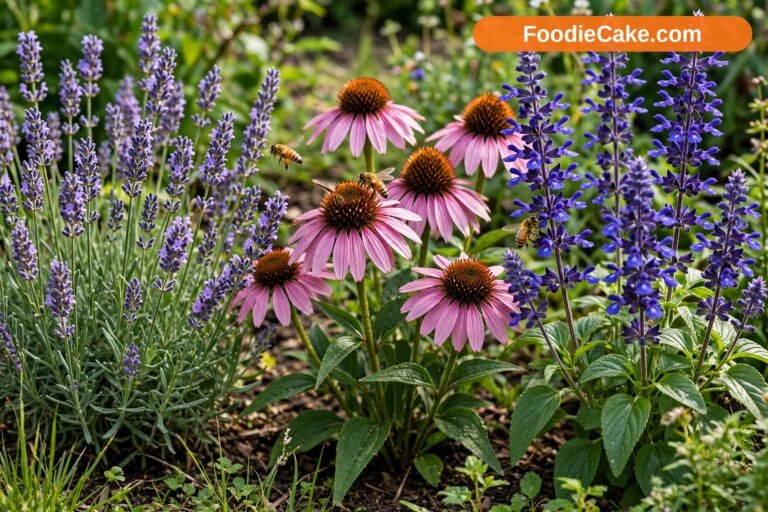
One more thing worth remembering: flowers that attract pollinators repay a little tolerance. The University of Minnesota Extension tested more than 30 annual flower varieties over four years (2015–2018) and found nine that drew the most pollinators, including sunflowers and zinnias. Their guide to those annuals is a good next read once your first border is growing: Annual flowers that attract pollinators | UMN Extension.
Your First Season, in One Paragraph
Growing flowers for the first time does not require talent, expensive kit, or a perfect garden. It requires a packet of seed, a sunny patch of soil or a pot, and a willingness to sow at the right time and water while plants are young. Marigolds, cosmos, zinnias and their companions have been delighting beginners for generations precisely because they make those first steps easy. Pick two or three flowers, sow them, and pay attention to what they teach you about your own space, where the sun lingers, where the soil dries first, which corner the bees love best. That knowledge carries into every garden you make afterwards. And when you cut your first small bunch of zinnias or watch a sunflower open taller than you expected, you will understand why people who start growing flowers rarely stop.
Sources
- University of Minnesota Extension — Annual flowers that attract pollinators (four-year study of 30+ annual varieties, 2015–2018)
- University of Minnesota Extension — Flowers (seasonal flower guidance and plant guides)
- FoodieCake — Best Flowering Plants for Spring and Best Flowers That Bloom All Summer (internal references)