

A garden that looks good only from May to September is a garden half finished, and that is exactly why gardeners go looking for the best evergreen plants for landscaping. Evergreens are the structure that holds a planting together in January as well as July. They screen a fence in winter, frame a front door when the perennials have died down, and provide the dark green backdrop that makes spring flowers and autumn colour look twice as rich.
The trap is choosing by photograph alone. The neat cone in a nursery pot may become a 40-foot tree. The glossy shrub that thrives in a mild coastal garden may scorch in a cold inland winter. A plant sold for screening may grow so slowly that you wait a decade for privacy, while another grows so fast it swallows the path in three years. Evergreen is not one job. It is at least four: tall screening, tidy foundation planting, ground-hugging texture, and winter flowers or berries.
This guide works plant by plant through the most reliable choices — boxwood, hollies, juniper, arborvitae, yew, rhododendron, camellia, pieris, dwarf conifers, and evergreen perennials that finish a bed. For each you will find hardiness zones, sun and shade needs, size at maturity, and the honest drawbacks, because a good plant in the wrong place helps nobody. Check your zone first, be truthful about sun and soil, and the plants below will repay you for decades.
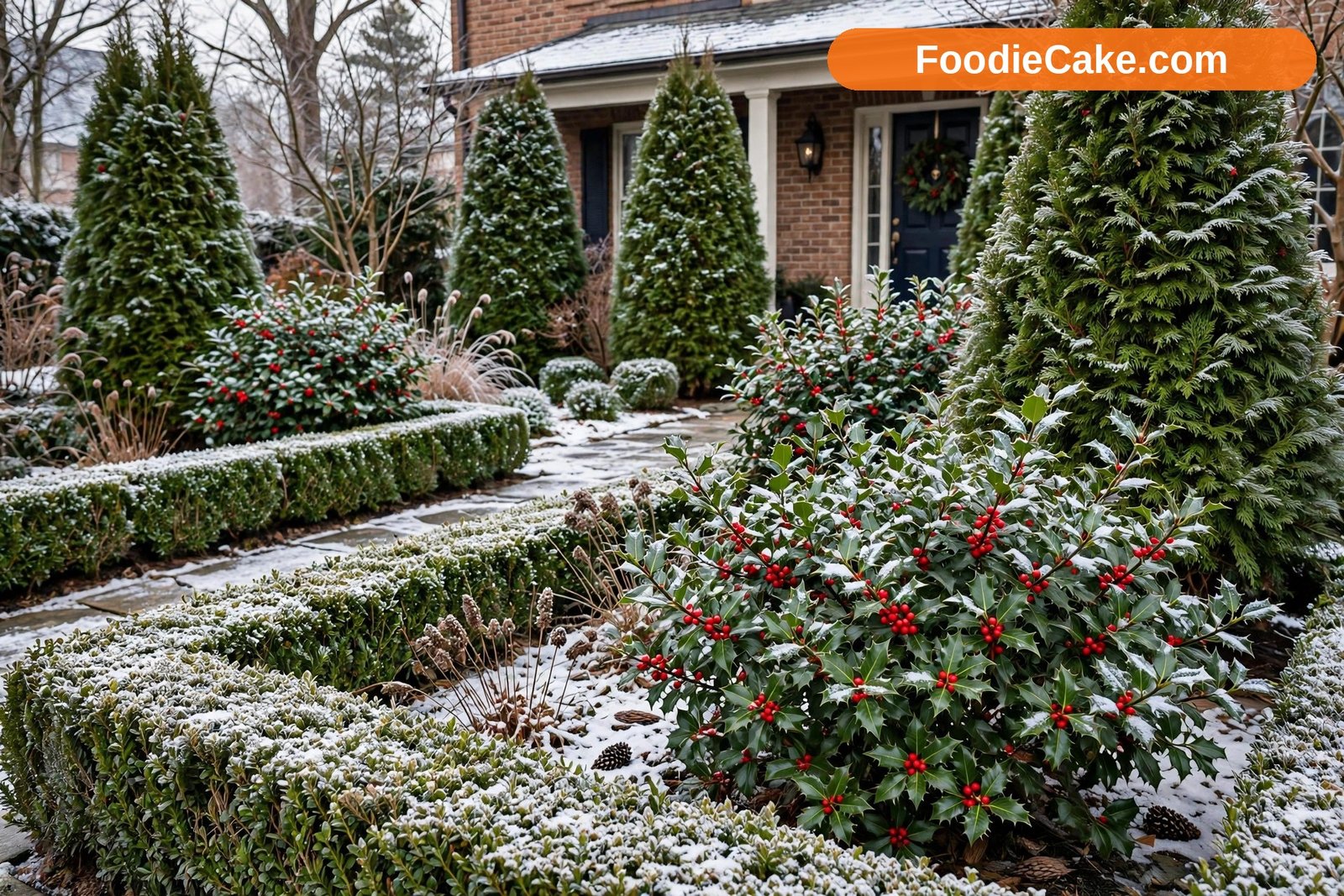
Boxwood: The Classic for Hedges, Edges, and Formal Shapes
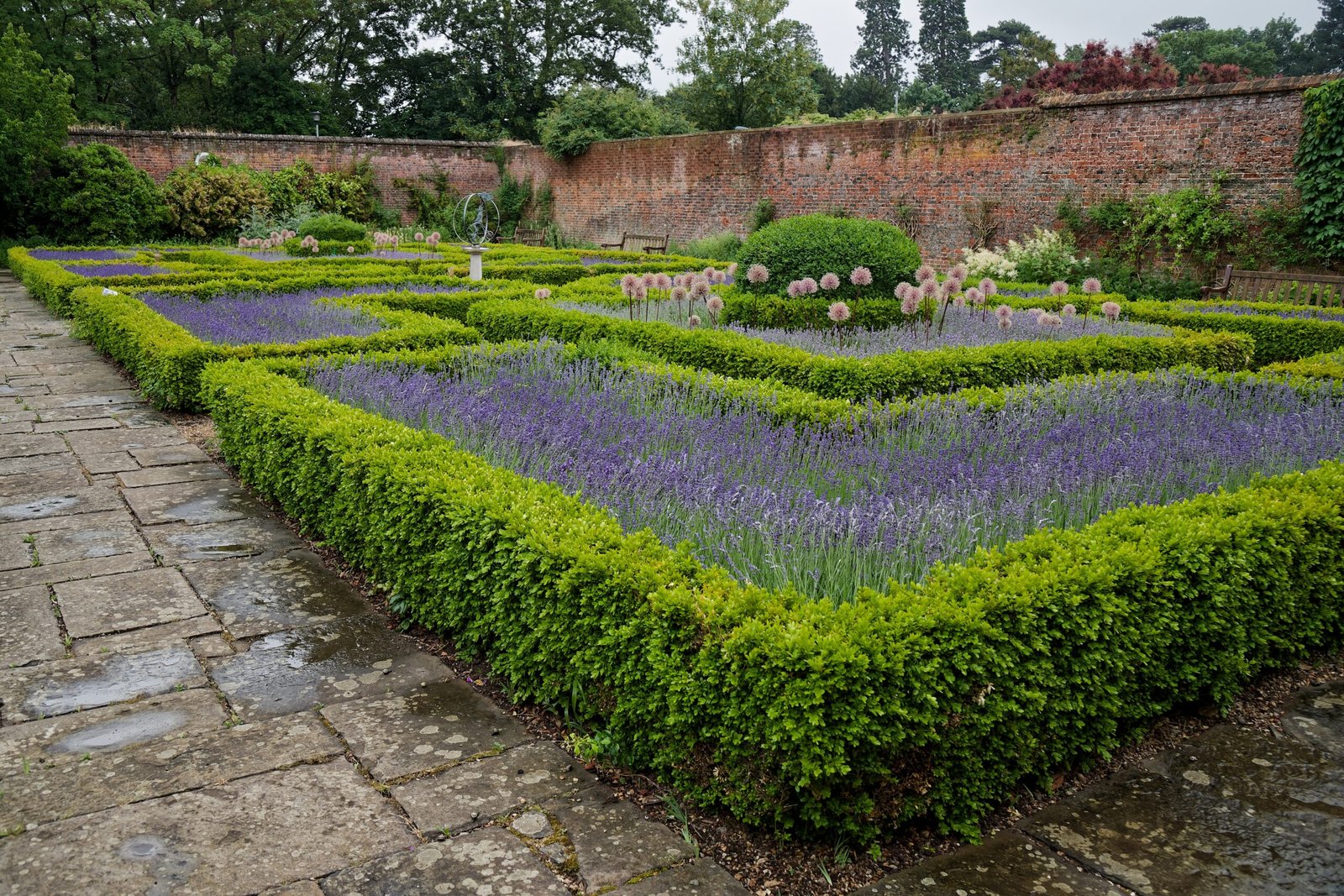
Boxwood, Buxus species, is the plant most people picture for a clipped hedge or a tidy edging along a path. It takes pruning beautifully, grows densely, and has small, neat leaves that look good all year. Common boxwood, Buxus sempervirens, is generally hardy in zones 5–8 and can reach 15 to 20 feet if left unclipped, though in gardens it is usually kept at 2 to 5 feet. Littleleaf boxwood, Buxus microphylla, and its Korean types are often a touch hardier, useful in colder parts of zone 5, and naturally smaller.
Boxwood prefers sun to partial shade and well-drained soil that does not stay soggy. It dislikes wet feet and harsh, drying winter wind on exposed sites in cold zones, which can bronze the foliage. Space hedging plants about 1 to 2 feet apart depending on variety and how quickly you want the hedge to close, and mulch to keep roots cool and moist.
The honest caveat is disease. Boxwood blight is a serious fungal disease in many regions, and box tree caterpillar is now a major pest in parts of Europe. Where blight is common, look for varieties selected for better resistance, such as selections in the NewGen series, plant with air flow between shrubs, avoid overhead watering, and buy clean plants from a reputable source. Deer generally leave boxwood alone, which makes it valuable where deer rule out other shrubs. For a formal edge or foundation, few plants do the job as calmly.
Holly: Glossy Leaves, Winter Berries, and a Tough Option for Wet Soil
Hollies, Ilex species, offer more variety than almost any other evergreen group. American holly, Ilex opaca, hardy in zones 5–9, becomes a pyramidal tree of 40 to 50 feet in time — a magnificent specimen, but not a small-garden shrub. The Meserve hybrids, Ilex x meserveae, such as Blue Prince and Blue Princess, are hardy in zones 5–7, stay a manageable 8 to 15 feet, and give glossy blue-green leaves and, on female plants, bright red berries. Most hollies need a male pollinator nearby for berries, so buy a matched pair or check that a male grows in the neighbourhood.
Japanese holly, Ilex crenata, looks surprisingly like boxwood, with small rounded leaves and a dense habit, hardy in zones 5–8 depending on variety. Compact forms such as Soft Touch stay around 2 to 3 feet and suit foundations and low hedges. It is a common substitute where boxwood blight is a worry, though it wants well-drained, slightly acidic soil and can yellow in very alkaline conditions.
Inkberry, Ilex glabra, deserves special mention because it solves a problem most evergreens hate: wet soil. This native holly, hardy in zones 4–9, tolerates damp ground that would kill boxwood or juniper. Varieties such as Shamrock and Compacta form mounds of about 3 to 4 feet, with small black berries on females. Older plants can get leggy at the base, so choose compact varieties and prune lightly. Most hollies prefer sun to partial shade and are fairly deer resistant, though not deer proof in a hard winter.
Juniper: The Drought-Tough Choice for Sun, Slopes, and Screening
If you have hot sun, lean soil, and a slope where other shrubs struggle, juniper is probably your answer. Junipers, Juniperus species, range from ground-hugging mats a few inches tall to upright trees, and most share the same virtues: excellent drought tolerance once established, tolerance of poor, rocky soil, and a dislike of shade and soggy ground. Eastern red cedar, Juniperus virginiana, hardy in zones 2–9, can reach 40 to 50 feet and makes a fine windbreak on a larger property. Narrow selections such as Taylor stay much slimmer for tighter spaces.
For a garden screen, upright varieties like Blue Arrow and Skyrocket, hardy roughly in zones 4–9, give strong vertical lines in a narrow footprint, often 2 to 3 feet wide and 12 to 15 feet tall — useful between houses where a wide tree will not fit. Spreading junipers such as Blue Rug carpet slopes at only about 6 inches tall, holding soil and suppressing weeds. Shrub forms in the 2- to 4-foot range fill sunny foundation beds where reflected heat from a wall would cook fussier plants.
Give junipers full sun and sharp drainage, then mostly leave them alone. They resent transplanting when large and do not regrow well from bare old wood, so avoid pruning back into the brown interior. They can suffer from cedar-apple rust and bagworms in some regions. Deer tend to avoid them, and in dry gardens in zones 6–9 a juniper planting can look good with very little summer watering once its roots are down. Few evergreens ask for less.
Arborvitae: The Fast, Friendly Screen — With Limits
Arborvitae, Thuja species, is the plant of a thousand privacy screens, and used well it earns that popularity. Eastern arborvitae, Thuja occidentalis, is hardy in zones 3–7 and prefers cool, moist conditions. Emerald Green, also sold as Smaragd, is the familiar narrow pyramid, reaching about 12 to 15 feet tall and 3 to 4 feet wide, dense enough for a hedge without constant clipping. Green Giant, a hybrid Thuja, is hardy in zones 5–8, grows fast — often 2 to 3 feet a year in good conditions — and can reach 40 to 60 feet, so it suits larger lots, not a cosy corner.
Arborvitae like sun to light shade and consistent moisture, especially in their first two years, in soil that drains but does not bake dry. They struggle in hot, dry, exposed sites in warmer zones 9–10, where other screens often perform better, and heavy wet snow can splay multi-stemmed plants open, so many gardeners tie tall hedges loosely before winter in snow country.
The biggest honest drawback is deer. Where deer pressure is high, arborvitae is a salad bar, and a hedge can be stripped to bare trunks up to browsing height in one winter. If deer visit daily, choose juniper, spruce, or holly for screening instead, or budget for fencing. Bagworms can also defoliate plants if ignored, so check in summer and pick off the small hanging bags by hand. Where deer are absent and summers are not scorching, an arborvitae hedge is one of the quickest ways to turn an exposed yard into a private room.
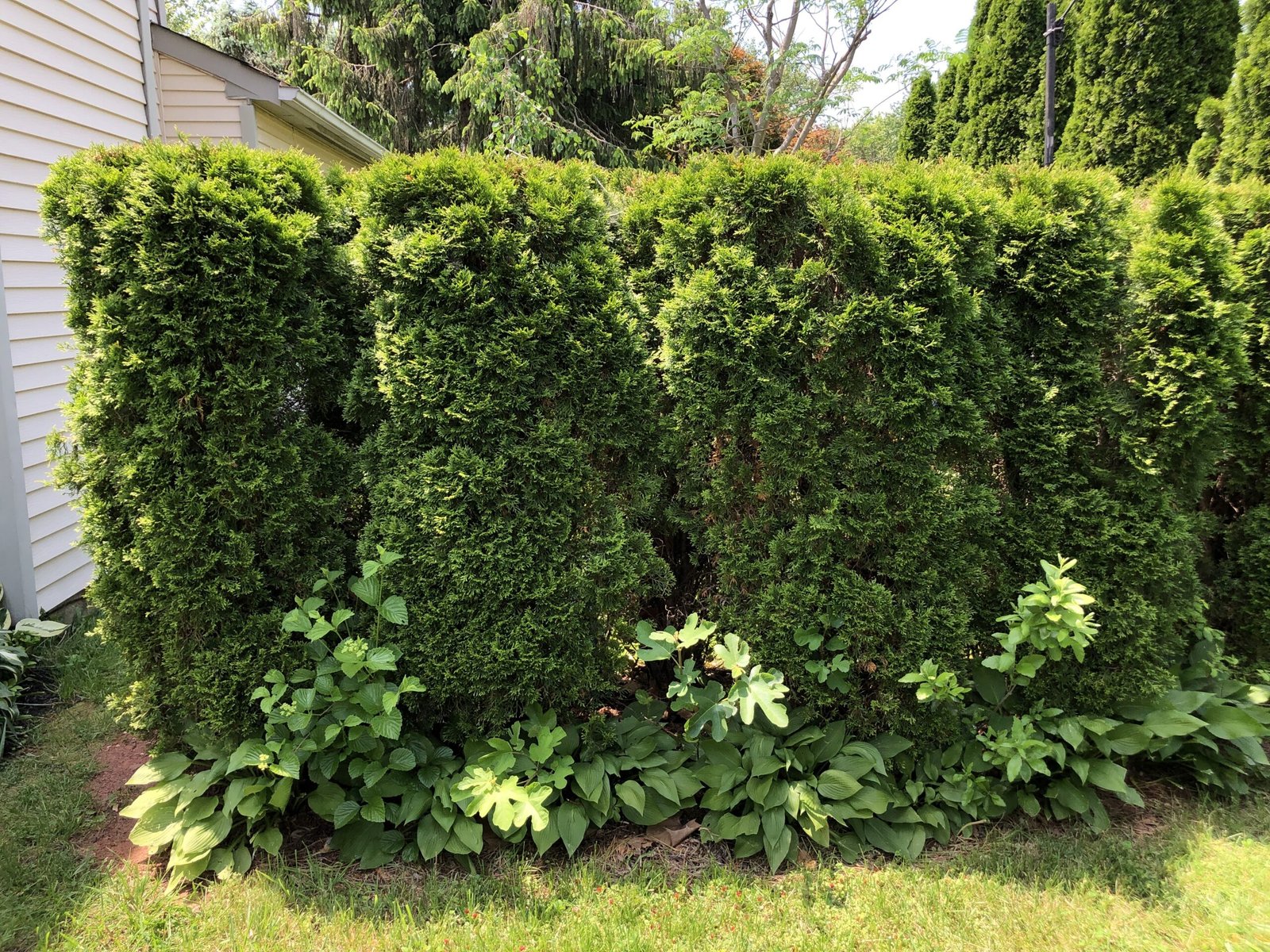
Yew: The Shade-Tolerant Classic for Foundations and Hedges
Yew, Taxus species, is the evergreen to reach for when the spot is shady and other conifers thin out. English yew, Taxus baccata, hardy in zones 5–7, and Japanese and hybrid yews, Taxus cuspidata and Taxus x media, hardy in zones 4–7, tolerate shade better than most needle evergreens and respond well to pruning, even regrowing from older wood — a rare and forgiving trait. Upright forms such as Hicksii reach about 10 to 12 feet and suit hedges and house corners. Spreading forms such as Densiformis stay around 3 to 4 feet tall and wider, a foundation staple under windows for generations.
Yews want well-drained soil above all. They rot in ground that stays wet in winter, so plant them slightly high on heavy soil and improve drainage rather than hoping they will cope. They prefer sun to partial shade, tolerate full shade at the cost of looser growth, and appreciate shelter from winter wind in cold zones. Growth is slow to moderate, so a yew hedge takes patience but stays where you put it.
Two cautions belong in any honest account. All parts of yew except the fleshy red aril around the seed are poisonous to people and livestock, and the seed inside is poisonous too, so think carefully where horses, cattle, or very young children are present. Deer, frustratingly, will browse yew despite that toxicity. Where neither issue applies, yew remains one of the most elegant, long-lived foundation and hedging plants you can buy.
Rhododendron: Bold Leaves and Spring Flowers for Shade
Rhododendrons bring what most conifers cannot: big, showy spring flowers on a bold, broadleaved evergreen. Large-leaved hybrids, hardy commonly in zones 4–8 depending on variety, typically reach 4 to 8 feet in gardens and more in mild, sheltered woodland. Catawbiense hybrids such as Roseum Elegans and Nova Zembla are among the hardiest choices for cold gardens in zones 4–5. Smaller yakushimanum hybrids stay compact at 2 to 3 feet and suit smaller beds and containers.
The requirements are specific and non-negotiable. Rhododendrons need acidic soil, roughly pH 4.5 to 6.0, that is moist, rich in organic matter, and sharply drained. They are shallow rooted, so mulch well, water during dry spells, and never cultivate deeply around them. The ideal light is dappled shade, or morning sun with afternoon shade. In zones 5–7 a north- or east-facing spot sheltered from winter wind prevents the leaf curl and scorch that cold, bright winter days can cause. In warmer zones 7–8, afternoon shade matters even more.
Planted in alkaline soil or a soggy hole, a rhododendron will tell you with yellow leaves and few flowers. Planted in leaf mould under tall trees, it can thrive for decades with mulch and an occasional feed for acid-loving plants. Deer will browse rhododendrons, especially in winter, so protect prized plants if deer are regular visitors. As a backdrop behind the best plants for shady gardens, a group of rhododendrons gives a bed structure and a spring display few other evergreens can match.
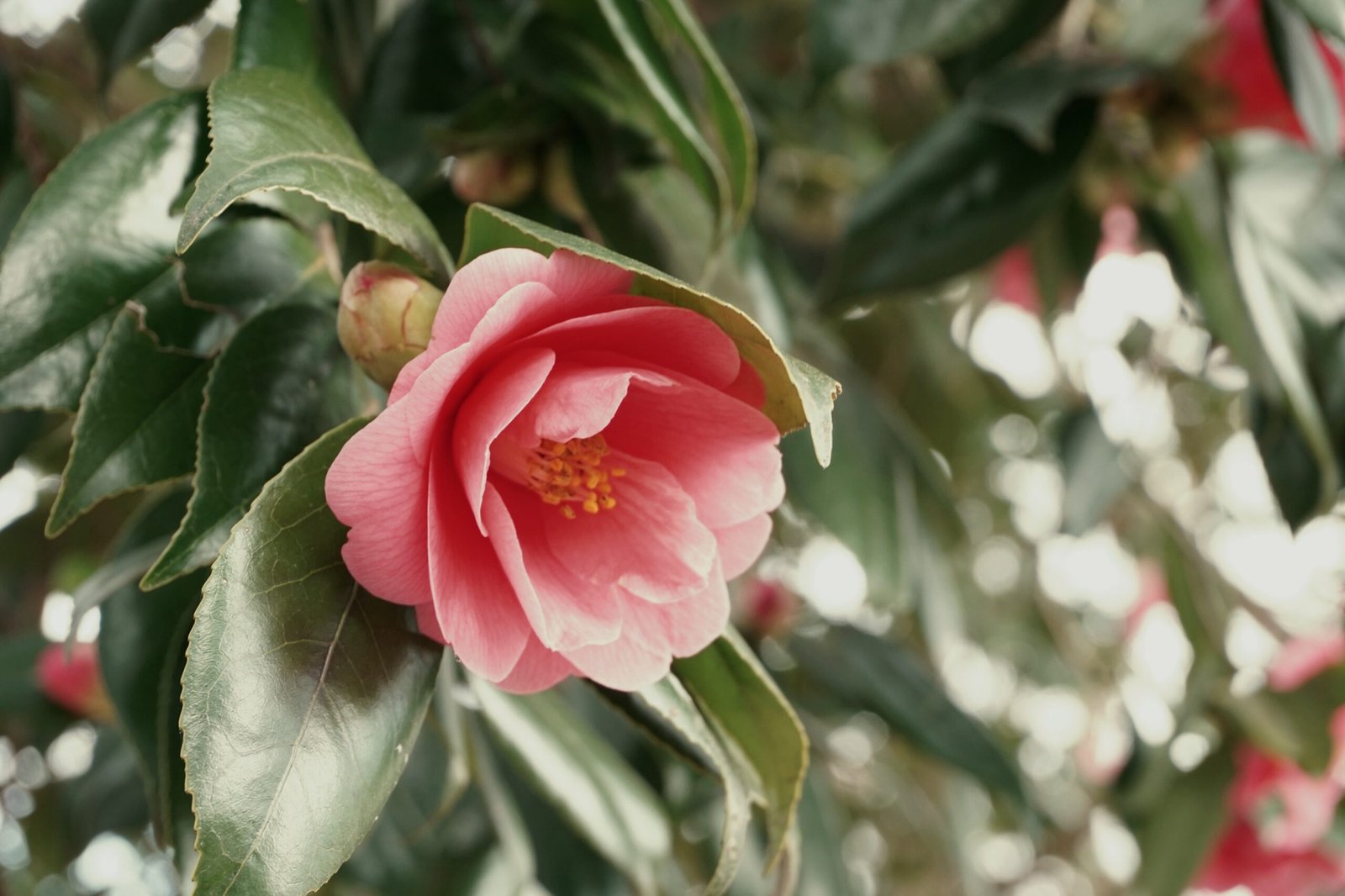
Camellia: Winter and Spring Flowers Where Winters Are Mild
Camellias are the glory of the mild-winter garden: glossy evergreen leaves all year and rose-like flowers when little else dares to bloom. Camellia sasanqua varieties, hardy in zones 7–9, flower in autumn and early winter and tolerate more sun than Camellia japonica types, which are also generally zones 7–9 and flower from late winter into spring. Sizes vary widely, from compact 3- to 4-foot varieties to large shrubs and small trees of 10 to 15 feet, so read the label for your variety rather than assuming.
Camellias want acidic, well-drained, organically rich soil, shelter from cold winter wind, and light shade — ideally morning sun and protection from fierce afternoon heat. In zone 7 and at the cold edge of their range, plant them against a sheltered wall or in the lee of other evergreens, because a hard freeze can brown open flowers and damage buds even when the plant itself survives. Gardeners in zones 5–6 can try the hardiest modern hybrids in very sheltered spots or in containers brought under cover, but for most cold-climate gardens camellia is a plant to admire on visits south.
Water young camellias steadily, mulch with leaf mould or pine bark, and prune lightly right after flowering if shaping is needed, because next year’s buds form in summer. Scale insects can appear on leaf undersides; a strong jet of water and, if needed, horticultural oil help. Against a foundation wall in a mild climate, a camellia earns its place every winter week it flowers.
Pieris: Four Seasons of Interest in a Compact Shrub
Pieris, Pieris japonica and its hybrids, is a smaller broadleaved evergreen that works hard in every season. Dangling chains of urn-shaped white or pink flowers open in early spring, new foliage often emerges bronze or red, and the flower buds themselves are decorative through winter, formed the previous summer like strings of tiny beads. Most varieties are hardy in zones 5–8 and grow slowly to about 3 to 6 feet, with compact forms such as Mountain Snow and Cavatine staying nearer 3 feet — ideal for foundations, containers, and the front of a shady bed.
Pieris shares the rhododendron’s taste in soil: acidic, moist but well drained, and rich in organic matter, in partial shade or morning sun. It struggles in alkaline soil and hot, dry afternoon sun in warmer zones. Lace bugs can stipple the leaves in sunny, stressful sites, so light shade is both a cultural and a pest decision. Deer usually leave pieris alone, another point in its favour for woodland-edge gardens.
Because pieris forms its buds in summer, prune — if at all — immediately after spring flowering. A shrub that needs no regular pruning, looks interesting in bud from November to March, then flowers, then throws coloured new leaves is doing more than most plants manage in a year. Group it with rhododendrons and ferns where the soil suits them all, and let the shared mulch and shade do the maintenance for you.
Dwarf Conifers: Slow, Sculptural, and Perfect for Small Gardens
Not every conifer wants to be a tree. Dwarf and slow-growing cultivars of spruce, pine, fir, and false cypress give you evergreen sculpture at a scale a small garden — or a rock garden, trough, or container — can actually hold. Dwarf Alberta spruce, Picea glauca Conica, hardy in zones 2–8, forms a tight green cone that may reach only 6 to 8 feet after many years. Mugo pine, Pinus mugo, hardy in zones 2–7, forms a low, rounded mound; true dwarf forms such as Mops stay around 2 to 3 feet, while the species itself can grow much larger, so the cultivar name matters enormously. Hinoki cypress cultivars, Chamaecyparis obtusa, hardy in zones 4–8, offer soft, fan-like foliage in forms from 2-foot cushions to 10-foot accents.
Dwarf conifers generally want sun to light shade and excellent drainage, and they resent wet soil and heavy, humid shade. Their great virtue is pace: an inch or a few inches a year means the planting you design is the planting you still have in ten years. That makes them a natural fit if you are drawn to low maintenance garden plants and would rather weed a little than prune a lot. Check any stated size carefully, though. Dwarf in conifer catalogues often means slow, not small forever, and a plant listed at 8 feet at ten years will keep going after that.
Watch for spider mites on dwarf Alberta spruce in hot, dry summers — a sharp spray of water to the foliage helps — and give young plants shelter from winter wind in cold zones. Otherwise, dwarf conifers are among the most rewarding long-term plants you can buy: plant one well, mulch it, and enjoy a living sculpture for decades.
Evergreen Perennials: Hellebores and Heuchera at Ground Level
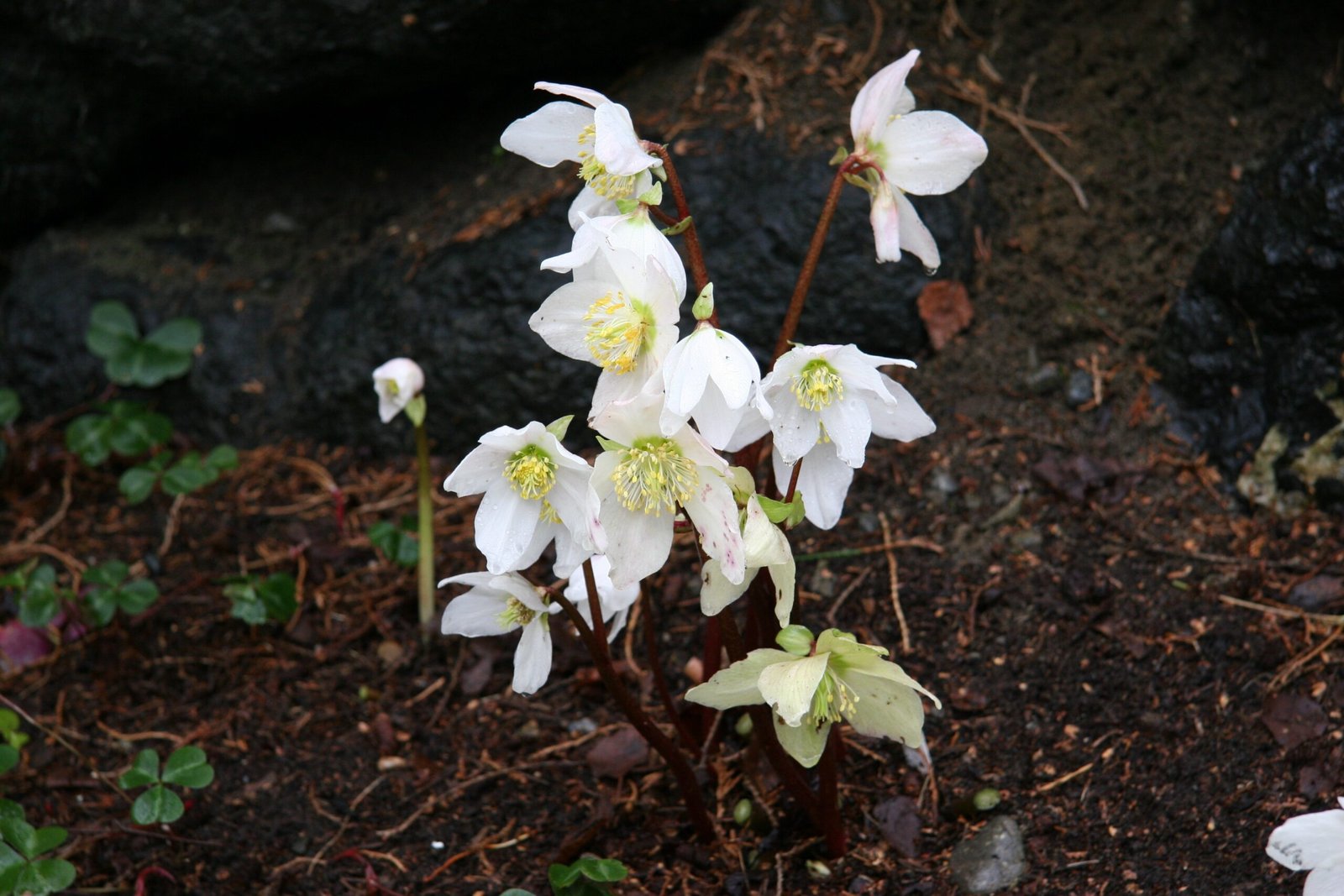
Landscaping evergreens are not only shrubs and trees. At ground level, evergreen perennials knit a bed together through winter when summer perennials have vanished. Hellebores are the stars here. Lenten roses, Helleborus x hybridus, hardy in zones 4–9, keep handsome, leathery foliage through most winters and flower from late winter into spring in white, pink, plum, and near-black shades. They prefer partial shade and humus-rich soil that neither dries out completely nor sits in winter water, and they resent being moved once established. Cut old leaves away in late winter, just as flower buds emerge, so the blooms show cleanly and any leaf spot goes with them.
Heuchera, coral bells, are semi-evergreen to evergreen depending on climate, keeping mounds of foliage in purple, amber, lime, and silver through mild winters in zones 4–9. In colder parts of zones 4–5 they may look tired by spring and benefit from a light mulch after the ground freezes, to stop roots heaving in freeze-thaw cycles. Heuchera want well-drained soil and sun to partial shade, with afternoon shade in hot climates to keep leaf colours from scorching. They make perfect edging in front of taller evergreen shrubs, where their foliage contrasts with the green wall behind.
Other reliable ground-level evergreens worth knowing include Christmas fern for shade, bergenia with bold leaves that tint bronze in cold weather, and epimedium for dry shade under trees. None of these replaces a screening shrub, and they do not try to. Their job is to make sure the bottom foot of your planting is alive in February, not a gap of bare mulch.
Practical Tips for Planting and Using Evergreens Well
Start every decision with mature size. Measure the space, read the label’s height and spread at maturity — not the pot size in front of you — and plant for the plant it will be in ten years. A foundation shrub planted 18 inches from a wall because it is small today will be a pruning battle for life. Give screening plants room to reach their natural width and they will need far less clipping to look dense.
Plant at the right depth, with the top of the root ball level with or slightly above the surrounding soil, especially for yew, rhododendron, and camellia, which sulk when buried. Dig the hole two to three times as wide as the pot but no deeper, backfill with the soil you removed, water deeply to settle it, and mulch 2 to 3 inches deep, keeping mulch a few inches from stems and trunks. Autumn is an excellent planting time in zones 6–8, because roots grow in warm soil while the top rests; in colder zones 4–5, spring planting gives tender broadleaved evergreens a full season to settle before their first winter.
Water new evergreens through their first full year, including in autumn before the ground freezes, because an evergreen entering winter dry is far more likely to suffer leaf scorch when wind and frozen soil stop it replacing lost moisture. A burlap wind screen helps in exposed cold sites. Mix your evergreens rather than planting a single-species screen where you can: a hedge of one plant can be lost to one disease, while a mixed screen of juniper, holly, and arborvitae loses, at worst, a section.
Think in layers. Tall screens at the back, mid-sized foundation shrubs in the middle, dwarf conifers and evergreen perennials at the front — that layering turns a row of shrubs into landscaping. Repeat a few key plants through the garden rather than collecting one of everything, so the winter view feels calm and deliberate instead of spotty.
Common Mistakes and Problems With Evergreens
The commonest mistake is planting for the photograph, not the site. A juniper in damp shade, a rhododendron in alkaline soil, a camellia in a cold wind tunnel in zone 6 — each declines slowly and gets blamed on the plant rather than the placement. Match zone, sun, drainage, and soil acidity before you fall in love with a variety, and check all four for the actual spot, not the garden you wish you had.
Underestimating size runs a close second. Green Giant arborvitae against a small house, a species mugo pine in a 3-foot bed, American holly under power lines — all fine plants in the wrong dimensions. If a label gives a range, plan for the larger end in a mild climate with good soil.
Winter damage is the problem gardeners most often misread. Brown, scorched leaves on broadleaved evergreens in spring usually mean winter desiccation — water lost through leaves on bright, windy days when frozen roots could not replace it — not a mysterious disease. Autumn watering, mulch, wind shelter, and siting tender plants away from winter sun and wind prevent most of it. Road salt damages many evergreens too, so near a salted street choose tolerant plants such as juniper, or give others distance or a burlap screen.
Finally, do not shear everything into the same green ball. Over-shearing conifers back into dead interior wood leaves permanent brown patches on most species except yew and boxwood, and shearing broadleaved shrubs at the wrong time removes the flower buds you planted them for. Prune each plant according to how it grows, at the season its buds allow, and many problems simply never happen.
Frequently Asked Questions
What is the fastest growing evergreen for a privacy screen?
Green Giant arborvitae is one of the fastest reliable screens in zones 5–8, often growing 2 to 3 feet a year once established, though it becomes a very large plant. Leyland cypress grows even faster in zones 6–10 but can suffer disease and storm damage and outgrow small lots quickly. In hot, dry sites, upright junipers grow more slowly but survive conditions that would kill faster, thirstier screens.
Which evergreens are best for shade?
Yew is the outstanding choice for shade among conifers, keeping its density where juniper and arborvitae thin out. Among broadleaved evergreens, rhododendron, pieris, and many hollies perform well in partial shade, and camellia prefers light shade in most climates. At ground level, hellebores, Christmas fern, and epimedium are dependable evergreens for shaded beds.
Which evergreen shrubs will deer leave alone?
No shrub is completely deer proof when deer are hungry, but boxwood, pieris, and juniper are among the least favoured and are good first choices where deer pressure is moderate. Spruce is also rarely browsed. Arborvitae and yew, by contrast, are heavily browsed in many areas, and rhododendron is often eaten in winter, so protect those or choose alternatives if deer visit regularly.
How far apart should I plant evergreens for a hedge?
As a guide, space hedging plants at about half to two-thirds of their mature spread, closer for a fast, formal hedge and wider for a natural screen. Boxwood for a low hedge often goes in at 1 to 2 feet apart, Emerald Green arborvitae for a screen at about 3 to 4 feet apart, and large screens such as Green Giant at 5 to 6 feet or more. Always check the mature width of your specific variety first.
Can evergreens grow in containers?
Yes, many do well for years in large containers, including dwarf conifers, compact boxwood, Japanese holly, compact pieris, and smaller camellias in mild climates. Use a pot with drainage and a good compost-based mix, and remember that container roots are colder in winter and drier in summer than roots in the ground, so in zones 5–6 choose a plant rated at least one zone hardier than your climate and water attentively.
Why are the leaves on my evergreen shrub turning yellow?
Work through the likely causes in order: soil that stays too wet, especially for yew, boxwood, and juniper; soil too alkaline for acid lovers such as rhododendron, camellia, pieris, and Japanese holly, which yellow between the leaf veins; drought stress in a new planting; and winter scorch after a cold, windy season. A simple soil pH test and a drainage check answer most cases better than guessing with fertiliser.
Final Thoughts
The best evergreen landscaping is not a collection of green lumps. It is a set of deliberate choices: juniper where the soil is dry and the sun is fierce, inkberry where the ground stays damp, yew and pieris in the shade, camellia and rhododendron where the soil is acidic and the winters allow, and boxwood or holly where you want a clipped, formal line. Each plant in this guide will do an excellent job — in the place its nature suits.
Before you buy, write down your zone, your sun, your drainage, and the mature size your space can truly hold. Take that short list to the nursery and let it rule out the wrong plants for you. What remains will be a planting that looks composed in the depths of winter, frames everything else in spring and summer, and asks for less from you each year as it settles in. That is what evergreens are for.