
Low Maintenance Garden Plants
Low maintenance garden plants are the difference between a garden you enjoy and a garden you apologise for. Most of us start with good intentions and a free Saturday in spring, then work, weather, family, and life get in the way by July. The plants that still look good in August are rarely the fussy ones. They are tough perennials that come back each year, hold their shape without constant pruning, shrug off a dry spell once established, and do not need staking, spraying, or dividing every season.
Choosing plants like that is not settling for a dull garden. The seven plants in this guide cover shady corners and hot, sunny borders, give you flowers from early summer into autumn, and provide foliage interest even when nothing is in bloom. Between them there is purple, silver, gold, and deep green, plus seed heads and grasses that keep a border looking intentional through winter. Low effort, it turns out, can still look generous.
The honest secret is matching the plant to the place. A lavender bush will never be low maintenance in heavy, wet clay, and a hosta will never thrive scorched in full afternoon sun. Put each plant where it is naturally suited and it will ask very little of you. Put it in the wrong spot and you will spend years compensating with watering cans, feeds, and shade cloth. Read the zone ranges and the sun and soil notes below, check them against your own plot, and the rest is mostly planting once and enjoying for years.
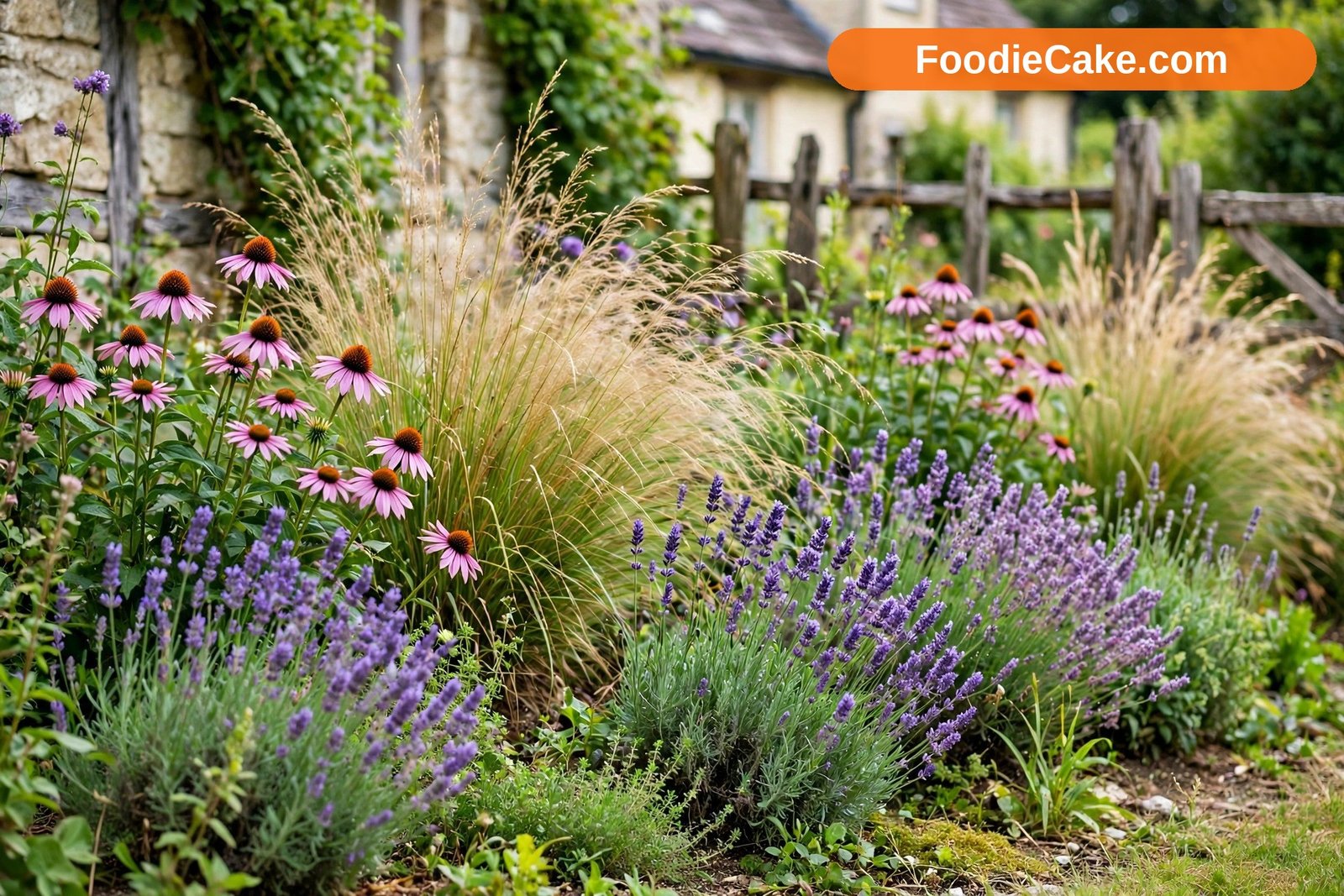
Match the Plant to the Problem Spot
Most gardeners shop backwards: they fall for a plant, then hunt for somewhere to put it. Low maintenance gardening works the other way round. Start with the spot that defeats you, then pick the plant that already likes those conditions.
| Your trouble spot | Plant from this guide | Why it works there |
|---|---|---|
| A baked, sunny strip along a fence | Lavender, sedum, Russian sage, coneflower | All four love sun and sharp drainage, and need almost no water once settled |
| Dry shade under a tree | Hostas | The backbone of the shady garden; thick, blue-leaved types cope best with dry shade |
| Heavy clay that stays wet in winter | Daylilies, hostas, coneflowers, ornamental grasses | All four cope with clay, especially with yearly mulch; lavender, sedum, and Russian sage do not |
| Pots on a patio | Lavender, sedum, hostas | Lavender and sedum love pots; hostas are easier to defend from slugs in a container |
| A small garden where every plant must earn its space | Compact lavender, Russian sage, and grasses; hostas for shady walls | Choose compact varieties and upright shapes so nothing crowds the paths |
If your spot is not on this table, the rule still holds: describe the spot honestly — sun, soil, wet or dry — and choose for that, not for the photo on the label. A plant matched to its place is a plant you barely have to think about again.
The Seven, One by One
Every plant below is a perennial in the zones listed, which means it returns year after year rather than needing replanting each spring like annual bedding. That single trait saves more time and money than any other. Give them one good first season of watering while their roots establish, and most will then look after themselves with little more than a tidy-up once or twice a year.
1. Hostas — the shade answer
Zones 3–9 · Partial to full shade · Soil that holds some moisture · One job a year: clear collapsed leaves after frost or in early spring.
Hostas are the backbone of the shady garden. Grown for their foliage rather than their modest summer flowers, they offer leaves in deep green, blue-grey, gold, and bold cream-edged patterns, from palm-sized miniatures to plants that spread over a metre across. In USDA zones 3 to 9 they are reliably hardy, dying back in winter and returning fresh each spring with almost no intervention.
Plant hostas in partial to full shade, in soil that holds some moisture. They tolerate dry shade once established, and the thicker, bluer-leaved varieties cope best, but they look happiest with a mulch and a drink during long dry spells in their first year. There is no pruning to speak of: just cut the collapsed leaves away after frost or leave them and clear them in early spring. Space them generously, because a cramped hosta loses the calm, layered look that makes it worth growing.
Their one honest weakness is slugs and snails, which can lace the leaves with holes, especially in wet springs. Thick-leaved and blue varieties suffer noticeably less damage, and that is a practical reason to choose them. Copper tape around pots, gritty mulch, and clearing hiding places nearby all help. Deer also love hostas in some regions, so if deer visit your garden regularly, plant hostas close to the house rather than at an open boundary.
2. Daylilies — the plant-and-forget flower
Zones 3–9 · Full sun for best flowering · Almost any soil that is not permanently waterlogged · One job a year: cut foliage down in late autumn or early spring; divide every four or five years.
Daylilies are about as close to plant-and-forget as flowering perennials get. Each individual flower lasts a day, hence the name, but a clump produces buds in such numbers that the show runs for weeks in midsummer. Modern varieties come in yellows, oranges, reds, pinks, and near-whites, and reblooming types flower again later in the season. They are hardy across USDA zones 3 to 9, sometimes wider depending on the variety.
Give daylilies full sun for the best flowering, though they accept light shade with slightly fewer blooms, and almost any soil that is not permanently waterlogged. They tolerate drought once established, cope with road-side pollution, and rarely suffer serious pest problems. Care amounts to pulling off spent flowers if you want to be tidy, cutting the foliage down in late autumn or early spring, and dividing a congested clump every four or five years, which also gives you free plants for other spots. The University of Minnesota Extension calls them rugged, adaptable perennials that endure for many years with little or no care — see their daylily growing guide for variety advice and planting detail.
3. Lavender — fragrance and structure in one mound
Zones 5–9 · Full sun · Gritty, sandy soil that never stays soggy · One job a year: trim flowered stems after flowering.
Lavender earns its place twice: once for its fragrant purple flower spikes in summer, and again for its neat, silvery evergreen mound the rest of the year. English lavender varieties such as ‘Hidcote’ and ‘Munstead’ are the hardiest choices, generally suited to USDA zones 5 to 9. In colder zones they may need a sheltered spot and sharp drainage to come through winter, and in very humid climates they can struggle with the damp air as much as with the soil.
Drainage is the whole story with lavender. Plant it in full sun, in gritty or sandy soil that never stays soggy, and raise it slightly on a mound if your soil is heavy. It actually dislikes rich feeding and heavy mulch against its stems. Water to establish it in the first season, then leave it alone; lavender is properly drought tolerant once settled, which is why it pairs so well with the other sun lovers in our guide to the best drought tolerant plants for gardens. Pruning is one job, done once a year: trim the flowered stems and a little of the leafy growth after flowering, or in early spring in colder areas, but never cut back into bare old wood, which often fails to regrow.
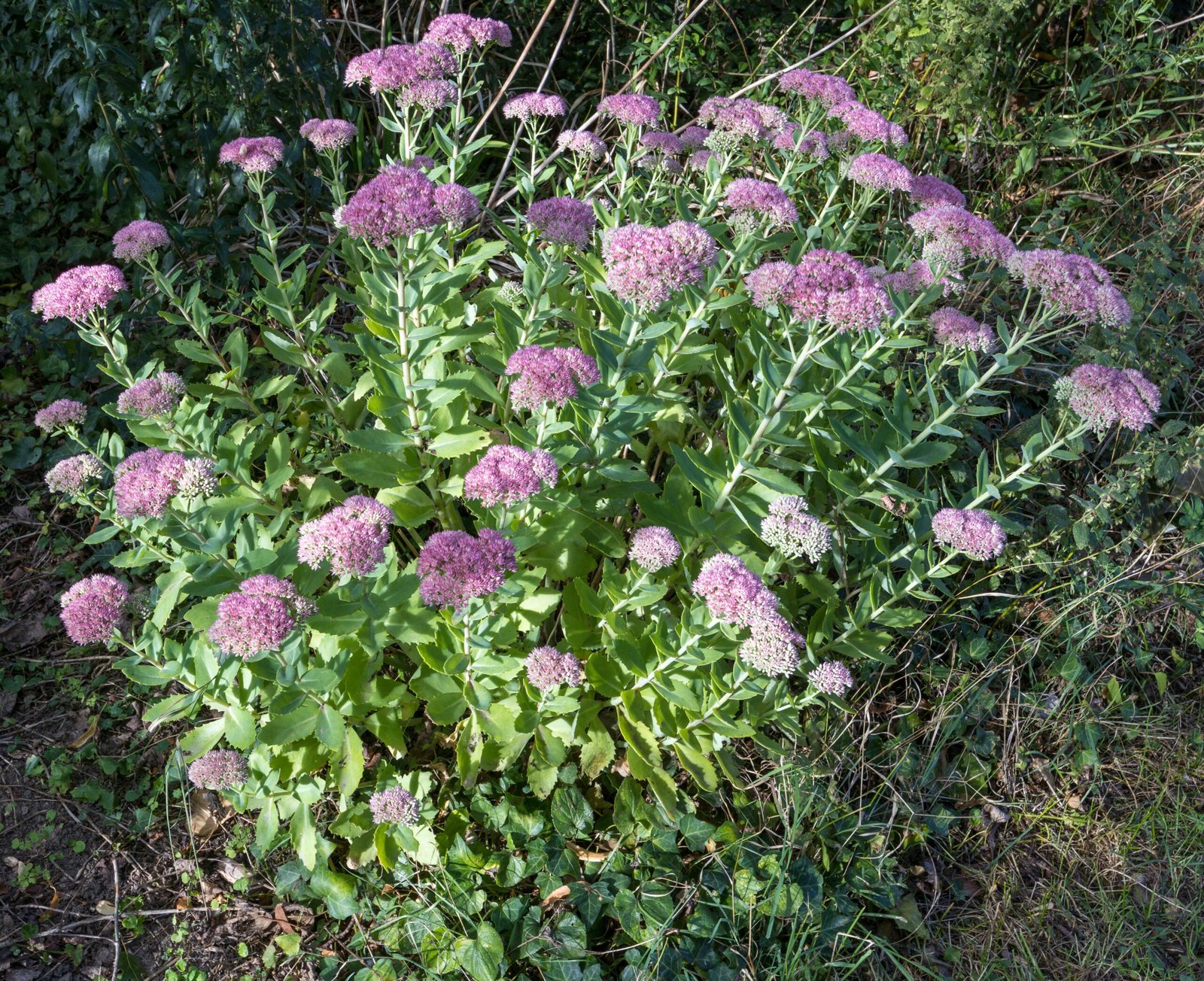
4. Sedum — built for the spots other plants refuse
Zones 3–9 · Full sun · Well-drained, even poor soil · One job a year: cut dried heads down in spring when new growth shows.
Sedums, especially the upright autumn-flowering types now often listed as Hylotelephium, such as ‘Autumn Joy’, are succulent-leaved perennials built for dry, sunny, poor soil where other plants complain. They are hardy in USDA zones 3 to 9, form tidy clumps of fleshy grey-green leaves, and finish the season with broad heads of dusty pink flowers that deepen to rusty red and feed bees and butterflies late in the year, when little else is open.
Plant sedum in full sun and well-drained soil. It tolerates drought, heat, shallow soil, and neglect, and asks only that it is not overwatered or overfed, both of which make the stems soft and floppy. In rich soil a tall sedum can splay open in the centre; growing it lean prevents that, and a Chelsea-chop style trim of the outer stems in late spring is an optional fix, not a requirement. Leave the dried flower heads standing over winter, because they look handsome in frost and shelter insects, then cut them down when new growth shows at the base in spring.
5. Ornamental grasses — movement, sound, and winter structure
Zones 4–9 depending on variety · Full sun · Free-draining soil · One job a year: cut the whole clump down in late winter or early spring.
Ornamental grasses bring movement, sound, and a long season of structure for almost no work. Unlike the flowering perennials, they look good from the moment their new shoots rise in spring until the whole plant stands bleached and rustling in midwinter. Reliable, hardy choices include switch grass and little bluestem for sunny North American gardens, generally USDA zones 4 or 5 to 9, and feather reed grass, which suits zones 4 to 8 and holds a neat, upright shape even in smaller plots.
Most ornamental grasses want full sun and free-draining soil, and most are drought tolerant once established. The yearly maintenance could not be simpler: leave the plant standing all winter, then cut the whole clump down to a few centimetres in late winter or early spring, before new growth gets going. That is it. No feeding programme, no deadheading, no staking. Divide clumps every few years only if the centre dies out or you want more plants.
Choose the size carefully before you buy, because grasses range from knee-high tufts to screening plants over two metres tall. Check whether a variety is clump-forming or spreading, too. Clump-formers stay where you put them, which is what a low maintenance plan needs.
6. Coneflower — the prairie plant that feeds the birds
Zones 3 or 4 to 8 or 9 · Full sun · Soil that drains reasonably well · One job a year: deadhead the first flush if you want a longer show; leave the rest for the birds.
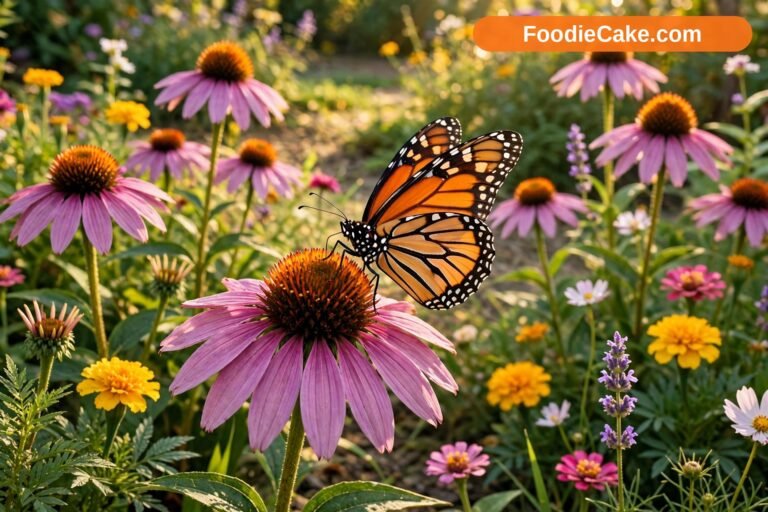
Coneflowers, the echinaceas, are prairie plants at heart, and that heritage makes them tough. Their daisy-like flowers, with the distinctive raised cone in the centre, open from midsummer into autumn in purple-pink, white, and newer warm shades of orange and yellow. They are generally hardy in USDA zones 3 or 4 to 8 or 9 depending on variety, with the straight purple species types usually the longest lived and most reliable of all.
Plant coneflowers in full sun and soil that drains reasonably well. They tolerate drought once established, flower without feeding, and need no staking in normal conditions. Deadheading the first flush can extend the show, but stop later in the season and leave the seed heads standing: goldfinches and other small birds feed on them, and the dark cones look striking against winter grasses. Plants can be short-lived in wet winter soil, sometimes lasting three or four good years rather than a decade, but they often seed themselves gently nearby, so the patch renews itself without you replanting it.
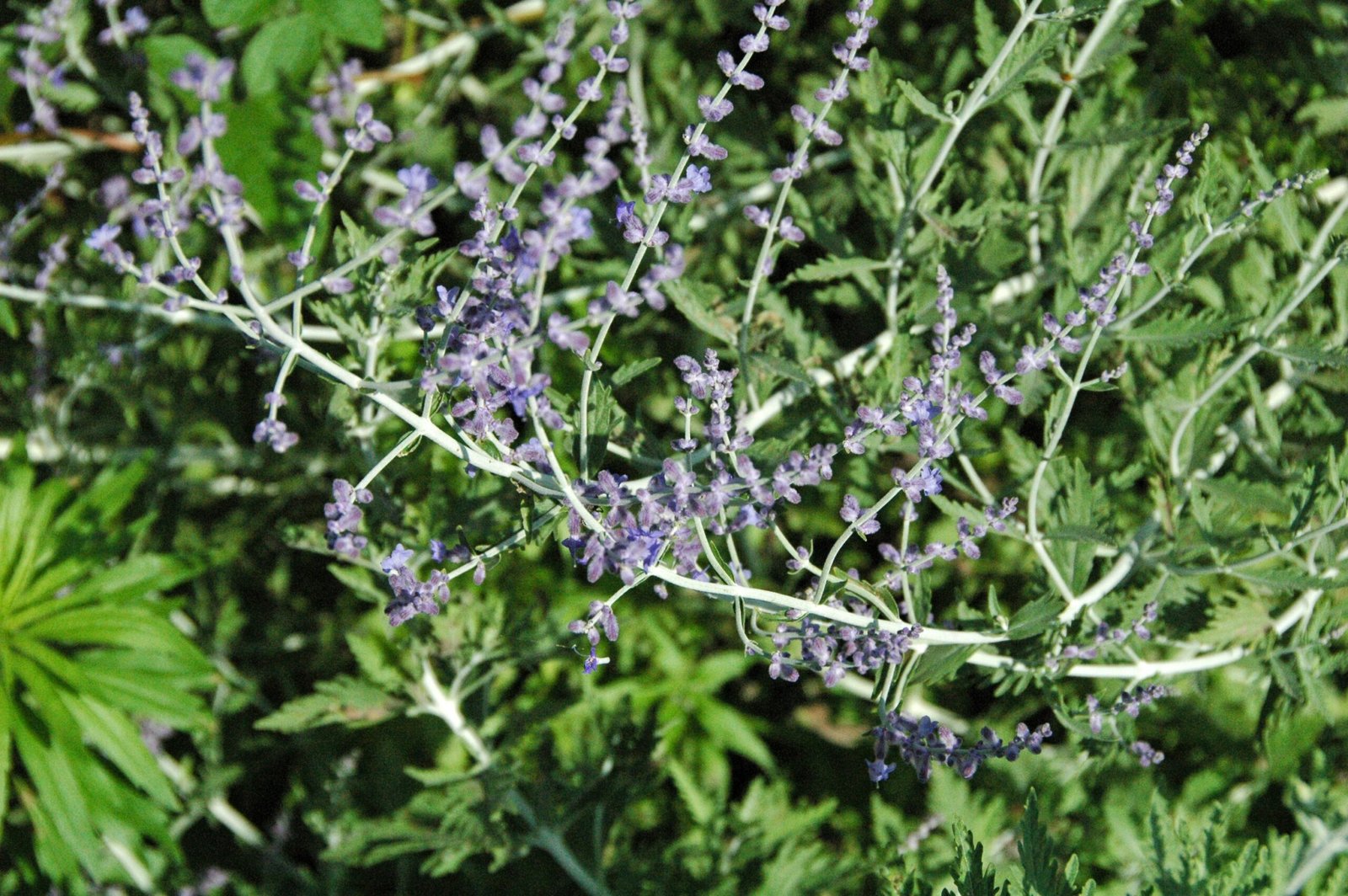
7. Russian sage — the plant that makes a border look designed
Zones 4 or 5 to 9 · Full sun · Well-drained soil · One job a year: cut all stems down to low buds in spring.
Russian sage is the plant that makes a sunny border look designed rather than merely planted. Through summer it carries clouds of small lavender-blue flowers on silvery-white stems above finely cut, aromatic grey foliage, and it keeps going for weeks when earlier perennials have finished. It is hardy in USDA zones 4 or 5 to 9, heat loving, and thoroughly drought tolerant once established.
Give it full sun and well-drained soil, and give it room, because a mature plant can reach well over a metre tall and wide. It dislikes wet winter soil and rich feeding, both of which make it lush and floppy. The single annual job is cutting all the stems down to low buds in spring, just as new growth starts; leave the silvery stems standing over winter, since they look good and protect the crown. It pairs beautifully with lavender, sedum, and coneflower, sharing their taste for sun and sharp drainage, so a border built from these four more or less runs itself after the first year.
The First Year Is the Only Hard Year
Plant choice is half the work; the other half is a few habits at planting time. Start by improving the planting hole sensibly rather than obsessively: loosen the soil wider than the pot, plant at the same depth the plant grew in its container, water the hole well, and firm the soil gently around the roots. Most hardy perennials do not need rich feeding at planting. In fact lavender, sedum, and Russian sage do better in leaner soil, so one-size-fits-all fertiliser is best skipped for them.
Water deeply and less often in the first season. A long soak once or twice a week encourages roots to grow down, where the soil stays moist, while a daily sprinkle trains them to the surface and creates a needy plant. By the second season, everything on this list should manage on rainfall alone in most climates, apart from hostas in dry shade during a long drought. If you are planning a whole plot around this approach, our step-by-step guide to how to create a low maintenance backyard garden covers layout, paths, and planting density in more depth.
Most perennials follow a rough pattern gardeners summarise as sleep, creep, leap. The first year they focus on roots and look modest, the second year they fill out, and by the third year they perform properly. Water them through dry spells in year one, mulch them, and resist judging them too early. A plant that looks unimpressive in its first summer is usually doing exactly what it should be doing underground.
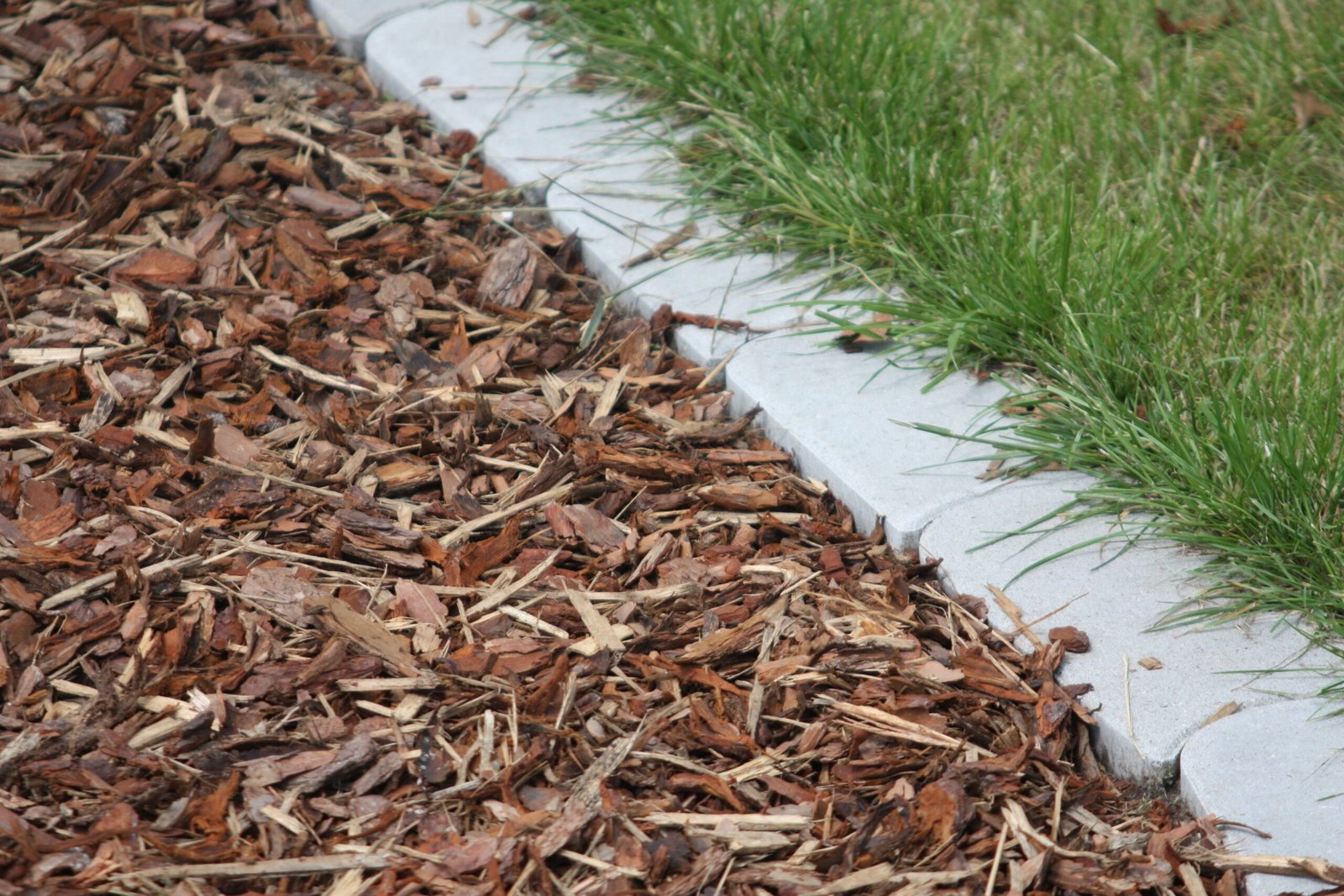
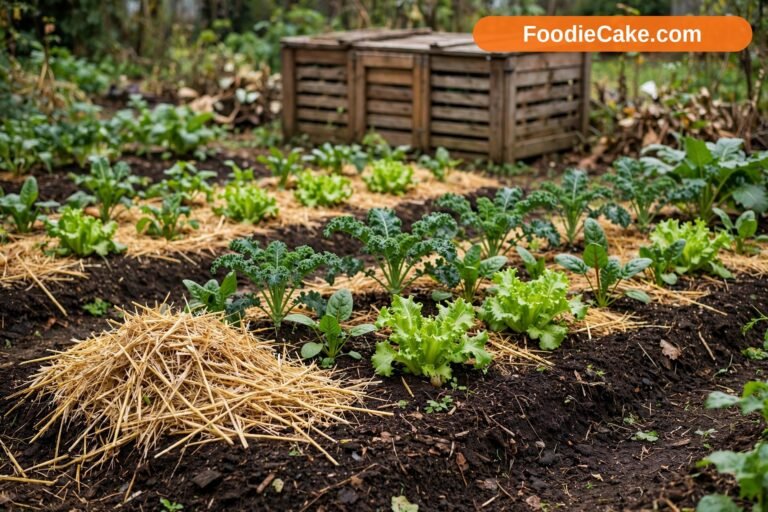
Mulch is the quiet hero of the low maintenance garden. A layer of bark, wood chip, or compost, roughly five to eight centimetres deep and kept just clear of plant crowns, suppresses most weed seedlings, holds moisture in summer, and protects roots in winter. Top it up once a year, usually in spring, and most borders will need only an occasional pass with a hoe or hand fork rather than a weekly weeding session. For gravel areas with lavender and sedum, a gravel mulch does the same job and suits those plants better.
Group plants by their needs, not just by looks. Put the drought lovers together where the soil is driest and sun strongest, and the hostas together where the soil stays cooler and damper. You will water less, lose fewer plants, and spend no time making exceptions for one thirsty plant in a dry border. Finally, plant densely enough that mature plants touch. Bare soil is an invitation to weeds; a full border shades its own soil and largely weeds itself. The RHS makes the same point in its guide to ground cover plants: a rapid, dense cover suppresses weed seeds and removes the need for weed control, though young plants still need watering in dry spells until they have formed that cover.
A Year in Four Jobs
Here is the whole maintenance calendar for these seven plants. Four visits a year, most of them short, and nothing in between unless you feel like deadheading.
| Season | What to do | Which plants |
|---|---|---|
| Late winter to early spring | Cut the whole clump down to a few centimetres; cut Russian sage stems to low buds; clear hosta and daylily leaves; top up mulch | Ornamental grasses, Russian sage, hostas, daylilies, everything mulched |
| Late spring | Optional Chelsea chop on tall sedum; check spacing as plants fill out | Sedum; the whole border |
| Summer | Trim lavender after flowering; deadhead the first flush of coneflowers if you want a longer show; water only first-year plants in dry spells | Lavender, coneflower, first-year plantings |
| Autumn | Tidy hostas and daylilies after frost, or leave them and clear in spring | Hostas, daylilies |
| Winter | Nothing — leave seed heads, grasses, and silvery stems standing; they feed birds and look good in frost | Coneflowers, grasses, Russian sage, sedum |
Notice what is missing from that table: no feeding programme, no spraying routine, no staking, no weekly deadheading. Leaving seed heads and grasses standing through winter feeds birds and looks good, so there is rarely a reason to rush the tidy-up. The garden does its winter work while you stay inside.
Where It Usually Goes Wrong
The commonest mistake is watering too little at the start and too much ever after. Even drought tolerant plants are not drought tolerant in their first season, because their roots are still the size of the pot they came in. Skipping establishment watering is why many tough plants die in their first summer. The fix is simple: water properly for one season, then step back with confidence.
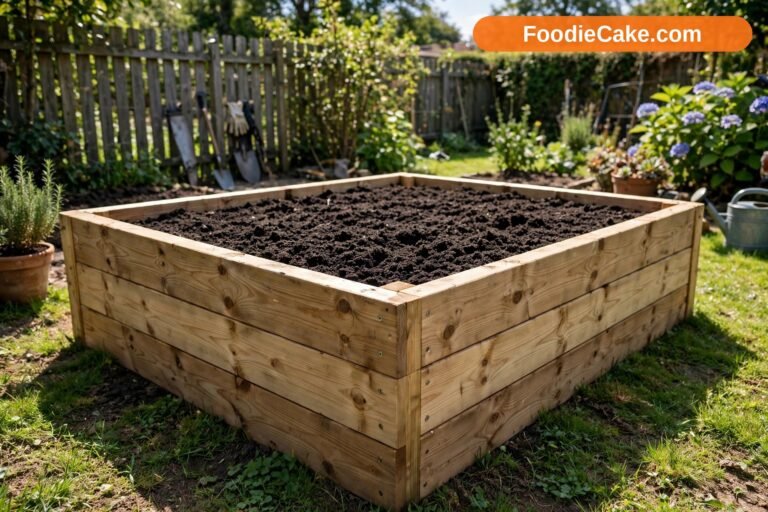
The second mistake is ignoring winter wet. More hardy perennials in cool climates are lost to soggy winter soil than to cold itself, and lavender and Russian sage top that list. If your soil sits wet in winter, grow those two in raised beds, on a slope, or in large containers of gritty compost rather than fighting your conditions. Choosing a different plant for a boggy spot is not failure; it is the entire method of this article.
Crowding and impatience cause quieter problems. Plants crammed too close compete, flop, and invite mildew in still, damp air, especially coneflowers. Space them according to their mature width, accept a gappy first year, and let mulch cover the gaps meanwhile. Conversely, dividing too eagerly is wasted effort: daylilies, hostas, and grasses can all go four or five years, often longer, before a clump genuinely needs lifting and splitting.
Pests and diseases, honestly assessed, are minor on this list. Hostas face slugs, coneflowers can pick up mildew or aster yellows in unlucky years, and a stressed lavender may sulk, but none of these plants needs a spraying routine. Remove badly affected leaves, improve air flow, water at the base rather than overhead, and most problems fade. A garden with a few chewed leaves and no weekly chemical chores is the trade this style of planting happily makes.
Before You Buy: Six Honest Questions
What is the lowest maintenance perennial of all?
Sedum and daylilies are probably the hardest to get wrong, because both tolerate drought, poor soil, and years without dividing. Russian sage and ornamental grasses run them close. Hostas are equally easy, but only in shade, and lavender is easy only where drainage is good, so the right answer depends on your spot.
How long do these plants take to establish?
Most perennials follow a rough pattern gardeners summarise as sleep, creep, leap. The first year they focus on roots and look modest, the second year they fill out, and by the third year they perform properly. Water them through dry spells in year one, mulch them, and resist judging them too early.
Can low maintenance plants work in a small garden?
Yes, and small gardens benefit most, because every plant has to justify its space across several seasons. Choose compact varieties of lavender, Russian sage, and ornamental grasses, use upright plants to avoid crowding paths, and lean on hostas for shady walls and fences where little else performs.
Do any of these plants suit heavy clay soil?
Daylilies, hostas, coneflowers, and many ornamental grasses cope well with clay, especially if you mulch yearly so the soil improves gradually. Lavender, sedum, and Russian sage are the clay exceptions; they need drainage help, such as a raised bed, a slope, plenty of grit, or a container.
When should I cut these plants back?
Ornamental grasses and Russian sage are cut down in late winter or early spring, just before new growth. Hostas and daylilies can be tidied after frost in autumn or left and cleared in spring. Leaving seed heads and grasses standing through winter feeds birds and looks good, so there is rarely a reason to rush.
Will these plants survive in pots?
Most of them will, in large enough containers with drainage holes. Lavender and sedum are particularly good in pots, and hostas are excellent there, partly because a pot is easier to defend from slugs. Remember that pots dry out far faster than soil, so container plants will always need more watering than the same plants in the ground.
A low maintenance garden is not a neglected one. It is a garden where the hard thinking happened at the plant shop and the planting stage, so that the seasons afterwards are spent cutting flowers, watching bees, and doing the odd satisfying tidy rather than rescuing struggling plants. Match the plant to your sun, soil, and zone, water it through its first year, mulch once a year, and these seven will repay you for a decade.
Start with three that suit your trickiest spot, whether that is dry shade under a tree or a baked strip along a fence. Get those settled, see how little they ask of you, and build from there. The best low maintenance garden grows one easy success at a time.
Sources
- University of Minnesota Extension — Daylilies (extension.umn.edu)
- Royal Horticultural Society — Ground Cover Plants (rhs.org.uk)


3 Comments