

How often should you water garden plants? If you ask ten gardeners, you will get ten different answers, and most of them will be right — for their garden, their soil, and their weather that week. That is not a cop-out. Watering is the one garden job where a fixed timetable almost always lets you down, because plants do not drink to a calendar. They drink according to how hot it is, how deep their roots go, what kind of soil they are sitting in, and whether it rained two nights ago.
That uncertainty is exactly what makes watering feel stressful, especially in your first season or two. Water too little and plants wilt, stall, and drop flowers. Water too much, too often, and you can quietly suffocate roots in soggy soil while the leaves above look just as miserable as a thirsty plant. The good news is that you do not need to guess. Once you learn to read the soil and the plant in front of you, the question stops being “is it Tuesday, so do I water?” and becomes “does this plant actually need water today?” — and that second question has a clear answer almost every time.
This guide walks through how to make that judgement with confidence. You will find the familiar one-inch-a-week guideline explained honestly, simple moisture checks that take seconds, why deep watering beats a daily sprinkle, how pots, beds, and lawns differ, and how needs change from a tiny seedling to a well-settled shrub. By the end, you should be able to walk your garden with a watering can or hose and know, bed by bed, what needs a drink and what is perfectly fine.
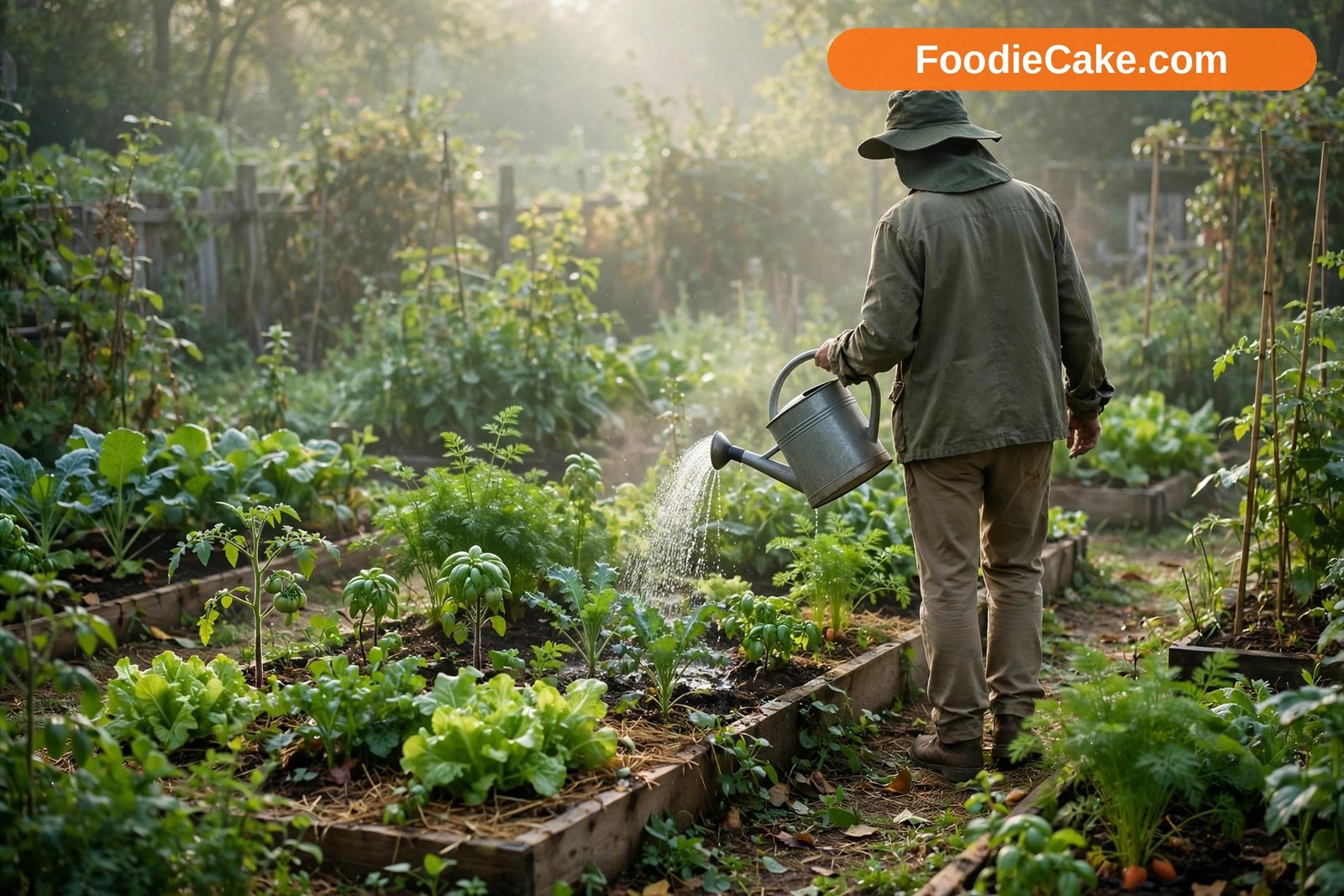
Why There Is No Single Schedule That Works for Every Garden
It would be lovely if the answer were simply “every other day” or “twice a week.” The trouble is that two gardens on the same street can need completely different watering on the same day. One sits on free-draining sandy soil that lets water slip straight through. The other sits on heavier clay that holds moisture for days after rain. One is sheltered by fences and trees. The other is an open, windy plot where the surface dries by lunchtime even when the soil below is still damp.
Plant choice widens the gap further. A shallow-rooted lettuce wants frequent, light moisture near the surface. A mature tomato, a rose, or a young tree sends roots much deeper and prefers a thorough soak that reaches down where those roots actually are, followed by a pause while the top layer dries a little. Herbs from dry, sunny climates, such as rosemary and lavender once they are established, actively dislike sitting wet. Bog-loving plants are the opposite. Lumping them all onto one sprinkler timer treats none of them well.
Weather does the rest. A cool, cloudy, still week in spring might need no watering at all in open ground, even if your calendar says it is watering day. A hot, dry, windy spell in midsummer can empty a pot by evening and leave even a mulched bed thirsty. Rain complicates the picture too, because not all rain is useful rain. A brief shower may only wet the leaves and the top few millimetres of soil, while a slow, steady downpour can do your watering job for you for several days.
So instead of hunting for a universal schedule, build a habit of checking. Experienced gardeners are not following a secret timetable. They are looking, touching the soil, noticing which plants flag first in the heat, and adjusting. That habit is learnable in a single season, and the sections below break it into practical pieces.
The One-Inch-a-Week Guideline — and What It Actually Means
You will often hear that most garden plants need roughly an inch of water a week, including rainfall. Treat that as a helpful starting guideline, not a law. For many established vegetables and flowers growing in average soil in temperate weather, it is a reasonable rough target: enough to wet the root zone properly without keeping the ground permanently saturated. In hotter weather, in sandy soil, or for plants in full fruit, needs can be higher. In cool weather, on clay, or under thick mulch, they can be lower.
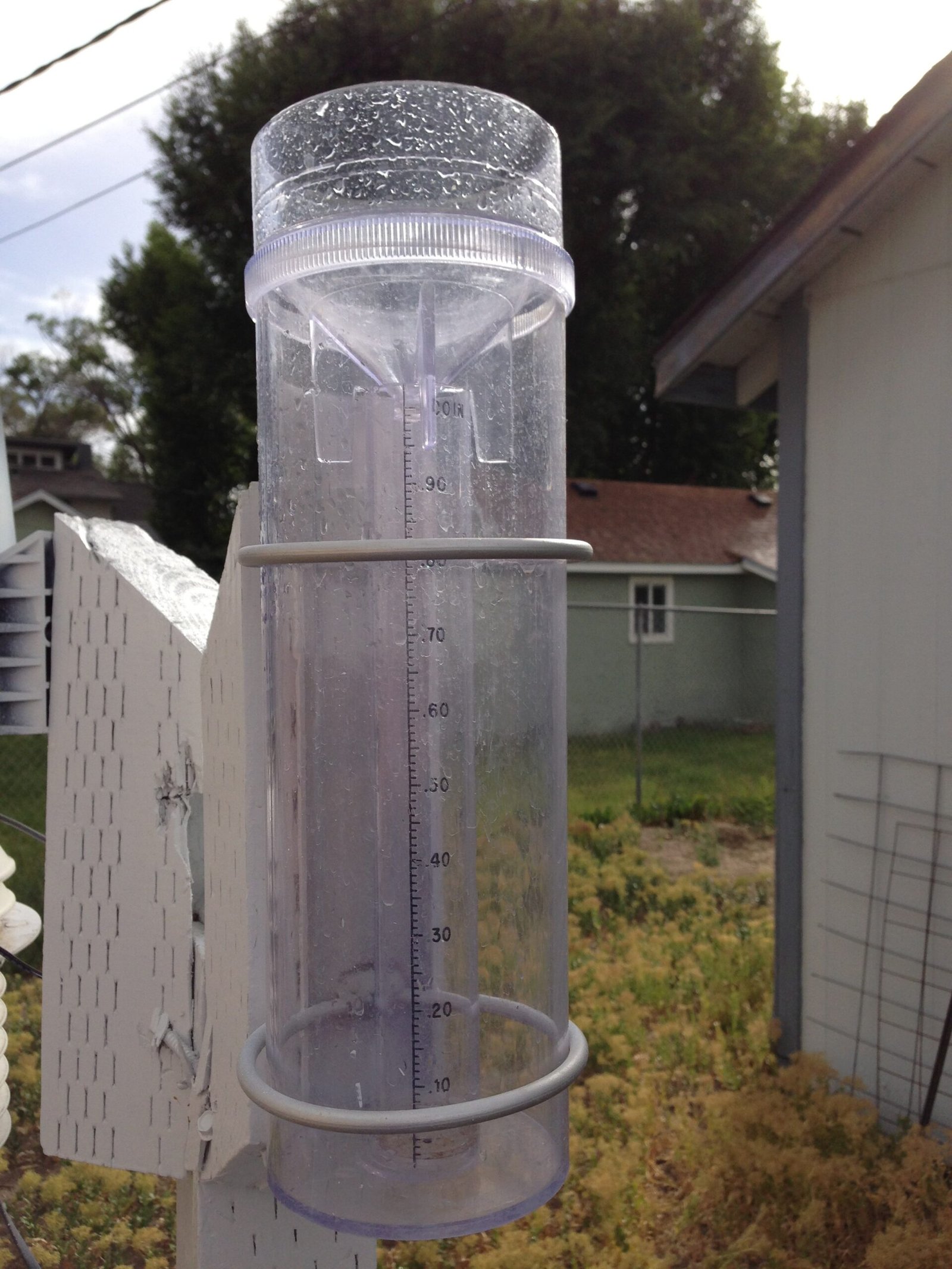
What does “an inch of water” mean in practice? It means water spread evenly over the soil surface to a depth of about an inch, which in turn usually wets the soil several inches down, depending on the soil type. If you use a sprinkler, you can measure what you are actually delivering by setting out a straight-sided empty tin or a rain gauge where the water falls and timing how long it takes to collect that depth. Most people who try this once are surprised — sprinklers often deliver far less, far less evenly, than they look like they are delivering. A hose with no nozzle, a watering can, and a soaker hose all deliver water very differently again, which is why measuring once for your own setup is more useful than any minute-by-minute watering chart from a book.
Count rainfall honestly, too. A rain gauge is a cheap and humbling tool. What felt like a good soaking rain while you watched from the window often turns out to be a few millimetres that barely touched the root zone under a leafy canopy. On the other hand, a night of steady rain can leave beds moist for days. A simple rule is this: if useful rain has fallen, check the soil before you water anyway, and skip or reduce watering if the root zone is still moist. If the weather has been dry and hot, assume the guideline is a minimum for thirsty crops rather than a ceiling.
New plantings, seeds, and containers sit outside this guideline almost entirely, and they are covered separately below. Use the inch-a-week idea for settled beds and borders, then let your soil checks fine-tune it.
The Finger Test and Other Simple Ways to Check Soil Moisture
The most reliable watering tool you own is a finger. Push it into the soil up to about the second knuckle — roughly two to three inches deep for most beds — away from the stem but within the root zone. If the soil at that depth feels dry and crumbly and does not stick to your skin, most vegetables and flowers need water. If it feels cool and slightly damp and holds together, you can usually wait. For deeper-rooted shrubs and young trees, check deeper still, with a trowel or a long screwdriver, because the surface can mislead you in both directions.
Do this check in a few spots, not just one. The sunny end of a bed dries faster than the shaded end. Soil near a wall or fence can be surprisingly dry because the wall shelters it from rain and draws warmth, even when the middle of the bed is fine. In pots, check near the edge and near the plant, and learn what a just-watered pot and a dry pot feel like by weight. Lifting pots is a skill worth building. A dry pot is noticeably lighter, and after a few weeks you will be able to judge most containers before you even touch the soil.
A few other simple clues help. Soil that has pulled away from the edge of a pot and looks pale and dusty on top is often dry below, too — though you should still confirm with a finger, because a dry crust can hide damp soil underneath, especially on clay. A wooden skewer or chopstick pushed into a pot and left for a minute works a bit like a dipstick: damp soil clings to it and darkens the wood, dry soil leaves it mostly clean. Inexpensive moisture meters exist and some gardeners like them for houseplants and large containers, but they are not essential outdoors if you are willing to get your hands dirty, and their readings vary. Your fingers, used consistently in the same spots, become surprisingly accurate.
Check at the time you would water, ideally in the morning. A plant that looks a little soft in the fierce heat of mid-afternoon but perks up by evening may simply be protecting itself from heat rather than begging for water, while a plant still wilting first thing in the morning almost always needs a drink.
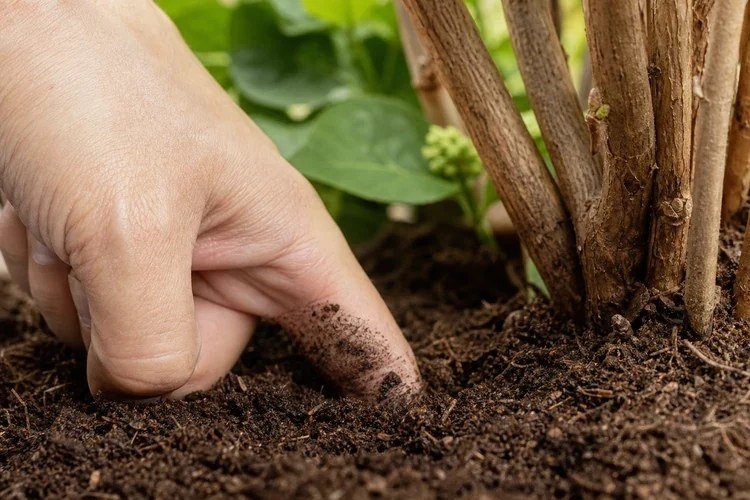
Water Deeply and Less Often, Not a Little Every Day
If you remember one principle from this article, make it this one: when you water, water thoroughly. A deep soak that wets the whole root zone, followed by a gap before the next soak, encourages roots to grow downwards where soil stays cooler and moisture lasts longer. A light daily sprinkle does the opposite. It wets only the top layer, so roots gather near the surface, where they are first to suffer the moment you miss a day, go on holiday, or a heatwave arrives.
Think about what happens after each style of watering. After a deep watering, the upper soil begins to dry while deeper soil stays moist, and roots follow that moisture down. The slight drying at the surface between waterings also helps, because roots need air as well as water, and soil that is never allowed to dry at all can become airless. After a shallow sprinkle, evaporation takes most of what you applied before it reaches any root that matters, which is why little-and-often watering wastes the most water while helping the plant the least — outside of seeds and tiny seedlings, which are a special case.
How deep is deep enough? For most vegetables and annual flowers, aim to moisten the soil at least six inches down, and more for tomatoes, sweet corn, and other deep or hungry crops. For shrubs and young trees, the wet zone needs to reach further still. Water slowly enough that it soaks in rather than running off. A fast blast from a hose on dry, hard soil mostly sheets across the surface. A gentle flow, a soaker hose left to seep, or moving a sprinkler before puddles form all give water time to enter the soil. On slopes and on very dry ground, water in two shorter passes with a break in between. The first pass softens the surface; the second actually penetrates.
This is where delivery method matters. Drip lines and soaker hoses put water at soil level, slowly, exactly where roots are, with very little lost to wind or evaporation. If watering by hand is eating your evenings, learning how to set up a simple drip system can change the whole job from a daily chore into a timer and a weekly check. Whatever method you use, aim the water at the soil, not the foliage. Wet leaves do not water a plant, and in warm, still weather, leaves that stay wet for hours are more inviting to fungal problems.
Morning vs Evening: When in the Day to Water
Early morning is, for most gardens, the best time to water. The air is cooler, wind is often lighter, and less of what you apply evaporates before it soaks in. Plants take up water as the day warms and they begin to work, and any splashes on the leaves have the whole day to dry. If you water with a sprinkler or hose, morning also means you are not standing in the midday sun doing it, which is not a trivial benefit in July.
Evening watering is a perfectly workable second choice, and for gardeners who leave early for work it may be the only realistic one. Water at the base of plants where you can, and try to finish early enough in the evening that foliage is not going into the night soaking wet, particularly in humid weather or on plants prone to mildew, such as courgettes, cucumbers, and roses. In many dry, hot climates, evening watering has a real advantage: almost nothing evaporates, and the soil holds that moisture through the night for roots to use at dawn. Slugs and snails are more active on damp ground at night, so if they are your main enemy, morning watering suits you better.
Midday watering is not the disaster it is sometimes made out to be — water droplets on leaves do not normally scorch plants like tiny magnifying glasses, despite the old story — but it is wasteful in hot sun because so much evaporates, and a plant wilting at noon in a heatwave will be grateful for water whenever you can give it. Do not let the perfect time stop you from rescuing a genuinely thirsty plant at the time you notice it. In containers especially, a midday emergency drink is far better than waiting for an ideal hour while roots cook in a hot pot.
Be consistent where you can. A regular morning round, can or hose in hand, doubles as your daily inspection for pests, ripe crops, and problems starting. Many gardeners find that inspection catches more trouble early than the watering itself prevents.
Containers, Raised Beds, Beds and Lawns Need Different Answers
Containers dry out faster than any other growing space, and it is not close. A pot holds a small, exposed volume of compost, warmed from all sides, drained from below, and filled with roots by midsummer. In hot, sunny, or windy weather, most outdoor pots need watering every day, and small pots, hanging baskets, and fabric grow bags can need it twice a day. Terracotta dries fastest of all because water wicks through its walls. The finger test still rules, but in a heatwave, assume pots need checking daily even if it rained — a leafy plant acts like an umbrella and sheds a surprising amount of rain off its pot entirely. Water pots until a little runs from the drainage holes, so you know the whole root ball is wet, and empty saucers that stay full afterwards so roots are not sitting in stagnant water.
Raised beds sit in the middle. They drain more freely than ground-level beds and warm up faster, which is lovely in spring and thirsty in summer. Freshly filled raised beds, and those with very free-draining, compost-rich fill, can dry noticeably faster than the surrounding garden for their first season or two. Mulching them makes a bigger difference than almost anything else you can do. Ground-level beds and borders, by contrast, tap into the moisture of the soil below, and established plants there may go a week or more between waterings in ordinary summer weather — sometimes the whole season with little help in a damp climate, once they are truly settled.
Lawns are a different question again, and the honest answer is that an established lawn can be left to go a little brown in a dry spell and will usually green up when rain returns, unless your region or water rules say otherwise or the lawn is brand new. New turf and newly seeded lawns are the exception: they have almost no root depth and need consistent moisture until they knit in and root down. If you do water an established lawn, follow the same deep-and-infrequent principle — a thorough soak now and then encourages deeper roots, while a daily light spray keeps roots at the surface and trains the grass to be thirsty. Let your local water restrictions, if any, have the final word for lawns, since they are the least urgent drinkers in most gardens.
Seedlings, Transplants and Established Plants
Newly sown seeds and tiny seedlings live by different rules because their entire world is the top inch of soil. That layer must stay evenly moist — not sodden, but never fully dried out — until germination and for the first days afterwards, or seedlings can die in an afternoon without ever looking dramatic about it. A fine spray, a light watering with a rose on the can, or covering a seed tray to hold humidity all help. Once seedlings have true leaves and roots reaching down, begin the transition: water a little less often, a little more deeply, so they learn to reach for moisture like older plants.
Transplants, even big healthy ones, behave like new plants for a while. Their roots occupy only the plug or pot shape they arrived in, and the surrounding soil can be moist while that small root ball is dry. Water transplants thoroughly at planting to settle soil around the roots with no air pockets, then keep that root-ball zone moist for the first couple of weeks, checking with a finger right beside the plant rather than halfway to the next one. A little shade or fleece on fierce days reduces stress while roots venture outwards. Wilting in the first few afternoons after transplanting is common and not always a watering failure, but persistent morning wilt means the roots are not yet finding enough water — so give it to them where they are.
Established plants are the forgiving ones. A shrub, perennial, or tree that has had a season or more to root widely can draw on a large volume of soil and ride out gaps that would finish a seedling. That does not mean they never need water. Young trees and shrubs in their first year or two in the ground deserve deep watering during long dry spells even when the rest of the border is left alone, because their roots have not yet reached far. Fruiting vegetables are established but thirsty in a different way: tomatoes, beans, courgettes, and cucumbers need steady moisture while fruit is forming and swelling, and uneven watering at that stage is linked to problems such as blossom end rot on tomatoes and peppers and split fruit after a drought breaks. Steady, not constant, is the word. Roots in soil that stays wet and airless cannot take up nutrients properly, and the plant suffers as surely as a dry one.
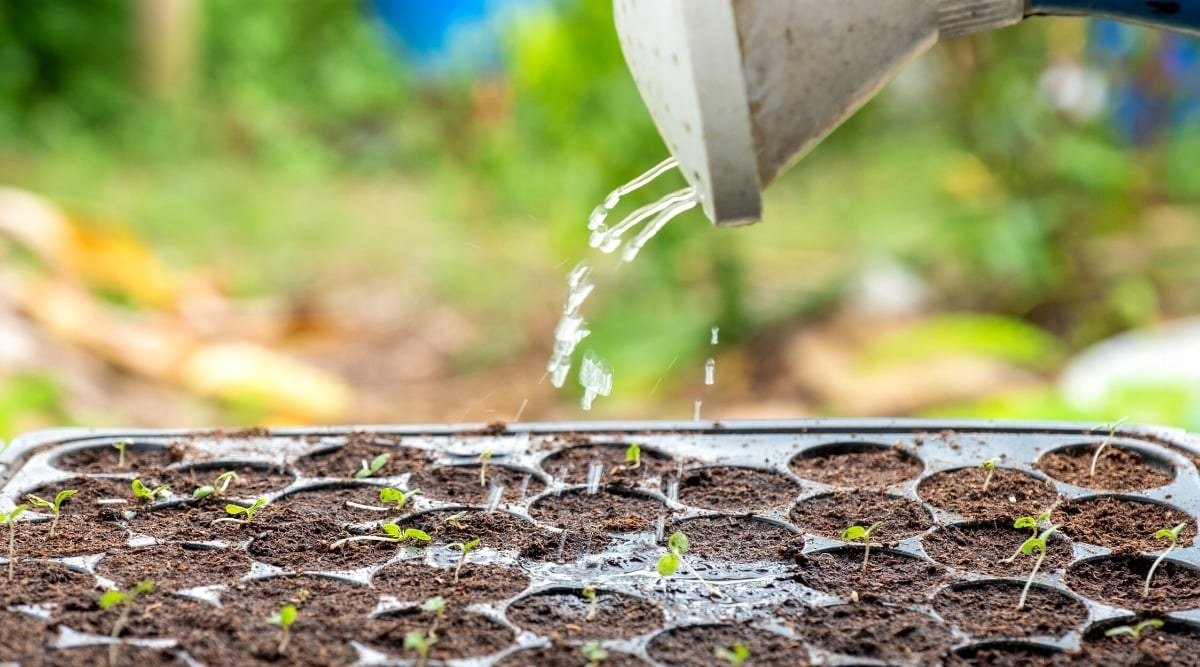
Signs You Are Overwatering — and Signs You Are Underwatering
Underwatering is usually the easier of the two to read. Leaves wilt and lose their shine, growth slows or stops, flower buds drop, and the edges or tips of leaves may turn dry and crisp. The soil is dry well below the surface, pots feel light, and plants often recover within hours of a thorough watering if you catch them in time. Repeated hard wilting, though, does lasting damage: roots die back, fruit splits or turns bitter, and a plant that has wilted to collapse several times rarely performs as well afterwards. Learn which plant in each bed wilts first — most gardens have an early-warning plant — and let it prompt your soil check, not your panic.
Overwatering is sneakier because its above-ground signs can look almost identical: wilting, yellowing leaves, and poor growth. The difference is in the soil. If a plant is wilting while the soil at root depth is wet, more water is the worst response. Roots in saturated soil cannot breathe, they begin to rot, and a rotted root system cannot drink — so the plant wilts from thirst in wet ground. Other clues include yellowing that starts on lower or inner leaves, soft or mushy stem bases, a sour smell from a pot, fungus gnats hovering over houseplant and greenhouse pots, green algae or moss forming on the compost surface, and soil that never seems to dry between waterings. In beds, persistently wet patches after modest watering point to heavy or compacted soil and poor drainage, which watering less often only partly fixes.
When in doubt, check before you act, and check low. Dig or push a finger down to where the roots are and believe what you find there over what the surface or the leaves seem to say. If it is wet, wait, improve air flow, and let the plant dry down. If it is dry, water deeply on the spot. That ten-second check prevents most watering mistakes in both directions.
How Soil Type and Mulch Change Everything
Soil type decides how water behaves once it leaves your can. Sandy soil lets water pass through quickly. It warms fast and is easy to work, but it holds little in reserve, so sandy gardens need watering more often, in somewhat smaller, more frequent deep drinks, and they benefit enormously from added organic matter over time. Clay soil is the mirror image. It holds water for a long time once it is wet, but it can be slow to absorb water when dry, so it needs slow, gentle application to avoid run-off, and then longer gaps between waterings. Loam — the crumbly middle ground most gardeners aim for — absorbs and holds water in the most forgiving balance. Knowing your soil honestly matters more than following any watering chart written for someone else’s ground. If you are not sure, squeeze a handful of damp soil: sand feels gritty and falls apart, clay feels smooth and holds a sausage shape, loam holds together loosely and crumbles under pressure.
Organic matter is the great leveller. Compost and well-rotted manure worked into beds, or simply laid on top year after year, help sandy soil hold moisture longer and help clay absorb and drain more evenly. It is slow work, measured in seasons, but few investments pay off in easier watering like it does.
Mulch is the fast version of the same idea. A layer of organic mulch — compost, leaf mould, straw, shredded bark, or grass clippings used thinly and kept away from stems — shades the soil, slows evaporation, softens the impact of heavy rain and hose water, and keeps the surface from baking into a crust that sheds water. Under mulch, beds need watering noticeably less often, and the moisture they have is more even. Choosing the right material for the job matters, which is why our guide to the best mulch for vegetable gardens is worth reading before you spread anything around thirsty crops. Apply mulch to moist soil, ideally after rain or a good watering, because mulch laid on dry ground can also slow rain getting in. Keep it a few centimetres deep for most beds, top it up as it rots down, and remember that mulched soil fools the eye — always check moisture underneath it, not on top of it.
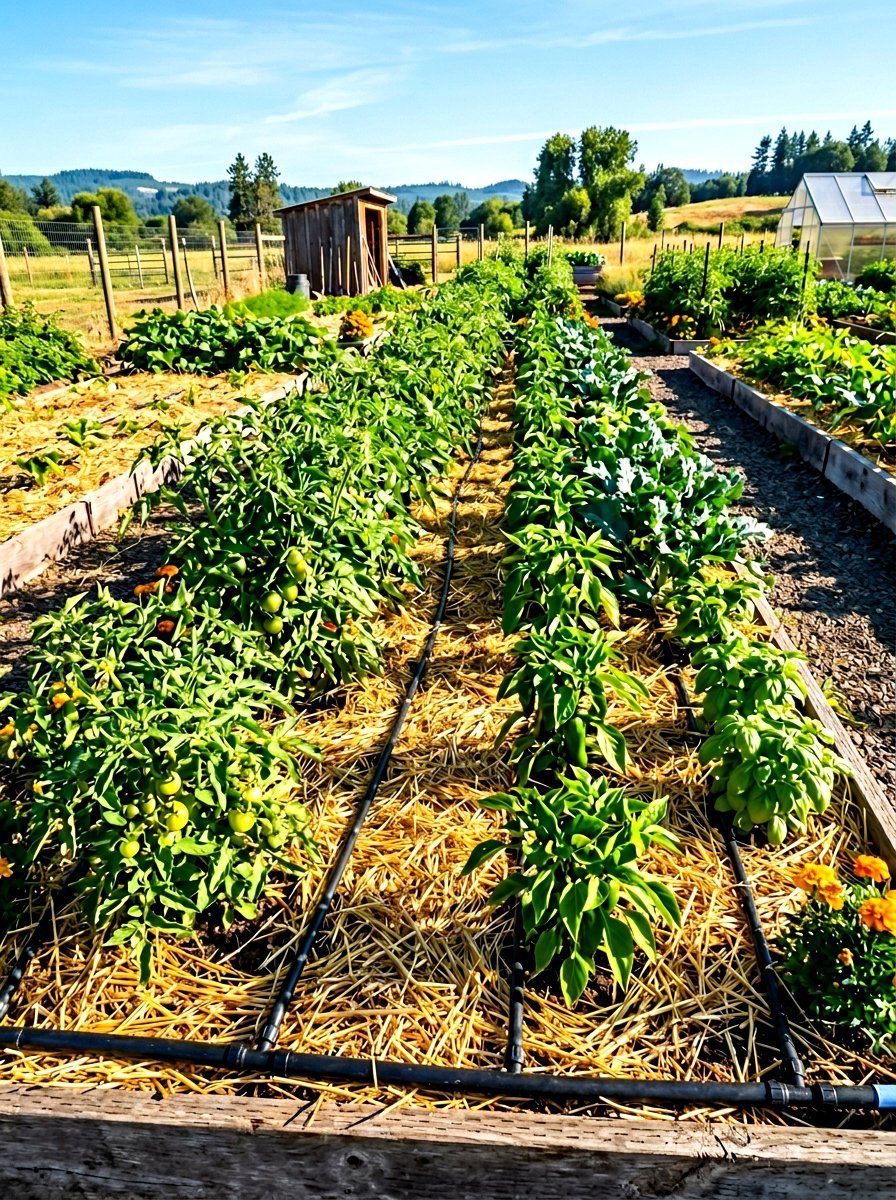
Adjusting Through the Seasons and for Your Climate
Spring watering is about encouragement without indulgence. The soil often holds winter moisture deep down while the surface dries in bright, windy weather, exactly when young plants have shallow roots. Water new plantings and sowings attentively, but leave established borders alone more than instinct suggests, and let roots go looking downwards early in the season. Cold water on cold soil also slows things, so in a chilly spring, watering later on a sunny morning, once the day has warmed a little, is kinder than dawn watering with icy water from an outdoor butt — though this is a refinement, not a rule worth stressing over.
Summer is the season of honest demand. Long days, heat, wind, and plants at full leaf and full fruit all pull moisture at once. This is when deep watering earns its keep, when pots may need twice-daily attention, and when a holiday watering plan — a neighbour, a timer, or moving pots into light shade and grouping them together — decides whether you come home to a garden or a loss. Grouping containers helps more than people expect: pots clustered together shade each other’s sides and create a slightly more humid pocket of air.
Autumn watering is easily forgotten and often still needed. Dry autumns are common in many regions, and newly planted perennials, shrubs, and trees put out roots in warm autumn soil and need moisture to do it. Evergreens going into winter in dry soil are vulnerable in cold, windy weather, because they keep losing water from their leaves while frozen or dry roots cannot replace it. A thorough watering of new and evergreen plantings before the ground freezes, where winters are cold enough for that to apply, is one of the most useful waterings of the year.
As for climate and zones, hedge your plans plainly. Gardeners in hot, arid regions will water far more often, lean heavily on mulch and shade, and favour evening or early-morning watering to beat evaporation. Gardeners in cool, rainy maritime climates may water beds only in dry spells but still wrestle with pots under eaves that never see rain. Altitude, wind exposure, and whether your garden faces the midday sun change things as much as your zone number does. Use every number in this guide, including the inch a week, as a starting point for your plot, then adjust by checking your own soil for a few weeks. Your garden will teach you its rhythm faster than any general advice can.
Practical Tips for Getting Watering Right
Water the soil, not the plant. Aim cans, hoses, and drip lines at the base, under the canopy, where roots can use what you give. Foliage wetting is wasted water at best.
Make a morning round your habit in summer. Kettle on, walk the garden, finger-check the beds that dry first and every pot, and water only what needs it. Ten minutes of checking saves hours of rescue work later.
Water slowly enough to soak in. If water puddles or runs off, stop, let it settle, and come back. Two gentle passes beat one flood, especially on dry clay and on slopes.
Put a rain gauge and a water butt to work if you can. The gauge stops you watering after useful rain and stops you trusting useless rain. A butt gives you stored, air-temperature water for pots and seedlings, and in many places it takes a little pressure off mains water in a dry spell.
Mulch after watering, group pots together, and choose bigger pots over smaller ones wherever you have the choice. All three reduce watering work more reliably than any gadget.
Keep notes for one season, even rough ones. Which bed dried first, which crop sulked in the dry spell, when the pots switched to daily watering. Next year those notes are worth more than a generic watering calendar, because they describe your soil and your microclimate.
Teach the stand-ins. If someone waters for you while you are away, leave instructions by plant and pot, not by day. “Soak the tomato pots until water runs through, every morning unless it poured overnight” survives real life far better than “water everything on Tuesday and Friday.”
Problems to Watch For When Watering Goes Wrong
Some problems blamed on pests, feed, or variety are watering problems wearing a disguise. Blossom end rot — the dark, sunken patch on the bottom of tomatoes and peppers — is tied to uneven moisture that interrupts calcium movement within the plant, even when there is plenty of calcium in the soil. The fix is rarely a supplement. It is steadier watering and mulch. Splitting and cracking fruit, especially tomatoes and plums, often follows the same pattern: dry roots, sudden heavy water, fruit swelling faster than its skin can stretch.
Root and crown rots are the serious end of overwatering. Plants yellow, wilt in wet soil, and collapse at the base, and by the time the stem is soft the damage is usually done. Prevention is drainage, restraint, and not planting a dry-loving herb in the boggiest corner because there was a gap there. Fungal leaf problems flourish where foliage stays wet and air barely moves, so spacing, base watering, and morning timing all quietly reduce them. Shallow, weak roots from constant light watering show up later as plants that collapse in the first real heatwave and lawns that brown within days — the season’s earlier kindness turning out not to have been kind at all.
Finally, watch your water itself. In areas with watering restrictions, prioritise in a sensible order: new plantings and food crops first, pots next because they cannot reach other moisture, young trees and shrubs after that, and established borders and lawns last, since they cope best. A garden watered thoughtfully through a dry spell, with the thirsty and the new looked after and the settled left to their deep roots, usually comes through in far better shape than one sprayed lightly and evenly everywhere, every day, until the can runs dry.
Frequently Asked Questions
How many times a week should I water my garden?
For established plants in open ground, once or twice a week with a deep soak is a common pattern in dry weather, and often not at all in a rainy week. Containers are different and may need water daily. Let the soil check decide rather than the calendar: if the root zone is still moist, wait, whatever day it is.
Is it better to water every day or every few days?
For most plants, every few days with a thorough soak is better, because it encourages deep roots and lets the surface dry enough for air to reach them. The exceptions are seeds, tiny seedlings, and containers in hot weather, which may genuinely need daily — even twice-daily — attention because their root zone is so small.
How do I know if I am overwatering my plants?
Check the soil at root depth. If a plant wilts, yellows, or grows poorly while that soil is wet and stays wet for days, overwatering or poor drainage is likely. Other signs are a sour smell from pots, soft stem bases, algae on the surface, and soil that never dries. Stop watering, let the plant dry down, and fix drainage before watering again.
Should I water in the morning or evening?
Morning is ideal for most gardens: less evaporation, and leaves dry quickly during the day. Evening is a good second choice, especially in hot, dry weather, as long as you water at the base and avoid leaving foliage wet all night in humid spells. Watering a truly thirsty plant promptly matters more than waiting for the perfect hour.
Does rain count towards watering?
Yes — but only useful rain that actually reaches and soaks the root zone. A light shower may barely wet the surface, especially under leafy plants or trees. A rain gauge, plus a finger check a few hours after rain, tells you whether you can skip watering or merely reduce it.
How much water do pots need compared with beds?
Much more frequent watering, because a pot holds a small volume of compost that heats, drains, and dries quickly. In hot weather, expect daily watering for most pots and twice daily for small pots and hanging baskets. Water until a little drains from the base, then empty full saucers so roots are not left sitting in water.
Final Thoughts
Watering stops feeling mysterious once you swap the calendar for a finger in the soil. Deep drinks, given only when the root zone actually needs them, suit almost every plant in almost every garden. Pots and seedlings want close, frequent attention. Established beds, borders, and shrubs want a thorough soak and then to be left alone. Mulch, soil with plenty of organic matter, and a simple morning checking round tie the whole system together.
Start this week. Check three spots you usually water on autopilot — a pot, a vegetable bed, and a border — before you turn the hose on, and see how often your hands tell you a different story than your habit does. Within a fortnight you will be watering less blindly, using less water, and growing deeper-rooted, calmer plants for the effort. That is the whole secret, and it was never a schedule at all.
[…] for most other rows. If you are unsure how long to run each session, it helps to think first about how often you should water garden plants in your soil, then set emitter numbers to match that rhythm rather than […]