

Common gardening mistakes to avoid are rarely exotic. Nobody loses a bed of vegetables because of some rare and complicated failure — they lose it to planting too early on a warm afternoon in a cold spring, to crowding six courgettes into a space fit for two, to watering a little every day and wondering why the roots stayed weak, or to soil that was never fed, never tested, and never really looked at. The ordinary mistakes do most of the damage, and they do it quietly, week after week.
Here is the encouraging part: almost every one of them is made by almost every gardener at least once, and almost every one has a straightforward fix that costs little or nothing. Experienced gardeners are not people who never made these errors. They are people who made them, watched what happened, and changed one habit at a time. Plants are quite forgiving teachers if you pay attention, and a mistake you catch mid-season is often a lesson rather than a loss.
This guide works through the mistakes that matter most, one by one, with an honest explanation of why each one causes trouble and exactly how to put it right — this season where possible, and from the start next season where not. Keep a mental note of the two or three that sound uncomfortably familiar. Fixing just those will do more for your garden than any new gadget, feed, or variety you could buy.
The Most Common Gardening Mistakes and How to Fix Them
Planting Too Early
A few warm days in early spring are the garden’s most convincing lie. Seed packets come out, garden centres fill up, and tender plants go into ground that is still cold and into nights that are still capable of frost. Warm-season crops such as tomatoes, peppers, cucumbers, courgettes, and beans do not merely pause in cold conditions — seedlings can be checked so hard they never quite recover, seeds can rot in cold, wet soil, and one late frost can end a plant that a fortnight’s patience would have saved. Even hardy plants suffer when rushed into waterlogged ground, because working and planting in very wet soil damages its structure.
The fix is patience backed by information. Know your area’s typical last frost date, treat it as a guide rather than a guarantee, and check night temperatures, not just sunny afternoons. Warm-season transplants generally want nights reliably above about 10°C before they live outside. Sow hardy crops first — peas, broad beans, onions, salad leaves suited to cool weather — and let them scratch your planting itch while the tender crops wait somewhere bright and sheltered. If you do get caught by a forecast frost, fleece, cloches, or even an upturned pot over a plant for the night can save it. Being a week late almost never costs a harvest. Being a week early regularly costs the whole plant.
Ignoring Your Soil
More gardens underperform because of soil than because of anything the gardener did above ground. Plants are expected to thrive in whatever happens to be there: compacted subsoil left by builders, tired beds that have grown hungry crops for years with nothing put back, ground so acidic, alkaline, sandy, or heavy that roots struggle from day one. Then money is spent on plants and feeds to fix symptoms that started underneath.
Start by actually getting to know your soil. Dig a hole and look at it. Squeeze a damp handful to judge texture. Notice whether water pools after rain or vanishes instantly, whether the soil is full of life or grey, dense, and lifeless. A simple home pH test, widely available and inexpensive, tells you whether your soil leans acidic or alkaline, which quietly decides how well many plants can take up nutrients at all. You do not need laboratory precision to make better decisions — you need a rough, honest picture. Our guide to the best soil for vegetable gardening explains what good vegetable soil looks and feels like, crop by crop.
Then feed the soil, not just the plants. Adding compost or well-rotted manure, season after season, improves almost every soil type: it opens up clay, helps sand hold moisture and nutrients, and feeds the soil life that does much of a plant’s real feeding. Avoid working soil when it is very wet, stand on boards rather than on beds where you can, and put organic matter back at least as fast as hungry crops take goodness out. Soil improvement is slow, unglamorous, and compounding — which is precisely why the gardeners who do it pull further ahead every year.
Overcrowding Plants
Seedlings are small, seed is cheap, and spacing advice on packets looks absurdly generous in spring. So plants go in a few inches apart, everything looks charmingly full for a month, and by midsummer the bed is a congested thicket where air cannot move, leaves stay wet, mildew and other fungal problems spread plant to plant, roots fight for the same water and food, and the harvest is a pile of small, stressed produce instead of a smaller number of generous ones. Courgettes, pumpkins, tomatoes, and sweet corn punish crowding hardest, but even carrots and salad leaves sulk when they cannot expand.
Fix it at both ends. At sowing and planting time, trust the packet spacing for the mature plant, not the seedling in your hand, and sow thinly so thinning is a small job rather than an act of destruction. If thinning seedlings breaks your heart, sow in short rows a week or two apart instead of one long row at once. Mid-season, be brave: removing one plant in three from a jammed bed often increases the total harvest, because the remaining plants finally get light, air, and root room. Prune for airflow where the crop allows it, especially tomatoes, and harvest leafy crops by taking outer leaves so plants keep their space. Gardens produce by the plant that thrives, not by the seed that germinated.
Overwatering — and Underwatering by Sprinkle
Watering mistakes cut in both directions, and the daily light sprinkle manages to be both at once: too shallow to reach deep roots, too frequent to let the surface dry. Plants watered this way grow shallow root systems, wilt the moment a hot day arrives, and become dependent on you never missing a day. At the other extreme, plants kept permanently wet — especially in pots without drainage, or in heavy soil watered on a timer regardless of rain — lose roots to rot, yellow from the bottom up, and wilt in wet soil because rotted roots cannot drink.
The fix is to water by need, deeply. Push a finger into the soil to the second knuckle; water only if it is dry at that depth for most vegetables and flowers, then soak thoroughly so moisture reaches well below the surface. Water at the base of plants, in the morning where possible, and let the top of the soil dry between waterings. Keep seeds and tiny seedlings evenly moist as the clear exception — their roots live in that top layer — and give pots their own, more frequent rhythm, since containers dry far faster than ground. Nearly every watering problem in the garden shrinks once the finger test replaces the timetable.
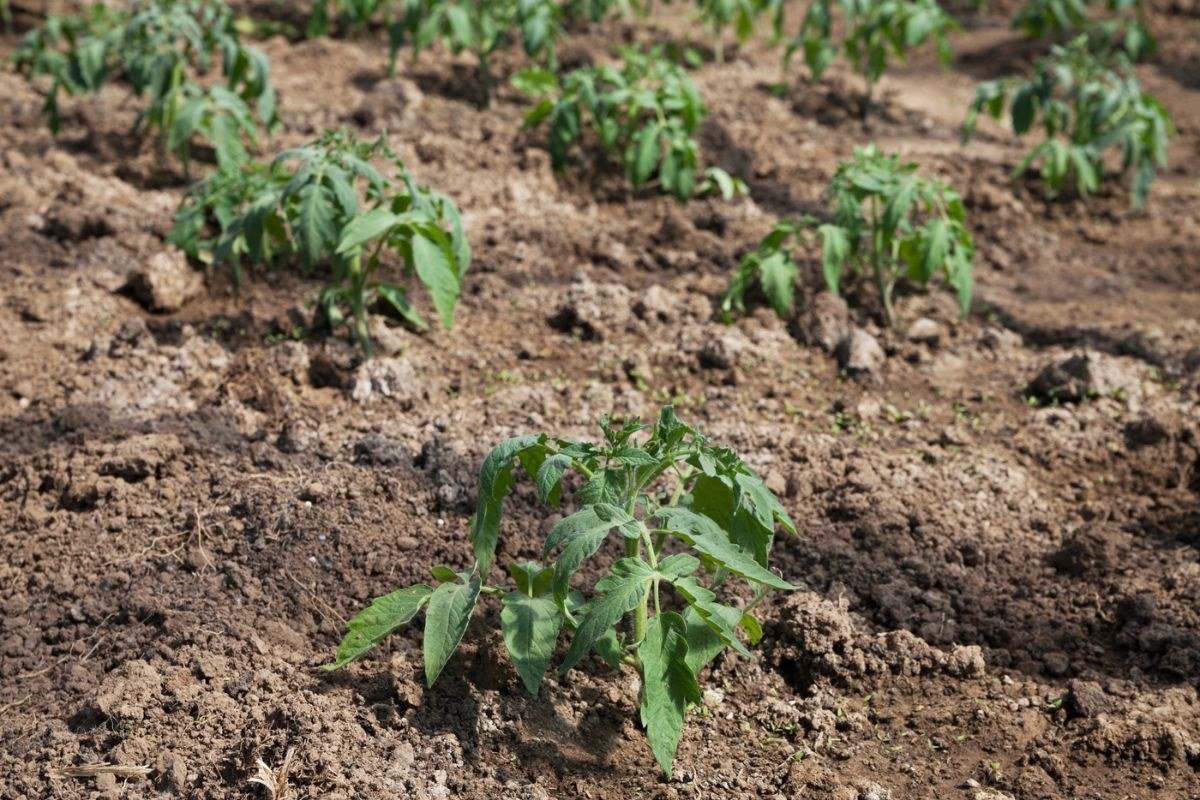
Planting in the Wrong Sun
Plants are labelled full sun, partial shade, or shade for a reason, and ignoring the label because a spot is convenient is one of the most quietly expensive mistakes in gardening. Sun-lovers such as tomatoes, peppers, roses, and most Mediterranean herbs planted in shade grow leggy, flower poorly, fruit reluctantly, and invite disease in the cool, damp, still air around them. Shade-lovers planted in fierce sun — many hostas, ferns, and leafy salads in midsummer — scorch, bolt, or turn bitter while the gardener waters frantically at a problem that was never about water.
Before planting, watch your garden the way you would watch weather. Spend a day, or at least a morning and an afternoon, noticing where sun actually falls in each season, remembering that a bed in full sun in June may be shaded by a fence or a neighbour’s tree in April. Most fruiting vegetables want at least six hours of direct sun, and more suits them better. Then match plant to place honestly: sun crops in your sunniest ground, salads and leafy greens where they get afternoon shade in hot climates, shade-tolerant plants earning their keep in the awkward corners. If a plant has failed twice in a spot, believe the spot, not the plant catalogue. Move one of them.
Skipping Mulch
Bare soil looks tidy for about a week. Then it bakes, crusts, sheds rain instead of absorbing it, loses moisture to sun and wind, splashes mud and soil-borne disease onto lower leaves at every watering, and offers weeds a clean, warm, empty seedbed. Gardeners who skip mulch then spend the summer doing the two jobs mulch does for free: watering constantly and weeding constantly.
Spread organic mulch — compost, leaf mould, straw, shredded bark, or similar — a few centimetres deep over moist soil around plants, keeping it a little clear of stems and crowns so they do not sit wet and rot. Lay it after rain or a thorough watering so you are locking moisture in, not sealing dryness under a blanket. Top it up as it rots down, because that rotting is itself feeding your soil. Few single habits repay their effort as visibly as this one: fewer weeds, steadier moisture, cleaner fruit, and soil that improves while you do nothing at all.
Planting Too Deep — or Too Shallow
Depth is a small detail that decides whether a plant starts life helped or handicapped. Most seeds sown too deep exhaust their stored energy before they reach light and simply never appear, leaving the gardener blaming the seed. A useful general guide is to sow at roughly two to three times the seed’s own diameter — tiny seeds barely covered or even surface-sown, large seeds such as beans and squash planted properly down. Seedlings and transplants planted with their stem buried deeper than they grew in the pot can rot at the crown, particularly in wet soil. Trees and shrubs planted too deep, with their root flare buried, can struggle for years.
There are honourable exceptions, and knowing them is part of the fix. Tomatoes famously root along a buried stem and can be planted deep on purpose to build a stronger root system. Potatoes are earthed up as they grow. Almost everything else wants to sit at exactly the depth it was growing before. When in doubt, plant at the same level, firm gently, water to settle soil around roots, and check seed depth on the packet rather than by feel. If a sowing fails, dig down carefully before re-sowing — very often you will find the answer, germinated and stranded, an inch too low.
Forgetting to Harden Off Seedlings
A seedling raised on a warm, still windowsill or in a greenhouse lives in a world with no wind, no fierce sun, and no cold nights. Moved straight outside into all three, it can scorch, wilt, and stall within a day, even on a date that is perfectly safe for a toughened plant. Gardeners then conclude the variety was weak, when really the plant was simply never introduced to the outdoors it was expected to perform in.
Hardening off takes about a week and almost no effort. Put seedlings outside in a sheltered, lightly shaded spot for a few hours on the first day, bring them in at night, and increase time and sun a little each day until they are outside all day and finally all night. Watch water during this week, because small pots outdoors dry faster than they did indoors. Plants bought from garden centres need the same courtesy if they were raised under cover, which most were. A hardened plant starts growing within days of planting out. An unhardened one spends its first fortnight recovering — if it recovers at all.
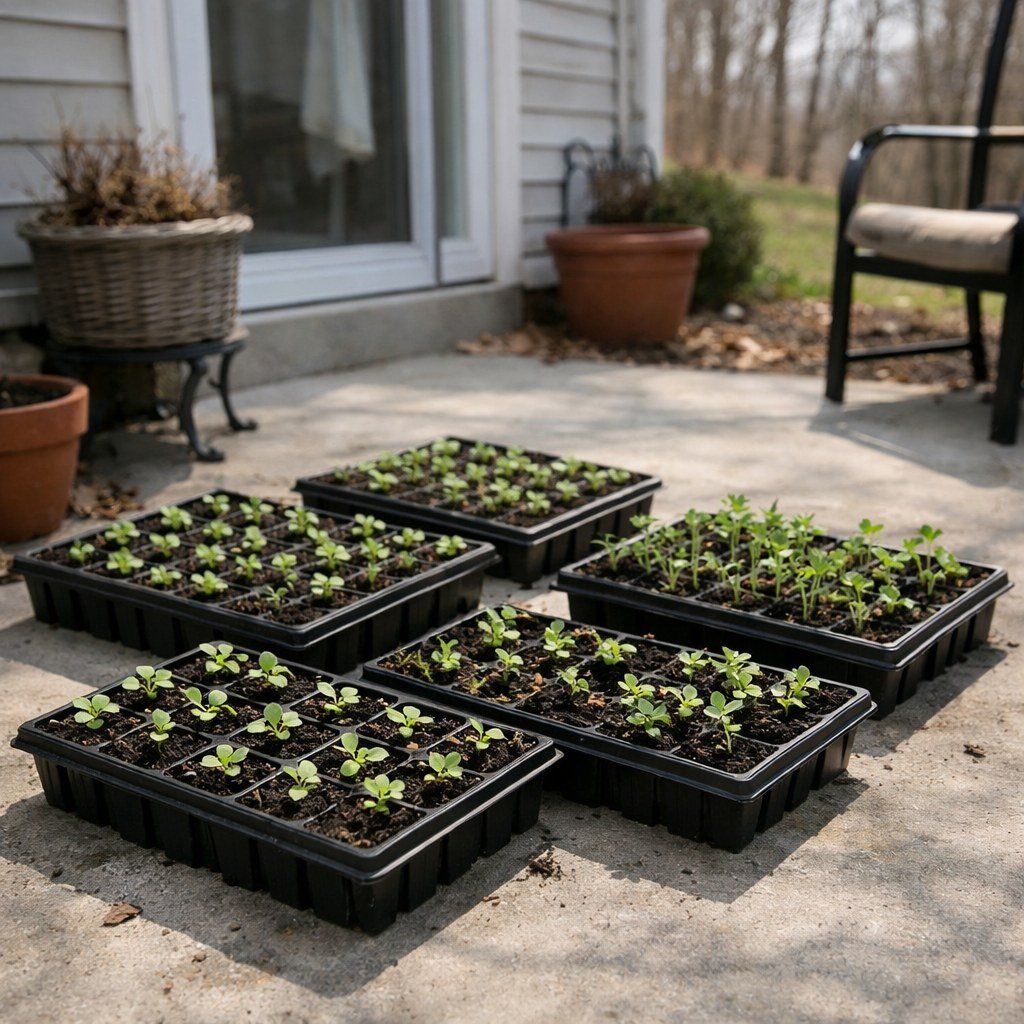
Neglecting Weeds Until They Own the Bed
Weeds are never a problem on the day they germinate. They become one three weeks later, when they are knee-high, rooted deep, seeding freely, and stealing water, light, and nutrients from crops that have been quietly losing the competition the whole time. A bed cleared in one exhausting annual blitz and then abandoned again also damages crops, because hoeing or pulling large, entangled weeds tears the roots of the plants you actually want.
Little and often is the whole secret. Hoe on a dry, breezy day when seedlings weeds are tiny and will wither where they fall, run round beds weekly in the growing season, and never let the worst offenders set seed — one seeding weed returns as next year’s hundred. Mulch does half this job for you by denying light to germinating seeds. Edges and paths matter too, because weeds creep and blow inwards from neglected margins. Ten minutes with a hoe each week feels like nothing. A lost Saturday in July, wrestling a jungle while your beans strangle beneath it, feels like exactly what it is: the same job, saved up at interest.
Feeding Blindly — Too Much, Too Little, or the Wrong Thing
Fertiliser mistakes usually come from kindness or from hope. Too much high-nitrogen feed produces the classic all-leaf-no-fruit tomato or pepper: a magnificent dark green plant with hardly a flower on it. Feed tipped onto dry soil or against stems can scorch roots. At the other end, hungry crops in poor soil — sweet corn, squash, brassicas, anything grown hard in a pot — pale, stall, and yield little while the gardener blames the variety or the weather. Random feeding without any sense of what the soil already holds wastes money in both directions.
Feed with a reason. Improve the soil base with organic matter first, since that alone carries many crops a long way. Then use a balanced general feed for most vegetables, follow the rates on the label rather than doubling them for luck, and water feed into moist soil. Once fruiting crops flower, a feed higher in potash, such as a tomato feed used as directed, supports fruit better than more nitrogen. Watch the plant before reaching for the bottle: overall pale, slow growth suggests hunger, lush soft growth with no flowers suggests the opposite, and a single ageing yellow leaf at the base usually suggests nothing but age. Learning how to improve garden soil naturally will do more for most underfed gardens than any shelf of bottles.
Ignoring Pests and Disease Until It Is Too Late
Most pest and disease disasters announce themselves quietly weeks in advance: a few aphids on a shoot tip, the first holed leaves, a couple of spotted leaves low on a tomato plant. Ignored, aphids become colonies that distort growth and spread virus, caterpillars strip brassicas in days, and fungal spots climb plant by plant through still, wet foliage. The gardener who only looks at the garden from the kitchen window meets the problem at its worst.
Walk the garden and actually look, ideally while watering or harvesting, when your hands are already among the plants. Turn leaves over. Check shoot tips, buds, and the undersides where pests prefer to start. Early problems have early-scale answers: squash aphids off with a jet of water or gloved fingers, pick caterpillars and slugs off by hand, remove badly spotted leaves, net brassicas against butterflies before eggs are laid rather than after. Space and prune for airflow, water at the base, and clear fallen, diseased material rather than leaving it under plants. You will not prevent everything, and a garden with zero insects is neither possible nor desirable — pollinators and predators live there too. The goal is to catch the balance tipping while tipping it back is still a two-minute job.
Putting Tender, Thirsty and Hungry Plants in the Wrong Soil Spot
A cousin of ignoring soil is ignoring the fact that different corners of the same garden have different soil. The dry rubble strip along a house wall, the boggy hollow where water sits, the thin patch over an old path — plant them as if they were the good bed in the middle and something suffers. Dry-loving herbs drown in the hollow. Moisture-loving plants crisp along the wall. Nothing at all grows well over the buried path except weeds, which manage everywhere.
Work with the spots you have. Mediterranean herbs, many salvias, and other sun-and-drainage lovers will thrive in that horrid dry strip by the wall that defeats everything else. The damp corner suits moisture-tolerant planting far better than it will ever suit lavender. Thin or rubbly patches improve fastest with generous organic matter and mulch, or can carry a pot, a seat, or a path instead of a struggling plant. Reading the garden as a set of small places, each with its own character, instead of one uniform plot, prevents a whole category of mysterious failures.
Practical Tips to Stop Making the Same Mistakes
Keep a simple garden notebook, on paper or on your phone, and actually use it. Note sowing and planting dates, what cropped well, what failed and where, and the mistakes you caught yourself making. Memory is unreliable across a winter; a line that says “tomatoes in the shaded bed again — poor fruit, move them” is worth a season of good intentions.
Slow down at the three moments mistakes happen: buying, sowing, and planting out. Check the mature size before you buy, the sowing depth and spacing before you open the packet, and the forecast and the soil — with your hand in it — before a plant goes in the ground. Nearly every error in the previous section slips in during one of those three moments of hurry.
Build the forgiving habits first: mulch the beds, water deeply by soil check, hoe little and often, and walk the garden looking at plants a few times a week. These four routines quietly prevent the majority of common problems, including several you have not met yet.
Start smaller than your ambition. A small plot, well spaced, well fed, and well watched will out-yield and out-please a large neglected one, and it leaves you energy to notice what is happening. Expand a bed a year as the habits bed in.
Forgive the failures properly by diagnosing them. Before ripping out a failed crop, ask which single cause fits best: timing, soil, spacing, water, sun, depth, pests. Write the answer in the notebook. A diagnosed failure is tuition. An undiagnosed one is just rent paid twice.
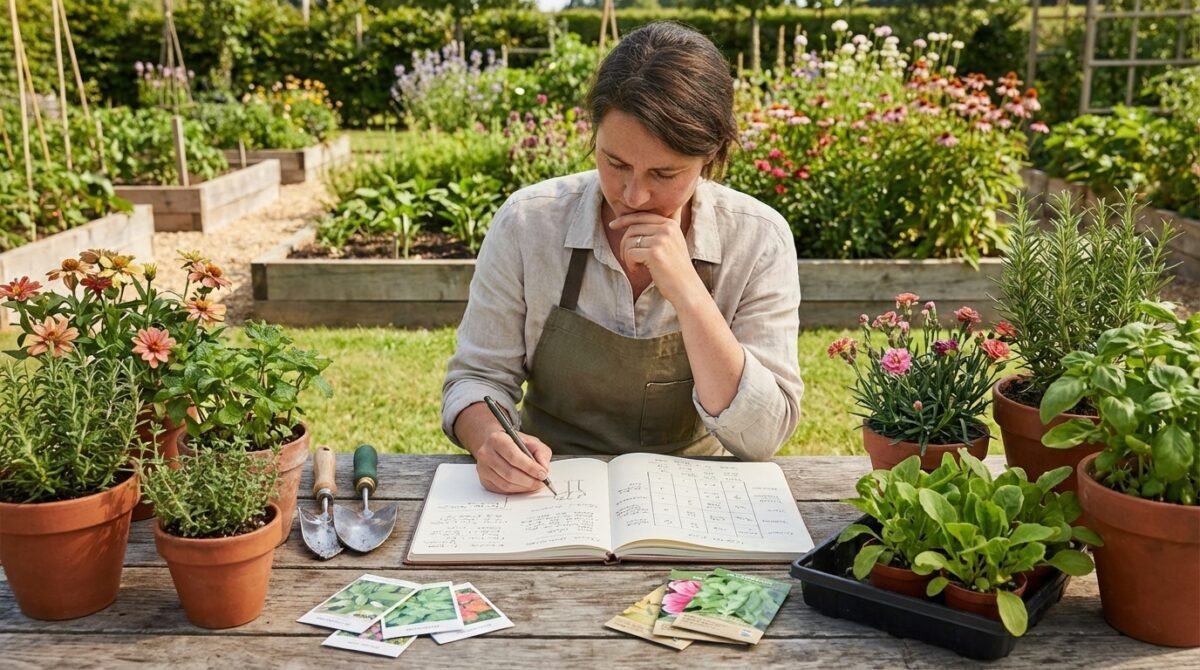
Mistakes Even Experienced Gardeners Still Make
Experience reduces mistakes; it does not retire them. The errors of seasoned gardeners are subtler — usually overconfidence rather than ignorance — and worth watching for precisely because they slip past people who know better.
The first is growing the same crops in the same beds year after year because the layout is convenient. Rotating crop families matters, especially for potatoes, tomatoes, brassicas, and onions, because soil-borne diseases and pests build up where their hosts keep returning, and hungry families keep mining the same nutrients. A rough three- or four-bed rotation, sketched once and roughly followed, prevents most of the trouble without requiring a spreadsheet or any real discipline beyond not putting potatoes where potatoes were.
The second is trusting memory over labels and dates. Unlabelled seed trays, unlabelled rows, and the confident belief that you will remember which tomato is which by June — you will not, and neither does anyone else. Label everything at sowing, with the variety and date, in something that survives weather. The same applies to saving seed and dividing perennials. Future you is a stranger who knows nothing.
Third is watering the garden on autopilot in a changed season — running the spring routine into a wet autumn, or forgetting that a dry, windy autumn still needs water for new plantings and evergreens. Conditions changed; the routine did not. The finger test remains the antidote at every level of experience, which is why confident gardeners still kneel and use it.
Fourth is letting success breed crowding of a different kind: keeping every self-sown seedling, every division, every bargain plant until the borders are as jammed as a beginner’s vegetable bed, with the same stale air and disease pressure. Editing a garden — removing, dividing, giving away — is a skill, and the gardens people admire are usually the edited ones.
Finally, experienced gardeners still plant things they know their garden dislikes, seduced by a catalogue photograph in February. The plant that has failed three times in your soil and climate is giving you information, not issuing a challenge. Spend that money and space on the plants that love your conditions and grow them superbly.
Frequently Asked Questions
What is the most common gardening mistake beginners make?
Overwatering and planting too early vie for first place. New gardeners water on a schedule rather than by checking the soil, which rots more young plants than drought does, and they plant tender crops out at the first warm weekend, then lose them to cold nights. Both fixes are free: a finger in the soil, and a week or two of patience.
How do I know if my soil is the problem?
Look for the pattern. If many different plants in the same bed grow slowly, look pale, or struggle despite reasonable watering and light, suspect the soil rather than the plants. Dig down and examine texture, moisture, and life, and try a simple home pH test. Poor soil usually improves steadily with added compost, mulch, and not being worked while wet.
Can crowded plants recover if I thin them late?
Often, yes. Thinning even in mid-season gives the remaining plants light, air, water, and food they were sharing, and many crops respond within a week or two with visibly stronger growth. You will not recover the lost early weeks entirely, but a thinned bed commonly out-produces the crowded one you were afraid to touch.
Is it better to water a little every day?
No, for most plants in the ground. A thorough soak every few days, given when a finger check shows the root zone is dry, builds deeper roots and hardier plants. Daily light watering keeps roots shallow and dependent. The exceptions are seeds, young seedlings, and containers in hot weather, which need more frequent attention because their root zone is small.
What should I do after I realise I have planted something in the wrong place?
Move it if it is young, small, or a perennial that tolerates moving — ideally on a mild, dull day, with plenty of water before and after. Large or well-established plants are often better supported where they are, with mulch, feed, and adjusted watering, and replaced in the right spot when they naturally come to an end. Note the mistake in your notebook either way, so the space is not repeated next spring.
How many of these mistakes do I need to fix at once?
Start with the two or three that match your garden’s worst symptoms, and fix only those this season. Mulch, watering by soil check, and honest spacing alone transform most struggling gardens. Gardening improves by accumulation, not overhaul, and a season spent bedding in three good habits beats a frantic weekend attempting twelve.
Final Thoughts
Every gardener you admire has killed plants in most of the ways described in this article — usually in their first few seasons, occasionally still, on a rushed Sunday in April. The difference was never talent. It was noticing, naming the cause honestly, and changing one small habit at a time: checking soil before watering, trusting spacing, waiting for warm nights, spreading the mulch, writing it down.
Pick your two or three from the list above, fix them this season, and watch how many other problems quietly disappear alongside them. Gardens rarely fail all at once, and they rarely recover all at once either. They recover bed by bed, habit by habit — which is fortunate, because that is a pace any of us can actually keep.
[…] you are weighing up habits like these, it is worth a quick look at some of the other common gardening mistakes to avoid, because weed problems often grow out of small, fixable routines — leaving soil bare all winter, […]