

If you are looking for natural ways to kill weeds in gardens without reaching for a bottle of chemical herbicide, you are in good company. Almost every gardener reaches the same point sooner or later: the beds looked tidy a fortnight ago, and now there are dandelions in the lawn edge, chickweed threading through the carrots, and something you cannot even name taking over the corner by the fence. Weeds are not a sign that you have failed. They are a sign that your soil is alive and that bare ground, left alone, will always try to cover itself.
The honest truth about natural weed control is that there is no single spray, powder, or clever trick that clears a garden for good. What does work is a small set of simple methods, used at the right moment and repeated when needed. Pulling a weed before it sets seed, covering bare soil so new seeds cannot get light, and pouring boiling water on the one stubborn plant in the path cracks will, together, do more than any one product used on its own. Most of these methods cost little or nothing, and none of them leaves you wondering what has washed into the soil your vegetables are growing in.
There is another benefit that rarely gets mentioned. When you control weeds by hand, by cover, and by timing, you spend more time actually looking at your beds. You notice the soil is dry before the plants wilt. You spot the first aphids, the slug damage, the seedling that needs thinning. Weed control done this way is slower in a single afternoon, but it tends to make the whole garden easier to look after over a season.
This guide walks through the methods that genuinely work, in roughly the order most gardeners end up using them: mulch to prevent weeds in the first place, careful hand-pulling for the ones already growing, boiling water and smothering for stubborn patches, corn gluten meal as a pre-emergent helper, and a clear-eyed look at vinegar and salt, which are often recommended online and just as often cause more harm than good. Pick the methods that fit your beds, your time, and your back, and expect to combine two or three of them. That combination, repeated calmly, is the real secret.
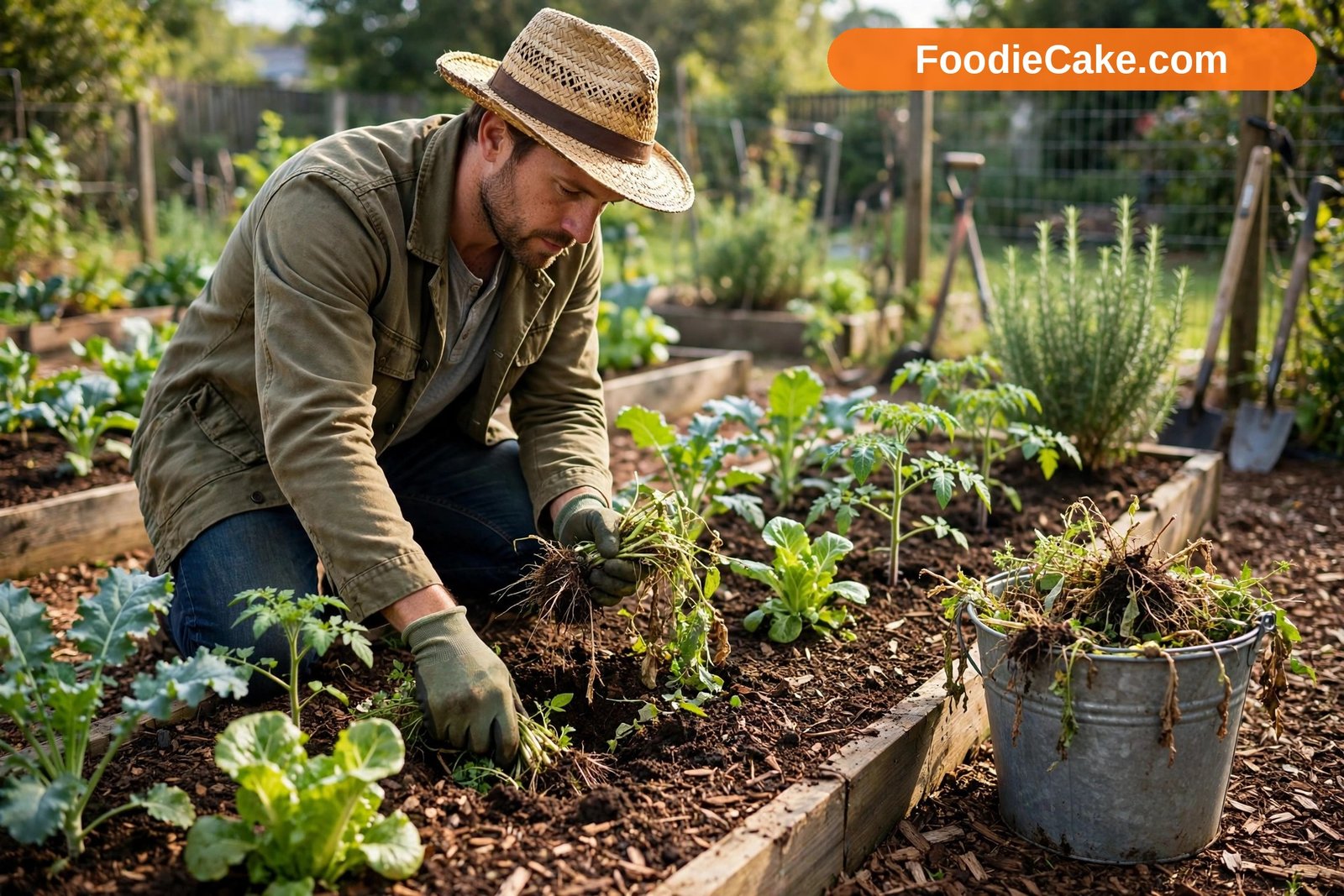
First, Know Which Weed You Are Dealing With
A few minutes spent identifying a weed saves hours of wasted effort later, because annual weeds and perennial weeds need completely different treatment.
Annual weeds — chickweed, hairy bittercress, annual meadow grass, groundsel, and fat hen are familiar examples — live fast and die young. They germinate, grow, flower, set seed, and die within a single season. Their roots are usually shallow and weak, and they pull out easily. The whole battle with annuals is about timing: remove them before they seed, and cover the soil so the next generation cannot start. One chickweed plant left to seed can scatter the makings of a hundred future problems, so with annuals, speed matters far more than thoroughness underground.
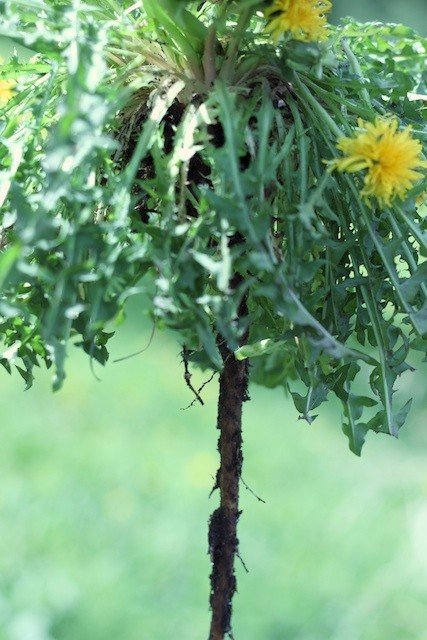
Perennial weeds are a different opponent. Dandelions drive a long taproot deep into the soil. Bindweed, couch grass, ground elder, nettles, and creeping buttercup spread by roots, rhizomes, or creeping stems that can regrow from a small fragment left behind. Pulling the top off a dandelion and snapping its root simply leaves the root to send up fresh leaves, sometimes more than one shoot. With perennials, the goal is to remove as much root as you possibly can, or to exhaust the root by repeatedly removing every leaf it produces until it has no reserves left.
You do not need a botany degree for this. Just ask two questions when you meet a new weed. Does it pull up easily with a small, fibrous root system, or does it resist and snap off above a thick root? And is it spreading sideways through the soil or along the surface? Easy roots and upright growth usually mean an annual you can deal with in seconds. Resistance, thick roots, and sideways spread mean a perennial that deserves a slower, more deliberate approach. Everything in the sections that follow works better once you know which of the two you are facing.
Mulching: Stop Weeds Before They Start
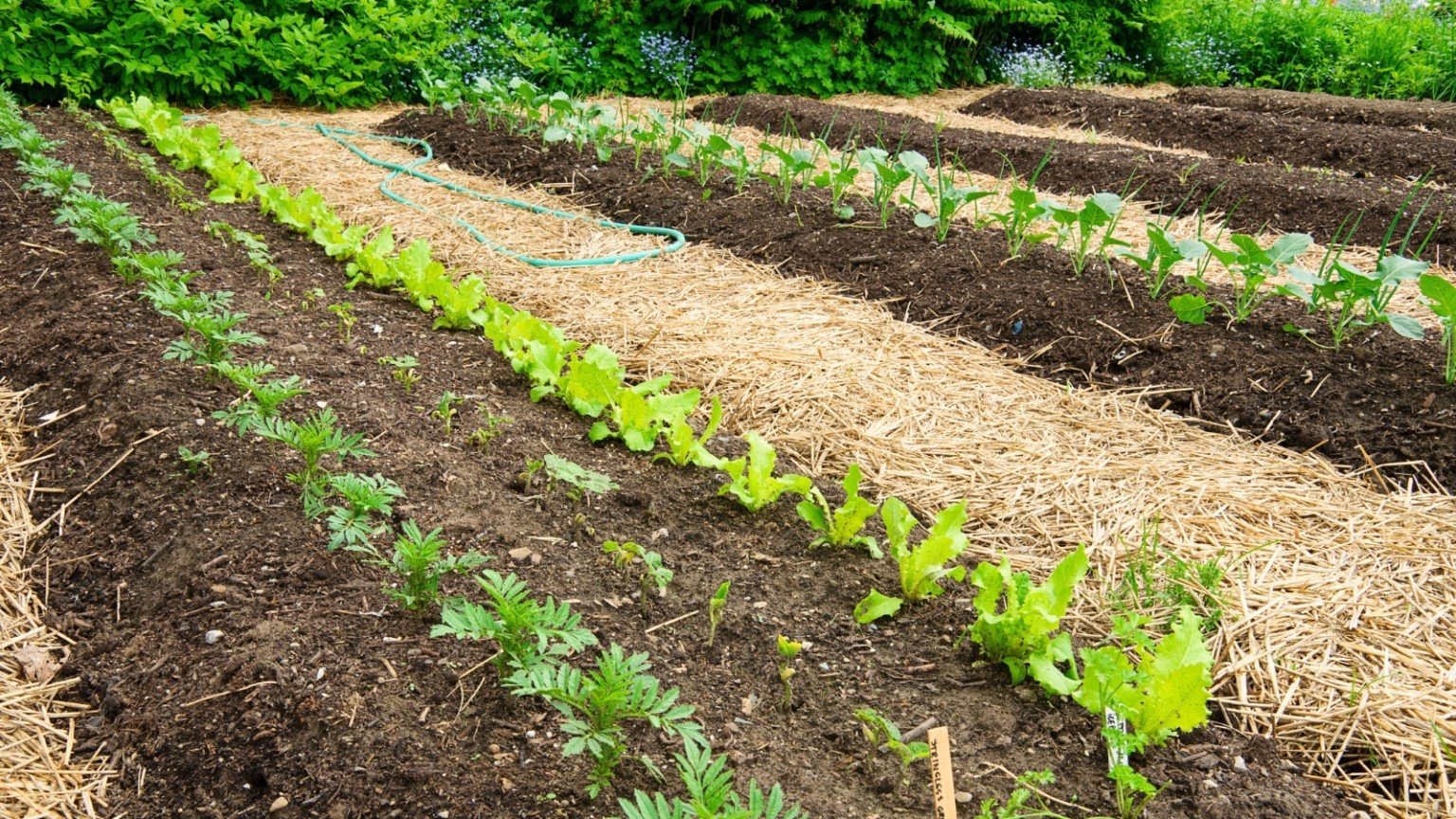
Mulch is the single most useful natural weed method, because it prevents the problem rather than fighting it. Most weed seeds need light and close contact with warm soil to germinate. A layer of mulch blocks the light, keeps the soil surface cool and shaded, and means the seeds already in your soil mostly stay dormant. The few weeds that do push through a good mulch layer are usually weak, pale, and easy to pull from the loose material.
For vegetable beds and flower borders, organic mulches do double duty: they suppress weeds while slowly breaking down and improving the soil. Well-rotted compost, leaf mould, straw, shredded bark, and grass clippings (applied thinly and allowed to dry a little first, so they do not mat into a slimy layer) all work well. Aim for a layer about five to eight centimetres deep — roughly two to three inches. Thinner than that and light leaks through; much thicker and you can smother the crowns of small plants you actually want. Keep mulch a few centimetres away from plant stems, too, so the base of each plant stays dry and is less likely to rot.
Timing matters. Mulch beds in spring once the soil has warmed and your plants are growing away, and top the layer up in autumn after you have cleared spent crops. Mulching straight onto weedy soil is a common disappointment: perennial weeds will simply grow up through it. Clear the bed first, ideally on a calm day when the soil is moist, then mulch immediately so you are covering clean ground.
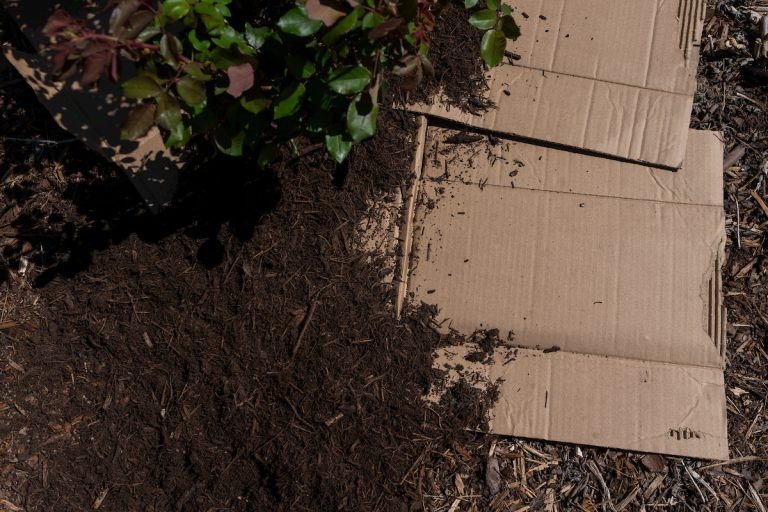
In permanent plantings — around shrubs, fruit bushes, and trees — a tougher approach works well: lay cardboard or a permeable landscape fabric over cleared soil, then cover it with bark or wood chips. The barrier layer handles determined weeds while the chips keep it looking tidy and protect it from sunlight. Avoid solid plastic sheeting in beds you plant into often, because it blocks water and air from reaching the soil and makes future planting awkward.
Choosing the right material for each bed makes a real difference, so it is worth reading up on the best mulch for vegetable gardens before you buy or spread anything, especially if you grow food. Straw behaves differently from bark, compost behaves differently from both, and the best choice for a tomato bed is not always the best choice for a path or a shrub border.
One honest limitation: mulch suppresses weeds, it does not eliminate them. Wind-blown seeds will land on top of the mulch itself and germinate there, especially in a compost mulch, which is itself a lovely seed bed. Those seedlings are shallow-rooted and pull out in seconds, but you do still need to walk your beds every week or two and pick them off. Think of mulch as turning an hour of weeding into five minutes, not into zero minutes.
Hand-Pulling: Technique Matters More Than Strength
Hand-pulling sounds too simple to need explaining, yet technique is the difference between a weed that is gone and a weed that returns in a fortnight wearing a smug expression.
Pull when the soil is moist. After rain, or after a good watering, roots slide out of the ground far more completely than they do from dry, hard soil. If you have a choice, weed the day after rain rather than during a dry spell. In dry soil, even shallow annual roots snap, and perennial roots break exactly where you least want them to.
Grip low. Take hold of the weed at its base, right at soil level, not halfway up the stem. Stems grabbed high up simply tear away and leave the crown behind. A slow, steady pull — sometimes with a gentle twist for tap-rooted weeds like dandelions — works better than a sharp yank. For dandelions and docks, slide a narrow hand fork, an old kitchen knife, or a dandelion weeder down alongside the taproot, lever gently to loosen the soil, and then lift the whole root out. Getting most of that root matters more than getting every last hair of it.
For creeping perennials such as couch grass and ground elder, digging beats pulling. Loosen a patch of soil thoroughly with a fork, then tease the white or wiry roots out by hand, following each runner as far as you can. Work a small area properly rather than a large area badly. And crucially, do not throw perennial weed roots on the compost pile unless your pile reliably gets hot — most home piles do not, and you will simply spread the weed around the garden in finished compost. Bag those roots and dispose of them with household waste, or leave them to dry out completely on a hard surface in the sun before composting.
Little and often is the rhythm that makes hand-weeding feel manageable. Ten minutes with a bucket, two or three times a week, walking the beds you pass anyway, keeps on top of almost any garden. It is the marathon weeding session once a month — three hours, an aching back, and weeds that have already seeded — that makes people give up and reach for a spray bottle. Hoeing is the close cousin of hand-pulling for larger areas: on a dry, sunny day, run a sharp hoe just under the surface between rows to slice young annual weeds off at the roots, and leave them on the surface to shrivel. Hoe shallowly, hoe early while weeds are tiny, and never hoe in wet weather, when severed weeds can simply re-root.
Finally, never let a weed flower in peace. If time is short and you can only do one thing, cut or pull the flower heads off seeding annuals and bag them. It takes seconds, and it breaks the cycle even if the plant itself stays in the ground a few more days.
Boiling Water: Simple, Instant, and Best for Paths
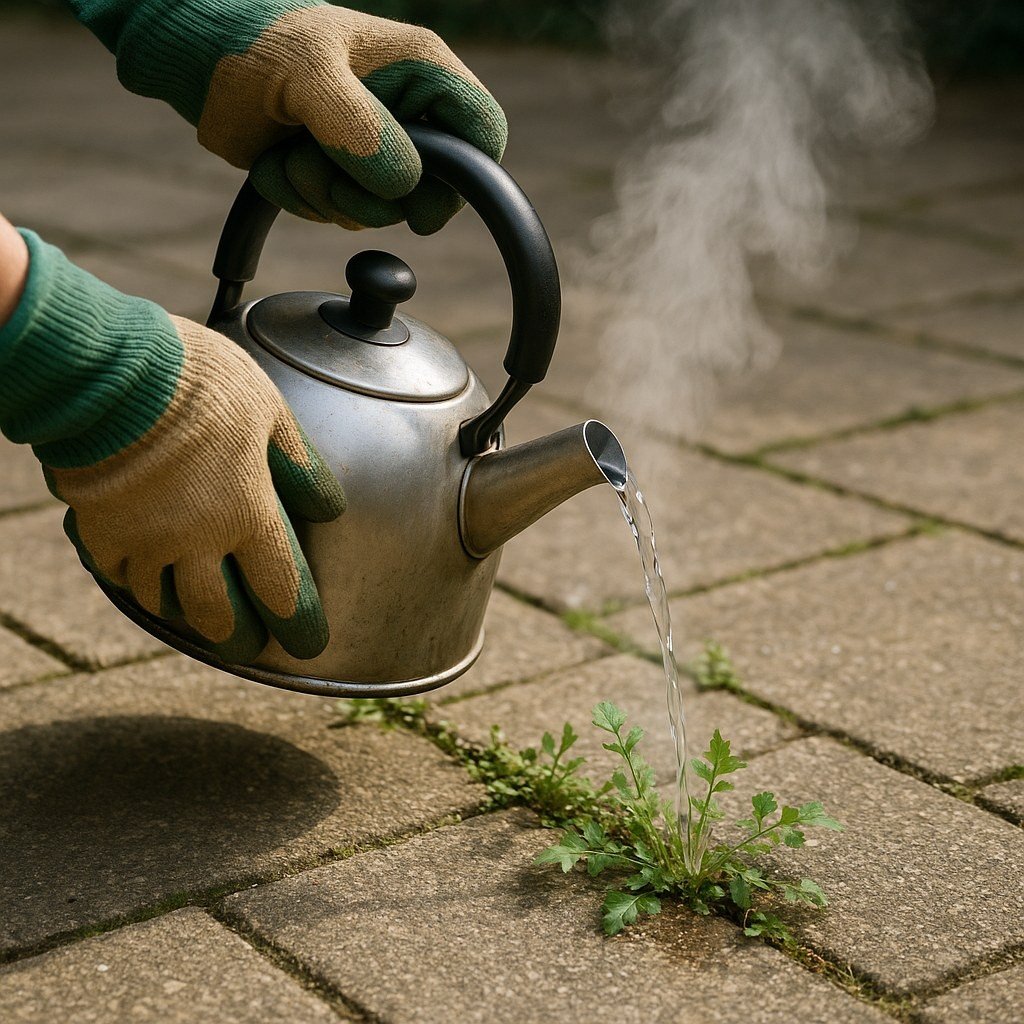
A kettle of boiling water is one of the most satisfying natural weed killers there is. Poured slowly and directly onto a weed, boiling water bursts its cells, and the plant wilts visibly within hours and dies back completely within a day or two. It costs almost nothing, leaves nothing behind in the soil, and is safe to use the same day you plan to plant nearby — once the ground has cooled, of course.
Boiling water is at its best where precision matters and roots cannot be dug out: weeds in the cracks of paths, patios, and driveways, seedlings sprouting in gravel, and individual weeds growing tight against a wall or step. Use a kettle rather than a pan — the spout gives you a controlled pour — and pour slowly, close to the plant, so the water soaks the crown and the top of the root rather than splashing across the surface. A full kettle deals with a surprising number of small weeds.
Be clear about its limits. Boiling water kills what it touches, which is the growth above ground and just the very top of the root. Shallow-rooted annuals usually die outright. A mature dandelion or dock will often regrow from its deep taproot, so expect to repeat the treatment each time new leaves appear. That repetition is not failure — each regrowth costs the root energy, and after several rounds even stubborn perennials weaken. The same non-selective quality is the main caution: boiling water will scorch any plant it lands on, including lawn grass and the leaves of border plants, so it is a poor choice in the middle of a crowded bed. It can also harm earthworms and soil life in the small spot it hits, which is another reason to reserve it for hard surfaces and isolated weeds rather than pouring it across whole beds. On paths, watch your feet and pour away from yourself, especially on slopes.
Smothering: Let Darkness Do the Work
Smothering — covering an area so completely that plants beneath it get no light — is the best natural answer to a badly weeded patch you want to reclaim without digging it all over. Weeds under a light-proof cover use up their stored energy trying to grow, produce weak pale shoots, and eventually die. The soil life underneath, meanwhile, carries on happily, and earthworms often improve the soil while you wait.
For a new bed or a neglected corner, lay overlapping sheets of plain cardboard over the area (remove tape and staples, and avoid heavily printed or glossy card), wet it thoroughly, and weigh it down with a thick layer of compost, soil, or mulch. You can plant through holes cut in the cardboard straight away, or leave the whole area covered for a season and plant the following spring into soil that is noticeably easier to work. Black plastic sheeting and old carpet offcuts do the same job on paths and future beds; just remember that solid covers shed rain, so the soil underneath can dry out, and plastic should be lifted and stored rather than left to crumble into the soil.
Smothering works on a small scale too. An upturned bucket or a piece of slate placed over a single persistent perennial weed for a few weeks will weaken it considerably. Covering a freshly cleared bed with mulch is, in effect, gentle smothering — which is why the two methods pair so well.
Patience is the price. Annual weeds under a cover may give up within a few weeks in warm weather, but established perennials with deep food stores, particularly bindweed and ground elder, can take a full growing season or longer to exhaust, and bindweed in particular will send runners sideways to find the edge of the cover. Check the edges regularly, extend the cover if shoots appear beyond it, and accept that the worst patches are a one-season project. In return you get a cleared bed without digging, without chemicals, and with its soil structure intact — a trade most gardeners find well worth making. In cooler climates and USDA zones at the colder end of the range, the process is slower in winter and fastest when covers go down in spring as growth wakes up; in hot climates, a clear-plastic variant called solarisation uses summer heat under the sheet to help kill weed seeds near the surface, though it will also stress soil life in that top layer, so use it on problem patches rather than your best beds.
Corn Gluten Meal: A Gentle Pre-Emergent Helper
Corn gluten meal is a by-product of milling corn, sold as a powder or granules, and it is the closest thing the natural toolkit has to a pre-emergent — something that stops weeds starting rather than killing weeds already growing. Applied to soil, it interferes with the earliest root development of germinating seeds, so seedlings fail before they establish. It is most often used on lawns against crabgrass and other annual weeds, and it can also be used on established beds.
The application rules matter. Spread it in early spring just before annual weed seeds germinate, and again in late summer or early autumn for autumn-germinating weeds, following the rates on the packet. It then needs a light watering to wash it into the soil surface, followed by a short dry period — heavy rain straight after application reduces how well it works, which makes its results weather-dependent and, honestly, variable. Sometimes it performs impressively; sometimes a wet spring washes away the benefit. Experienced gardeners treat it as a helpful layer in the system, not a guarantee.
Two cautions keep expectations realistic. First, because it affects germinating seeds generally, do not use it where or when you are sowing seeds of your own — direct-sown vegetables and flower seeds will struggle just as weed seeds do. Use it around established plants and transplants instead, or on lawns you are not overseeding. Second, it does nothing at all to weeds that are already up and growing, and nothing to perennials spreading by roots. A bed full of dandelions will still be full of dandelions after a corn gluten treatment; what it may contain is fewer new annual weeds next season. It also adds some nitrogen as it breaks down, which lawns generally appreciate but which is one more reason to apply it at packet rates rather than by enthusiastic handfuls.
Vinegar and Salt: Use With Real Caution
Search for natural weed killers online and vinegar and salt recipes appear everywhere. They deserve an honest section rather than either hype or dismissal, because both do kill plant tops — and both can quietly damage your garden if used carelessly.
Household vinegar is a mild acid, and stronger horticultural vinegar products are considerably more potent. Sprayed on leaves on a still, sunny day, vinegar burns the foliage it touches. Like boiling water, it is non-selective and top-growth only: shallow annuals may die, while perennials typically regrow from their roots. The burn also only happens where droplets land, so a light misting achieves very little. If you use vinegar at all, the sensible place for it is the same place boiling water shines — spot-treating weeds in paving cracks and gravel, away from plants you value. Keep it off your soil where you can, because repeated use acidifies the surface and stresses the soil life in that spot, and never spray on a breezy day, when drift will scorch neighbouring plants just as happily. Strong horticultural vinegar is a genuine skin and eye hazard, far beyond the kitchen bottle, so gloves and eye protection are not optional with it — and at that point many gardeners reasonably ask whether it is any friendlier than the thing they were avoiding.
Salt is the one ingredient to steer clear of almost entirely. Yes, salt kills plants; it does so by wrecking the soil’s water balance, and it does not politely leave afterwards. Salt builds up in soil, and ground treated with it can refuse to grow anything well — including your own plants — for a long time afterwards. It also washes sideways into neighbouring beds and lawn edges with rain. Gardeners sometimes inherit a dead, salty patch from a previous owner’s weed treatment, and it is a miserable thing to fix. The only place salt has any argument at all is in the joints of a paved area far from soil and planting, and even there, boiling water does the job without the lasting damage. As a rule: vinegar rarely and carefully, on hard surfaces; salt, essentially never.
While you are weighing up habits like these, it is worth a quick look at some of the other common gardening mistakes to avoid, because weed problems often grow out of small, fixable routines — leaving soil bare all winter, composting seeding weeds, or watering the whole bed (weeds included) when a targeted soak would do.
Practical Tips for Staying Ahead of Weeds
Never leave soil bare. Bare ground is an open invitation, and nature accepts it within days. If a bed will be empty for a few weeks between crops, cover it — with mulch, with cardboard, or with a fast-growing cover crop such as crimson clover or phacelia, which shades the soil, competes with weeds, and can be cut down and left in place or dug in before the next planting. Even a scattering of spare lettuce or radish seed is better than nothing.
Weed after watering, and water after weeding. The sequence sounds fussy but works beautifully: moist soil releases roots cleanly, and a settling watering afterwards helps disturbed crop roots re-establish contact with the soil. Then mulch the freshly weeded bed the same day if you can, while it is clean.
Keep edges tidy. Many weeds invade beds from the edges — lawn grasses creep in under the surface, and weeds seeding in the path drop their seed downhill into your beds. A defined edge, trimmed regularly, and a narrow cleared strip along paths remove the bridgehead most invasions start from.
Clean your tools and boots after working a weedy area, especially after dealing with anything that was in seed. Seeds travel happily in mud, and there is no sadder sentence in gardening than realising you spread the problem yourself. The same goes for bought-in manure and compost: if it has not been properly hot-composted, it can carry viable weed seeds, so watch newly manured beds closely for a few weeks.
Learn your worst five weeds. Every garden has a short cast of repeat offenders shaped by its soil and climate. Once you can recognise yours as seedlings — at the two-leaf stage, when they pull out with a fingertip — weeding becomes fast and oddly satisfying. A seedling removed in two seconds is a plant that never needs a fork, a kettle, or an afternoon.
Scale the method to the moment. A boiling kettle for the path, a hoe for the vegetable rows on a sunny morning, mulch everywhere it can go, and a patient cover over the disaster corner. Gardeners who stay on top of weeds are rarely doing anything heroic; they are just matching small methods to small problems before the problems grow.
Common Weeds Problems and Mistakes to Avoid
Waiting too long is the mistake behind most weed misery. Weeds are a five-minute problem in April and a five-hour problem in June, and seeds set in July become next year’s five-hour problem too. If your schedule only allows one weeding habit, make it a short weekly walk with a bucket, removing anything that is about to flower.
Pulling perennials carelessly is the second classic error. Snapping dandelions off at the crown, or forking couch grass so its roots chop into pieces left scattered through the bed, multiplies the problem you were trying to solve. Slow down on perennials: loosen deeply, lift whole roots, and remove the pieces from the bed entirely rather than dropping them back on the soil.
Expecting one treatment to finish the job leads to a lot of unfair conclusions — that boiling water “doesn’t work” because a dock regrew, or that mulch “doesn’t work” because seeds blew in on top of it. Natural methods mostly work by repetition and combination. Judge them over a season, not over a week, and judge the trend: fewer weeds, smaller weeds, and less time spent is success, even if the beds are never perfectly clean.
Smothering too small an area is a quiet failure, too. Covers that end right at the edge of a perennial patch simply invite the roots to run underneath and pop up just beyond the border, looking very pleased with themselves. Extend covers well past the visible patch, and keep checking the perimeter.
And a gentle one: do not let the pursuit of a weed-free garden spoil the garden. A few weeds in a wild corner feed pollinators and other wildlife, and a clover-filled lawn is doing no harm at all. The goal in beds, paths, and vegetable rows is control — weeds kept few, small, and seedless — not a sterile garden. Gardeners in hot, dry zones, roughly USDA zones 8 and above, will find weeds grow in flushes after rain rather than steadily; gardeners in cooler zones 5 to 7 get a shorter, sharper spring flush. Either way, the weekly walk catches both patterns.
Frequently Asked Questions
What is the most effective natural way to kill weeds?
There is no single winner, because it depends on the weed and the place. Mulch is the most effective prevention in beds, hand-pulling with good technique removes most established weeds, boiling water is best for paths and paving, and smothering wins on badly overgrown patches. Used together, and repeated through the season, these methods keep most gardens comfortably under control without any chemicals.
Will vinegar kill weeds permanently?
Usually not. Vinegar burns the leaves it touches, so small annual weeds may die, but perennials and well-rooted weeds normally regrow from their roots. Repeated applications can exhaust a plant eventually, but repeated vinegar use also acidifies the soil surface and can damage nearby plants through spray drift, so it is best kept for spot use on hard surfaces, if at all.
Is it safe to use salt on weeds?
It is best avoided. Salt does kill plants, but it stays in the soil, builds up with repeated use, and can prevent anything — weeds and wanted plants alike — from growing well in that spot for a long time. It also washes into neighbouring soil. Boiling water or hand-pulling does the same job in paving joints without the lasting soil damage.
How deep should mulch be to stop weeds?
Aim for about five to eight centimetres, or two to three inches, over cleared soil. Much less and light reaches the soil and seeds germinate; much more and you risk smothering small plants and keeping crowns too wet. Keep the mulch pulled back slightly from plant stems, and top it up once or twice a year as it breaks down.
When is the best time to pull weeds?
The day after rain, or after watering, when the soil is moist and roots slide out whole. Early in the season is better than late, and before weeds flower and set seed is best of all. A short session every few days beats a long session once a month, both for your back and for results.
Can I compost the weeds I pull?
Annual weeds pulled before they set seed are fine in the compost, as are most green weeds without thick roots. Keep out weeds carrying seed heads and the roots of perennials such as bindweed, couch grass, and ground elder, unless your compost pile reliably gets hot enough to kill them — most home piles do not. Dry those roots out completely in the sun first, or dispose of them with household waste.
Final Thoughts
Natural weed control is not a product; it is a rhythm. Clear the ground, cover it, pull young weeds while they are small and the soil is soft, use boiling water where digging cannot reach, and give corn gluten meal a supporting role where it fits. Treat vinegar as a last-resort spot treatment for hard surfaces, and leave salt out of the garden altogether.
Start with whichever method suits the patch in front of you today, and do not wait until you have a perfect plan for the whole garden. A bed mulched this weekend and a path cleared with the kettle next week is real progress. Season by season, you will notice the work getting lighter — fewer weeds, arriving later, in smaller numbers. That is what winning looks like in a natural garden: not an empty battlefield, just a garden where the plants you chose get the light, water, and space first.