

When gardeners go looking for the best organic pest control methods, what they usually want is not a philosophy — it is an answer to a specific, urgent question. Something is eating the kale. Something is curling the rose leaves. Something has turned the underside of the bean leaves into a busy, sticky city. Which product do I use, on which pest, and how do I use it without doing more harm than the pest itself?
That product-and-method focus is what this guide is for. Organic pest control has a real toolbox, and it is bigger than many people realise: neem oil, insecticidal soap, horticultural oils, the biological spray known as Bt, diatomaceous earth, spinosad, iron phosphate pellets, row covers, sticky traps and pheromone traps, bought and encouraged beneficial insects, and companion planting used deliberately as a method. Each of these works — on the right pest, at the right stage, applied the right way. Almost none of them works on everything, and every one of them has limits worth knowing before you spend money.
The golden rule runs through the whole toolbox: identify the pest first. A spray that is perfect for aphids does nothing for slugs. Bt stops caterpillars and is useless against whitefly. Half of all pest-control disappointment comes from using a good product on the wrong target, and the other half comes from using it at the wrong time of day or the wrong stage of the pest’s life. So think of this guide as a matching exercise. Find your pest, match it to the method built for it, apply that method carefully, and check the result a few days later before deciding it failed.
One more honest note before the toolbox itself. “Organic” does not mean harmless. These products are generally lower in persistence and narrower in effect than synthetic pesticides, which is a genuine advantage, but a misused organic spray can still kill bees, burn leaves, and wipe out the very predators that were quietly helping you. Used precisely — on the pest, at dusk, at the stated strength — they are some of the most useful tools a home gardener can own.
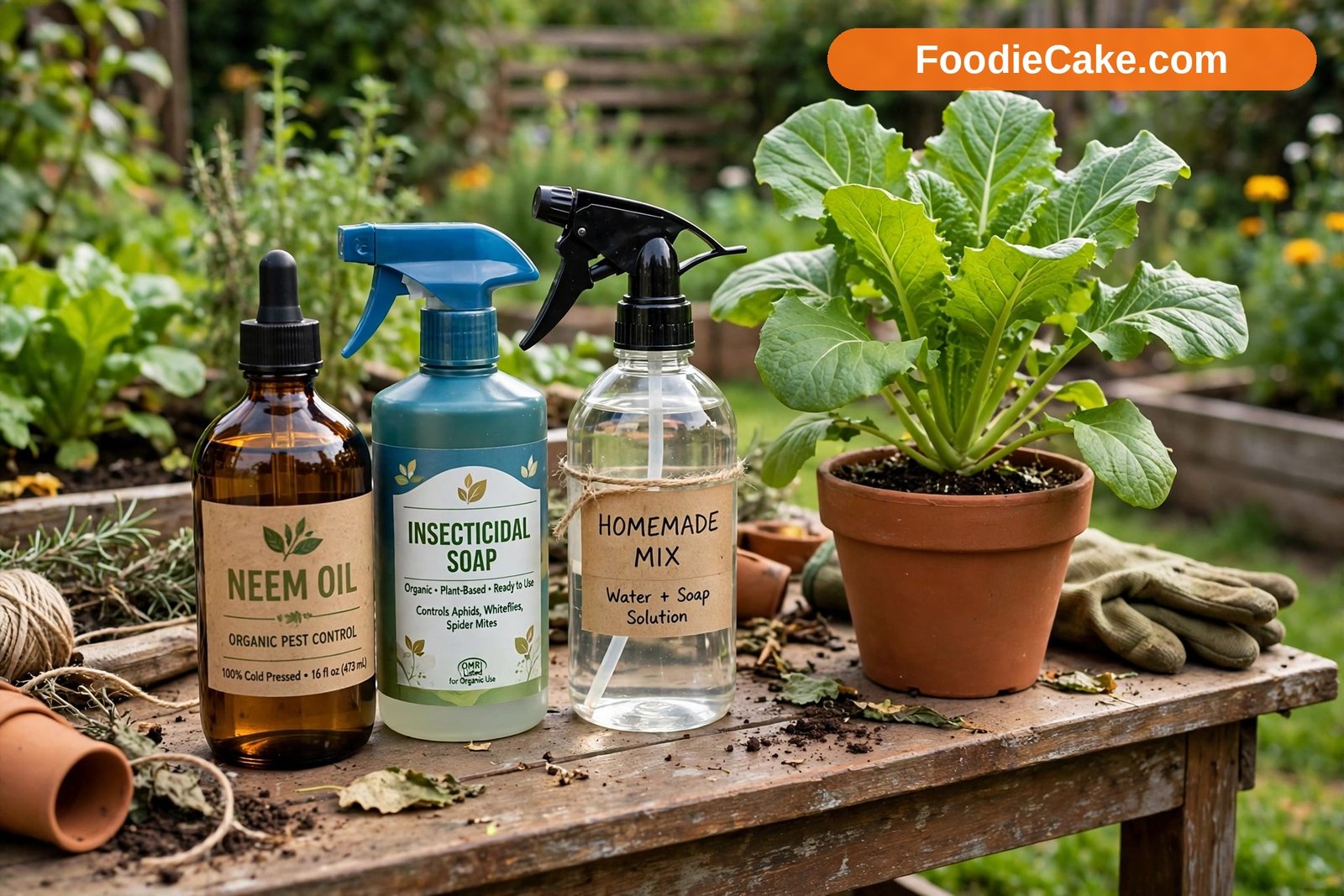
Neem Oil: The Broad-Spectrum Workhorse
Neem oil, pressed from the seeds of the neem tree, is probably the best-known organic pest product, and it earns its place. It works in several ways at once: it smothers and coats soft-bodied insects on contact, it discourages many pests from feeding on treated leaves, and its best-known active ingredient, azadirachtin, disrupts the growth and moulting of young insects that eat treated foliage. That combination makes neem useful against aphids, whitefly, spider mites, thrips, leaf miners, young caterpillars, and the nymph stages of several other pests. It also has a useful side role against some powdery mildew problems when used early.
Application is where neem succeeds or fails. Mix it exactly as the label directs — neem is usually sold as a concentrate, sometimes as a ready-to-use spray — and shake the bottle as you work, because oil and water separate quickly. Spray in the evening or on a dull day, never in bright sun or high heat, because oil on sunlit leaves can scorch them. Coverage matters more than quantity: neem mainly helps where it actually lands, so spray the undersides of leaves, where most of its target pests live and feed, until they are thoroughly coated. One application rarely finishes the job. Eggs often survive, so repeat every seven to fourteen days while the pest is active, checking the plant each time to see whether numbers are actually falling.
Its limits are worth respecting. Neem is slow compared with a contact killer — insects may take days to die or stop feeding — so it suits steady pressure on a building problem better than a rescue mission. Clarified neem products, where the azadirachtin has been removed, behave mostly as a smothering oil and lose the growth-disrupting effect, so read the label to know which you have bought. And neem will harm bees and other beneficial insects if it hits them directly while wet, so never spray open flowers, and apply at dusk when pollinators have gone home and the spray can dry overnight.
Insecticidal Soap: Simple, Fast, and Strictly Contact
Insecticidal soap is a specially formulated soap spray — not washing-up liquid, which can strip a leaf’s protective coating and damage the plant — that works by breaking down the outer coating of soft-bodied insects, causing them to dry out and die. Its target list is the soft-bodied crowd: aphids, whitefly, spider mites, thrips, mealybugs, and young scale insects. It is one of the most satisfying products to use on an aphid colony, because a thorough spray shows results within a day.
The catch is in the mechanism: insecticidal soap only works while it is wet and in direct contact with the insect. Once it dries, it has no lasting effect at all. That single fact dictates the whole technique. You must hit the pests themselves, which means slow, deliberate spraying of leaf undersides, stems, and growing tips, hunting out the clusters rather than misting the plant from a distance. Miss the colony and the colony carries on. The flip side of no residue is a real advantage: soap is safe to use close to harvest on vegetables (wash the produce as normal), it breaks down quickly, and beneficial insects that arrive after the spray has dried are unaffected.
Use it at label strength — stronger is not better, just more likely to damage leaves — and test any new plant first by spraying a small area and waiting a day or two, since some plants, including many ferns, some succulents, and stressed or drought-thirsty plants generally, are sensitive. Avoid spraying in full sun or extreme heat for the same reason as neem. Repeat applications every few days while you still find live pests, because eggs and newly arrived pests will not have been touched by the first round. Gardeners who already follow good habits for how to control garden pests naturally often find soap is the only spray they actually need to keep on the shelf, because it handles the most common outbreaks in a kitchen garden.
Bt: The Precision Tool for Caterpillars
Bt — short for Bacillus thuringiensis — is a naturally occurring soil bacterium sold as a spray or dust, and it is the most precise pest product most gardeners will ever use. Caterpillars that eat leaves treated with Bt stop feeding within hours and die within a few days, because the bacterium produces proteins that attack the gut of caterpillar larvae specifically. Cabbage white caterpillars on brassicas, tomato hornworms, corn earworms, and many other leaf-eating larvae are all fair targets.
Precision is both its strength and its boundary. Bt does nothing to aphids, beetles (with a specific exception below), slugs, or adult insects of any kind — if your pest is not a caterpillar, Bt is the wrong shelf to be standing in front of. There are different Bt strains, and the label matters: the common kurstaki strain targets caterpillars, while a different strain, israelensis, is used against mosquito and fungus gnat larvae in water and soil, and another targets certain beetle larvae. Buy the strain named for your pest.
Apply Bt to the leaves the caterpillars are actually eating, including undersides where young larvae feed, and time it for when small larvae are present — it works best on young caterpillars and must be eaten to work at all, so spraying before larvae arrive, or after they have grown large and are about to pupate, wastes it. Sunlight breaks Bt down within a few days and rain washes it off, so expect to reapply after rain and roughly weekly during an outbreak. Because it must be eaten by larvae feeding on the plant, it has very little effect on bees and other non-feeding visitors, which is one reason it is so valued around flowering crops. One thoughtful limit: butterfly caterpillars are caterpillars too, so keep Bt on your crop plants and off the wild plants at the garden’s edge where you are happy for butterflies to feed.
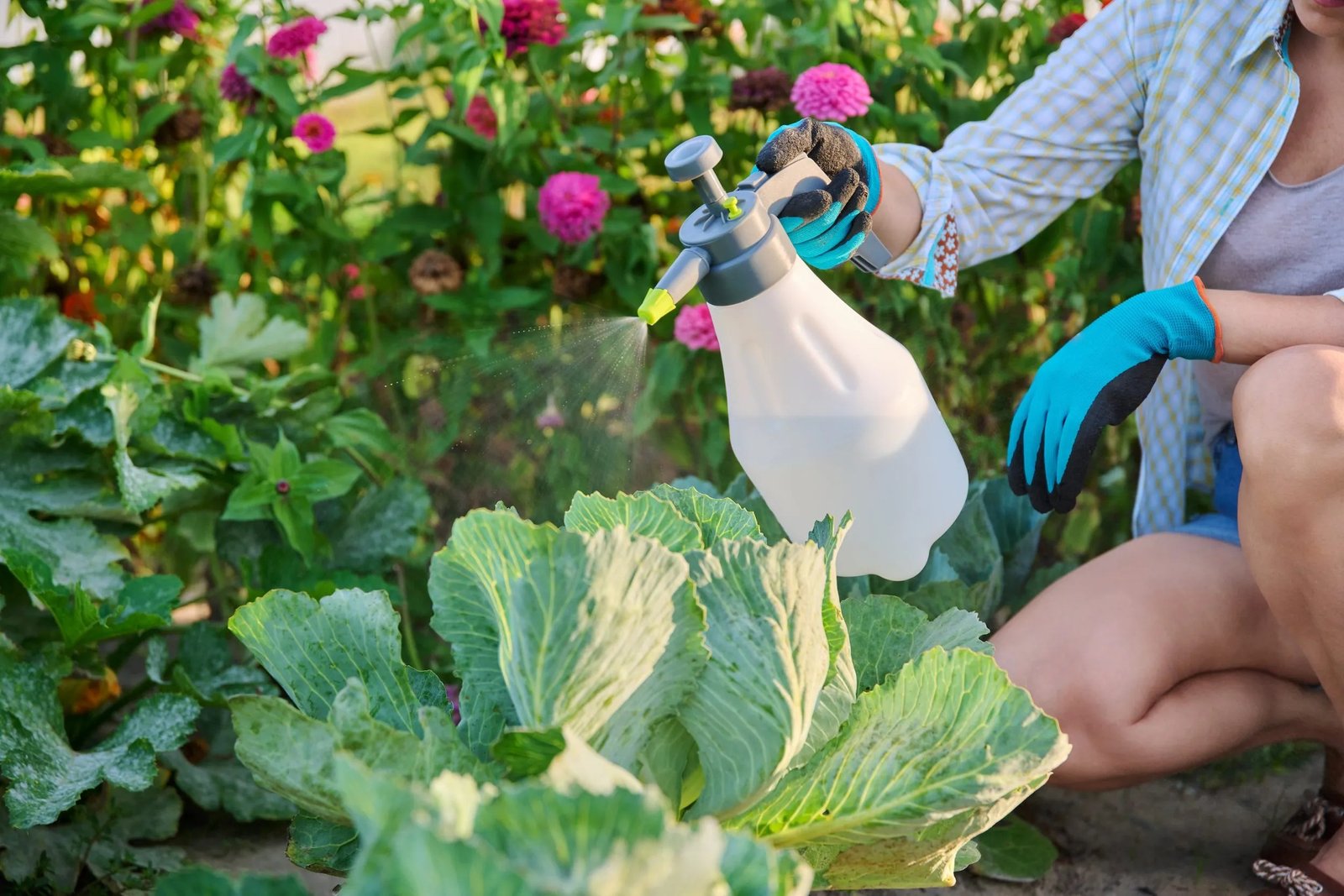
Diatomaceous Earth: A Dry Barrier That Must Stay Dry
Diatomaceous earth is a powder made from the fossilised shells of tiny algae, and it kills insects physically rather than chemically. The sharp microscopic particles damage the waxy coating of insects that crawl through it, and they lose water and die. Food-grade diatomaceous earth is the type sold for garden use. It is most useful against crawling pests: slugs and snails (as a scratchy barrier they dislike crossing), ants, earwigs, woodlice in excess, and beetles moving across soil or around plant bases.
Use it as a dry ring or dusting on the soil surface around vulnerable plants, around the legs of pots and cold frames, and in dry corners where pests shelter. The method’s great weakness is water. Rain, watering, and even heavy dew turn the powder into soft mud and it stops working until it dries — and in practice, a rained-on application usually needs replacing entirely. That makes diatomaceous earth a fair-weather, targeted tool: excellent in greenhouses, under cloches, around containers, and during dry spells; frustrating as a main defence in a wet month outdoors.
Apply it with a little care. The dust is an irritant to lungs — yours as well as anyone’s — so wear a simple mask on a still day, keep it off flowers so it does not harm visiting bees that crawl across it, and never use the pool-filter grade in the garden, which is a different, heat-treated product. Stored dry, a bag lasts for years, which makes it a cheap standby even if it only earns its keep a few weeks each season.
Row Covers and Insect Netting: The Method That Prevents Everything It Covers
Row covers — lightweight fabric or fine insect mesh laid over crops — are not a spray at all, but they may be the most reliable organic pest method in this whole guide, because they work by simple exclusion. If the pest cannot reach the plant, there is no infestation to cure. Fine mesh stops cabbage white butterflies laying on brassicas, carrot fly reaching carrot roots, flea beetles shredding young leaves, leek moth, and birds and rabbits helping themselves, all at once, with no reapplication and no effect on anything else.
The technique is straightforward but the details decide success. Cover the crop the day you sow or plant it — covering a week later can trap pests inside with their food, which is worse than no cover at all. Seal the edges properly with soil, boards, or bricks, leaving no welcoming gaps, and give plants room: draping mesh directly over foliage works, but hoops or supports that hold it above the leaves give the crop space to grow and stop pests reaching through to lay eggs on leaves touching the fabric. Check under covers every week or so when you weed and water, so a trapped pest or a disease starting in the still air is caught early.
Remember pollination. Crops grown for roots, leaves, and stems can stay covered until harvest, but fruiting crops that need pollinators — courgettes, squash, beans when flowering, strawberries — need the cover lifted when flowers open, or you trade a pest problem for a no-fruit problem. Covers also warm and shelter the microclimate slightly and hold in moisture, which young plants often enjoy, though in hot climates or the warmer USDA zones the lightest mesh is a better choice than heavy fleece, which can overheat a crop in summer. Few methods are as closely tied to avoiding disease as well as pests, since insects wound plants and carry problems from leaf to leaf — a point worth exploring alongside good practice on how to prevent plant diseases naturally if disease follows your pest problems around the garden.
Traps: Sticky Cards, Pheromone Traps, and Slug Traps
Traps are the scouts and the snipers of organic pest control — some mainly tell you what is happening, others genuinely reduce numbers.
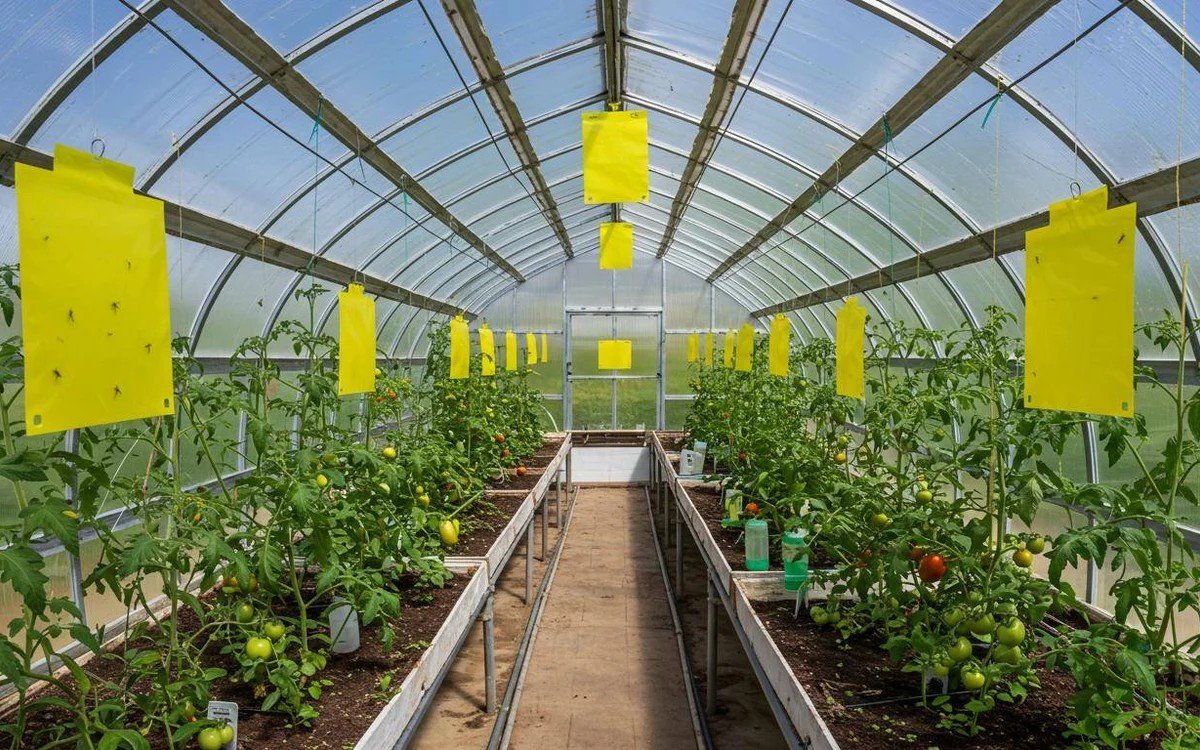
Yellow sticky traps, hung just above plants in greenhouses and polytunnels and among outdoor crops, catch whitefly, fungus gnats, winged aphids, and other small flying pests. Their best use is monitoring: a sudden jump in catches warns you a population is building while numbers are still small and easy to treat. They do catch pests in quantity in an enclosed greenhouse, but outdoors a sticky card will never catch enough of a large population to control it alone — and they will occasionally catch a beneficial insect too, which is another reason to treat them as an early-warning system first.
Pheromone traps work differently. A lure mimics the scent of a female moth, and male moths are drawn into a trap and caught. Codling moth traps for apple trees and plum moth traps are the classic home-garden examples. Like sticky cards, their main value is timing: when catches rise, you know eggs are being laid and the vulnerable stage is coming, which tells you when a targeted method such as Bt or a cover will do the most good. In small gardens they may also reduce mating enough to help, but buy them for information, not miracles.
Slug traps — a shallow container sunk to soil level and filled with beer or a yeast mixture — drown slugs and snails attracted to the fermenting smell. They genuinely work around high-value plants such as hostas and young seedlings, but they need emptying and refilling every few days, they can attract slugs from a wider area than they catch, and they can drown ground beetles, which are slug predators you want alive. A more decisive slug product is pellets based on iron phosphate, which break down into iron and phosphate in the soil and are widely accepted in organic gardening; slugs that eat them stop feeding and die, and the pellets are far safer around pets and wildlife than old-style metaldehyde, which is now banned or restricted in many places. Whichever you choose, traps and pellets protect best when concentrated around the plants that matter most, not scattered thinly everywhere.
Beneficial Insects: Buying and Encouraging Your Own Workforce
Beneficial insects are a method you can both buy and cultivate. Specialist suppliers sell live predators and parasites by post — ladybird larvae for aphids, parasitic wasps for whitefly and for aphid species, predatory mites for spider mites and thrips, and nematodes that are watered onto soil to hunt slugs, vine weevil larvae, and other soil pests. In greenhouses and polytunnels, where the insects stay where you put them, bought predators can be remarkably effective. Outdoors, bought insects often disperse, so outdoor gardeners usually get better value from encouraging the wild workforce that is already nearby.
Nematodes deserve a special mention because they fill a gap nothing else does: below-ground pests. Mixed with water and applied to moist soil in mild conditions — roughly spring and late summer are the usual windows, following the packet’s temperature guidance — slug nematodes seek out slugs under the soil surface, where pellets, traps, and hand-picking never reach. The soil must stay moist for the treatment to work well, and one application lasts weeks rather than a whole season, so plan repeat applications for prized beds.
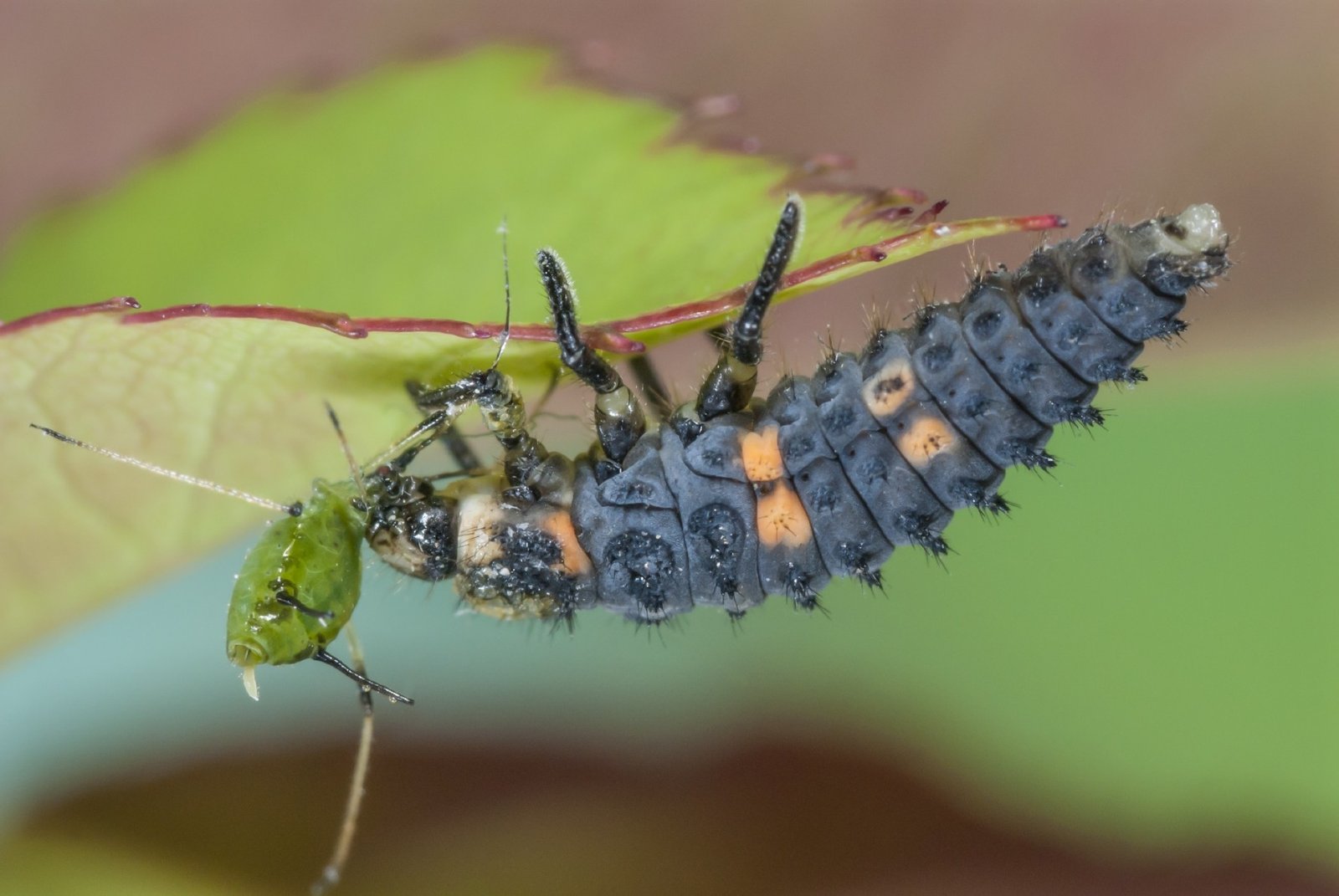
Encouraging free predators is the long game, and it is genuinely a method, not just a hope. Ladybirds, hoverflies (whose larvae eat aphids in quantity), lacewings, ground beetles, and parasitic wasps all need three things: food when pests are scarce, which means some flowers for nectar and pollen; shelter, in the form of undisturbed corners, leaf litter, and log piles; and an absence of broad spraying, because a spray that kills aphids today can starve or kill the predators that would have eaten next month’s aphids for free. Tolerating a small number of pests is, paradoxically, part of the method — a garden with zero aphids has nothing to feed the ladybird larvae that keep aphids at zero. Gardeners often notice the pattern after a season or two: outbreaks still happen, but they peak lower and collapse faster, because the clean-up crew arrives on its own.
Companion Planting as a Method: Helpful, With Honest Limits
Companion planting — growing certain plants alongside crops to confuse, repel, or distract pests — belongs in this guide because gardeners use it as a pest method, and parts of it genuinely work. It just needs honest framing: it is a supporting layer, not a shield.
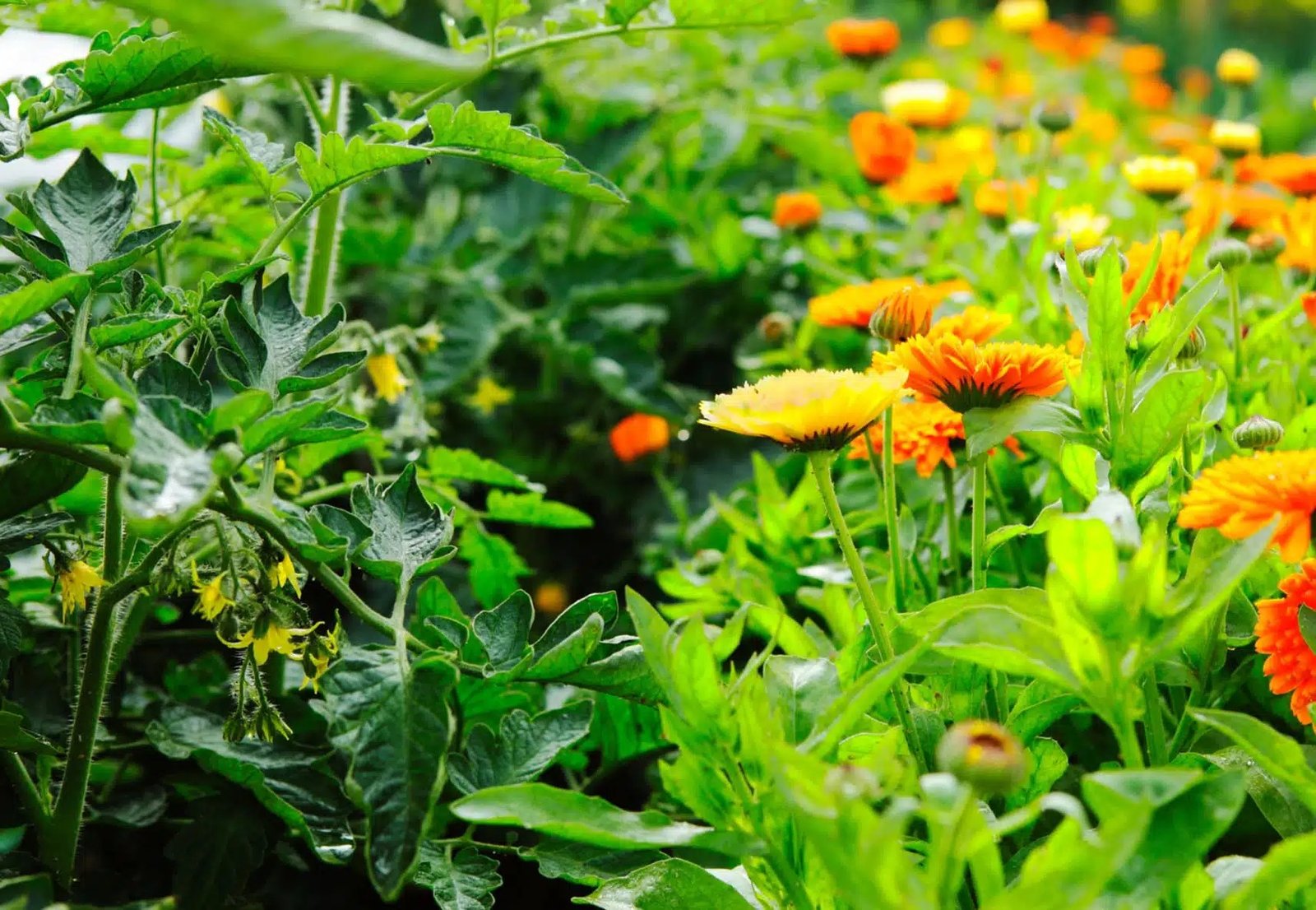
The strongest effects come from simple interruption. Strong-smelling herbs such as basil, rosemary, mint (kept in a pot, because it spreads aggressively), and chives grown among vegetables can make it harder for pests that find their host by smell to locate it. Flowers such as marigolds and nasturtiums earn their place two ways: marigolds are traditionally planted with tomatoes and are believed to discourage whitefly in greenhouses, and nasturtiums act as a trap crop, drawing aphids and cabbage white caterpillars onto themselves — where you can then remove the infested leaves, pests and all, or spray just that one plant thoroughly with insecticidal soap. Sacrificial planting is companion planting at its most practical: you are not repelling the pest, you are choosing where it goes.
Keep expectations proportional. Companion planting has modest, variable effects that depend on the pest, the planting density, and the season. It will not save a brassica from cabbage whites the way a net will, and it will not clear an established aphid colony the way soap will. What it can do — while also feeding pollinators and making the vegetable patch a better-looking place — is lower the background pressure so your other methods have less work to do. That is a respectable job. Just do not let a row of marigolds talk you out of buying the net.
Other Useful Products Worth Knowing
A few more products round out the organic shelf. Horticultural oils — highly refined oils sprayed on dormant or growing plants — smother overwintering eggs, scale insects, and mites, and are a traditional winter treatment for fruit trees and bushes; they are best used exactly within their labelled season, since oil on soft, active growth in heat can damage it. Spinosad, made from a naturally occurring soil bacterium, is effective against caterpillars, thrips, and leaf miners when other options fail, but it is toxic to bees while wet, so it belongs at dusk, on non-flowering plants, and as a reserve rather than a first choice. Garlic and chilli sprays, homemade or bought, work mainly as feeding deterrents — they make a leaf less appealing rather than killing anything — and need frequent reapplication, so treat them as mild helpers for low pressure. Kaolin clay, sprayed on fruit, coats it in a pale film that deters some fruit pests and reduces sunscald; it washes off produce before eating and needs renewing after rain. None of these replaces the core methods above, but each solves one specific problem neatly.
Practical Tips for Getting Real Results
Match before you buy. Spend two minutes identifying the pest — a hand lens and a look at the undersides of leaves will answer most questions — and then choose the product labelled for that pest. Keeping a tiny shelf of soap, neem, and Bt covers the great majority of home-garden outbreaks, and costs far less than one of everything.
Spray in the evening. Dusk application protects bees, prevents sun-scorch on wet, treated leaves, and gives contact products the longest possible wet working time before they dry. Never spray open blooms with anything, even organic products, and never spray when bees are actively working a plant.
Test, then treat. With any new spray on any new plant, treat a small area and wait twenty-four to forty-eight hours. Leaf damage from a product usually shows quickly, and a tested plant saves a whole bed from an unhappy surprise.
Aim at the pest, not the calendar. These products work at specific pest stages — young caterpillars for Bt, live soft-bodied insects for soap — so weekly scouting beats routine spraying. Spray when you find the pest at the stage the product targets, repeat as the label allows while live pests remain, and stop when they are gone.
Rotate and combine methods sensibly. A net over the brassicas, soap for the aphids on the beans, nematodes under the hostas, and a trap crop by the gate is a complete system, and because each method works differently, pests are far less likely to shrug the whole system off. Write down what you used, where, and whether it worked; next season you will thank yourself, because pest problems are wonderfully repetitive and your notes turn guesswork into a plan.
Store products properly. Most organic sprays keep best cool, dark, and sealed, and mixed-up sprays should generally be used fresh rather than stored — mixed neem in particular loses strength quickly. Check dates on biological products such as nematodes, which are living things with a shelf life, and order them when you are actually ready to apply them.
Common Mistakes and Problems to Avoid
Spraying at midday in full sun is the fastest way to turn a good product into leaf scorch, and it is the most common application error of all. Oils and soaps on hot, sunlit leaves can burn tissue they would never harm at dusk. Move spraying to the evening and most “this product damaged my plants” stories disappear.
Using the wrong product for the pest wastes money and, worse, time — a week of spraying Bt at aphids is a week in which the aphid colony doubles twice. If a treatment shows no effect after two properly applied rounds, question the identification before increasing the dose. The pest may be something else entirely; curling leaves, for instance, can be a virus, water stress, or herbicide drift damage wearing a pest costume.
Going too strong feels decisive and is consistently a mistake. Double-strength soap burns leaves without killing one extra aphid, because the pest still has to be hit directly. Label rates are the tested rates. Related to this is the homemade substitution problem: washing-up liquid, vinegar, and random kitchen mixtures are not gentler versions of the real products — they are untested ones, often harsher on leaves and with no reliable effect on the pest.
Killing the clean-up crew is the mistake with the longest shadow. A broad spray applied to a mild problem can wipe out ladybirds, hoverfly larvae, and parasitic wasps, and the next pest generation then grows up in a garden with no predators — the classic rebound, where the outbreak two weeks after spraying is worse than the one you sprayed. Before treating, look for predators already at work — ladybird larvae look like tiny grey-and-orange crocodiles and are easily mistaken for pests themselves — and if they are present in numbers, consider giving them a few days to work.
Expecting one application to finish the story leads to the last common error: declaring a method useless and switching products weekly, so nothing is ever applied properly or repeated on schedule. Organic methods generally work through correct, repeated application at the right stage. Judge any method after a fair trial — the right product, the right pest, two or three applications as directed — and judge it on whether numbers fall, not on whether every last insect vanishes. In most gardens, control means damage kept below the level that matters, and that is achievable in every USDA zone, though the pest calendar shifts: southern and warmer zones face longer pest seasons and extra generations each year, while cooler zones get shorter, sharper outbreaks that reward fast, early action.
Frequently Asked Questions
What is the most versatile organic pest control product to own?
Insecticidal soap is the best first purchase for most gardeners, because it handles the most common outbreaks — aphids, whitefly, and spider mites — works quickly, leaves no residue, and is inexpensive. Neem oil is a close second and covers a slightly wider range, including some feeding deterrence. Add Bt when you grow brassicas or tomatoes, and those three cover most home-garden situations.
Is neem oil safe for bees and other beneficial insects?
Neem can harm bees and other beneficial insects if it is sprayed directly onto them while wet, which is why it should be applied at dusk, kept off open flowers, and aimed at the pests themselves. Once dry on the plant, the risk drops greatly. The same care applies to most organic sprays — organic describes the product’s origin, not a promise that it cannot harm anything.
Does Bt harm butterflies or bees?
Bt in its common caterpillar strain affects caterpillars that eat treated leaves, and it has very little effect on bees, which do not eat leaves. Butterfly caterpillars are caterpillars, though, so the sensible approach is to spray only the crop plants you are protecting and leave wild plants and garden-edge flowers untreated, so butterflies keep their food plants.
How often do I need to reapply organic sprays?
It depends on the product and the weather. Insecticidal soap has no effect once dry, so repeat every few days while live pests remain. Neem is usually repeated every seven to fourteen days during an outbreak. Bt breaks down in sunlight and washes off in rain, so reapply after rain and roughly weekly while caterpillars are feeding. In every case, scout first and spray when you find the pest at the stage the product targets.
Can I use diatomaceous earth indoors and in the greenhouse?
Yes — it is often at its best indoors and under glass, because it stays dry, and staying dry is what makes it work. Dust it around pot bases, along greenhouse staging edges, and in dry corners where crawling pests travel. Wear a mask while applying it, keep it off flowers, and use only the food-grade type.
Are organic pest control methods safe on vegetables?
Generally yes, when used as labelled. Insecticidal soap and Bt are widely used on food crops right up close to harvest; just wash produce before eating as you normally would. Check each product’s label for any harvest interval it specifies, keep sprays off anything you are about to pick if the label says so, and remember that row covers and traps involve no spray on the crop at all.
Final Thoughts
The best organic pest control is not a single wonder product, and that is actually good news, because it means your garden does not depend on one bottle. It is a matching exercise you get better at every season: identify the pest, pick the method built for it — soap for the soft-bodied crowds, Bt for caterpillars, nets to keep pests off entirely, nematodes for the ones hiding underground, predators for the long game — apply it at dusk, at label strength, at the right stage, and repeat it fairly before judging it.
Start small. A bottle of insecticidal soap, a net for the brassicas, and the patience to check leaf undersides once a week will take a beginner further than a shed full of products used at random. Add neem, Bt, traps, and beneficial insects as your garden teaches you which pests are truly yours. Over time the aim shifts from winning individual battles to running a garden where outbreaks are noticed early, dealt with precisely, and rarely allowed to become emergencies — and that garden, notably, also has more ladybirds in it.