

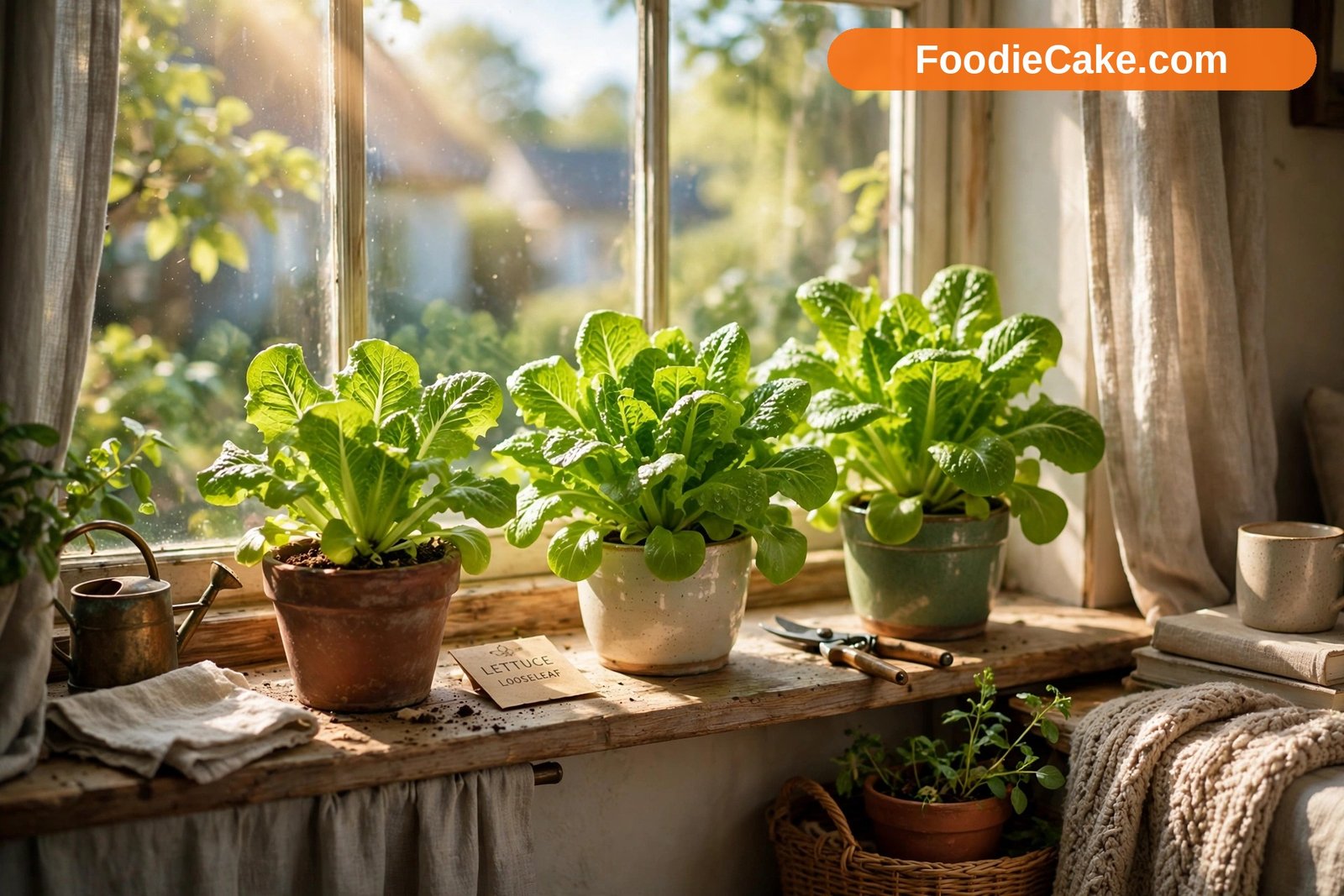
Learning how to grow lettuce indoors is one of the most satisfying small projects in all of gardening, because lettuce is almost comically well suited to life in a pot on a windowsill. It grows fast — you can be picking outer leaves within a month of sowing — its roots are shallow enough for a tray no deeper than a teacup, and it actively prefers the cool conditions of an ordinary room to the heat of a summer garden. While outdoor lettuce bolts, turns bitter, and gets eaten by slugs, an indoor crop sits quietly beside the kettle, unbothered.
It is also genuinely useful. A couple of trays on the go at different stages means fresh leaves for sandwiches and salads whenever you want them, picked minutes before eating, with no plastic packaging and no limp supermarket bag quietly sweating in the fridge. You will not feed a family of six from a windowsill, and this guide will not pretend otherwise — but for pick-as-you-go leaves, indoor lettuce is hard to beat for effort against reward.
Why Lettuce Suits Indoor Growing So Well
Most vegetables are terrible house guests. Tomatoes want to be two metres tall, courgettes want the whole room, and even chillies sulk without serious light. Lettuce is the opposite in almost every respect. Its root system is small and fibrous rather than deep, so a shallow container that would starve most crops is perfectly adequate. It is a cool-season plant by nature, happiest in temperatures that match a comfortable living room or a cool kitchen far better than a July greenhouse. And it is fast: from sowing to first pickings in roughly four to six weeks for loose-leaf types, which means mistakes are cheap — a failed tray costs you a fortnight, not a season.
Lettuce also tolerates being harvested gradually, which suits indoor quantities perfectly. Instead of waiting months for one big plant, you pick a few outer leaves from several plants, and the plants simply carry on. Grown this way, a modest windowsill becomes a slow, steady salad supply rather than a single glut.
Choosing the Best Lettuce Types for Indoors
Variety choice matters more indoors than out, because the types that form a tight, heavy head — the classic round and iceberg lettuces — are the ones that struggle most inside. Heading types take longer, need more room per plant, and are the most prone to rot in the centre when air movement is poor. Loose-leaf lettuces are the indoor champions: they grow as an open rosette of separate leaves, they are ready to pick sooner, and they regrow after picking, which is exactly what a small indoor crop needs.
Salad Bowl is a long-standing favourite for pots, producing a generous mound of frilly green leaves that keeps coming as you pick. Lollo Rosso brings deep red, tightly frilled leaves that look as good as they taste and make a plain windowsill look like a deli counter. Oakleaf types, with their soft, lobed leaves, are tender and mild and very forgiving of ordinary conditions. Butterhead varieties such as Tom Thumb — a genuinely miniature heading lettuce bred small — are the exception worth trying if you want something closer to a whole little lettuce per plant. If this project gives you the indoor growing bug, the same windowsill can soon host pots from our guide to the best herbs to grow indoors, which share lettuce’s love of a bright sill and regular picking.
Containers: Shallow, Wide, and Well Drained
Lettuce does not need depth; it needs width. A container ten to fifteen centimetres deep is plenty for the roots, so shallow trays, window boxes, wide bowls, and cut-down storage boxes all work well, and they fit on a sill where a deep pot would crowd the glass. A wide tray holding many seedlings at loose spacing will out-yield a single deep pot with one plant in it every time.
Drainage is the non-negotiable part. Lettuce wants constantly moist compost, and moist tips into waterlogged the moment excess water has nowhere to go — roots sitting in a puddle rot, and the first sign is often seedlings toppling over at the base. Choose containers with drainage holes and stand them in a tray or saucer to protect the sill. If you fall for a pretty pot without holes, either drill them or use it as an outer cover pot and grow in a plain plastic one inside it, lifting the inner pot out to drain after watering.
Soil and Compost for Indoor Lettuce
Ordinary peat-free multipurpose compost, straight from the bag, grows perfectly good indoor lettuce. It holds moisture evenly, drains adequately in a shallow tray, and contains enough food for the first few weeks. If your multipurpose compost is coarse and lumpy, sieving a tray’s worth through your fingers and breaking up the chunks gives seedlings a much easier start, because tiny seeds sitting in a pocket of bark chip germinate unevenly.
Fill the tray to about a centimetre below the rim, firm it very gently with the flat of your hand — level and settled, not rammed — and water it before you sow, so the surface is evenly damp. Sowing onto pre-moistened compost means you do not have to blast tiny seeds around with a watering can afterwards.
Sowing Lettuce Seed Indoors
Here is the detail that catches people out: lettuce seed needs light to germinate well. Buried deep, it germinates patchily or not at all, which is why so many first attempts produce a tray with three seedlings and a lot of bare compost. Sprinkle the seed thinly and evenly over the damp surface — lettuce seed is small, so tip a little into the palm of one hand and tap it out gradually rather than pouring straight from the packet — then cover it with the barest dusting of compost or fine vermiculite, a couple of millimetres at most. Some growers cover with nothing at all and simply press the seed gently onto the surface so it makes good contact with the moisture. Either way, the rule is: barely covered, never buried.
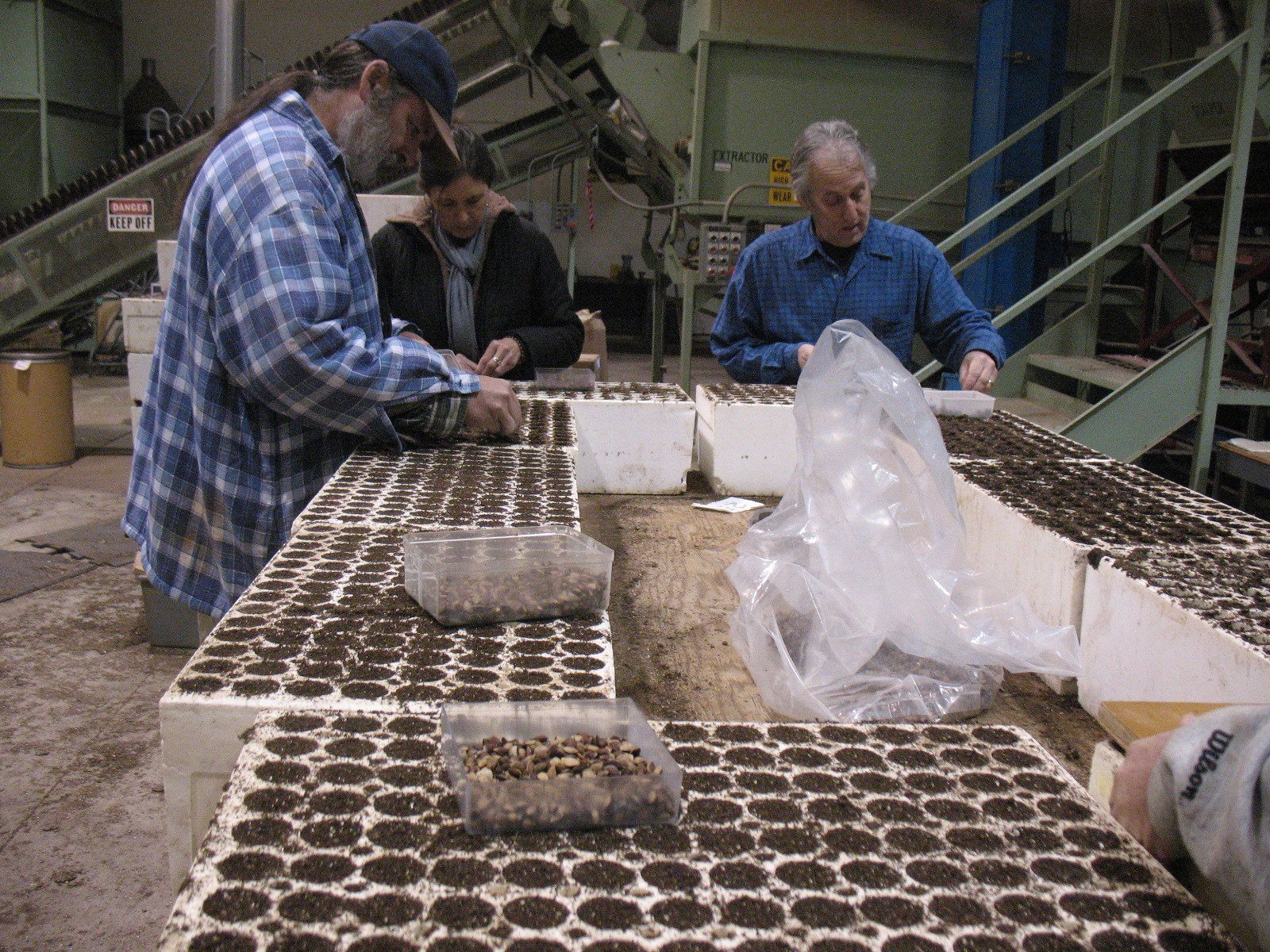
After sowing, mist the surface with a spray bottle rather than watering from above, cover the tray with a clear lid, a pane of glass, or a loose sheet of cling film to hold in humidity, and put it somewhere bright but not baking — the windowsill is fine, out of fierce midday sun. At ordinary room temperatures, germination usually takes somewhere between a few days and a week. The moment you see green, remove the cover. Seedlings left under a lid in a warm room grow soft and invite mould; they want light and air from their first hour above the surface.
Light: The One Thing You Must Get Right
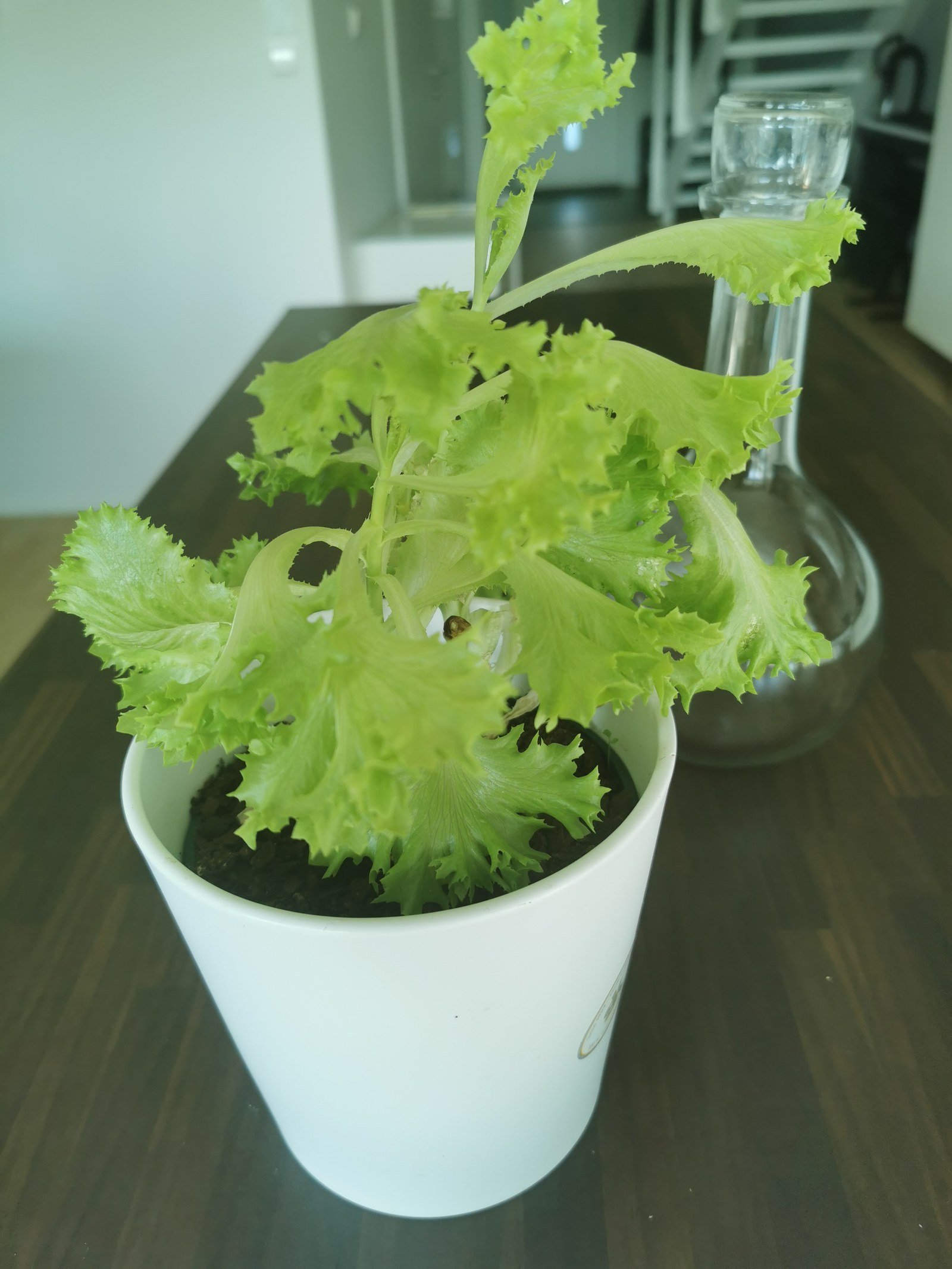
Light decides everything, so let us be direct: a bright windowsill works, a dim one does not, and no amount of good compost compensates. The best indoor spot is the brightest windowsill you have, ideally south-facing, where the tray sits close to the glass and receives several hours of direct sun plus strong light for the rest of the day. East- and west-facing sills can work, especially from spring to autumn, giving a few hours of direct light morning or evening. A north-facing sill, or a tray sitting on a table a metre back from any window, will almost always produce the classic indoor lettuce failure: pale, elongated, floppy leaves leaning desperately towards the glass. Lettuce grown in low light does not just look sad — it tastes watery and bland, because the plant never gathered the energy to make real leaves.
Using LED Grow Lights
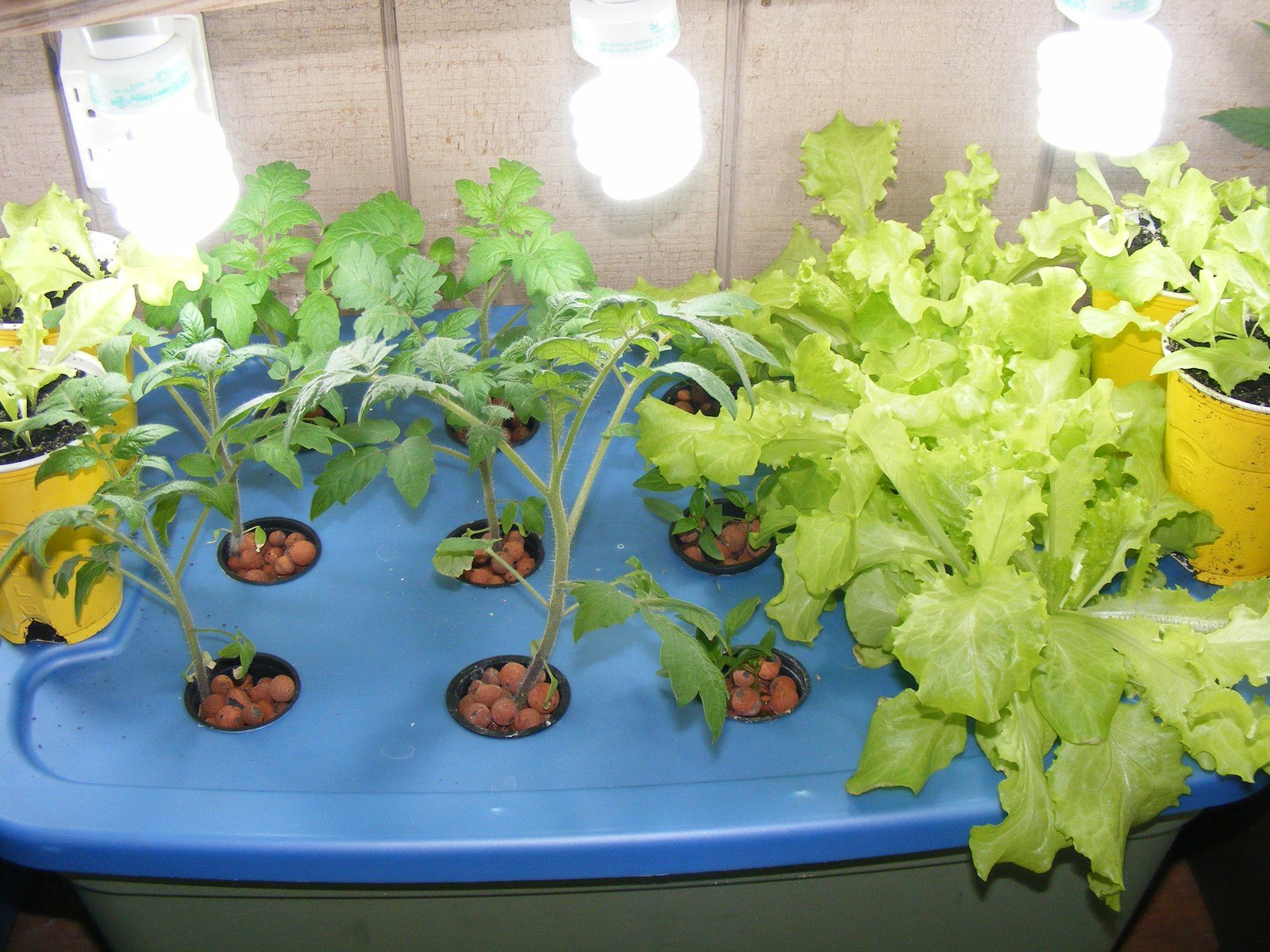
If your brightest sill is not bright enough, or you want to grow through the dark middle of winter, an LED grow light changes everything, and it need not be elaborate or expensive. A simple full-spectrum LED panel or bar, of the kind sold for houseplants and seedlings, hung or stood over the tray, gives lettuce exactly what a windowsill in December cannot. Two settings matter: duration and distance. Run the lights for roughly fourteen to sixteen hours a day — lettuce is a long-day crop indoors and thrives on it — using a cheap plug timer so you never have to remember. And keep the light close: a few centimetres above the tops of the leaves, far closer than most beginners instinctively place it. Light intensity falls away fast with distance, so a lamp thirty centimetres above the tray is delivering a fraction of what it delivers at five.
As the plants grow, raise the light to maintain that small gap, which is why a light hung on adjustable cords, or a tray you can raise and lower on books, beats a fixed fitting. Leaves that begin to stretch, pale, or lean are asking for more light or a lower lamp; compact, richly coloured, flat rosettes mean you have it right. If you enjoy this kind of setup, it opens the door to a whole shelf of projects among the best indoor plants for beginners, many of which will happily share the same light.
Temperature: Keep It Cool
Lettuce is a cool-weather crop wearing a houseplant’s clothes. Its ideal range indoors is roughly fifteen to twenty degrees Celsius — normal living-room and kitchen temperatures in other words — and it germinates happily at the cooler end of that. Problems begin with heat. A tray on a sunny sill above a radiator, or in a room that regularly sits in the mid-twenties, produces leaves that turn bitter and plants that bolt, sending up a tall flowering stem and giving up on leaf production altogether.
If you have a cool spare room, a bright hallway, or an unheated conservatory corner, lettuce will often do better there than in your warmest room. Keep trays away from radiators and heat vents even if the light there is tempting, avoid the top of a fridge or a boiler cupboard for germination, and remember that the windowsill itself is cooler at night against the glass — which, within reason, suits lettuce fine. In a heatwave, moving the tray to your brightest spot out of direct afternoon sun can save the crop’s flavour.
Watering: Evenly Moist, Never Soggy
Lettuce leaves are mostly water, and they show it: let the compost dry out and the leaves wilt, turn bitter, and bolt soon after; keep it drowning and the roots rot. The target is evenly moist compost at all times, like a well-wrung sponge, checked with a fingertip every day or two. In a shallow tray on a bright sill, that usually means watering little and often rather than a weekly flood.
Bottom watering suits indoor lettuce best. Stand the tray in its saucer or a shallow dish of water for fifteen to twenty minutes and let the compost draw up what it needs, then tip away whatever remains. The surface stays comparatively dry, which discourages the tiny fungus gnats that haunt houseplants and the mould that troubles seedlings, while the roots get a thorough drink. If you water from above, do it gently, in the morning, aiming at the compost rather than the leaves, and never leave the tray standing in water afterwards.
Thinning, Feeding, and Airflow
Even a carefully thin sowing produces some crowding, so thin seedlings while they are small — once they have their first true leaves, the little rounded real leaves after the first seed leaves. Snip out the weakest at soil level with scissors rather than pulling them, because pulling disturbs the roots of the neighbours you are keeping. Aim for roughly five to eight centimetres between the plants you intend to grow on; it feels wasteful for about a day, and then the remaining plants visibly accelerate. The thinnings, if they are big enough to bother with, are perfectly good in a sandwich.
Feeding should be light and late. Fresh compost carries enough food for the first three or four weeks, and lettuce is not a hungry crop. After that, a weak liquid feed — a general-purpose or tomato feed at about half the strength on the label, given once a week — keeps leaves growing steadily. Overfeeding soft, indoor-grown lettuce pushes floppy growth and can leave leaves tasting harsh, so if in doubt, feed less.
Airflow is the quiet third factor. Still, damp air around dense seedlings invites grey mould and the damping-off disease that makes seedlings keel over. A window opened on mild days, a tray not packed rim-to-rim against other pots, or even a small fan on its lowest setting for part of the day keeps air moving and stems sturdier. Brush your hand lightly over the seedlings once a day as you pass — it sounds like folklore, but the gentle movement genuinely encourages stockier growth, and it is also how you will notice problems early.
Harvesting: Cut and Come Again
The harvest method that makes indoor lettuce worthwhile is cut-and-come-again. Once a plant has a good rosette of leaves, start picking the outermost, largest leaves individually, snipping or pinching them at the base, and always leave the central growing point and a decent heart of younger leaves untouched. The plant responds by producing more leaves from the centre, and a single plant picked this way gives you leaves for weeks rather than days.
For a slightly bigger harvest, you can cut a whole loose-leaf plant a couple of centimetres above the compost and let it regrow from the stump — it usually manages this two or three times, each regrowth a little weaker than the last, before the plant tires and turns bitter. Either way, pick in the morning when leaves are at their crispest, pick little and often rather than stripping a plant bare, and eat what you pick the same day if you can: leaves that go from sill to plate in five minutes are the entire point of the exercise.

Succession Sowing: The Secret to a Continuous Supply
One tray of lettuce, however well grown, gives you a few weeks of leaves and then it is done. The trick professionals and allotment gardeners rely on is succession sowing: small sowings, often. Every one to two weeks, sow a fresh small tray or top up a fresh section of a window box, so that as one batch passes its best, the next is sizing up and a third is germinating. Three trays in rotation — germinating, growing, and being picked — is a complete home salad system on a single sill.
A Brief Word on Hydroponic Jars
If you enjoy the gadget side of indoor growing, lettuce is also the easiest crop to try hydroponically — in plain water with a little liquid nutrient, no compost at all. The simplest version is a jar or bottle with the seedling held in a small net pot or a collar of foam so its roots dangle into nutrient solution, on the same bright sill or under the same LED light. Roots grow fast, growth can be noticeably quick, and there is no compost to spill. The trade-offs are real, though: the solution needs topping up and refreshing, algae grows in clear jars unless you block the light, and a failed crop fails soggy. It is a fun second experiment once soil growing is second nature, not a necessary first step — the tray of compost remains the cheaper, simpler, and more forgiving route.
Practical Tips for Better Indoor Lettuce
Sow less than you think, more often than you think. A quarter of a packet every fortnight beats the whole packet in January, in yield, in flavour, and in how much of the crop you actually eat.
If leaves taste bitter, work through the causes in order: too warm, too dry at some point, too old. Picking younger, watering more evenly, and moving the tray somewhere cooler fixes the great majority of bitter crops without changing anything else.
Common Mistakes and How to Avoid Them
Not enough light is the indoor lettuce mistake, accounting for most leggy, pale, floppy failures. The seedlings stretch within days, the leaves stay thin and yellowish-green, and no feeding or watering regime rescues them. The fix is always the same: a brighter sill, a tray closer to the glass, or an LED light a few centimetres overhead for fourteen to sixteen hours a day. Move the tray first and judge after a week of new growth — the new leaves tell the truth.
Letting the compost dry out runs a close second. Shallow trays hold little water, a sunny sill is warm, and lettuce punishes a single bad drying with bitterness and bolting. Check daily with a finger, bottom water before the tray feels light and dry, and never rely on a weekly routine.
Sowing too thickly is the beginner’s classic. A dense green carpet looks wonderful at a week old and is a tangled, competing, mould-prone mess at three weeks. Sow sparsely, thin bravely with scissors, and remember the thinnings are edible rather than wasted.
A warm room causes the fourth failure: bitter leaves and early bolting, especially in trays above radiators or in steamy kitchens. Cooler is better — move the tray to the coolest bright spot you have, and in summer grow lettuce in your lightest shade rather than your sunniest heat trap.
Frequently Asked Questions
How long does lettuce take to grow indoors?
Loose-leaf lettuce sown indoors is usually ready for its first outer-leaf pickings in about four to six weeks, depending on light and temperature, and a well-picked plant keeps producing for several weeks after that. Growth is faster under a good LED light and on a bright sill in spring than in midwinter natural light, when everything slows down a little.
Can I grow lettuce indoors all year round?
Yes, and that is one of its great advantages. Outdoors, lettuce has a season; indoors, you can sow in any month. Winter crops grow more slowly and really benefit from a grow light, while spring and autumn crops on a bright sill often do best of all, since the light is decent and the room stays cool.
Does indoor lettuce need a grow light?
Not always. On a genuinely bright, preferably south-facing windowsill, loose-leaf lettuce grows well in natural light for much of the year. A grow light becomes close to essential for north-facing windows, for trays kept away from windows, and for winter growing — and it gives more compact, colourful plants in almost every situation.
Why is my indoor lettuce leggy and pale?
Almost certainly light. Seedlings stretch towards whatever light they can find, and a tray too far from the window or on a dim sill produces tall, weak, washed-out growth. Move it to your brightest spot, turn it daily, or add an LED light close above the leaves, and expect the new growth — not the stretched growth — to come in compact and green.
Why does my lettuce taste bitter?
Heat, drought, and age are the usual causes, in roughly that order. Move the tray somewhere cooler, keep the compost evenly moist, and pick leaves younger and more often. Bitterness that arrives with a tall central stem means the plant is bolting, and that plant’s leaves will not improve — harvest what you can and start the next tray.
How many times can I harvest from one lettuce plant?
Picking outer leaves, a healthy loose-leaf plant gives pickings over four to eight weeks. Cut whole just above the base, it will usually regrow two or three times with declining vigour. Either way, your succession sowings should mean a fresh batch is always coming up behind it.
Final Thoughts
Growing lettuce indoors asks for very little: a shallow tray, decent compost, seed barely covered, cool air, steady moisture, and — above all else — honest light. Give it those things and it repays you with crisp, fresh leaves a few steps from the chopping board, in January as happily as in June. Start with one tray of a loose-leaf variety on your brightest sill, sow the next tray a fortnight later, and let the small, steady rhythm of it win you over. Of all the crops a windowsill can hold, this is the one most likely to turn a curious beginner into a confirmed indoor gardener.