
Best Ground Cover Plants for Gardens
Bare soil never stays bare for long. If you do not choose what covers it, weeds will happily choose for you, and you will spend summer pulling them out of the same awkward bank, shady corner, or strip under trees where grass refuses to grow. That is why gardeners keep coming back to ground cover plants: low, spreading plants that knit together into a living carpet, shade the soil, hold moisture, and look deliberate while they do it.
A good ground cover softens paths and edges, fills the ground beneath shrubs, holds a slope that would otherwise wash away, and in a few cases stands in for lawn where shade or drought has defeated grass. Some flower beautifully in spring; some are grown for foliage and look good far longer. None is magic, and this guide will be straight about the vigorous ones that need watching.
Which Ground Cover for Which Problem?
The fastest way to choose is to start from the problem, not the plant. A sunny bank, a dark corner under trees, and a path that gets walked on every day are three different jobs, and a plant that is perfect for one will fail at the others. Work out which row of this table is yours, and you have already narrowed eleven plants down to two or three.
| Your problem | Best first choices | Avoid here |
|---|---|---|
| Hot, dry, sunny bank or thin soil | Creeping thyme, sedum, creeping phlox, creeping juniper | Hosta, wild ginger, sweet woodruff |
| Dry shade under trees | Vinca minor (contained), ajuga, wild ginger | Thyme, sedum, phlox, lamb’s ear |
| Damp or moist shade | Sweet woodruff, wild ginger, grouped hostas | Sedum, creeping juniper, lamb’s ear |
| A path or lawn you actually walk on | Clover, creeping thyme (light traffic) | Sedum, phlox, hosta, lamb’s ear |
| A big slope you want to forget about | Creeping juniper, sedum | Clover, sweet woodruff |
| Spring flowers on a wall or bank | Creeping phlox, vinca minor | Clover, creeping juniper |
| Silver foliage at a sunny edge | Lamb’s ear | Anything that needs shade or wet soil |
Match each plant to your light first, then to your soil and foot traffic. If your hardest area is a dark corner, pair this guide with our roundup of the best plants for shady gardens for taller companions to plant above your cover. Iowa State University Extension’s guide to groundcovers for shade is also a useful cross-check, since it covers many of the same plants with notes on how they behave in real gardens.
Reading Your Site Before You Spend a Penny
Ground covers fall into two camps. Sun lovers such as thyme, sedum, phlox and juniper need six or more hours of sun, lean soil and good drainage, and thin out in shade. Shade lovers such as hosta, wild ginger and sweet woodruff thrive under trees but scorch on a hot bank. Planting each group in the other’s conditions is the most common reason cover disappoints, so walk your site at different times of day first. A patch that looks shady at noon may get three hours of morning sun, and a bank that looks dry may sit wet all winter.
Prepare the ground properly, because this is your one easy chance. Clear weeds thoroughly, roots and all, dig out perennial offenders such as bindweed and ground elder, and improve poor soil with compost in the top few inches. Be honest about weed suppression: a mature, dense cover shades out most annual weed seedlings, but it will not defeat established perennial weeds, and no cover is dense in its first season. Mulch the gaps in year one and weed while plants fill in. If clearing weeds in a new bed feels uphill at first, our guide to natural ways to kill weeds in gardens covers the clearing stage in useful detail, so your covers start with the clean ground they need.
Spacing decides how fast the carpet closes and how much it costs. Small perennials are often planted 9 to 12 inches apart for cover in one to two seasons, hosta 18 inches or more apart, and creeping juniper 3 to 4 feet apart. Closer fills faster and costs more; wider means another season of mulching the gaps. Buy fewer plants and space them properly rather than buying one of everything: a carpet needs repetition, not variety.
For Hot Sun and Thin Soil
Sunny, dry ground is where most gardens have their ugliest bare patches: the top of a bank, the strip beside a drive, the gravelly corner nothing else likes. These four plants do not just tolerate those conditions, they prefer them, and they sulk in rich, wet soil. That is a useful thing to remember when you are tempted to improve the ground too much.
Creeping Thyme: Fragrant, Flowering, and Walkable
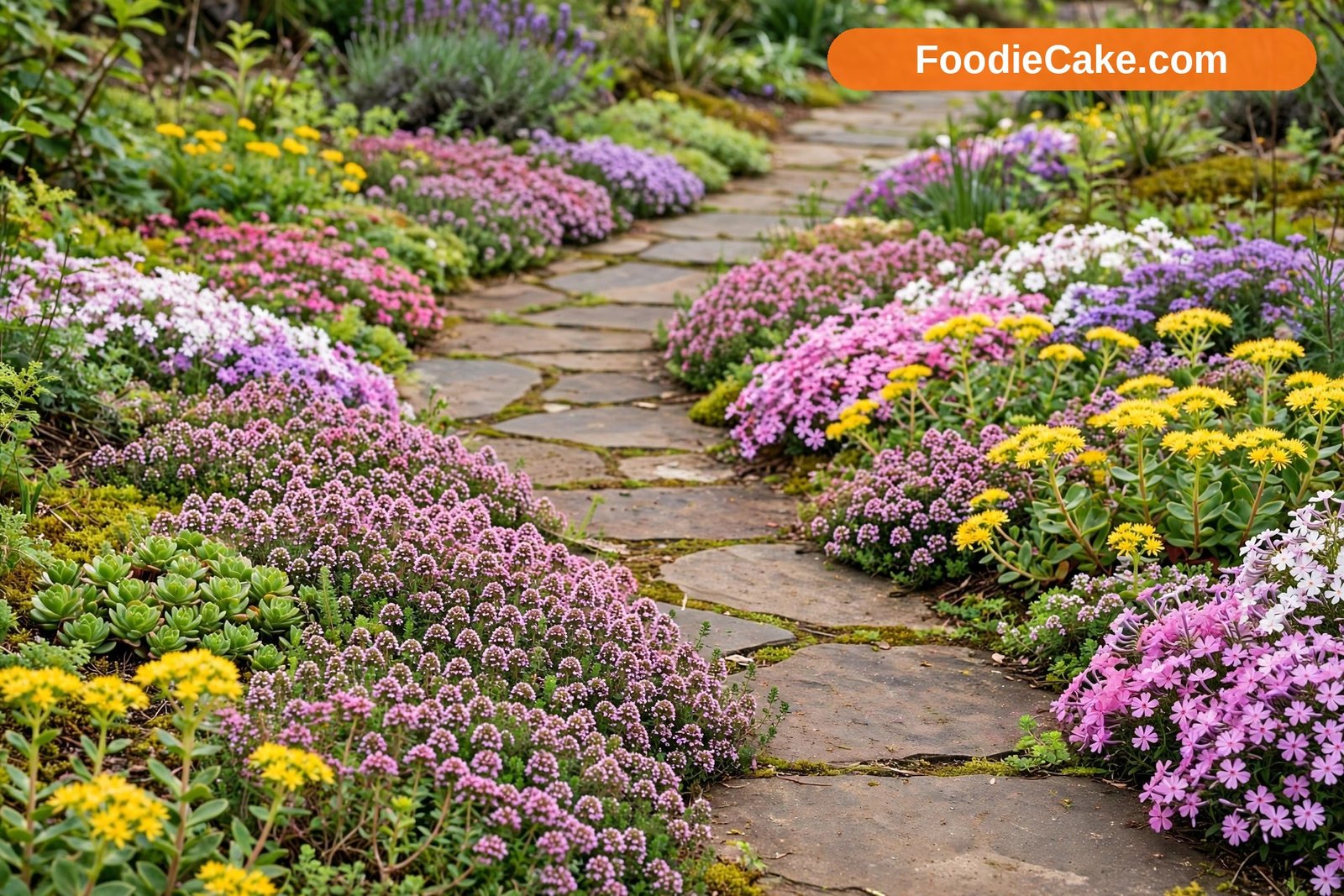
Creeping thyme, Thymus serpyllum and Thymus praecox types, is the ground cover people picture between stepping stones. Plants grow only 2 to 4 inches tall, spread a foot or more across, and cover themselves in pink, magenta or white flowers in early to midsummer that bees love. The foliage is aromatic when trodden on lightly. Pink Chintz flowers heavily, while woolly thyme offers soft grey foliage and sparser flowers.
Give it full sun and the leanest, sharpest-draining soil you have. Thyme hates winter wet and thins in shade. It tolerates light foot traffic once established, so it works between stones and as a small lawn substitute in low-use areas, but not a dog run. Drought tolerant once rooted, hardy roughly in zones 4 to 9, and best planted 8 to 12 inches apart.
Sedum and Stonecrop: The Drought-Proof Carpet
Low-growing sedums, often listed under Sedum and Phedimus, are the answer for hot, dry, thin soil. Sedum acre forms a tight evergreen mat an inch or two tall with yellow flowers in early summer. Sedum spurium types, including red-leaved Dragon’s Blood, spread wider and colour up in sun. Kamtschaticum types are a little taller and reliably tough. All root as they spread, helping them hold a slope.
Sedums want full sun and excellent drainage above all else. In rich, wet soil they grow soft, flop and rot, so they suit gravel gardens, rockeries, sunny banks and wall tops, and they are a poor choice for heavy clay that stays wet in winter unless you improve drainage generously with grit. Foot traffic tolerance is low, so keep them out of main walkways. Most are hardy in zones 3 to 9, need almost no feeding, and fill in within one to two seasons planted 9 to 12 inches apart.
Creeping Phlox: A Spring Flower Show on Banks
Creeping phlox, Phlox subulata, exists for one glorious reason: for three or four weeks in spring it disappears under flowers in pink, lilac, blue, white or candy-striped forms, spilling over walls and down banks. Emerald Blue, Candy Stripe and Scarlet Flame all behave similarly. The needle-like evergreen foliage forms mats 4 to 6 inches tall.
It needs full sun and well-drained soil, at its best cascading where the flowers can be seen from below. It fades and turns patchy in shade, and wet soil invites rot. It is not a walk-on plant. Shear mats by about a third after flowering to keep them dense. Hardy roughly in zones 3 to 9, spaced 12 to 18 inches apart, with good cover in two seasons: slower than vinca or ajuga, and far better behaved.
Lamb’s Ear: Soft Silver Foliage for Sunny Edges
Lamb’s ear, Stachys byzantina, covers ground with rosettes of thick, felted, silver-grey leaves people stop to stroke. It grows 6 to 12 inches tall and spreads to form wide clumps. Many gardeners cut off the leggy woolly flower spikes, or choose a mostly non-flowering form such as Silver Carpet, or large-leaved Helen von Stein, best where heat and humidity make ordinary lamb’s ear melt.
Sun and drainage are the rules. Lamb’s ear excels in full sun, gravel and poor dry soil in zones 4 to 8 roughly, but rots in winter wet and humid summers. It is an edging cover, not a walk-on one, and needs dividing every few years as old centres die out. Spaced 12 to 18 inches apart, clumps meet within a season or two.
For Shade Under Trees and Walls
Shade is where ground cover earns its keep most visibly, because it is exactly where lawn gives up. The plants below are not sun plants making do; they are plants that genuinely prefer life out of the glare, under trees or on the north side of a wall. The catch is that shade usually comes with root competition and dry soil, so they all need watering while they establish, even the tough ones.
Vinca and Periwinkle: Tough Shade Cover With a Warning
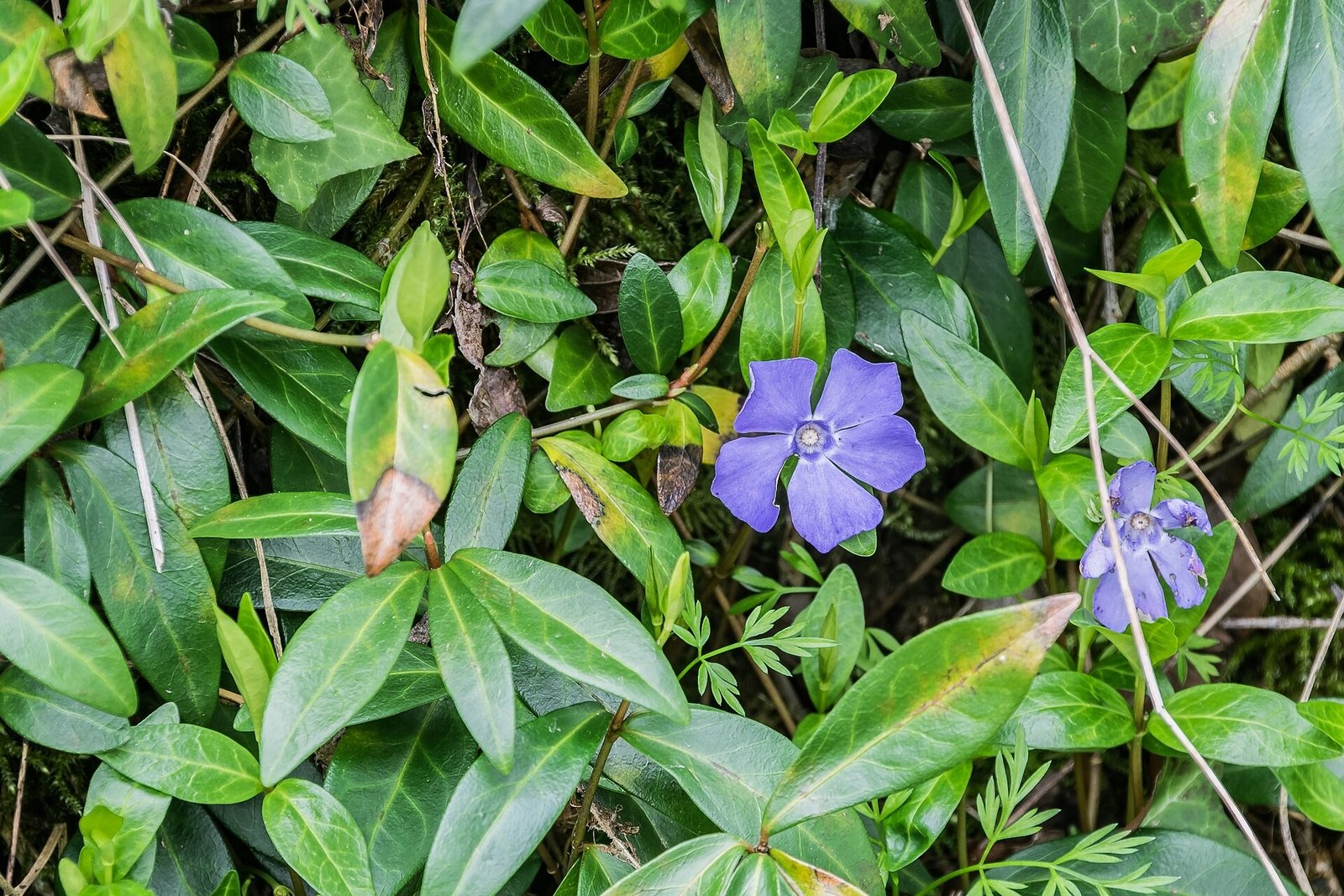
Vinca minor, lesser periwinkle, is one of the toughest shade covers in existence, and that is both its virtue and its problem. Glossy evergreen leaves on trailing stems root wherever they touch soil, blue-violet or white flowers appear in spring, and it covers dry shade, steep banks and neglected corners where almost nothing else survives. Vinca major is larger and even more vigorous.
The warning, plainly: vinca is listed as invasive in parts of North America, escapes into woodland, and is genuinely hard to remove because every stem fragment can root. Never plant it where it can run into natural woodland, and think twice in a small garden at all. Contained in a paved or walled area, in zones 4 to 9 for Vinca minor, it is undeniably effective, closing within a season planted 12 inches apart. Iowa State Extension’s shade groundcover guide makes the same point about vinca and other spreaders: they are good groundcovers precisely because they spread readily, which is why they need a boundary.
Ajuga and Bugleweed: Fast, Colourful, and Keen to Travel
Ajuga reptans spreads by runners like a strawberry plant, making it one of the fastest covers here for shade. The foliage is the main event: glossy green, deep purple-black in Black Scallop, or variegated in Burgundy Glow types. Short blue flower spikes in late spring are a bonus bees appreciate. Plants sit 3 to 6 inches tall and can spread over a foot in a season.
That speed needs managing. Ajuga will run into lawns and through neighbouring perennials, though it is far easier to pull out than vinca. Edging and a yearly session lifting stray runners keeps it civilised. It prefers moisture-retentive soil and can suffer crown rot in waterlogged ground. Space 9 to 12 inches apart, light foot traffic only, hardy roughly in zones 3 to 10. In zones 9 to 10 it appreciates afternoon shade.
Hosta: Bold Foliage for Shade, Planted as Ground Cover
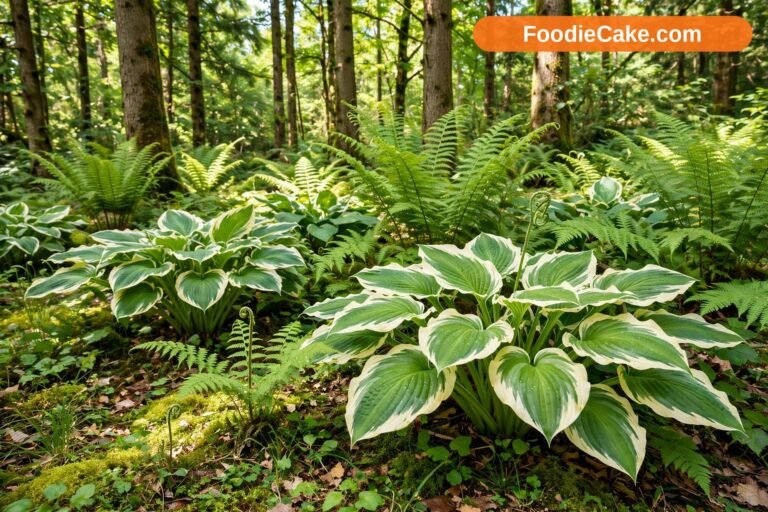
Grouped at proper spacing, hostas shade soil completely with broad overlapping leaves and suppress weeds under trees better than many creepers. Small Blue Mouse Ears, medium workhorses like Patriot and Francee, and the big blue Hosta sieboldiana Elegans give options from a few inches to over 2 feet tall, in blue, green, gold and variegated foliage.
Hostas want part to full shade, moisture-retentive soil rich in organic matter, and shelter from wind. In zones 3 to 9 they are hardy and long-lived, needing little beyond a spring mulch. Space small types 12 inches apart and larger ones 18 to 30 inches, and expect two to three seasons for a full canopy. The honest drawbacks are slugs, which shred leaves in a damp spring, and deer, which treat hosta as salad. Hosta also dies back completely in winter.
Wild Ginger: A Native Carpet for Deep Shade
Wild ginger, Asarum canadense in eastern North America and Asarum caudatum on the west coast, is the connoisseur’s shade cover: heart-shaped, rich green leaves 4 to 8 inches tall forming a dense, slowly spreading carpet under trees, with curious maroon flowers hidden at ground level in spring. European ginger, Asarum europaeum, is glossier and evergreen in milder areas, and spreads even more slowly and neatly for a small formal shady space.
All want true or dappled shade and humus-rich, moisture-retentive soil improved with leaf mould. They need watering while establishing, after which a mulched planting in zones 3 to 8 for the Canadian species ticks along steadily. Space 10 to 12 inches apart and be patient: two to three seasons to close, no foot traffic. In return you get a refined, mostly slug-resistant carpet.
Sweet Woodruff: Sweet-Scented and Spring Flowering
Sweet woodruff, Galium odoratum, is one of the prettiest shade covers beneath shrubs and along a north facing wall. Whorls of bright green leaves on stems 6 to 12 inches tall are topped in late spring with tiny white star flowers, and the foliage smells of hay and vanilla when dried. It spreads by rhizomes into a soft carpet that daffodils and bluebells push through happily.
It prefers part to full shade and evenly moist, well-drained soil with plenty of leaf mould or compost, in zones 4 to 8. In hot, dry shade it can look tired by late summer and may go partly dormant, recovering with autumn moisture. In rich damp soil it spreads enthusiastically, and while it is easy to pull from where it is not wanted, do not plant it tight against delicate small alpines it could swamp. Space about 10 to 12 inches apart and expect cover in one to two seasons. Foot traffic tolerance is poor, so treat it as a visual carpet to walk around, not on.
For Slopes, Lawns, and Feet
Two jobs are left, and they are the ones where gardeners most often pick the wrong plant: holding a big sunny slope, and covering ground that people and pets actually walk across. Both need plants chosen for toughness first and looks second.
Creeping Juniper: Evergreen Structure for Slopes and Sun
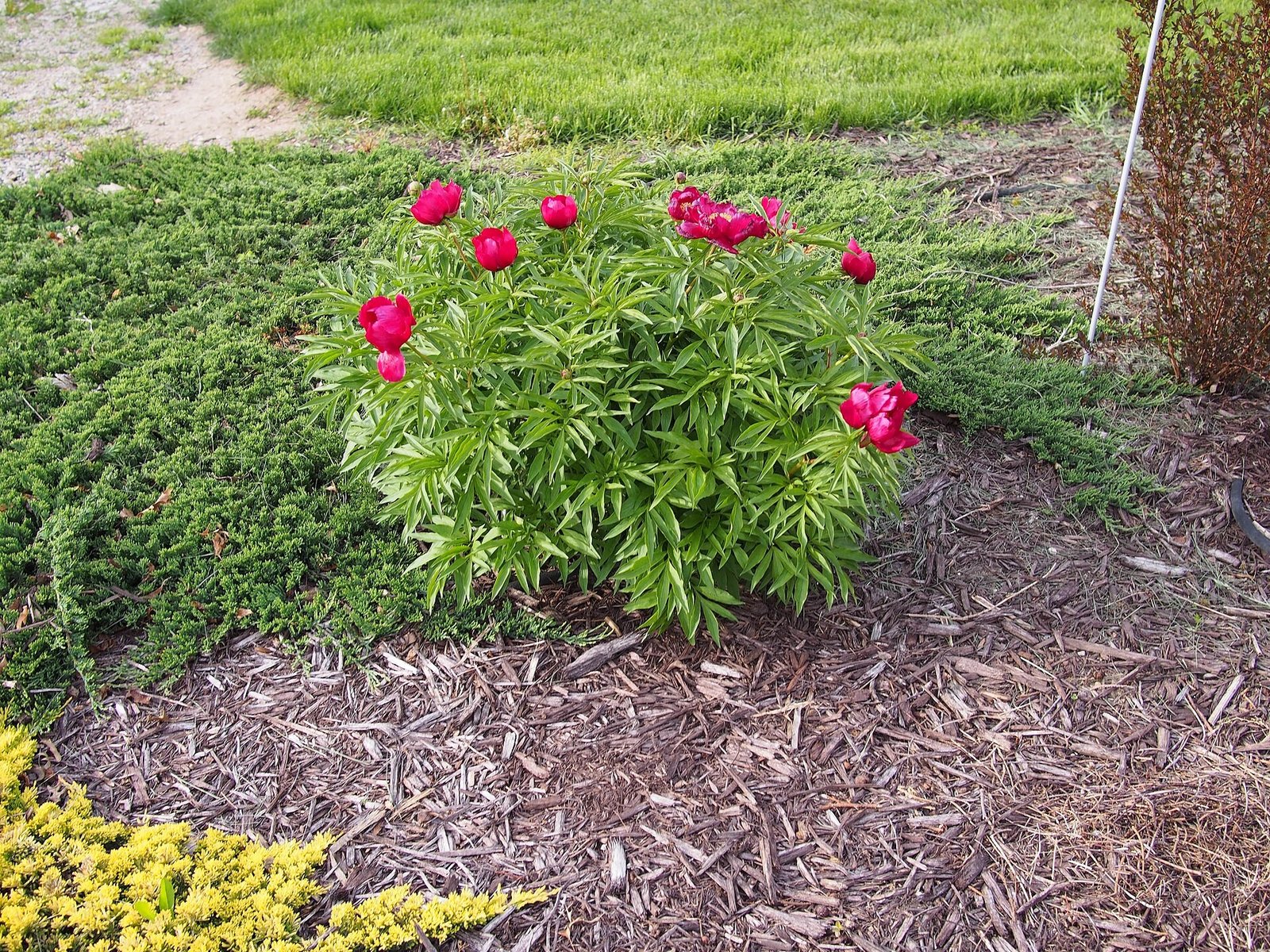
For a large sunny bank or a wide open area you want covered permanently with almost no attention, creeping juniper, Juniperus horizontalis, is hard to beat. Cultivars such as Blue Chip and Blue Rug form dense evergreen mats 6 to 12 inches tall that spread 6 to 8 feet or more over time, holding soil on gradients admirably. Foliage is blue-green to steel blue, often bronzing slightly in winter cold.
Plant in full sun with well-drained soil, spaced 3 to 4 feet apart, and water through the first season. After that, plantings in zones 3 to 9 need almost nothing, and no walking on them, because branches resent foot traffic. Mulch between young plants for the first two or three years while the canopy closes. It fails in shade and wet soil. Given the right site, a planting can look good for decades.
Clover: A Living Cover You Can Mow and Walk On
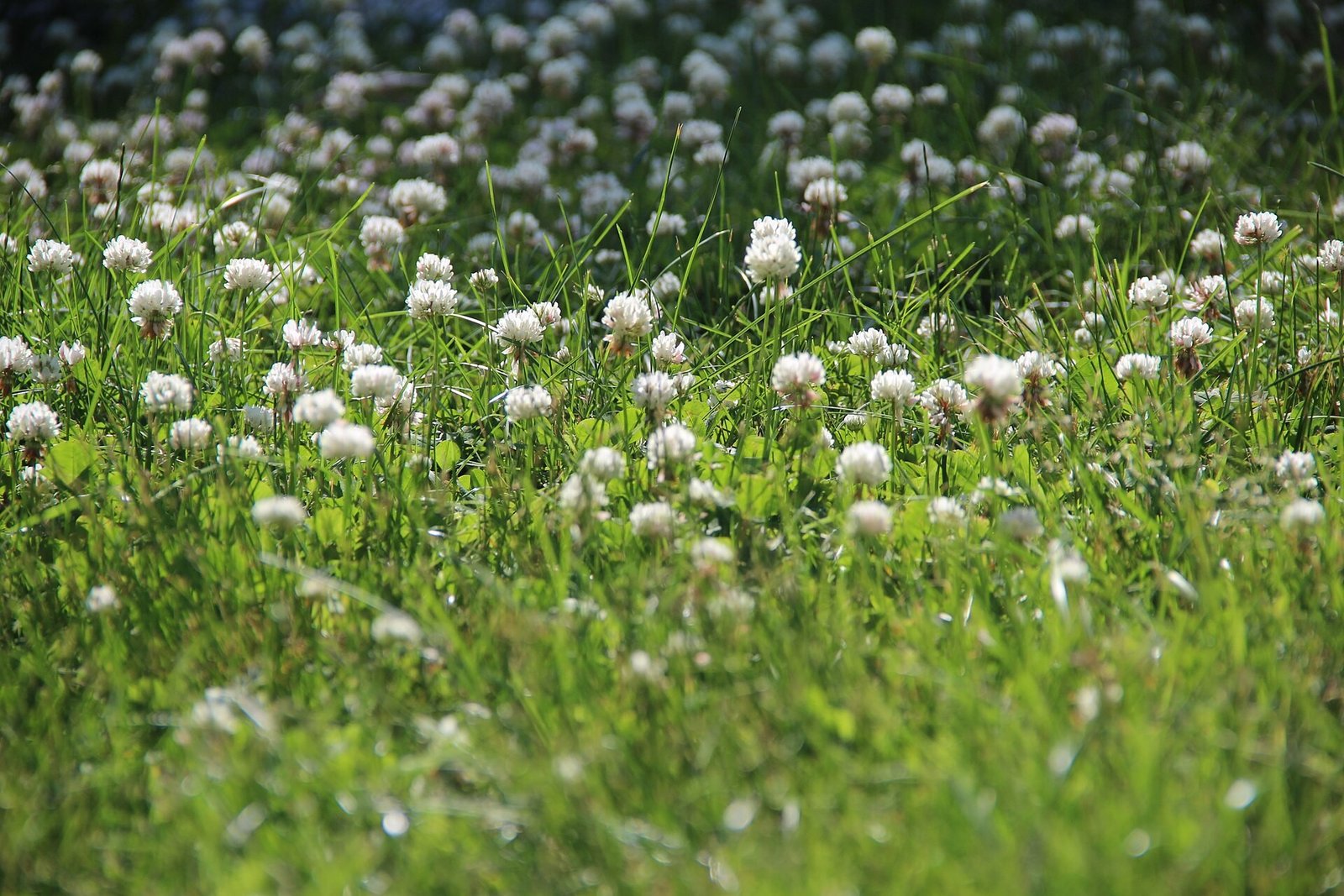
Clover does a job no ornamental above can: it takes regular foot traffic, can be mown, and fixes nitrogen, feeding the soil as it grows. White clover, Trifolium repens, and smaller-leaved microclover types spread into a soft mat 4 to 8 inches tall, flower white through summer for bees, and stay greener in drought than tired grass, though they brown in a severe dry spell and recover with rain.
Use clover as a lawn alternative in low to moderate traffic areas, as a living mulch between beds, or overseeded into a thin lawn. It suits zones 3 to 10 broadly, prefers sun or light part shade, and tolerates most soils with reasonable drainage. Seed in spring or early autumn, keep moist until it germinates, and mow high if you want flowers for pollinators. Trade-offs: it stains clothing more than grass, flowers attract bees where bare feet walk, and it can thin in hard winters.
How the Eleven Compare
When several plants could work, the deciding factors are usually speed, height and how much attention each one wants after planting. This table puts those side by side, using the figures from the plant notes above.
| Plant | Height | Sun or shade | Zones | Time to close | Foot traffic | Needs watching? |
|---|---|---|---|---|---|---|
| Creeping thyme | 2–4 in | Full sun | 4–9 | 1–2 seasons | Light | No |
| Sedum | 1–6 in | Full sun | 3–9 | 1–2 seasons | Occasional step | No |
| Creeping phlox | 4–6 in | Full sun | 3–9 | 2 seasons | No | No |
| Vinca minor | About 6 in | Shade | 4–9 | 1 season | Light | Yes — invasive in places |
| Ajuga | 3–6 in | Shade / part shade | 3–10 | 1 season | Light | Yes — runs into lawns |
| Lamb’s ear | 6–12 in | Full sun | 4–8 | 1–2 seasons | No | No |
| Hosta | Up to 2 ft+ | Shade | 3–9 | 2–3 seasons | No | Slugs and deer |
| Creeping juniper | 6–12 in | Full sun | 3–9 | 2–3 years | No | No |
| Wild ginger | 4–8 in | Shade | 3–8 | 2–3 seasons | No | No |
| Sweet woodruff | 6–12 in | Shade | 4–8 | 1–2 seasons | No | Yes — swamps small neighbours in rich soil |
| Clover | 4–8 in | Sun / light shade | 3–10 | 1 season from seed | Light | No |
If you are unsure of your zone before ordering, check the USDA Plant Hardiness Zone Map, which is the standard reference for matching a plant’s hardiness range to your garden.
The First Year: What to Do, and When
Water new plantings as any other new perennial. Most failures blamed on the plant are really first-season drought: small plugs dry out in days on a bank or under thirsty tree roots. Water deeply at planting, mulch the gaps, and keep soil evenly moist for the first season, even for drought-tolerant thyme, sedum and juniper. Once roots are down, step back to low maintenance.
Edge your planting from day one. A mowing strip, steel edge, or spaded trench gives spreaders such as ajuga and woodruff a boundary you can maintain in minutes, and stops grass creeping in. Feed sparingly: most covers here want lean to average soil, and lush feeding means fewer flowers on thyme and phlox.
If a patch fails, find out why before replanting the same thing in the same hole. Deepening shade, a leaking downpipe waterlogging one corner, or dogs using one spot regularly all defeat replacement plants just as efficiently. And do not plant covers against house walls where they trap moisture: leave a gravel margin.
A rough calendar for the first year looks like this: clear and prepare the ground in spring or early autumn, when the soil is workable and rain is more reliable. Plant in spring for sun lovers and in spring or early autumn for shade lovers, so roots establish before summer heat or winter cold. Mulch the gaps immediately after planting. Water through the first summer, weed the gaps monthly, and do not judge the result until the second growing season. Creeping juniper is a three-year project on wide spacing, and wild ginger and hosta take two to three seasons to close; that is normal, not failure.
When a Cover Goes Wrong
Planting a vigorous spreader in a small, precious bed is the classic mistake. Vinca in a cottage border, ajuga against tiny alpines, or woodruff smothering small bulbs all end in the same weekly rescue work. Match vigour to space: big, wild areas get the travellers, small plantings get phlox, thyme and ginger, which stay where they are put.
Mismatching light comes next. Sedum rotting in damp shade, hosta scorching on a hot bank, and phlox flowering less each year under a growing tree are not problem plants. They are plants in the wrong section of this guide. Re-check sun and shade honestly before blaming the nursery.
The third mistake is expecting instant results and giving up in year one, ripping out slow juniper or ginger just as their roots were ready to reward you. A season or two of mulching buys years of a border that largely looks after itself. Finally, do not plant covers against house walls where they trap moisture: leave a gravel margin.
Questions Worth Asking Before You Order
How long does ground cover take to fill in?
It depends on the plant, the spacing, and the soil. Fast spreaders such as ajuga and vinca planted about a foot apart in decent soil can close within one growing season. Thyme, sedum and sweet woodruff usually need one to two seasons. Phlox, hosta and wild ginger take two to three, and creeping juniper is a three year project on wide spacing. Planting closer, watering well in year one, and mulching the gaps all shorten the wait.
What is the best ground cover for full shade?
For deep, dry-ish shade under trees, vinca minor is the toughest option, with the invasiveness cautions covered in this guide. For shade with reasonable moisture, wild ginger and sweet woodruff are finer, better-behaved choices, and grouped hostas give the boldest foliage effect. European ginger is the pick for a small, neat, evergreen carpet in a mild climate. All of them need watering while they establish under thirsty tree roots.
Which ground covers can you walk on?
Creeping thyme handles light, regular foot traffic and is the classic choice between stepping stones. Clover takes the most walking of any plant here and can be mown like a lawn. Tight sedum mats tolerate an occasional step but not a daily route, and a proper path of stone or gravel with thyme planted around it is a better answer for a main walkway than asking any plant to be a pavement.
Will ground cover stop weeds completely?
No, and any source promising that is overselling. A dense, mature cover shades out most germinating weed seedlings and greatly reduces weeding, sometimes to a few minutes a month. Established perennial weeds with deep roots, such as bindweed, dandelion and ground elder, will still push through, especially before the canopy closes. Clear the ground thoroughly before planting and weed the gaps in year one, and the cover repays you from year two onwards.
What is the lowest maintenance ground cover for a sunny slope?
Creeping juniper is the strongest answer for a large sunny, well-drained slope in zones 3 to 9, needing almost no attention once established over two to three years. For smaller areas where you want faster cover, low sedums root as they spread and grip thin, dry soil well, and creeping phlox gives a spectacular spring display on a bank. All three fail in shade or waterlogged soil, so drainage and sun are the deciding factors.
Can I plant ground cover under a tree where grass will not grow?
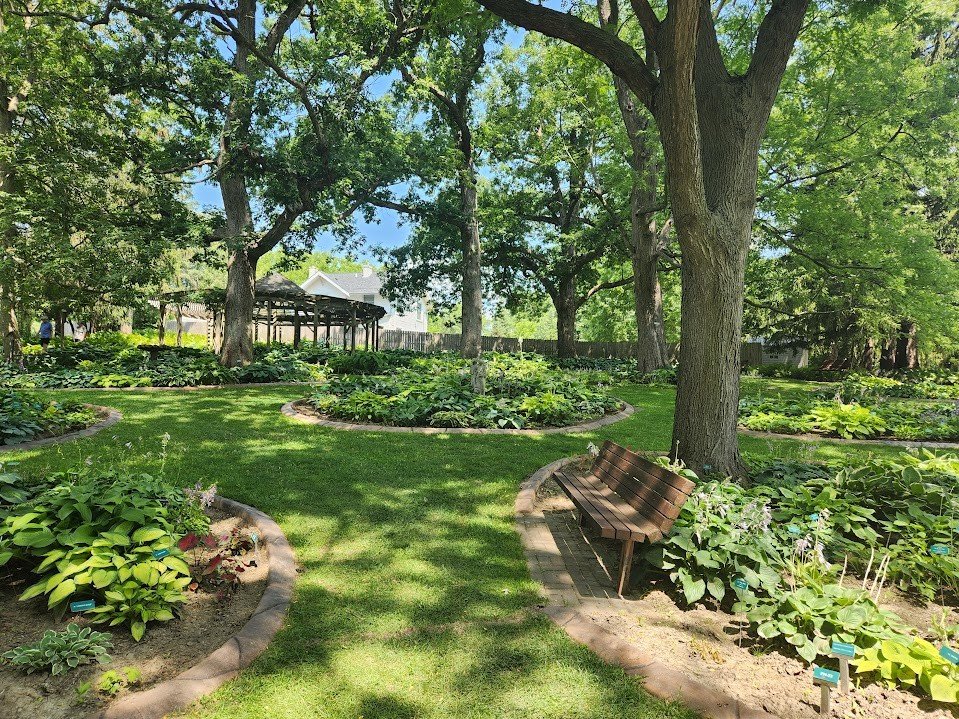
Yes, this is one of the best uses for it, provided you choose shade plants and respect the tree. Wild ginger, sweet woodruff, ajuga, vinca and grouped hostas all cope with root competition far better than lawn grass. Dig individual planting pockets between roots rather than cultivating the whole area, which damages the tree, add compost to each pocket, and water generously through the first season, because the tree canopy intercepts rain and its roots take most of what lands.
First Year, Then Freedom
The right ground cover turns the hardest ground in your garden — the dry bank, the dark corner, the tired strip under trees — into some of the easiest. Start by reading your light honestly, clear the ground once and clear it well, then pick a plant whose vigour matches the size of the job. Thyme and sedum for hot sun, ginger and woodruff for kind shade, juniper for the big slope, clover where feet actually go.
Give your planting one attentive season of water and gap-weeding, and it will give you back years of low-effort, good-looking ground. That is a trade most gardeners are very happy to make.
Sources
- Iowa State University Extension — Groundcovers for Shade (yardandgarden.extension.iastate.edu)
- USDA Agricultural Research Service — 2023 Plant Hardiness Zone Map (planthardiness.ars.usda.gov)
- FoodieCake — Best Plants for Shady Gardens and Natural Ways to Kill Weeds in Gardens


One Comment