

If you are new to growing your own food, the best fast growing vegetables for beginners are the ones that reward you quickly, forgive small mistakes, and do not need a greenhouse, a heated propagator, or months of patient waiting before you eat anything. A radish ready in a month or a bowl of salad leaves cut six weeks after sowing does more for a new gardener’s confidence than any amount of reading — it proves the soil, the seeds, and you can do this together.
Speed matters for practical reasons, too. Fast crops fit into small spaces, fill gaps between slower plants, and give you several sowings in one season, so a failure is never the end of the story. If the first row of lettuce bolts in a hot spell, you sow another. Quick vegetables teach you the core skills — sowing, watering, thinning, picking — on a short cycle, so you learn in weeks what a slow crop like parsnips would take a season to show you.
This guide picks out the most reliable quick vegetables for a first garden, explains how long each one really takes and how to grow it well, and finishes with the tips and mistakes that make the difference between a patch that produces and a patch that disappoints. You do not need a large plot for any of them: a single raised bed, a few large pots, or even a sunny balcony can produce a surprising amount of food.
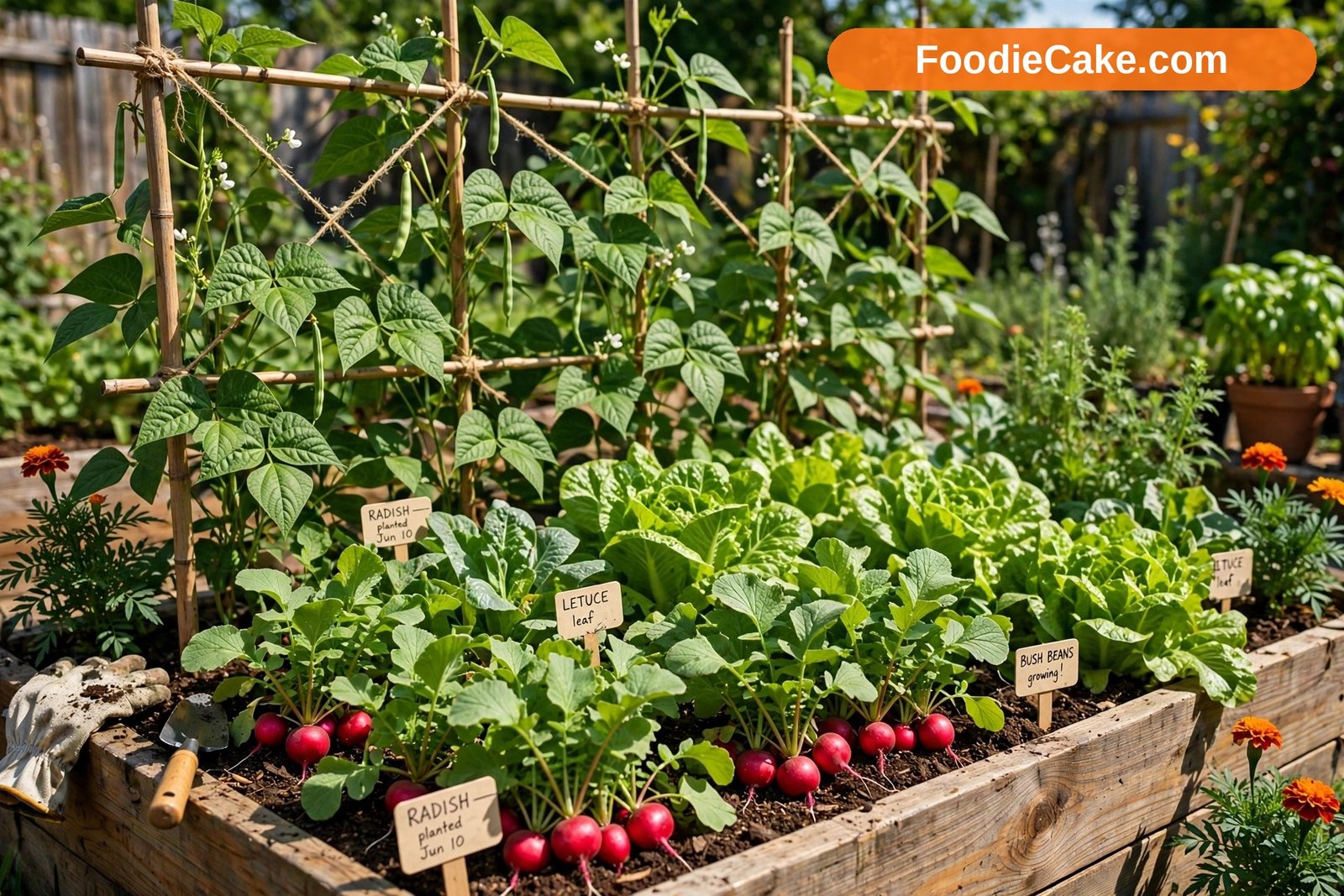
How Fast Is Fast? Setting Honest Expectations
Seed packets promise days to harvest, and those numbers are best treated as a hopeful guide rather than a guarantee. They assume warm soil, good light, steady moisture, and a variety sown at its ideal time. In a cool spring in zones 5–6, almost everything takes a week or two longer than the packet suggests; in the warmth of zones 8–10 in late spring, crops can match the packet almost exactly. That is normal, and it is not a sign you have done anything wrong.
As a rough map, radishes and salad leaves are the true sprinters, ready in about 25 to 45 days. Peas, bush beans, and baby courgettes follow at around 50 to 65 days. Baby carrots, beetroot for small roots, and chard picked young sit in the next group, at roughly 55 to 70 days. All of them are fast compared with tomatoes, winter squash, or brassicas, which need a long season of care before they give anything back.
The other secret to feeling like everything is fast is succession. Sow a short row or a single pot every two to three weeks, rather than one long row all at once. You get a steady stream of crops at their peak instead of one overwhelming week of gluts followed by nothing, and young plants are always coming along to replace the ones you have finished.
1. Radishes — Ready in as Little as a Month
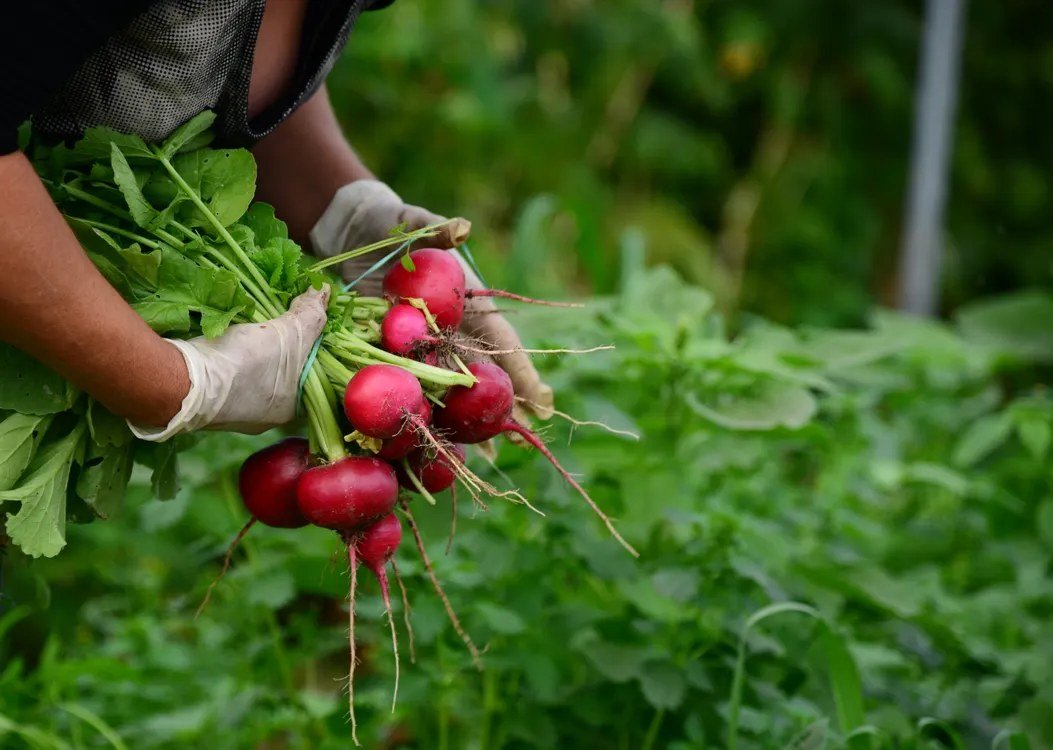
Radishes are the beginner’s confidence crop. In warm, moist soil they germinate within days and can be ready to pull in 25 to 35 days for small salad varieties. ‘French Breakfast’, with its red-and-white elongated roots, and round types like ‘Cherry Belle’ and ‘Scarlet Globe’ are all reliable, crisp, and mild when picked young and grown without a check.
Sow them directly where they are to grow, about 1 cm deep, in short rows or scattered in a pot, and thin the seedlings to roughly 2 to 3 cm apart once they have their first true leaves. Thinning feels wasteful, but crowded radishes make leaves instead of roots. Keep the soil consistently moist — dry spells followed by heavy watering give you hot, woody, split roots — and pick them while they are still small and glossy. A radish left a week too long is a very different, much less pleasant vegetable.
Radishes are also brilliant gap-fillers: sow a pinch between slower rows of carrots or at the edge of a bed, and they will be eaten before the main crop needs the space. In zones 5–8, sow from early spring to late summer, easing off in the hottest weeks when they bolt most readily.
2. Salad Leaves and Lettuce — Cut and Come Again
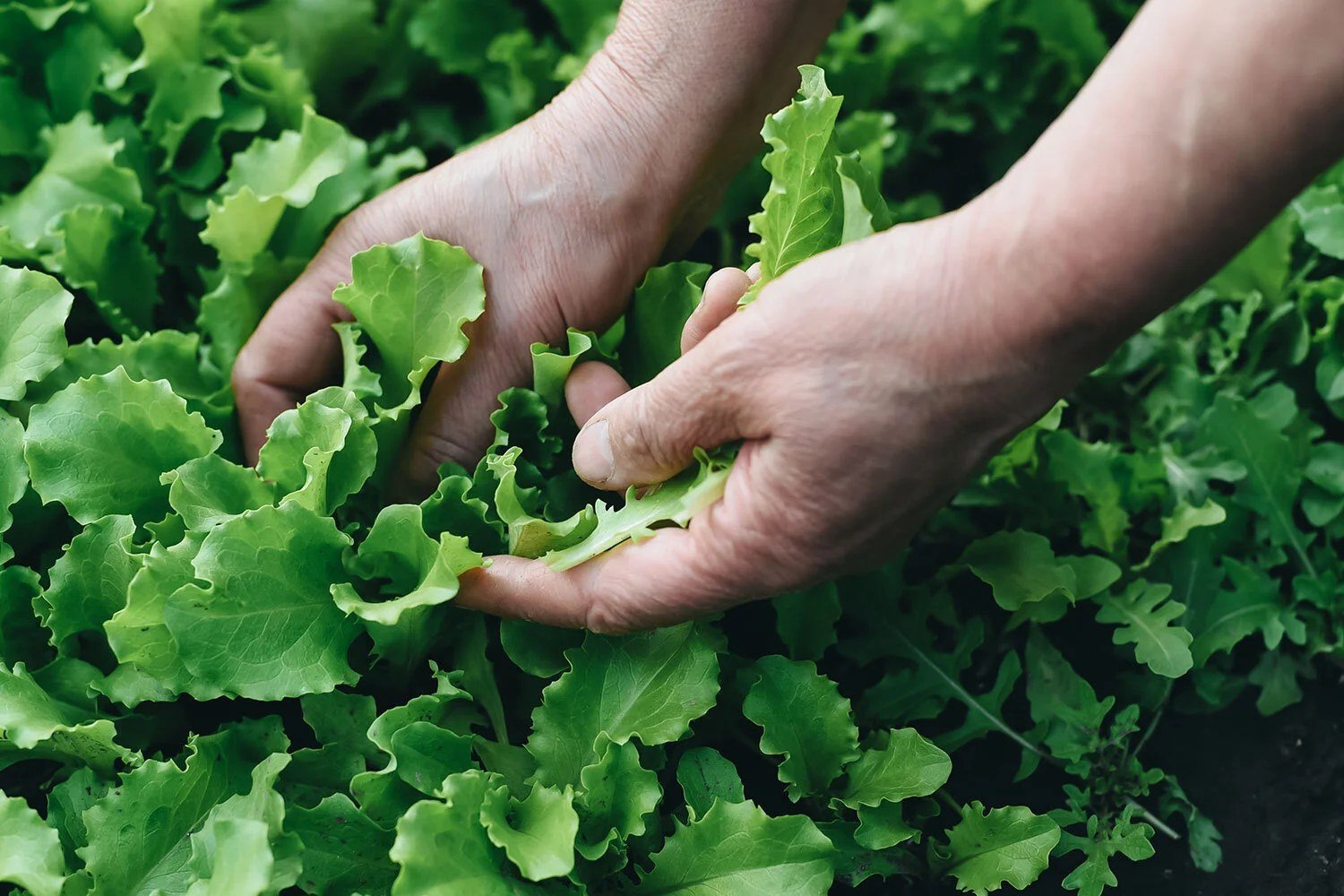
If you buy bagged salad, growing your own leaves will save you more money, faster, than almost anything else. Loose-leaf lettuces and mixed salad leaves can be cut from about 30 to 45 days after sowing, and a single sowing keeps producing for weeks if you pick the outer leaves and leave the heart to grow. Varieties like ‘Saladin’, ‘Lollo Rosso’, and ‘Oak Leaf’, or any mixed cut-and-come-again blend, are bred for exactly this job.
Sow thinly in shallow drills or in a wide pot, cover lightly, and keep moist until germination. Thin gradually, eating the thinnings, until plants sit about 15 to 20 cm apart for larger lettuces, or closer for a cutting patch. Leaves are the thirstiest of the fast crops: dry roots mean bitter leaves and bolting, so water regularly, mulch if you can, and in midsummer give them a little afternoon shade if your garden bakes.
Harvest in the morning when leaves are crisp, take the outer leaves a few from each plant, and never strip a plant bare. When a patch starts to tire or send up a flower stem, pull it out and sow the next batch — with succession sowings every fortnight, you can be picking leaves from spring to autumn in most zones, and they belong at the heart of the best vegetables to grow in a home garden precisely because they earn their space week after week.
3. Bush Beans — Big Harvests from Small Plants
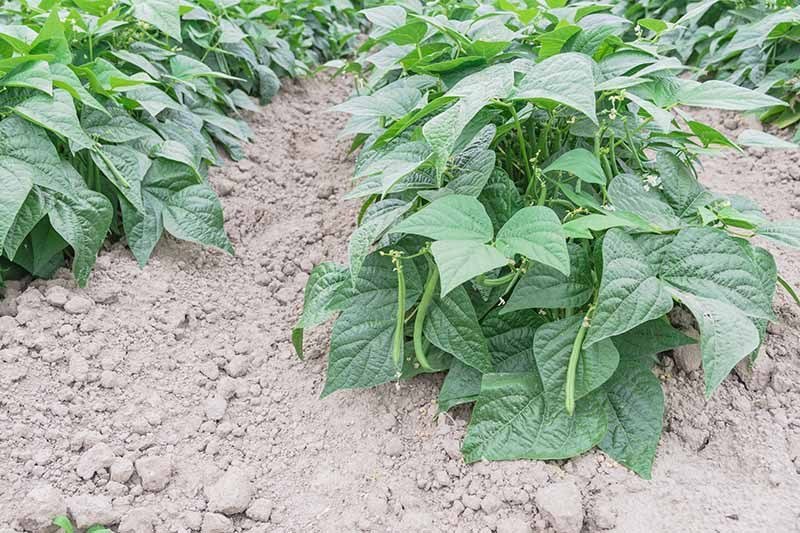
Dwarf French beans, also called bush beans, are one of the most generous fast crops you can grow. Sown once the soil has warmed, they typically start producing tender pods in 50 to 60 days, and a short row will keep giving for weeks if you pick every two or three days. ‘Tendergreen’, ‘Maxi’, and ‘Purple Teepee’ — whose purple pods turn green in the pan and are easy to spot against the foliage — are all dependable beginner choices.
Beans hate cold, wet soil, so patience at sowing pays. In zones 5–7, wait until late spring, after the last frost, when the soil feels warm; in zones 8–10 you can start earlier and sow in succession into summer. Sow seeds 4 to 5 cm deep and about 15 cm apart, water the drill beforehand in dry weather, and protect emerging seedlings from slugs, which can clear a row overnight. Alternatively, start plants in deep pots indoors or under cover and plant them out once they are sturdy and the nights are mild — a useful trick in cooler areas.
Once growing, beans largely look after themselves. They need only moderate feeding, and ask mainly for water when the flowers are setting pods. Pick pods young, while they are smooth and snap cleanly, before the seeds inside swell — every picking encourages more flowers.
4. Courgettes (Zucchini) — Fast, and Famously Productive
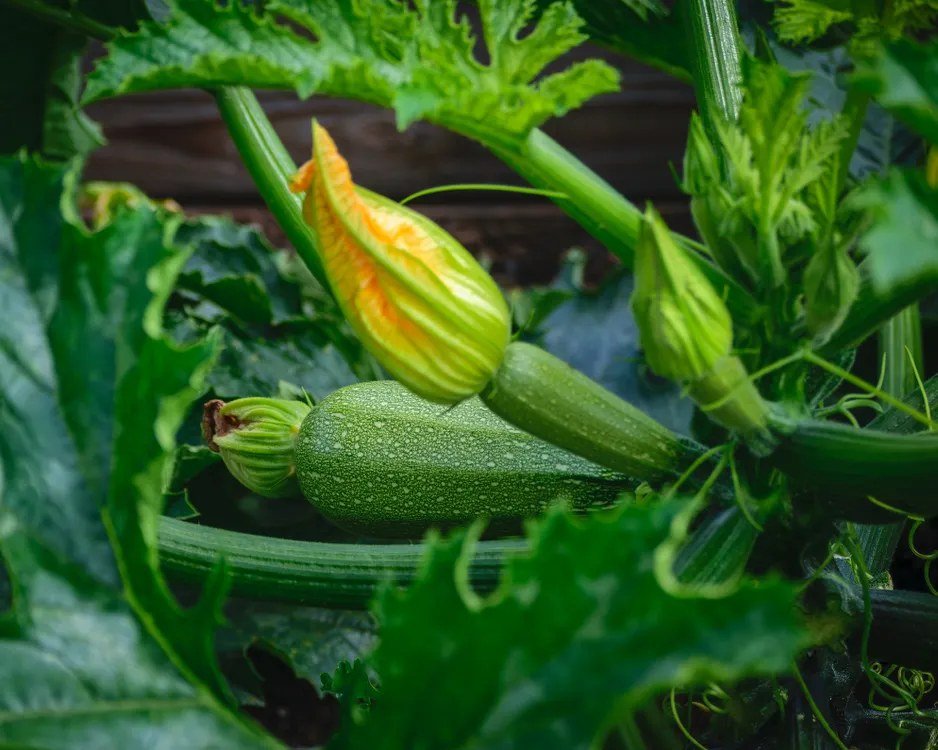
Courgettes have a reputation for overwhelming their growers, and it is earned: a healthy plant in warm weather can move from sowing to the first pickings in about 50 to 60 days, and then produce almost daily. For beginners, that productivity is a delight — just respect the space they need. One or two plants are plenty for most households. ‘Defender’ is known for reliability, ‘Costata Romanesco’ has handsome ribbed fruit with excellent flavour, and round types like ‘Ronde de Nice’ are perfect picked tiny.
Sow seeds on their edge, about 2 cm deep, in pots under cover from mid-spring, or directly outside once frosts are over and the soil is warm. Plant out into rich, moisture-retentive soil — courgettes are hungry and thirsty — spacing plants 60 to 90 cm apart, and mulch well. Soil enriched with compost or well-rotted manure before planting will repay you all summer.
Water at the base, deeply and regularly, and pick the fruit small, at 10 to 15 cm long, while the skin is glossy. Small courgettes taste best, and picking them young keeps the plant producing instead of pouring its energy into one giant marrow. If you go away for a week in August, you will come home to that giant anyway — every courgette grower does — but picked on time, this is one of the most rewarding fast vegetables there is.
5. Peas and Mangetout — Sweet, Quick, and Fun to Pick
Peas take a little longer than radishes, but the taste of a pea eaten straight from the pod, minutes after picking, converts more people to vegetable growing than almost any other crop. Mangetout and sugar snap types are especially good for beginners because you eat the whole pod, so there is no shelling and the harvest window is more forgiving. Expect pods in about 55 to 70 days, depending on variety and weather. ‘Kelvedon Wonder’ is a reliable dwarf maincrop pea, ‘Sugar Ann’ is an early sugar snap, and ‘Oregon Sugar Pod’ is a widely grown mangetout.
Sow directly into the ground from early spring in most zones — peas germinate in cool soil and dislike root disturbance — about 3 to 5 cm deep, in a wide drill, with seeds roughly 5 cm apart. Give them something to climb from the start: pea sticks, netting, or a simple frame of canes, even for dwarf varieties, which crop better and stay cleaner when supported. Protect newly sown seed from mice and pigeons if they are a problem in your garden, with netting or a covering of fleece until the plants are up and growing.
Water well when the flowers appear and the pods are swelling, which is when it matters most. Pick sugar snaps and mangetout while the pods are still flat or just plumping, and pick often — peas left to get old and starchy slow the plant down, while regular picking keeps it going. In cooler zones, spring and early summer sowings are the reliable ones.
6. Spring Onions, Chard, and Baby Roots — The Supporting Cast
A few more quick crops deserve a place in a first garden because they fill plates and gaps so usefully. Spring onions, or scallions, sown in short batches, are ready to pull in about eight weeks and take up almost no room tucked along the edge of a bed. Varieties like ‘White Lisbon’ have been beginners’ favourites for generations for good reason.
Swiss chard, such as ‘Bright Lights’ with its coloured stems, can be picked leaf by leaf from about 55 days, tolerates heat better than spinach, and keeps producing for months from one sowing. True spinach is faster in cool weather — ready in 35 to 45 days — but bolts at the first hint of summer heat, so in zones 6–8 treat it as a spring and autumn crop.
Baby beetroot and carrots round out the list. Beetroot like ‘Boltardy’, grown for roots the size of a golf ball, is ready in roughly 55 to 65 days, and you can eat the young leaves too. Carrots are slower and fussier about stony soil, but short or round varieties such as ‘Paris Market’ or ‘Nantes’ types thinned and pulled young, at around 60 days, give sweet baby roots without the wait for full size. Grow these in loose, stone-free soil or in deep containers, keep them moist, and thin bravely — baby roots are mostly a lesson in giving each plant just enough room.
Planning Your First Fast Vegetable Patch
You do not need a grand plan, but a little order helps. Put the tallest crops, like peas on their supports, where they will not shade the leaves and radishes, and group thirsty crops — courgettes, beans, and salads — where watering is easiest. If you are starting from scratch, the layout advice in our guide on how to start a vegetable garden will help you place beds and paths sensibly before you sow a seed.
Prepare the soil lightly but well: fork the bed over, remove perennial weeds and large stones, and rake in a bucket or two of compost per square metre. Fast vegetables grow fast only if their roots can move, and a modest, even soil that holds moisture beats a rich bed that dries out in a day.
Finally, label everything with its sowing date — with succession sowings it is the only way to know which row of lettuce is the fresh one.
Practical Tips for Fast, Reliable Harvests
Sow little and often. This is the single most useful habit for fast vegetables. Short rows every two to three weeks mean a constant supply at the perfect size, less waste, and a second chance whenever weather, slugs, or life interrupt the first sowing.
Water steadily, not in feasts and famines. Quick crops have shallow roots and no time to recover from a drought check — a stunted lettuce or a stringy bean is usually a thirsty one. Water deeply in the morning or evening, mulch beds with compost or straw once plants are established, and in hot weather check pots daily, because a container can dry out completely in a single sunny day.
Pick at the right moment, and pick often. Almost every crop in this guide is best young: small radishes, slim beans, glossy little courgettes, flat mangetout pods. Harvesting is not the end of growing — for beans, peas, courgettes, and cut-and-come-again salads, picking is what keeps the plant producing. Walk the patch every day or two in midsummer with a basket, even if you think nothing is ready. Something usually is.
Feed lightly and watch for slugs. A weak liquid feed every couple of weeks keeps leafy crops in containers growing well, but bed-grown crops in decent soil need little extra. Slugs and snails are the main enemy of fast, soft growth, especially seedlings — keep the area around young plants clear of hiding places and protect rows when they first emerge.
Common Mistakes Beginners Make with Fast Vegetables
Sowing everything at once is the most common beginner mistake. A whole packet of lettuce or radish seed sown on one day matures on roughly one day too, and most of it goes to waste or bolts while you try to eat it. Sow short rows in succession instead, and put the rest of the packet away for the next batch — seed keeps far better in the packet than a glut keeps in the fridge.
Sowing too early in cold soil runs a close second. Beans and courgettes sown into cold, wet ground rot or sit sulking, and even hardy peas are slow and patchy in a freezing spring. Wait for the soil to warm, use the zone guidance for each crop rather than the first sunny day as your signal, and remember that a sowing made a fortnight later into warm soil will usually overtake one made too early.
Crowding and forgetting to thin cause more quiet failures than any pest. Seedlings left shoulder to shoulder compete for light and water and none of them thrive — radishes make no roots, carrots stay pencil-thin, lettuce hearts never form. Thin bravely to the spacing on the packet, and eat the thinnings where you can, which softens the sense of waste considerably.
The last mistake is giving up after one setback. A row lost to slugs or a patch of lettuce that bolted in a heatwave happens to experienced gardeners every season. The great advantage of fast crops is that you can almost always sow again — a fresh row of radishes or salad leaves costs pennies and a few weeks, and the second attempt very often succeeds.
Frequently Asked Questions
What is the fastest vegetable a beginner can grow?
Radishes are usually the fastest, ready to pull in as little as 25 to 35 days in warm, moist conditions, with cut-and-come-again salad leaves close behind at 30 to 45 days. Both are sown directly where they will grow, need no special equipment, and forgive a lot — which is why they are recommended for a first sowing.
Which fast vegetables can I grow in pots?
Almost all of them, with the right container. Radishes, salad leaves, spring onions, and bush beans do well in wide pots at least 25 to 30 cm deep, peas suit a large pot with supports, and even a courgette will thrive in a single big container of 40 cm or more, provided you water and feed it faithfully. Use a good multi-purpose compost, ensure drainage holes, and expect to water containers more often than beds.
When should I sow fast-growing vegetables?
It depends on the crop and your zone. Hardy crops like peas, radishes, spinach, and salad leaves can be sown outdoors from early spring in zones 6–8, a little later in cooler zones and earlier in warmer ones. Tender crops like beans and courgettes must wait until after the last frost and until the soil has warmed — late spring in most areas. Succession sowings every two to three weeks then keep you supplied through summer.
Why did my fast vegetables grow slowly?
Cool weather, dry soil, crowding, and poor light are the usual causes. Packet timings assume near-ideal conditions, so a cold spring in zones 5–6 can add a week or two to every crop. Check the basics in order: are the plants getting steady water, were they thinned, is the soil loose enough for roots, and were tender crops sown before the soil warmed? Fixing whichever one applies usually gets the next sowing moving properly.
How do I stop everything being ready at the same time?
Sow in succession and in small amounts — a short row or one pot every two to three weeks instead of a whole packet at once. Mix crops with different speeds, too, so radishes finish as beans begin. Labelling each sowing with its date makes the rotation easy to follow.
Final Thoughts
The fastest way to become a vegetable gardener is to grow something you can eat within the month, and then do it again. Start with a row of radishes, a pot of salad leaves, and a few bush beans if the season is warm enough. Water steadily, thin bravely, pick young and often, and sow the next batch before you need it. Within one season, those small, quick successes add up to real skill — and food you grew yourself, picked that morning, a few steps from the door.
[…] quick crops suit impatient gardeners perfectly, and they pair naturally with other fast growing vegetables for beginners such as spring onions, baby carrots, and dwarf beans. The trick is shade and water in high summer: […]