Best Plants for a Pollinator Garden
Choosing the best plants for a pollinator garden is less about finding one superstar flower and more about building a menu that stays open for as long as possible. Bees, butterflies, hoverflies, and moths all need nectar for energy and pollen for their young, but they are active at different times, have different tongue lengths, and prefer different flower shapes. A garden that feeds a bumblebee in March, a honeybee in June, and a tired butterfly in September is doing its job properly — and it will look good while it does it.
The encouraging news is that pollinator-friendly planting and beautiful planting are mostly the same thing. Lavender spilling over a path, coneflowers standing tall in a late-summer border, sunflowers towering at the back of a veg patch, and herbs flowering beside the kitchen door are plants most gardeners would happily grow anyway. You do not need a wildflower meadow or a specialist knowledge of insects to make a real difference, especially in towns and suburbs where a well-stocked garden can be a lifeline between parks and other green spaces.
This article works the other way round from most plant lists. It starts with the calendar, because a garden that is magnificent in July and empty in March and October is the most common failure in pollinator gardening. Then it looks at flower shapes, because shape decides who can actually feed. Only then does it get to the plants themselves — the reliable backbone, the herbs, and the fillers that keep the quiet weeks full.
Start With the Calendar, Not the Catalogue
Before buying anything, list what flowers in your garden in each part of the year. Any month with only one entry is a gap to fix with your next purchase, because hungry weeks matter more than a glorious fortnight. The table below is a starting point, built from the plants in this article, and you can adapt it to your own garden once you know what already grows there.
| When | What is flowering | Who it feeds |
|---|---|---|
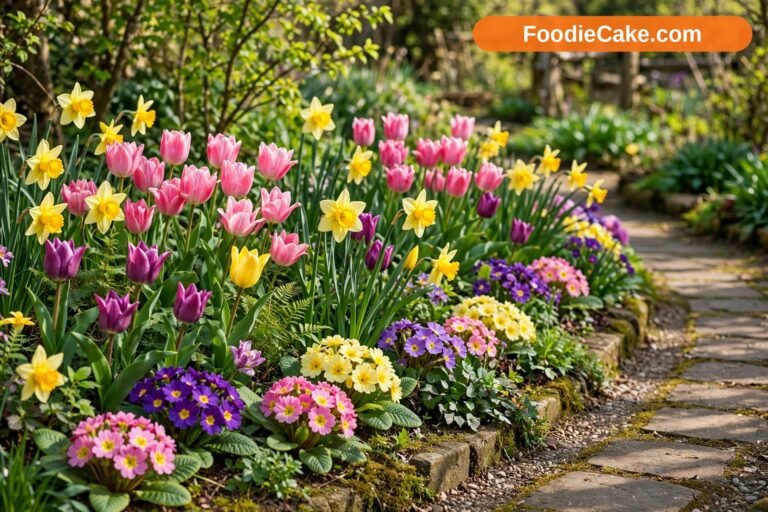
| Late winter to early spring | Rosemary, lungwort, wallflowers, flowering shrubs, early bulbs such as crocus and snowdrops | Emerging queen bumblebees, early solitary bees |
| Late spring | Chives, catmint, flowering cherry and crab apple, clover in the lawn | Bumblebees, honeybees, early butterflies |
| Early to midsummer | Lavender, salvia, borage, cornflowers, cosmos | Honeybees, bumblebees, hoverflies, butterflies |
| High summer | Echinacea, sunflowers, rudbeckia, agastache, thyme and oregano | Butterflies, bees of every kind, hoverflies |
| Autumn | Asters, sedum, verbena bonariensis, ivy in flower | Late butterflies, bees stocking up before winter |
Two things stand out from that table. First, the early and late ends of the season are where most gardens fail. A border that is magnificent in July and empty in March and October leaves emerging queens and late butterflies with nothing when they may need food most urgently. Fix that with early bulbs, spring shrubs, and late asters and ivy, rather than adding yet another July flower.
Second, trees and shrubs matter as much as the flower border. A flowering cherry, a crab apple such as Malus ‘Evereste’, a hawthorn hedge, or a patch of bramble left at the back of the garden provides a huge, concentrated burst of blossom in spring that no flower bed can match, plus fruit and shelter later. Pollinator gardening is as much about these larger, longer-lived plants as it is about the summer border.
The Three Shapes Every Pollinator Garden Needs
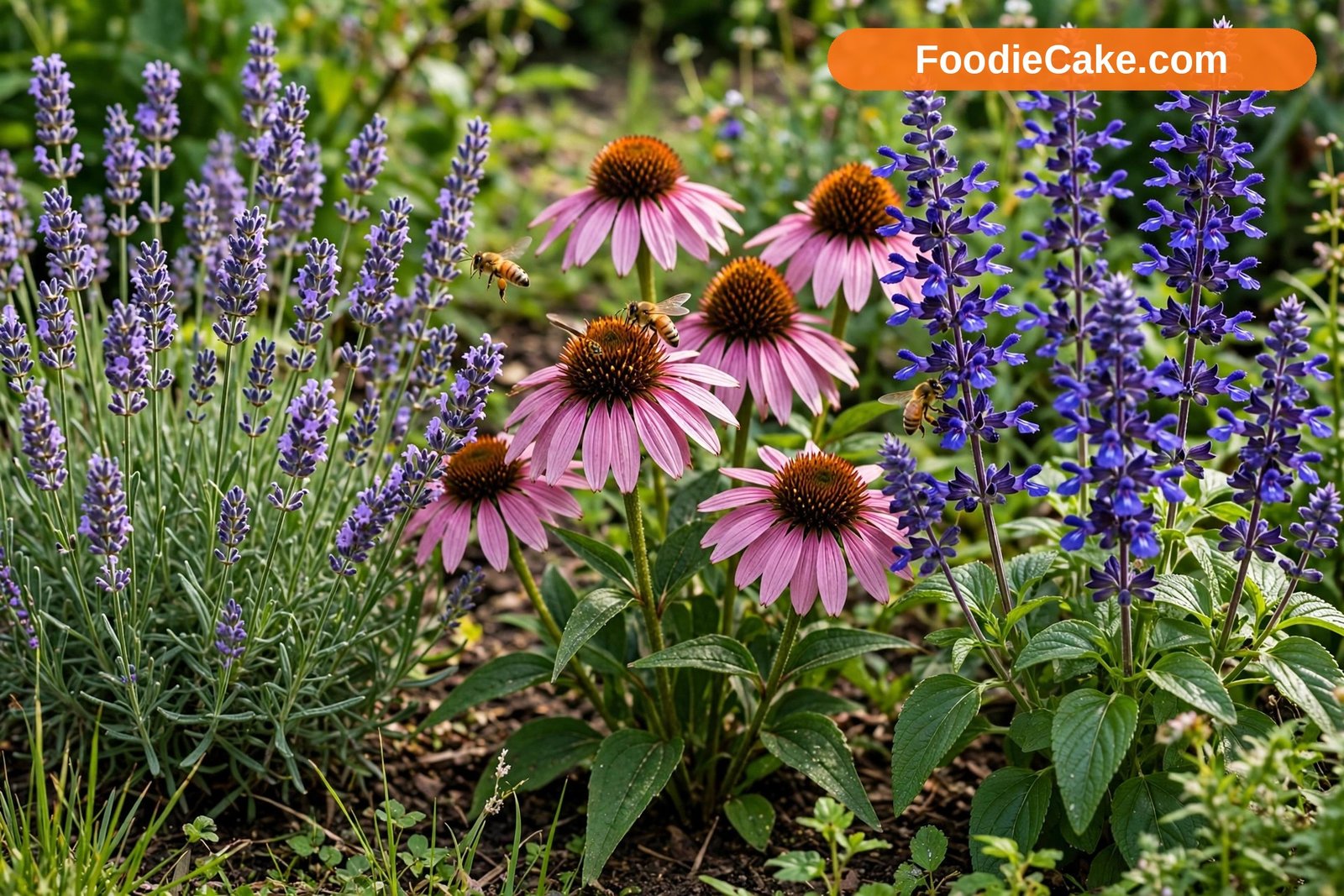
Not all pollinators can feed from the same flowers, and the reason is shape. A butterfly needs a flat surface to land on. A long-tongued bumblebee needs a tube it can reach into. The smallest bees and hoverflies need tiny, clustered flowers they can work quickly. A garden with only one shape feeds only one kind of visitor, however many plants it holds.
Flat, open flowers are the landing pads. Echinacea is the classic example: its large, daisy-like flowers have a raised, spiky central cone that works as both a landing pad and a dining table. Butterflies can settle flat and feed in comfort, while bees work their way around the cone collecting pollen and nectar. Sunflowers, rudbeckia, and single-flowered dahlias do the same job at different heights and times.
Tubular flowers are the second shape. The salvia and mint families shine here: their two-lipped, tubular blooms are built for long-tongued bees, and the best kinds flower for an exceptionally long time if you keep cutting them back lightly. Lavender spikes, catmint, and agastache all belong in this group.
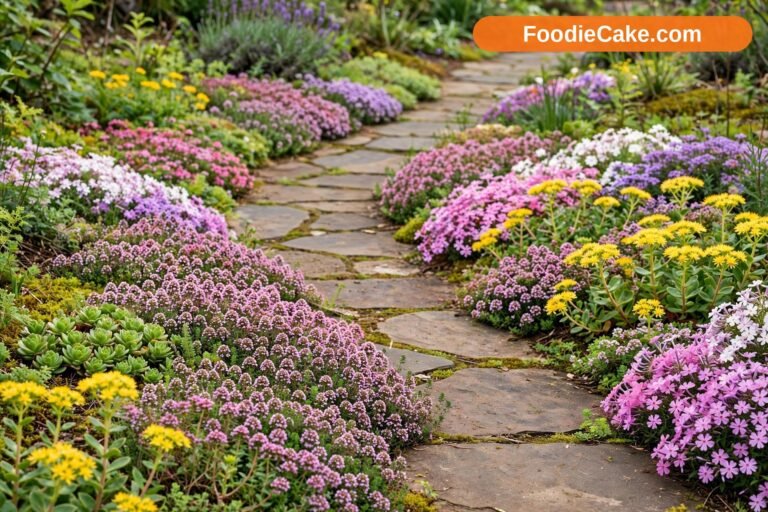
Tiny clustered flowers are the third shape, and the easiest to overlook. Thyme, oregano, and marjoram form low, spreading mats covered in tiny pink and white flowers that suit the smallest bees and hoverflies. Borage flowers are small too, but they are produced in great numbers and refill with nectar remarkably fast, so bees return to the same plant again and again through the day.
If you remember nothing else from this article, remember this: when you are choosing plants at the garden centre, look for an open centre. If you cannot see the centre of the flower, a bee probably cannot use it easily either. That one habit will improve every bed you plant. The RHS draws on the same idea in its Plants for Pollinators lists — see their 10 award-winning plants for pollinators for varieties chosen specifically for flower shape and season.
Lavender and Echinacea: The Summer Backbone
If every pollinator garden had to start with one plant, lavender would be on almost everyone’s list. English lavender, Lavandula angustifolia, and its cultivars such as ‘Hidcote’ and ‘Munstead’ produce spike after spike of small, nectar-rich flowers that honeybees and bumblebees work from morning to evening in early to midsummer. In zones 5–8 it is a hardy, long-lived sub-shrub, and in warmer zones it can be nearly evergreen in a sheltered spot.
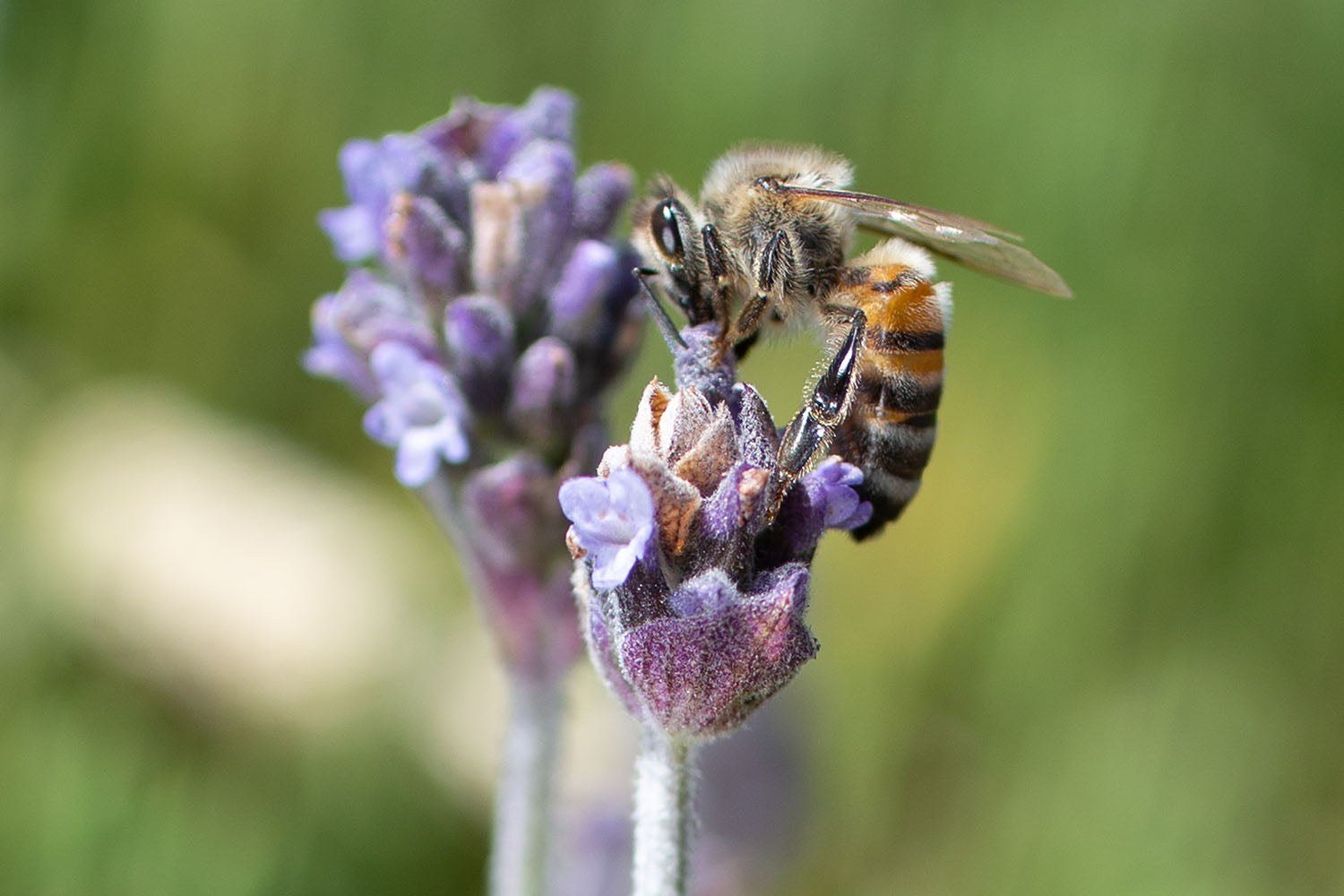
Lavender wants what pollinators want too: full sun and sharp drainage. It thrives in poor, stony, or sandy soil where fussier plants sulk, and it is an excellent choice for a hot border, a gravel garden, or a large pot by a sunny door. What it will not forgive is cold, wet soil in winter, so if your ground is heavy clay, plant it on a slight mound, work in plenty of grit, or grow it in containers and raised beds instead.
Prune it once a year, just after the main flush finishes, trimming back into the soft green growth but never into the old, bare wood at the base, which rarely resprouts. Leave the flowers on until the bees have clearly finished with them — cutting at peak bloom for drying may please the house, but it steals a week or two of food from the garden. A second, smaller flush often follows a timely trim in a warm summer. Use lavender as edging, as a low hedge along a path where you will brush past and release the scent, or in repeated clumps through a border to give the planting rhythm.
Purple coneflower, Echinacea purpurea, earns its place in almost every list of this kind, and justly so. Flowering runs from midsummer into early autumn, exactly when many gardens start to look tired. In zones 3–9 it is a sturdy perennial for full sun and average, well-drained soil. Classic purple-pink is the most reliable, though white forms such as ‘White Swan’ and newer sunset shades are widely available.
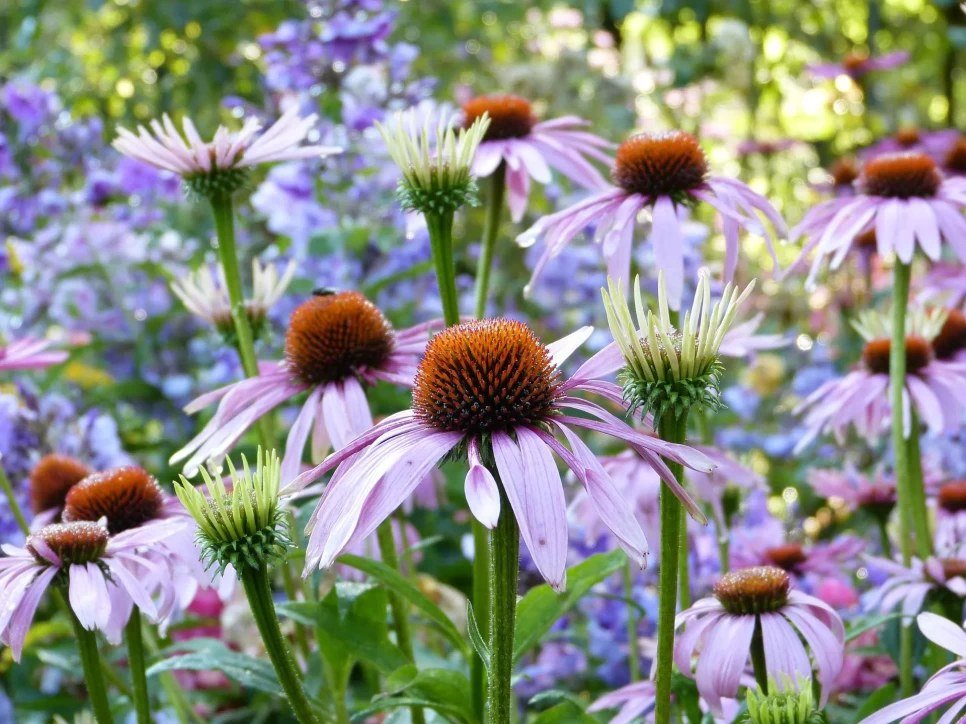
A word of caution on the newest varieties: some heavily bred, very double, or unusually shaped forms are harder for insects to use, so favour open, single flowers with a clear central cone if pollinators are your priority. Plant echinacea in drifts of five or more in the middle of a border, where it partners beautifully with grasses, rudbeckia, and verbena bonariensis.
Do not deadhead everything in autumn. The seed heads are handsome in frost, birds — especially goldfinches — feed on the seeds through winter, and the hollow stems and undisturbed crowns give shelter to overwintering insects. Cut the old growth down in early spring instead, just as new leaves appear. Echinacea is slow to bulk up in its first year, like many good perennials, then settles in and flowers more strongly each season. That patience is rewarded: a mature clump on a still August afternoon can hold bees, butterflies, and hoverflies all at once, each working a different flower.
Salvia, Catmint, and Agastache: Food for Long Tongues
Hardy perennial salvias such as Salvia nemorosa ‘Caradonna’, with its dark stems and violet spikes, and ‘Amethyst’, flower in early summer in zones 4–8 and will often produce a second flush if you shear the plant after the first display fades. Russian sage, now classified as Salvia yangii and still often sold as Perovskia, carries airy lavender-blue clouds from midsummer into autumn and is a magnet for bees in hot, dry borders.
Catmint, Nepeta × faassenii and the larger Nepeta ‘Six Hills Giant’, is similarly generous: a froth of small blue flowers from late spring, cut back after the first flush for a second show, and foliage that releases scent whenever it is brushed. Anise hyssop, Agastache foeniculum, in zones 4–9, adds upright purple spikes with a faint liquorice scent and is one of the most bee-visited plants in many gardens, self-seeding gently where it is happy.
Group these spiky plants together in the sunny middle of a border and you create a feeding station that works from May to September with very little intervention. Learning how to attract butterflies to your garden uses many of the same plants, because butterflies will happily share these spikes on warm days. Good pollinator planting rarely serves just one kind of visitor.
Sunflowers and Rudbeckia: The Big, Easy Annuals
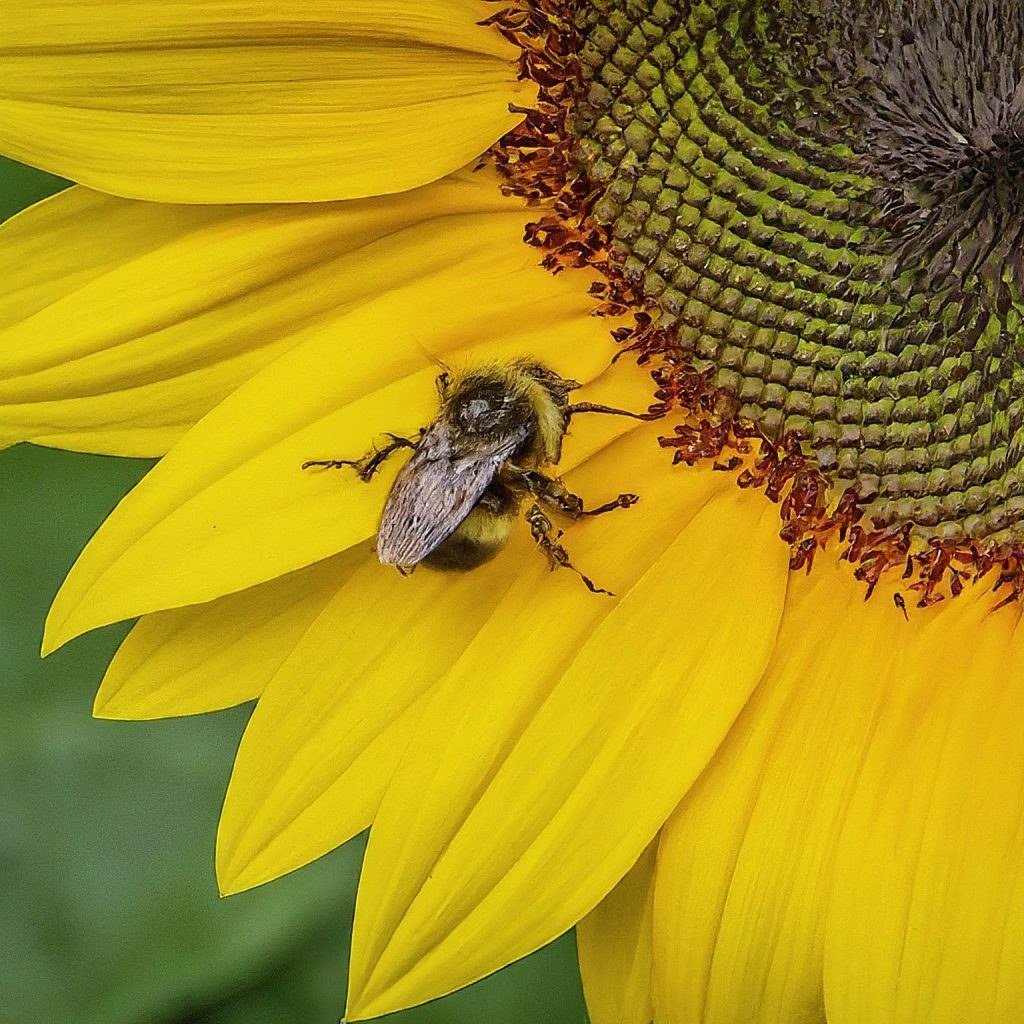
For sheer cheerfulness and insect value combined, the sunflower family is hard to beat. Annual sunflowers, Helianthus annuus, are more than a children’s project: a branching cultivar such as ‘Russian Giant’ for height or a multi-headed type for a border produces a succession of large, pollen-rich discs that bees work intensively, and if you leave the heads to ripen, birds will strip the seeds in autumn. Choose pollen-producing varieties rather than pollen-free types bred for cut flowers, because pollen is half the point here.
Sow sunflowers where they are to flower, after the risk of hard frost has passed, in full sun and reasonably rich soil, and stake tall plants in exposed gardens. Even a small row along a fence in zones of almost any range — they are grown as annuals nearly everywhere — will be busy on every sunny day from midsummer onwards.
Rudbeckia, especially Rudbeckia fulgida ‘Goldsturm’ in zones 3–9, offers the same daisy shape in a perennial form, flowering from late summer into autumn in rich yellows with dark centres. It is undemanding, spreads politely into satisfying clumps, and bridges the tricky gap between the high-summer flush and the asters. Heleniums, the sneezeweeds, do similar work in oranges and russets and are excellent for bees in August and September.
These are also some of the most forgiving plants for new gardeners. If you are just starting out, many of them appear among easy flowers to grow for beginners, because they germinate readily, tolerate a little neglect, and reward you in the same season. That is exactly the confidence boost a new pollinator bed needs.
The Herb Bed That Feeds Two Kitchens
Herbs are the quiet champions of the pollinator garden. Their flowers are often small, but they are produced in great numbers, are rich in nectar, and appear over a long period — and you get a kitchen harvest from the same plants. The trick is simply to let a portion of each herb flower instead of harvesting every stem before it can bloom.
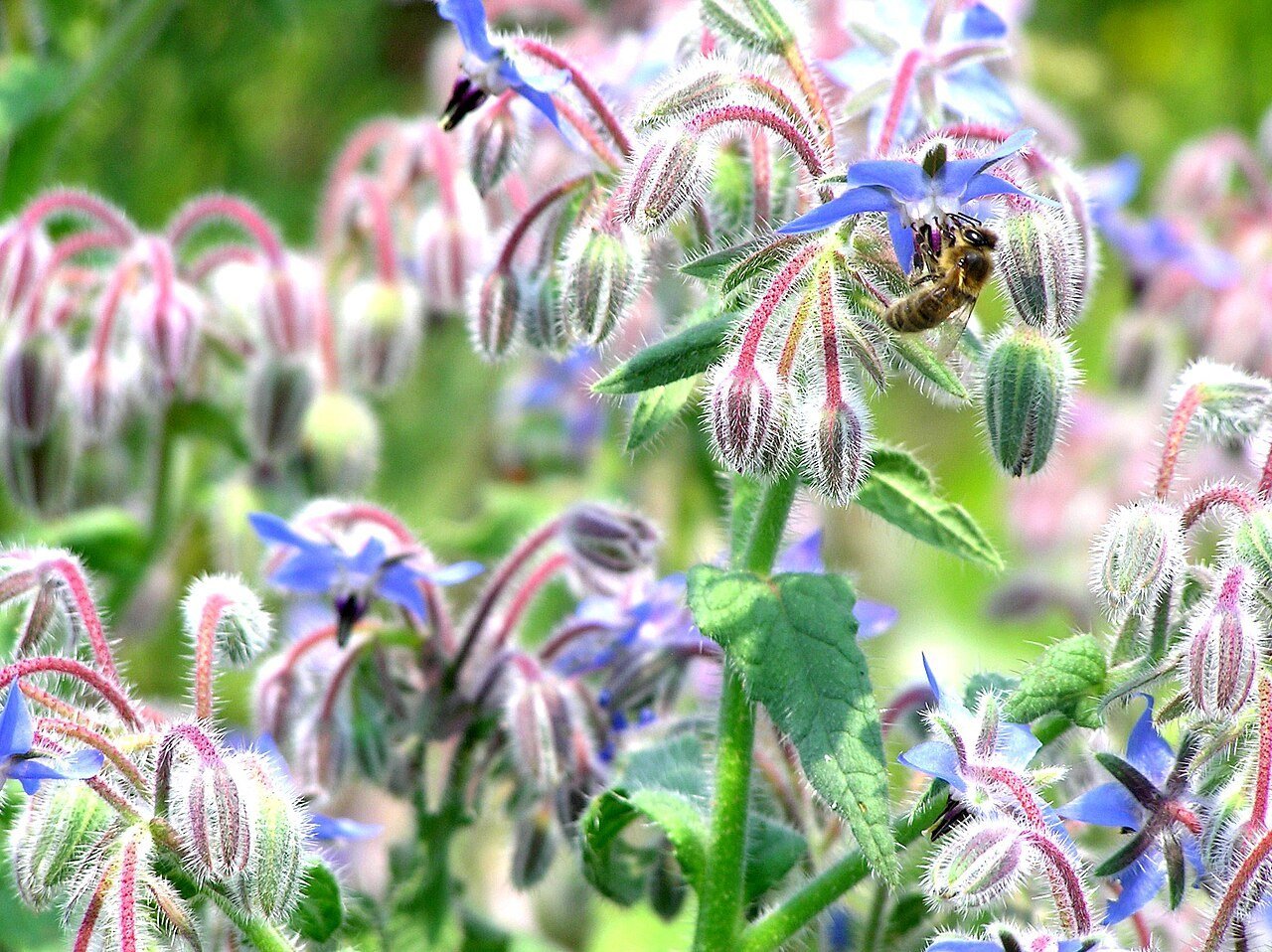
Borage is perhaps the finest bee plant of all. Its starry blue flowers refill with nectar remarkably fast, so bees return to the same plant again and again through the day, and it flowers from early summer until frost if you sow a couple of batches a few weeks apart. It self-seeds freely in zones where it is happy as an annual, so once you have it, you usually have it for good. Pull out the seedlings you do not want and let the rest carry on.
Thyme, oregano, and marjoram form low, spreading mats or mounds covered in tiny pink and white flowers that suit the smallest bees and hoverflies. Chives allowed to bloom give you purple pompons in late spring that bumblebees adore, and their seed heads look good for weeks afterwards. Rosemary, hardy in zones 7–10 and worth growing in a pot elsewhere, flowers early — sometimes from late winter in mild gardens — providing food when very little else is available for emerging queen bumblebees.
Grow herbs where you will walk past them daily, in sun and free-draining soil, in beds, gravel, or pots. Take your kitchen cuttings from one side of the plant and leave the other side to flower, and you will have both seasoning and a border that hums.
Wildflowers, Fillers, and the Trees You Forgot
Beyond the headline perennials, a layer of wildflowers and easy annual fillers is what keeps a pollinator garden from having quiet weeks. Cornflower, Centaurea cyanus, field scabious, red and white clover allowed to bloom in a patch of lawn, and birds-foot trefoil all feed a wide range of insects, including the butterflies that lay eggs on some of them. A small meadow patch or an unmown corner of lawn from spring to midsummer can hold more life than a whole bed of bedding plants.
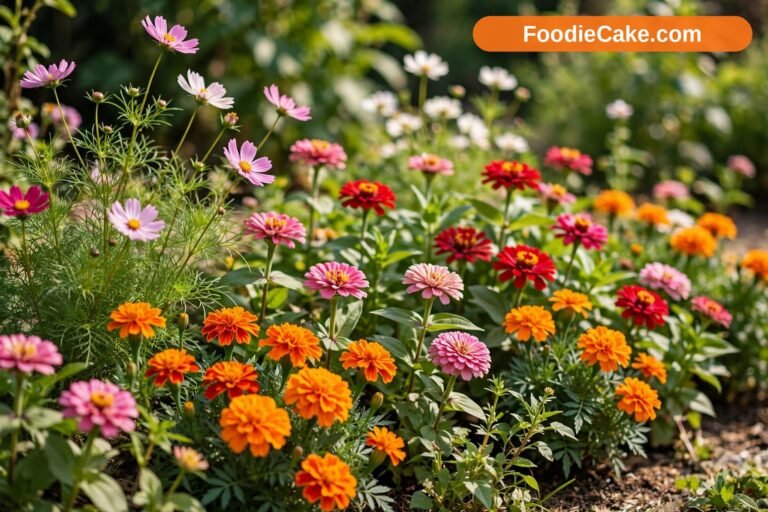
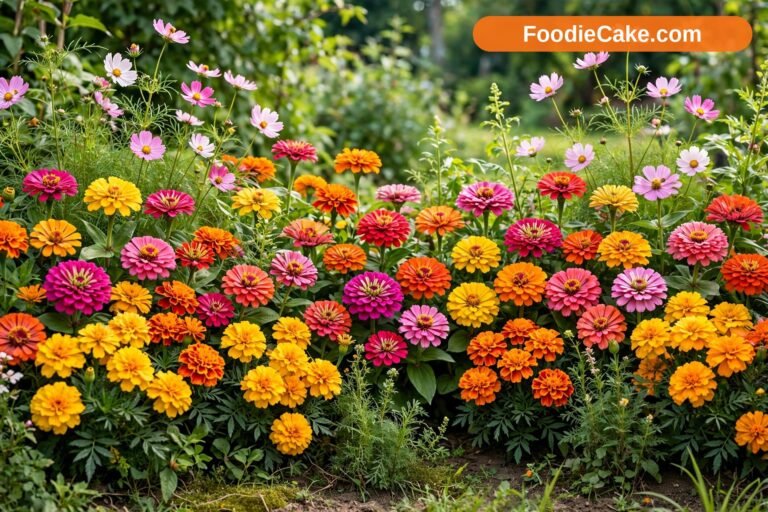
Cosmos is the annual to sow if you want fast results. Cosmos bipinnatus in pink and white and Cosmos sulphureus in orange and yellow produce open, single flowers on ferny foliage from midsummer to the first frosts, and bees and butterflies visit them constantly. Sow in succession from spring, deadhead lightly, and they will fill any gap while slower perennials establish. Single-flowered dahlias, grown from seed or as open-centred cultivars rather than tight doubles, do similar work in late summer and are superb for bumblebees.
Verbena bonariensis deserves a second mention here as a filler that behaves like a perennial in zones 7–10 and self-seeds in colder gardens. Its small purple clusters on tall, see-through stems weave through a border without smothering neighbours, and few plants hold butterflies so visibly in late summer. Phacelia, often grown as a green manure, has extraordinary blue, curled flower heads that bees crowd onto — worth letting a small patch flower in the veg garden before you dig it in.
The University of Minnesota Extension puts the same point more formally in its pollinator guidance: a healthy landscape is about food, habitat, and nesting sites together, not just flowers. Their guide to creating a pollinator-friendly landscape is a good checklist if you want to check your own garden against it.
Water, Shelter, and the Night Shift
Food alone is only part of the habitat. Provide water and shelter as well. A shallow dish with pebbles, topped up in hot weather, lets bees drink safely, and a pile of logs, a dry stone wall, or stems left standing over winter gives solitary bees and other insects places to nest and hide. Water new plants well in their first season and mulch with compost rather than bark alone where you can. Established lavender, salvia, and echinacea are drought-tolerant once settled, but no perennial establishes on neglect in its first dry summer. A plant that survives and bulks up feeds insects for a decade; one that dies in August feeds nothing.
Then there is the night shift, which most gardens forget. Moths pollinate too, and evening-scented plants such as night-scented stock, honeysuckle, and evening primrose support them as well as perfuming your evenings. Leaving the garden dark at night, rather than floodlit, completes the picture.
Autumn tidiness is the other habit to unlearn. Cutting all stems to the ground, clearing every leaf, and digging every corner removes overwintering shelter and nesting sites at the worst possible time. Leave seed heads, hollow stems, and a leaf pile under a hedge until early spring, and cut back then instead.
What Not to Do
Reaching for insecticide when aphids appear undoes the whole project. Sprays kill the pollinators you planted for, along with the ladybirds and hoverflies that would have cleared the aphids for free. Tolerate a few, wash heavy colonies off with water, and remember that aphids themselves are food for young birds in spring.
Buying the showiest cultivar without checking the flower is the second trap. Neon colours, pompon doubles, and pollen-free sunflowers are bred for looks in a vase or a photo, not for feeding insects. Read the label, look for an open centre, and when in doubt choose the species or a simple, traditional cultivar.
Planting one of everything is the third. A collector’s border of single specimens looks busy but feeds poorly, because insects waste energy travelling between scattered flowers. Commit to fewer kinds in larger groups and the whole garden — visually and ecologically — will feel calmer and work harder. Plant in blocks, not singles: a drift of seven lavenders or five echinaceas is far easier for insects to find and far more efficient for them to feed from than the same plants scattered one by one. Blocks look better to human eyes as well, so there is no trade-off to make.
Five Questions Before You Buy
If I can only buy five plants, which ones?
Start with lavender, echinacea, salvia nemorosa, borage, and an aster for autumn. Together they cover early summer to late autumn, offer flat, tubular, and tiny clustered flowers for different insects, and all are tough, widely available, and forgiving for beginners in zones 5–8, with borage grown as a self-seeding annual.
Do pollinator plants need a sunny garden?
Most of the best nectar plants do want full sun, because flowers produce more nectar and insects are more active in warmth. That said, a partly shaded garden is not hopeless: lungwort, foxgloves, brunnera, and wood anemones feed spring bees in shade, and a single sunny corner or a group of pots in the brightest spot will still be well used.
How big does a pollinator garden need to be?
There is no minimum that matters. A window box of herbs, a metre-square bed of lavender and echinacea, or three large pots of salvia and cosmos will all be visited within days in summer. Bigger and more varied is better, because it supports breeding as well as feeding, but small and flower-filled beats large and empty every time.
Should I keep bees to have a pollinator garden?
No. A pollinator garden supports wild bees, honeybees from nearby hives, butterflies, hoverflies, and moths without you keeping anything at all. In fact, planting well is usually more helpful than adding a hive, because wild pollinators need food and nesting places far more than they need competition from extra honeybees.
Will it look messy?
Only if you want it to. The backbone plants in this article — lavender hedges, echinacea drifts, salvia, sunflowers — are classic border plants that look deliberate and tidy with ordinary care. The wild touches, such as seed heads left over winter or a small unmown patch, can be framed with a mown edge or a neat path so the whole garden reads as intentional rather than neglected.
One Bed, One Season, One Drift at a Time
A great pollinator garden is really just a generous garden, planted in the right order: something in flower from the first queen bumblebee of spring to the last butterfly of autumn, flower shapes for every kind of visitor, big honest drifts instead of scattered singles, and no sprays to undo the welcome. Lavender and echinacea will carry your summer, herbs and wildflowers will fill the gaps, and asters will close the season in style.
You do not have to replant your whole garden this year. Add one drift, let the herbs flower, leave the seed heads standing, and watch who arrives. Season by season, as you fill the quiet weeks and the clumps grow stronger, the border will get busier and more beautiful at the same time — and on a still, warm evening, standing in a garden that is audibly alive is reward enough for every plant on this list.
Sources
- Royal Horticultural Society — 10 award-winning plants for pollinators (rhs.org.uk)
- University of Minnesota Extension — Support pollinators: how to create a pollinator-friendly landscape (extension.umn.edu)