
Best Fruit Trees for Small Gardens
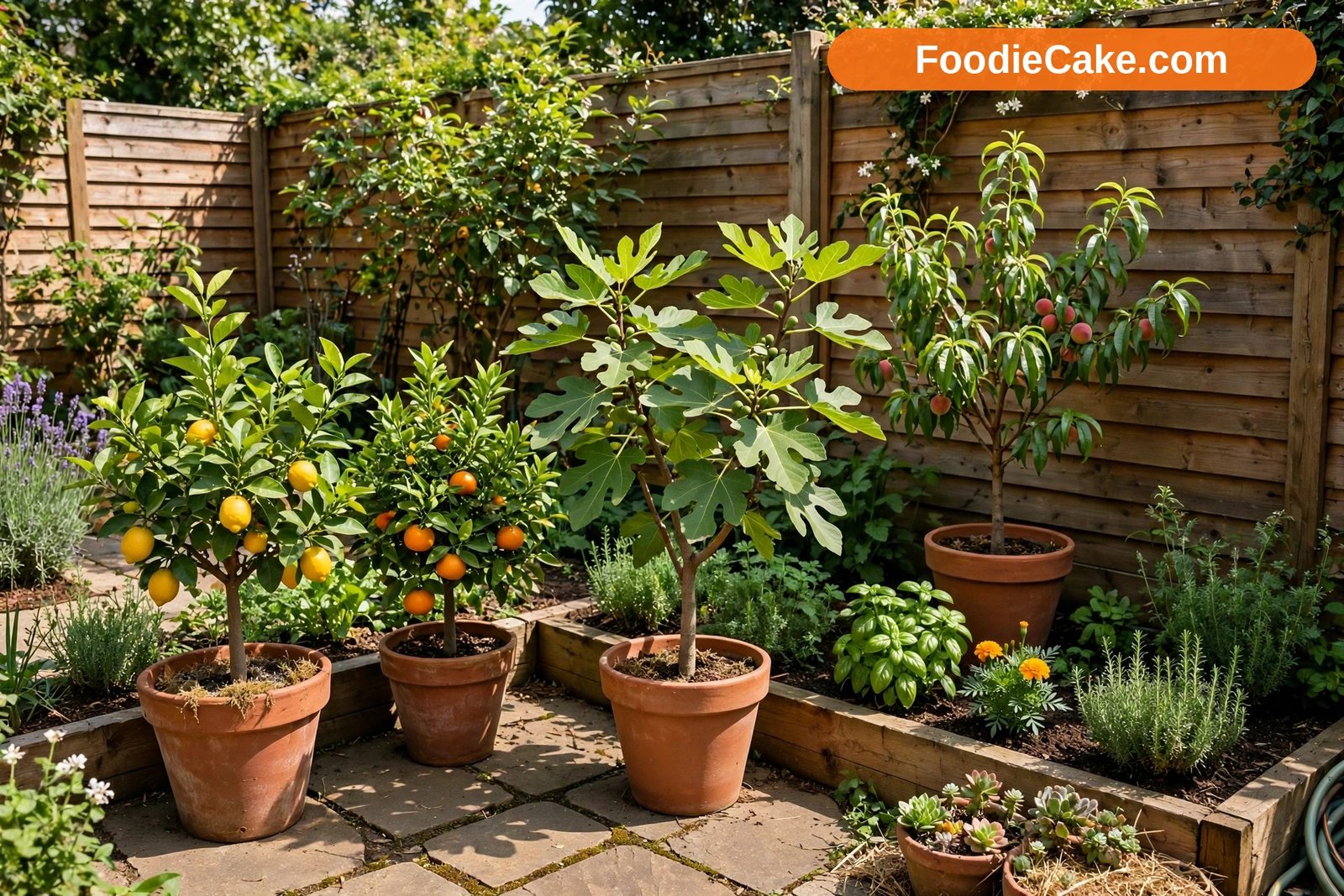
If you have ever stood in a small backyard and wished for homegrown fruit, you are not alone. Finding the best fruit trees for small gardens is less about giving up on an orchard and more about choosing trees that were bred, grafted, or trained to stay compact. A dwarf apple on a sunny patio, a fig tucked against a warm wall, or a columnar tree along a fence can give you real harvests without shading out everything else you grow.
The good news is that size is now a choice. Many modern varieties grow on dwarfing or semi-dwarfing rootstocks that keep them between 5 and 10 feet tall, while columnar and patio types stay narrower still. That means you can fit several different fruits into the space one old-fashioned tree would have taken, spread your harvest across the season, and still leave room for vegetables, flowers, and a place to sit with a cup of tea.
This guide walks through reliable options that earn their place in a tight space. For each tree you will find its mature size, pollination needs, chill hours, and whether it is happier in the ground or in a container. There are no miracle trees here — every fruit needs sun, water, and a little patience — but the right match for your climate and space makes all of that work far more rewarding.
How Much Room Do You Really Have?
Before you fall for a variety, measure what you actually have. Small gardens hold more fruit than people think — but only if the tree’s shape matches the space. A free-standing dwarf needs a circle of ground; a columnar tree needs a strip; a cordon needs a fence, not a lawn.
| Form | Footprint | Spacing | Best for |
|---|---|---|---|
| Columnar apple | About 2 feet wide, 8 to 10 feet tall | 2 to 3 feet apart in a row | A narrow border or fence line; several varieties in the space of one tree. |
| Cordon (oblique) | A fence line, almost no depth | About 18 to 24 inches apart | Pears and apples trained flat against a wall or fence. |
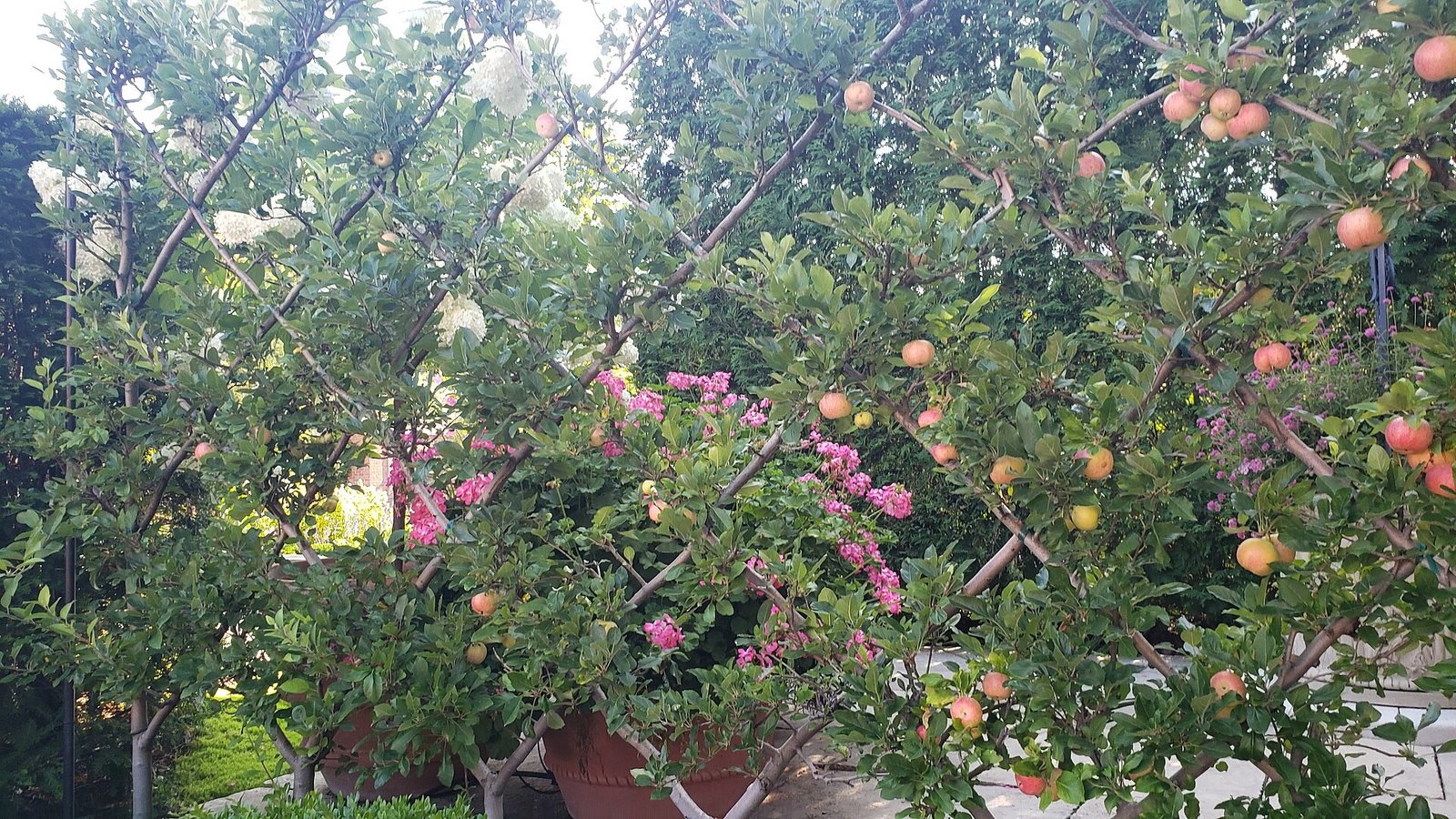
| Espalier or fan | A wall or fence face, a few feet deep | One tree per wall section | Apples, pears, cherries and peaches against a sunny wall; also makes netting easy. |
| Free-standing dwarf | A circle 8 to 10 feet across | 8 to 10 feet apart; 6 to 8 feet for pears | The classic small-garden tree where you have a lawn corner to spare. |
| Patio / container tree | One large pot, 15 to 20 gallons | As close as you can water them | Paved gardens, balconies, and fruit you can move out of a late frost. |
Most small gardens comfortably hold three to five trees in mixed forms, plus a couple of pots. Quality of light matters more than squeezing in one extra tree — a tree in shade will disappoint you no matter how clever its shape.
Why Some “Dwarf” Trees Stay Small
Not every tree sold as “dwarf” stays small in every garden, so it helps to understand what controls size before you buy. Most fruit trees are grafted, which means a fruiting variety is joined to a rootstock. The rootstock influences vigour, disease resistance, and final height. A ‘Liberty’ apple on a dwarfing rootstock such as M27 or M9 will stay much smaller than the same variety on a vigorous rootstock, even though the fruit itself is full size.
The RHS rootstock guide makes the same point with numbers: an apple on M27 stays around 1.2 to 1.8 metres tall, on M9 around 1.8 to 2.4 metres, and on M26 around 2.4 to 3 metres — the same variety, three different trees, decided by the roots. Pears on Quince C stay compact at 2.5 to 3 metres, and cherries on Gisela 5 reach about 2.4 to 3 metres. The RHS also notes that dwarfing rootstocks usually need permanent staking, because their small root systems never hold the tree up on their own — worth knowing before you buy.
Training matters just as much. Espalier, cordon, and fan shapes grow flat against a wall or fence and can be kept to a few feet wide. Columnar trees grow mostly upright with short side branches, so they take up a narrow column of air rather than a wide canopy. Patio varieties are bred to branch low and stay compact in pots, which is useful if your garden is paved or your soil is poor.
Three other factors decide whether a tree will actually fruit for you. The first is chill hours — the number of hours below about 45°F (7°C) a tree needs in winter to flower properly. In zones 5–8 many apples, pears, and plums get enough chill naturally, while gardeners in mild zones 9–10 should look for low-chill varieties. The second is pollination. Self-fertile trees can set fruit on their own, which is ideal when you only have room for one. Others need a compatible partner flowering at the same time nearby. The third is sunlight. Almost all fruit trees need at least six hours of direct sun a day, and more is better for sweetness and ripening.
Think, too, about harvest time and mess. A tree that drops soft fruit over a patio in midsummer may be less welcome than one you can pick cleanly from a path. Keep a simple map of where the sun falls in different seasons, check your local frost dates, and note any frost pockets at the bottom of a slope. Ten minutes of planning like this saves years of wrestling with a tree in the wrong spot.
The Ten Trees at a Glance
Read this table first, then read the profiles below for the trees that survive your shortlist. Sizes are mature sizes with regular pruning, not the size on the nursery label in the first year. Where a range is given, your rootstock and pruning will decide where your tree lands within it.
| Tree | Mature size | Chill hours | Pollination | Zones | Best in |
|---|---|---|---|---|---|
| Columnar apple | 8–10 ft tall, ~2 ft wide | ~800–1,000 (northern types) | Needs a partner | Varies by variety | Row along a fence; pot of 15–20 gal |
| Dwarf apple ‘Liberty’ | 8–10 ft tall and wide | ~800 | Needs a partner | 5–8 | Ground or espalier |
| Patio peach ‘Bonanza’ | 5–6 ft | 250–350 | Self-fertile | 6–9 | Pot of 15–20 gal |
| Dwarf nectarine | 5–6 ft in pots; 6–8 ft in ground | 600–800 (northern types) | Self-fertile | Varies | Sunny, sheltered spot |
| Fig ‘Little Miss Figgy’ | 4–6 ft | Under 100 | Self-fertile | 7–10 (6 with protection) | Pot of 15–20 gal or restricted pit |
| Dwarf Meyer lemon | 4–6 ft in a pot | Almost none | Self-fertile | 9–11 outdoors | Pot of 10–15 gal, indoors in winter |
| Dwarf cherry ‘Stella’ | 8–10 ft (fan) | 700–1,000 | Self-fertile | 5–8 | Fan against a sunny wall |
| Dwarf pear | 8–12 ft | 600–800 | ‘Conference’ partly; ‘Comice’ needs a partner | 5–8 (some to 9) | Espalier, cordon, or free-standing |
| Dwarf plum | 8–10 ft | ~300 (‘Santa Rosa’); 700–900 (European) | Self-fertile (‘Victoria’, ‘Santa Rosa’) | 5–9 | Ground, sunny and frost-free |
| Dwarf pomegranate | 3–4 ft (‘Nana’); 6–8 ft (compact ‘Wonderful’) | 100–200 | Self-fertile | 8–11 | Pot of 15 gal+ or hot, dry garden |
The Three Easiest Places to Start
If you want the highest chance of a good first season, start with one of these three. They are forgiving in different ways: the fig asks almost nothing, the peach crops young, and the apple shrugs off disease.
Fig ‘Little Miss Figgy’ and Compact Figs
Figs love small, warm gardens. ‘Little Miss Figgy’ is a genuinely compact selection that grows about 4 to 6 feet tall and wide, with deeply lobed leaves that look good all season and small, sweet, dark purple fruit. Larger but still manageable, ‘Brown Turkey’ can be kept to 8 to 10 feet with pruning and is known for reliability in zones 7–10, with some protection in zone 6.
Figs are self-fertile and need very little winter chill, often under 100 hours. Their secret in a small space is root restriction. Growing in a 15- to 20-gallon container, or in the ground with a planting pit lined with slabs, encourages fruiting instead of endless leafy growth. Figs fruit on new wood, and in cooler climates you will usually get one main crop in late summer. Water steadily while fruit is swelling, ease off as it ripens, and pick when the neck softens and the fruit droops. Few things from a small garden taste as indulgent.
Patio Peach ‘Bonanza’ and Other Dwarf Peaches
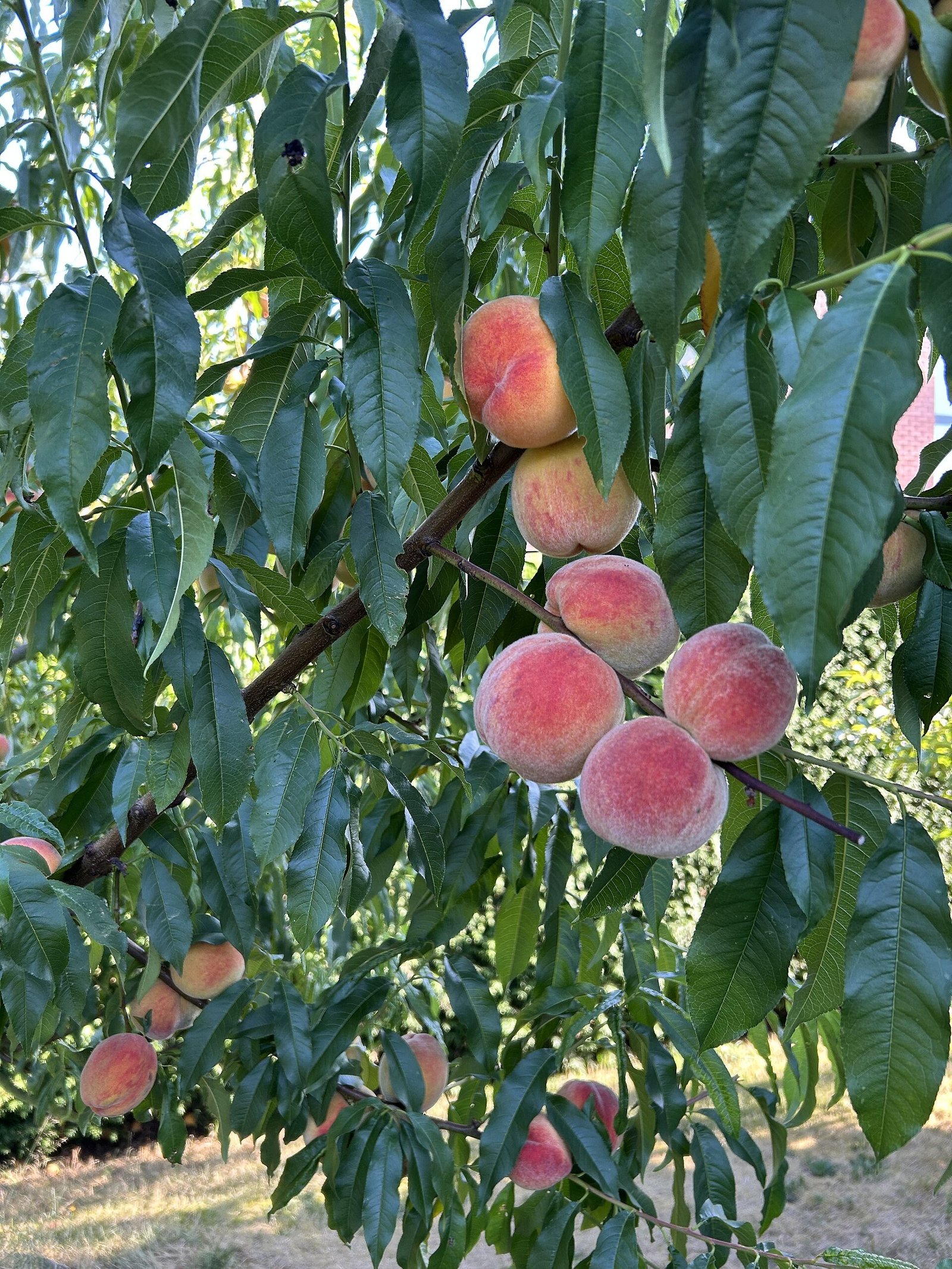
Peaches feel luxurious in a small garden, and patio types make them possible. ‘Bonanza’ is a genetic dwarf that naturally stays around 5 to 6 feet tall, with lush foliage and pink spring blossom as a bonus. Standard dwarf peaches on semi-dwarfing rootstock are a little larger, at 8 to 10 feet, but crop more heavily.
Peaches are self-fertile, so one tree is enough. ‘Bonanza’ needs around 250 to 350 chill hours, making it one of the better choices for warmer areas in zones 6–9, while many northern peaches need 700 hours or more and suit zones 5–8. Grow patio peaches in a 15- to 20-gallon pot in a sunny, sheltered spot, and move pots against a house wall in very cold snaps if you are at the edge of their range. Watch for peach leaf curl in wet springs — keeping rain off the leaves with a simple cover from winter to bud burst helps a lot — and pick fruit when it gives slightly and smells sweet at the stalk end.
Dwarf Apple ‘Liberty’
If you want one dependable apple, ‘Liberty’ is a strong candidate. Bred for disease resistance, it copes better than many varieties with apple scab, cedar apple rust, and fire blight, which means less spraying and fewer disappointed seasons. On a dwarfing rootstock it reaches about 8 to 10 feet tall and wide, and it can be espaliered if width is tight.
‘Liberty’ is not self-fertile, so plant another apple or crab apple that blooms at the same time within bee range. It needs roughly 800 chill hours and suits zones 5–8 well. The fruit is dark red, tangy-sweet, and good for both eating fresh and cooking, usually ripening in September. Thin the fruitlets in late spring to one per cluster when crops are heavy; the tree will reward you with larger fruit and will be less likely to fall into a pattern of cropping heavily one year and barely at all the next. The University of Minnesota Extension gives the same thinning rule for home apple trees: one apple per cluster, at least a fist-length apart.
The Rest of the Shortlist
The three above are the easiest starts, but the rest of the list earns its place too. Pick by chill hours and pollination first, flavour second — the easiest tree is always the one suited to your climate.
Columnar Apple
Columnar apples are the ultimate space-savers. Varieties in the Ballerina series and trees such as ‘North Pole’ grow 8 to 10 feet tall but only about 2 feet wide, with fruit carried on short spurs close to the trunk. You can plant them 2 to 3 feet apart in a row along a fence, or grow a single tree in a large pot.
Most columnar apples need a pollination partner from a different apple variety that flowers at a similar time, although a crab apple nearby often does the job. Chill requirements vary by variety, commonly around 800 to 1,000 hours for northern types, so southern gardeners should check labels carefully. Use a container of at least 15 to 20 gallons if you are growing in a pot, and prune only lightly — remove crossing or damaged wood and keep the central leader intact. Fruit is full size, crisp, and picked in early to mid autumn depending on the variety.
Dwarf Nectarine
Nectarines are essentially smooth-skinned peaches, and they behave in much the same way. Compact varieties such as ‘Nectarella’ and ‘Leprechaun’ stay around 5 to 6 feet in pots, while dwarf trees in the ground reach 6 to 8 feet. The flavour is often a little more aromatic than a peach, and the smooth skin appeals to people who dislike fuzz.
Like peaches, nectarines are self-fertile and bloom early, so a sheltered, sunny position matters. Late frost can damage blossom in colder areas, so check your local frost dates and be ready to drape fleece over a small tree on a frosty night during flowering. Chill needs are variety-specific, often 600 to 800 hours for northern types and lower for newer low-chill releases. Thin hard, because nectarines will happily set more fruit than their branches can ripen well. A final spacing of about 6 inches between fruits sounds ruthless in June, but by August you will be glad you did it.
Dwarf Meyer Lemon
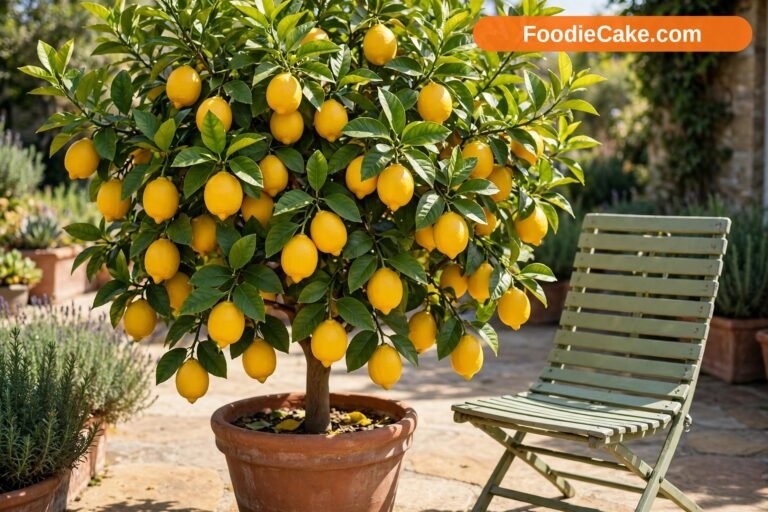
A lemon on the patio changes how you cook, and it is one of the most rewarding container fruits for a small space. Dwarf Meyer lemon grows 4 to 6 feet in a pot and produces thinner-skinned, slightly sweeter fruit than a shop lemon, along with heavily scented white blossom that can appear in flushes through the year. If you want to go deeper on potting mix, feeding, and winter care, our guide on how to grow lemon trees in pots covers the details step by step.
Meyer lemons are self-fertile and need almost no chill, but they are not hardy. They suit zones 9–11 outdoors year-round; elsewhere, grow them in a 10- to 15-gallon pot and bring them under cover before frost, ideally into a bright, cool room or conservatory. They dislike soggy roots, so use a gritty, free-draining citrus mix and a pot with plenty of drainage holes. Feed with a citrus fertiliser during the growing season, watch for scale insects indoors, and expect fruit to ripen mainly from late autumn into winter, taking many months from blossom to pickable lemon.
Dwarf Cherry ‘Stella’ and Bush Cherries
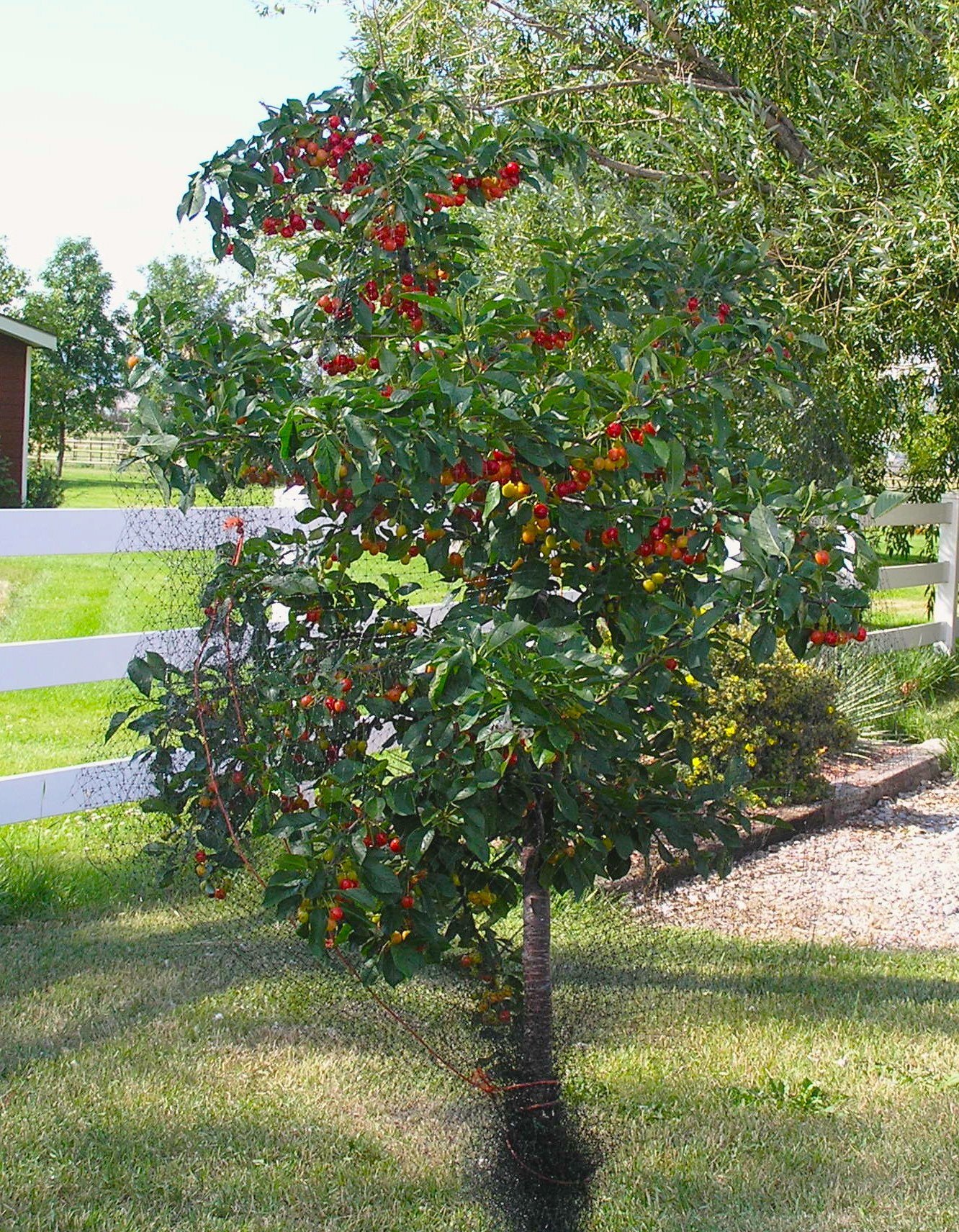
Sweet cherries used to need a huge garden. Self-fertile ‘Stella’, kept on a dwarfing rootstock such as Gisela 5, can be held at 8 to 10 feet and trained as a fan against a sunny wall, which also makes netting against birds much easier. Bush cherries such as ‘Romeo’, from the Romance series, are even smaller at 6 to 8 feet, very cold-hardy, and produce dark fruit that is excellent for cooking, preserving, and eating fresh when fully ripe.
Most modern sweet cherries need 700 to 1,000 chill hours and do best in zones 5–8, while bush cherries tolerate colder winters. Self-fertile varieties are the sensible pick for a small garden because you get a crop from a single plant. Cherries ripen all at once and birds know it, so net the tree as the fruit starts to colour. Prune cherries in summer rather than winter, which reduces the risk of certain bacterial and fungal problems, and pick with the stalk attached to help the fruit keep.
Dwarf Pear
Pears are long-lived, handsome, and surprisingly adaptable to training. Varieties such as ‘Conference’ and ‘Doyenne du Comice’ on Quince C rootstock grow to about 8 to 12 feet and respond beautifully to espalier and cordon forms, so a pear can occupy a fence line rather than the middle of the lawn. ‘Conference’ is partially self-fertile and will crop alone, though yields improve with a partner; ‘Comice’ needs a pollination partner.
Pears typically need 600 to 800 chill hours, depending on variety, and suit zones 5–8, with some types pushing into zone 9. Plant them 6 to 8 feet apart as free-standing dwarf trees, or about 18 to 24 inches apart as oblique cordons. Pears are picked while still firm and ripened indoors — test by lifting a fruit gently; if the stalk separates easily, it is ready to come in. Leave them in a cool room and check daily. That brief wait is worth it for fruit that melts rather than crunches.
Dwarf Plum
Plums are generous croppers and often the easiest stone fruit for a beginner. ‘Victoria’ is a classic self-fertile choice in many regions, reliable and heavy-cropping on dwarfing rootstock at 8 to 10 feet. ‘Santa Rosa’ is another self-fertile option, popular in warmer areas, with a lower chill requirement of around 300 hours and suitability for zones 5–9.
European plums often need more chill, around 700 to 900 hours, while Japanese types tend to need less, so match the type to your winters. Plums flower early, so a spot that is sunny but not a frost pocket is ideal. Thin fruit in early summer if the branches are overloaded, because plums are prone to branches snapping under a heavy set and to biennial cropping if left to exhaust themselves. Support a laden branch with a forked prop rather than watching it split in a storm the week before harvest. Ripe plums should come away with a gentle twist and taste best warmed by the sun.
Dwarf Pomegranate
For gardeners in hot, dry summers, a dwarf pomegranate brings something completely different — vivid orange-red flowers, glossy leaves, and fruit that stores well. ‘Nana’ is a true dwarf at 3 to 4 feet and is mostly grown for ornament, though it sets small fruit. For eating, look for compact selections of ‘Wonderful’ or similar varieties kept at 6 to 8 feet with pruning in zones 8–11, or grow in a large container and overwinter under cover in colder areas.
Pomegranates are self-fertile, need very little chill (often 100 to 200 hours), and thrive in heat that would stress an apple. They need a 15-gallon or larger container if potted, sharp drainage, and full sun. Water deeply but infrequently once established, and do not overfeed with nitrogen, which produces leaves at the expense of flowers. Fruit is ready when it feels heavy, the skin colour is rich, and a tap gives a slightly metallic sound — usually in autumn, many months after that spectacular blossom.
In the Ground or in a Pot?
Both routes work, and many small gardens use a mix. Trees in the ground, once established, need less frequent watering and can root deeply, which helps in dry spells. They are also more permanent, so take time over the planting hole: dig it wide rather than deep, loosen the sides, plant at the same depth the tree was in its pot, water in well, and mulch with organic matter while keeping mulch a few inches away from the trunk.
Containers give you control. You can give a lemon the gritty mix it wants while your garden soil stays heavy clay, move a peach out of a late frost, and use paved corners that would otherwise grow nothing. The trade-offs are watering and feeding. Pots dry out quickly in summer — sometimes daily in a heatwave — and nutrients wash through, so a regular liquid feed in the growing season matters. Choose the biggest pot you can manage, generally 15 to 20 gallons for a dwarf tree, with drainage holes, and raise it slightly on pot feet so water escapes freely. Repot or root-prune every few years, refreshing the top layer of mix each spring.
Whichever route you choose, keep grass and weeds away from the base for the first few years. A mulched circle about 3 feet across reduces competition for water and makes mowing accidents — a surprisingly common cause of young tree death — far less likely.
A Year With Small Fruit Trees
Small trees are easy to look after once the jobs are tied to the seasons. Here is the rhythm that covers all ten trees on the list.
| Season | Jobs |
|---|---|
| Late winter | Prune apples and pears while dormant. Check ties and stakes. Order bare-root trees for spring planting. |
| Spring | Feed with a balanced organic fertiliser and top up mulch. Drape fleece over early blossom on frosty nights. Plant bare-root and potted trees. |
| Early summer | Thin fruitlets — one per cluster for apples, about 6 inches apart for nectarines. Water young trees deeply once or twice a week in dry weather. |
| Summer | Prune stone fruits (plums, cherries) in dry weather. Shorten side shoots on trained forms. Net cherries and plums as fruit colours. Pick figs, peaches and plums as they ripen. |
| Autumn | Pick apples and pears; ripen pears indoors. Pick pomegranates when heavy and metallic-sounding. Move tender pots towards shelter before frost. |
| Winter | Protect pots and citrus under cover. Water container trees lightly. Plan next year’s additions — one or two trees that truly suit your zone, sun, and chill hours. |
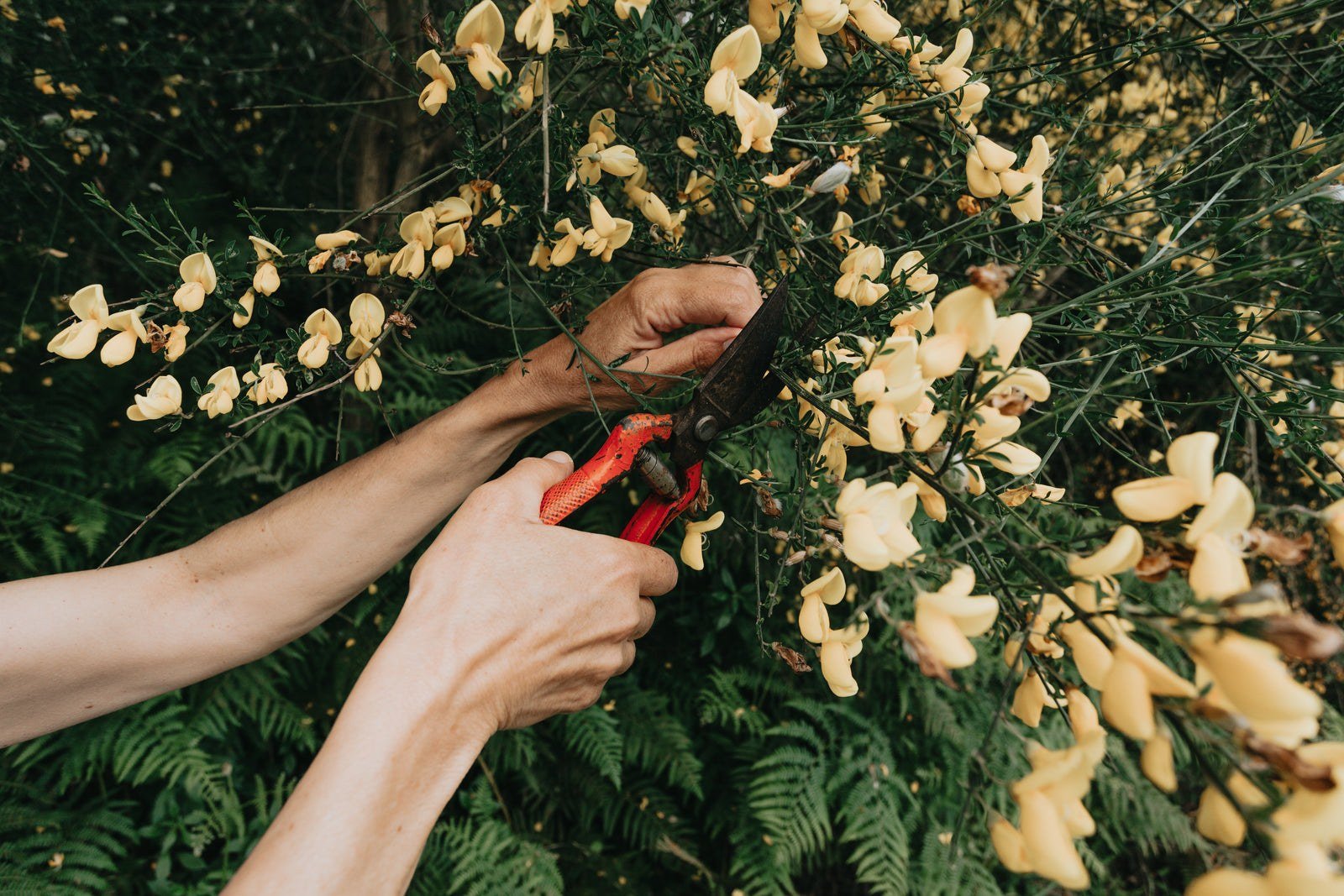
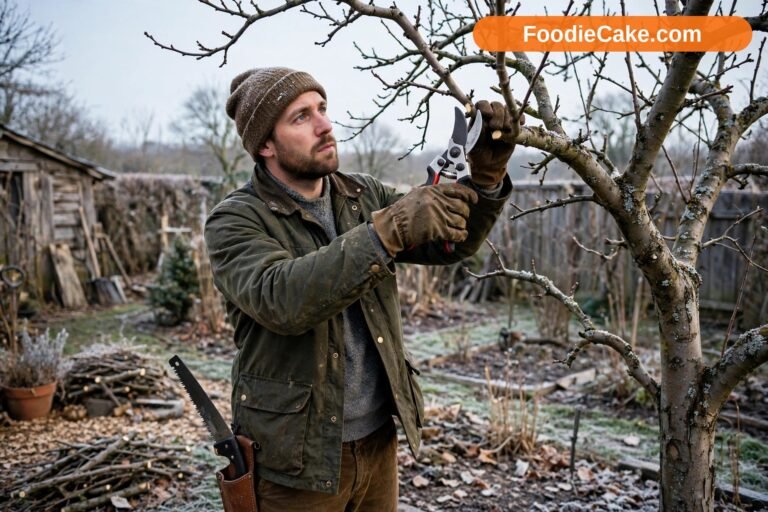
Pruning is what keeps “dwarf” honest. Learn the right season for each type — most apples and pears are pruned mainly in winter, stone fruits such as plums and cherries in summer — and keep cuts small and purposeful. A clear, illustrated routine makes the job much less intimidating, and our guide to how to prune fruit trees explains the basic cuts for beginners. Remove dead, damaged, and crossing wood first, then step back often. You are aiming for light and air through the canopy, not a perfect shape in a single year.
Start with sun and shelter. Track where shadows fall at midsummer and midwinter if you can. A south- or west-facing wall stores heat and can ripen figs, peaches, and lemons that would struggle in an open, windy spot. At the same time, avoid planting right under the drip line of a large existing tree, where roots will steal water and the canopy will steal light.
Water young trees properly in their first two seasons. A deep soak once or twice a week in dry weather beats a daily sprinkle, because it encourages roots to grow down. Use a mulch of compost or well-rotted bark to hold moisture and feed soil life, topping it up each spring. Once trees are established, many need extra water only during prolonged dry spells and while fruit is swelling.
Feed modestly. A spring application of a balanced organic fertiliser, plus compost mulch, suits most in-ground trees. Container trees need more regular feeding because they cannot forage. Resist the urge to push soft, rapid growth with lots of nitrogen; it attracts aphids and often comes at the expense of fruit buds.
Finally, plan for the harvest, not just the planting. Stagger varieties so you are not buried in plums for two weeks and then fruitless for ten months. A columnar apple for autumn, a fig for late summer, and a lemon for winter can give a tiny garden a surprisingly long season.
Mistakes That Waste the Space You Saved
The most common mistake is buying on flavour alone and ignoring pollination and chill. A tree that needs 900 chill hours will leaf out weakly and flower poorly in a mild coastal garden, no matter how well you feed it. Likewise, a non-self-fertile apple planted alone may blossom beautifully every spring and set almost nothing. Read the label, keep it, and write the variety and rootstock in a garden notebook — you will thank yourself in three years when you need to know.
Overcrowding is a close second. Young trees look lost in a wide spacing, so people plant too close, then face a tangled thicket where disease thrives and fruit stays small and pale. Trust the mature size. If a gap looks empty in year one, fill it temporarily with herbs or annual flowers, not another tree.
Watering problems show up at both extremes. Newly planted trees die from drought in their first summer more often than from almost anything else, yet container trees also fail when pots sit in saucers of water and roots rot. Check soil moisture with a finger pushed a couple of inches down rather than guessing from the surface.
Pests and diseases are easier to manage in a small garden because you see the trees daily. Net cherries and plums against birds as fruit colours. Pick up fallen, diseased fruit instead of leaving it under the tree. Watch for aphid colonies on soft new growth and blast them off with water or encourage ladybirds by avoiding broad sprays. For leaf curl on peaches, mildew on apples, or canker on stone fruit, prompt removal of affected growth and better air circulation often do more than any product. If a problem keeps returning, check whether the tree is simply in the wrong place — shade and damp air undo a lot of good intentions.
Wind rock is an underrated problem for container and newly planted trees. Stake young in-ground trees firmly but not tightly for the first year or two, check ties so they do not cut into bark, and place heavy pots where a summer storm will not topple a top-heavy, fruit-laden tree onto the patio.
Six Questions Before You Plant
How many fruit trees can I fit in a small garden?
It depends on form more than garden size. Free-standing dwarf trees need roughly 8 to 10 feet of spacing, columnar apples can sit 2 to 3 feet apart, and cordons can be planted under 2 feet apart along a fence. Many small gardens comfortably hold three to five trees in mixed forms, plus a couple of pots. Quality of light matters more than squeezing in one extra tree.
Which fruit tree is easiest for a beginner in a small space?
A self-fertile fig, a patio peach, or a disease-resistant dwarf apple such as ‘Liberty’ are all forgiving places to start. Figs need little pruning know-how and few sprays, peaches crop young, and resistant apples reduce disease pressure. Pick the one whose chill hours and hardiness match your zone first; the easiest tree is always the one suited to your climate.
Can I grow fruit trees in pots permanently?
Yes, if the variety and rootstock are genuinely dwarf or patio types and the pot is large enough — usually at least 15 gallons for most dwarf trees. Permanent pot life means committing to regular watering, seasonal feeding, and repotting or root-pruning every few years. Citrus, figs, and patio stone fruit are especially well suited to long-term containers.
Do I always need two trees for pollination?
No. Many of the best small-garden choices — figs, peaches, nectarines, Meyer lemons, ‘Stella’ cherry, and ‘Victoria’ plum — are self-fertile and crop on their own. Apples and most pears generally need a compatible partner. In built-up areas a neighbour’s tree within bee range may do the job, but do not rely on luck if you have room for a crab apple, which pollinates many varieties.
When will a young dwarf fruit tree start producing?
Patio peaches, figs, and columnar apples often give a small crop in their second or third year. Dwarf apples and pears may take three to five years to crop well. It feels slow, but removing blossom in the first year after planting, hard as it is, helps the tree build roots and usually pays back with stronger crops later.
What size pot do I need for a dwarf fruit tree?
Start with at least 10 to 15 gallons for citrus and patio types, and 15 to 20 gallons for dwarf apples, peaches, and figs. Bigger pots dry out more slowly and give roots room to support fruit. Always choose a pot with drainage holes, and avoid jumping a very small tree into an enormous pot of wet mix that stays soggy around its roots.
A small garden is not a compromise orchard; in many ways it is a better one. You walk past your trees every day, you notice the first blossom and the first aphid, and you pick fruit at the moment it is ready rather than a week late. Start with one or two trees that truly suit your zone, sun, and chill hours, plant them well, and learn their rhythms for a season before adding more.
Whether your first pick is a columnar apple by the fence, a fig in a big pot by the back door, or a lemon you wheel in for winter, the principle is the same: small tree, full-size fruit, and a harvest that tastes like the garden it came from. That is a very good use of a few square feet.
Sources
- Royal Horticultural Society — Rootstocks for fruit (rhs.org.uk)
- University of Minnesota Extension — Growing apples in the home garden (extension.umn.edu)
2 Comments