How to Grow Strawberries at Home
There is a reason strawberries are the fruit so many gardeners start with. Learning how to grow strawberries at home does not require a big plot, expensive kit, or years of waiting — a sunny bed, a few large pots, or even a hanging basket can give you a bowl of berries that actually taste like strawberries. Shop fruit is bred to travel; homegrown fruit is picked ripe, still warm from the sun, and eaten before it ever sees a fridge.
Strawberries are also honest plants. Give them sun, decent soil, and steady water, and they will tell you quickly that they are happy: deep green leaves, white flowers, and runners exploring in every direction. Get one of those basics wrong and they will tell you that too, which makes them a brilliant way to learn how fruit grows without committing to a tree.
This guide takes you from choosing a type to planting crowns at exactly the right depth — the one detail that matters more than almost any other with strawberries — through watering, feeding, runners, and harvest. It also covers the mistakes that quietly ruin crops, like planting too deep or letting a bed turn into a congested tangle, so you can sidestep them from the start.
Which Strawberry Are You?
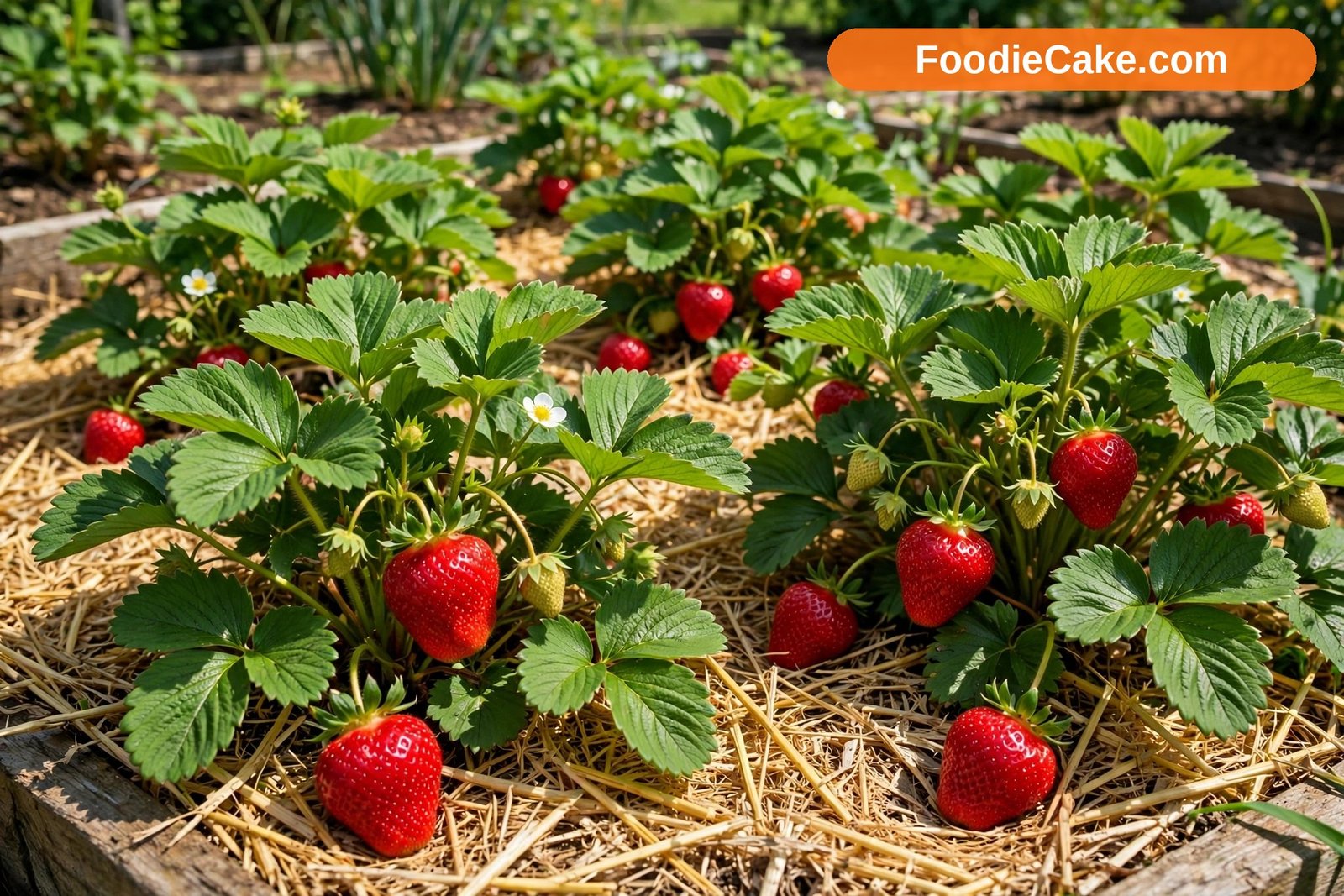
Choosing your type decides when you harvest and how you manage the bed, so it is worth pausing here before you order plants on a cheerful spring morning. All strawberries fall into three groups based on how they respond to day length, and most home gardeners do best with a mix or with the type that matches how they like to eat.
| Type | Harvest pattern | Varieties to know | Best for |
|---|---|---|---|
| June-bearing | One big crop over two to three weeks in late spring to early summer | ‘Earliglow’ (early, excellent flavour, zones 4–8); ‘Jewel’ (later, large glossy berries, zones 4–8) | Jam, freezing, and one glorious glut. Flower buds form in the short days of autumn, so first-year care matters. |
| Everbearing | Two main crops — early summer and late summer into autumn — with lighter picking in between | ‘Ozark Beauty’ (long-standing favourite, zones 4–8); ‘Quinault’ (widely grown in containers and milder areas, zones 4–8) | Gardeners who would rather pick a punnet a week than twenty punnets in a fortnight. |
| Day-neutral | Flowers and fruits whenever temperatures are moderate, roughly 35°F to 85°F (2°C to 29°C), pausing in the worst summer heat | ‘Seascape’ (large, flavourful fruit, zones 4–9, excellent in containers); ‘Albion’ (firm, sweet, conical berries, some disease resistance, zones 4–9); ‘Tristar’ (worth knowing for flavour) | Berries from late spring through autumn, and the best choice for pots and baskets. |
Whichever type you choose, buy certified disease-free plants from a reputable source rather than accepting a handful of runners from a tired old bed. Virus problems build up in strawberry stock over generations, and clean plants establish faster and crop better. It is one of the few places in this whole project where spending a little more genuinely changes the result.
The Strawberry Year at a Glance
Strawberries reward gardeners who think a season ahead, because much of next year’s crop is decided this autumn. Keep this calendar on the fridge for your first year.
| When | What happens | What you do |
|---|---|---|
| Autumn | June-bearing flower buds form in the short days; plants settle in before winter. | Water in drought and keep weeds off the crowns — this is quietly next year’s harvest. In mild zones 8–10, autumn is also a good planting time. |
| Early spring | Growth restarts; bare-root crowns can go in as soon as soil can be worked. | Plant bare-root crowns a few weeks before the last frost in cooler zones 3–7. Tidy winter debris and mulch with compost. |
| Late spring | Flowering, then fruit. June-bearers planted this spring should have their flowers pinched off in year one. | Water at the base, tuck straw under the fruit as it forms, and net against birds before the first berry colours. |
| Summer | Peak picking, runners everywhere, and heat stress in the worst weeks. | Pick every day or two at the peak. Decide per plant: fruit or runners, not both. In zones 9–10, afternoon shade helps day-neutrals keep fruiting. |
| After the June crop | June-bearers finish and need renovation to build next year’s buds. | Cut old foliage back to just above the crowns, clear tired straw, feed lightly, and water if dry. Fresh leaves push through within a week or two. |
Spot, Soil and Timing
Strawberries need full sun — at least six hours of direct light a day, and eight to ten if you can manage it. Less sun means fewer flowers, paler fruit, and berries that never quite sweeten up. Pick a spot with good air circulation but some shelter from harsh wind, and avoid low frost pockets, because strawberry flowers are easily damaged by late spring frost.
Just as important is what grew there before. Avoid planting strawberries where tomatoes, potatoes, peppers, or other strawberries grew in the last few years, because they share soil-borne diseases such as verticillium wilt. A fresh bed, a raised bed with new mix, or containers sidestep the problem entirely.
Timing depends on your climate and the form of plant you buy. Bare-root crowns are usually planted in early spring, as soon as the soil can be worked and after checking your local frost dates — commonly four to six weeks before your last spring frost in cooler zones 3–7. In mild zones 8–10, autumn planting is popular, letting plants establish through a cool winter for a spring crop. Potted plants are more forgiving and can go in through spring. Day-neutral and everbearing types planted in spring can crop in their first season; June-bearers planted in spring are usually asked to wait, for reasons explained in the planting step below.
Getting the Soil Right
Strawberries like soil that is fertile, slightly acidic, and — above all — drains freely while holding enough moisture for their shallow roots. Aim for a pH between 5.5 and 6.8; a simple soil test is worth doing once, because strawberries sulking in very alkaline soil often show pale, yellowing leaves even when fed. Good preparation here does half the work of the whole season, and the principles in our guide to the best soil for vegetable gardening apply just as well to a strawberry bed.
Dig the bed over and remove perennial weeds carefully, because weeding around shallow strawberry roots later is fiddly and disruptive. Work in plenty of well-rotted compost or manure — a bucketful per square yard is a sensible guide — along with a balanced organic fertiliser if your soil is poor. On heavy clay, raise the bed a few inches or grow in a raised bed so crowns never sit in winter wet. On very sandy soil, extra compost matters even more, because nutrients and water will otherwise race straight through.
If you are growing in containers, use a good-quality peat-free multipurpose mix lightened with a little perlite or grit for drainage. A strawberry planter with side pockets looks charming, but plants in small pockets dry out fast; many gardeners get better crops from wide, deep pots or grow bags where each plant has real root room. Give each plant a pot of at least 8 to 10 inches across, or plant three to four plants in a 12- to 14-inch container.
Planting the Crown: The Detail That Decides Everything
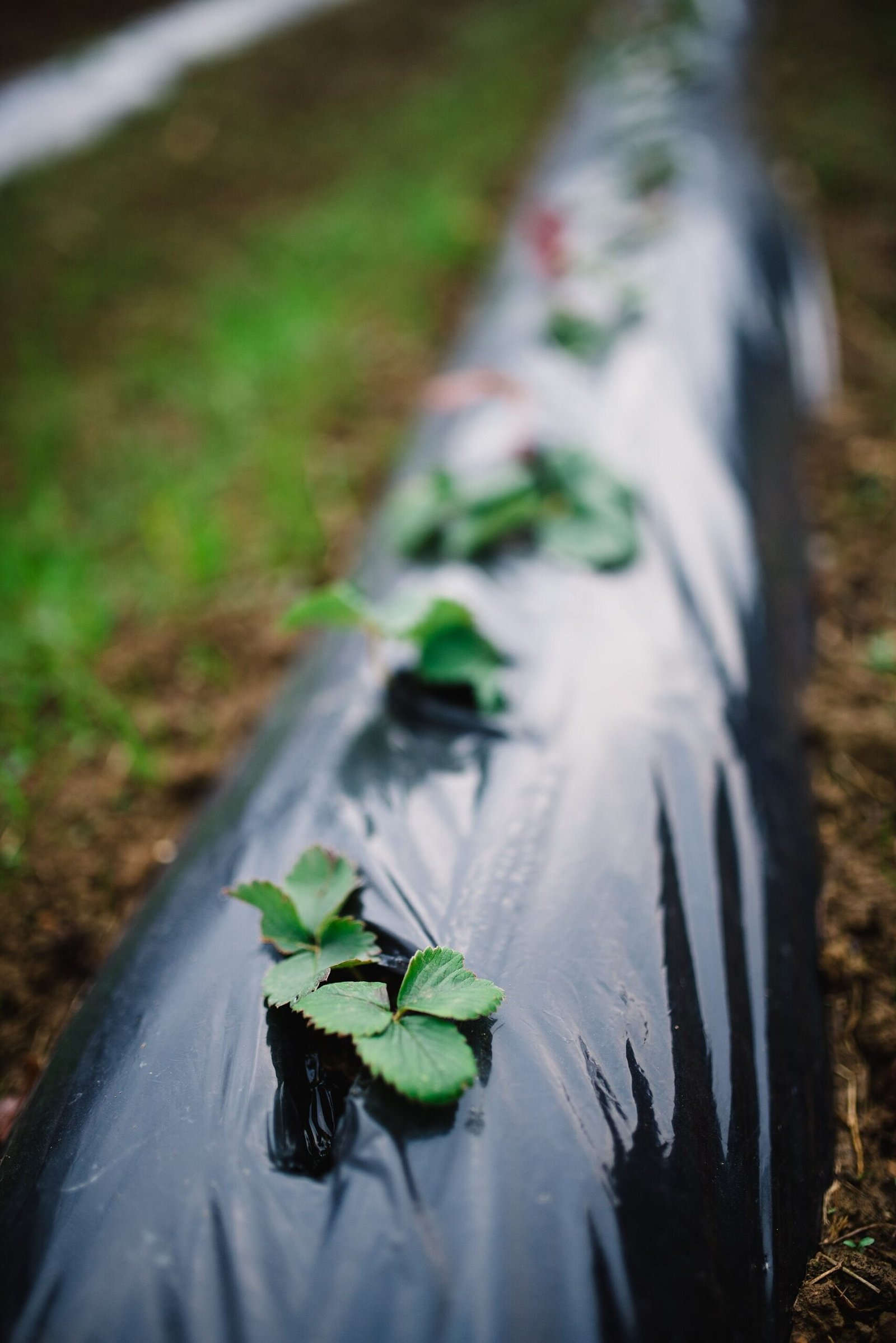
This is the step that makes or breaks a strawberry bed, and it hinges on the crown — the thick, stubby base where leaves emerge above and roots dangle below. Plant so the crown sits exactly at soil level. Too deep, and the crown rots, especially in wet weather. Too shallow, and the roots dry out and the plant rocks in the wind and never establishes. When you think you have it right, water the plant in and check again, because watering often settles soil and quietly drags a crown below the surface. The RHS strawberry guide gives the same warning in the same words: if the crown is planted too deeply it will rot, and if it is too shallow the plant will dry out.
For bare-root plants, soak the roots in water for about an hour before planting if they look dry, trim any roots that are excessively long or damaged to about 4 to 5 inches, and spread the roots out in the planting hole like a little fan over a small mound of soil. Firm the soil gently around them so there are no air pockets, then water well.
Spacing matters more than enthusiasm suggests. Plant June-bearing varieties about 18 inches apart in rows 3 to 4 feet apart if you plan a traditional matted row, or 12 inches apart in a more controlled bed. Everbearing and day-neutral types can sit 9 to 12 inches apart in all directions. In a small home bed, a simple grid at 12-inch spacing, with runners managed deliberately, is far easier to keep productive than a free-for-all. Mark where each plant is before the runners start flying; in six weeks you will not remember.
For June-bearing plants bought in spring, pinch off the flowers in the first year. It feels cruel. Do it anyway. A plant that spends its first season building crowns and roots will crop far more heavily in its second and third years. Everbearing and day-neutral plants need only have their first flush of flowers removed until early summer, after which you can let them fruit in the same year they were planted.
Water, Mulch and Food
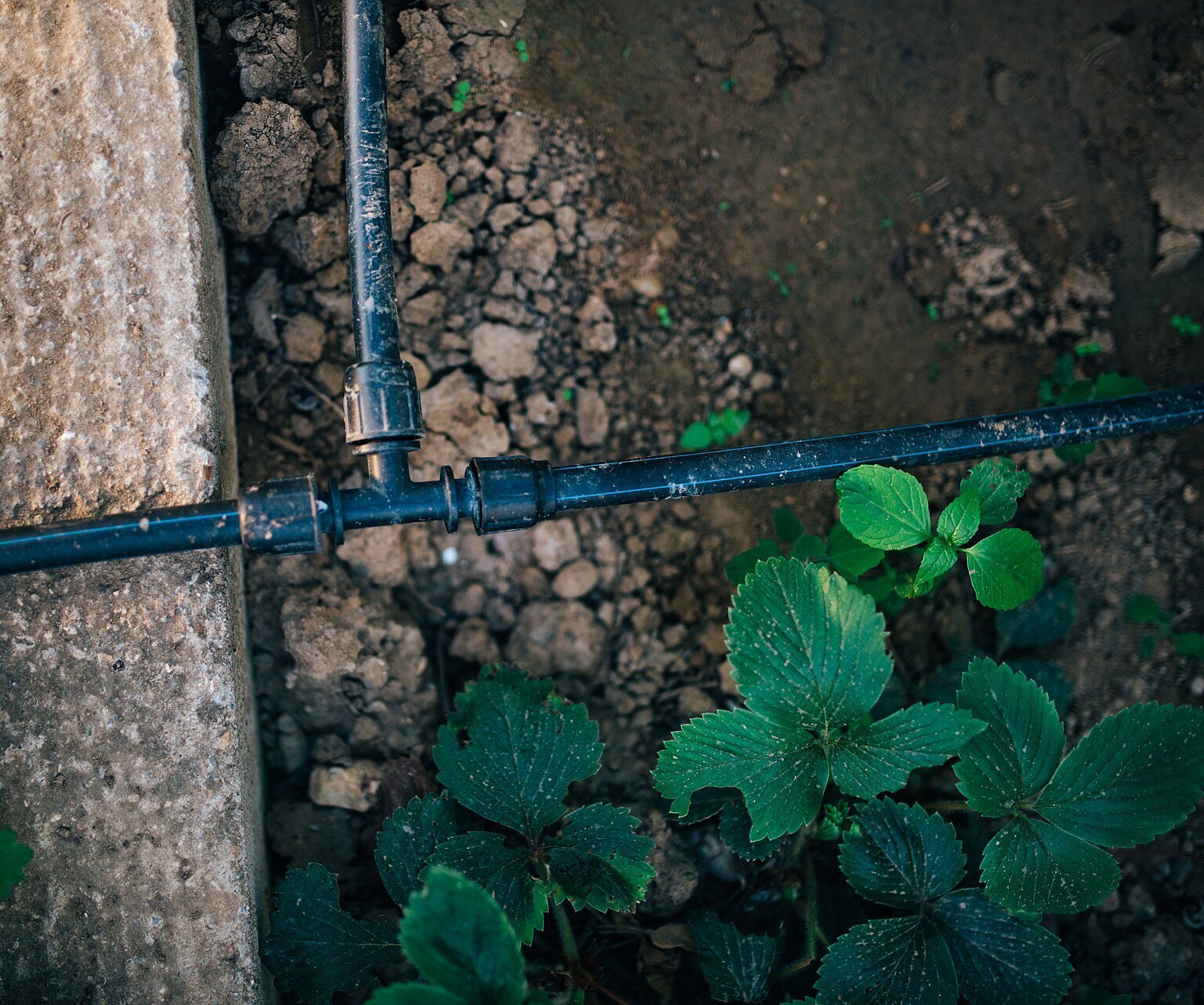
Strawberry roots are shallow — most sit in the top few inches of soil — so plants dry out quickly, especially in pots and during fruit formation. Aim for roughly 1 to 1.5 inches of water a week, more in hot, dry spells, and water at the base of the plants in the morning where possible. Wet foliage sitting overnight invites gray mold, the fuzzy enemy of every ripening berry. Drip irrigation or a soaker hose is ideal in beds; a watering can aimed at the soil, not the leaves, works fine at home scale.
Mulch is your second line of defence and the reason strawberries have their name. A layer of clean straw tucked under the leaves as fruit begins to form lifts berries off the soil, keeps them clean, reduces rot, and slows splash that spreads disease. About 2 to 3 inches of straw, or a sheet of weed-suppressing membrane in larger beds, does the job. In containers, a lighter mulch of straw or bark over the surface helps hold moisture between waterings.
Feeding should be steady rather than extravagant. A balanced organic feed in spring as growth starts, and another light application after the main June harvest for June-bearers, keeps plants productive. Day-neutral and everbearing types, which fruit over a long season, appreciate little and often — a liquid feed every couple of weeks while they are flowering and fruiting. Avoid heavy doses of high-nitrogen fertiliser, which push out soft, leafy growth that shades the fruit and attracts aphids. If you are setting up pots on a patio or balcony for the first time, the layout and drainage advice in our guide on how to start a container garden will help you place them where watering is easy rather than a chore.
Runners: Free Plants or Stolen Fruit?
Strawberries reproduce by runners — long stems that arc out from the mother plant and root a baby plant, called a daughter, wherever a node touches soil. Runners are both a gift and a distraction. Every runner a plant sends out is energy not going into fruit, so how you handle them depends on your goal for the season.
If you want maximum fruit this year, especially from day-neutral varieties, snip runners off as they appear. If you want free plants to expand the bed or replace older ones, choose a few strong runners per plant, peg the daughter down into the soil or into a small pot of compost sunk beside the mother, and keep it watered. Once it has rooted firmly — usually after a few weeks — cut the cord to the mother and move or leave it as a new independent plant.
A strawberry plant is at its best in its second and third years. After that, yields drop and disease builds up, no matter how fond of it you have become. Plan to renew the bed on a rolling basis: replace roughly a third of your plants each year with fresh runners you rooted yourself or with new certified stock, and retire the oldest crowns to the compost. In practice, many home growers simply start a fresh bed every three to four years in a different spot, which also neatly solves the crop rotation problem from the first step.
After a June-bearing crop finishes, tidy the bed. Cut back old foliage to just above the crowns, clear away straw that has become matted and tired, feed lightly, and water if the weather is dry. This renovation looks drastic for a week, then fresh leaves push through and the plants build the buds that become next spring’s flowers.
Picking, Protecting and Storing
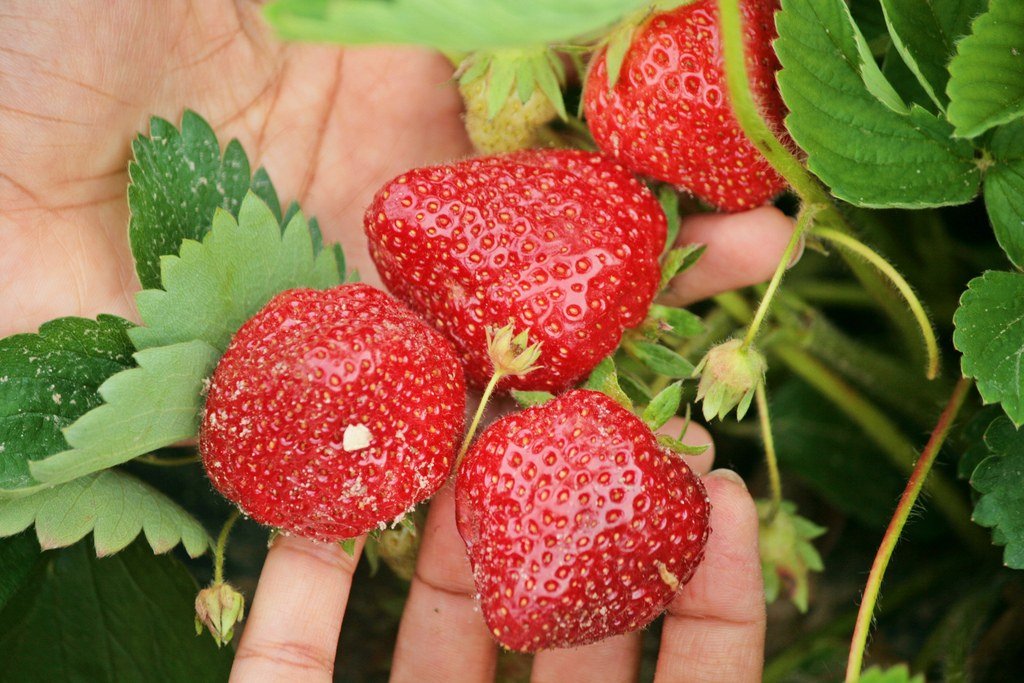
Harvest is the easy part to do well and the easiest to time badly. Strawberries do not ripen further after picking, so a pale-shouldered berry will stay pale-shouldered on the counter. Wait until the fruit is fully red all over, including around the tip, then pick in the cool of the morning when flavour and firmness are at their best. Pinch or snip the stem just above the berry rather than pulling, so you do not tear the crown or yank out a plant that is only loosely rooted. At the peak of the season, check the bed every day or two; ripe fruit hidden under leaves is exactly the fruit slugs find first.
Protection is mostly about beating other creatures to a fair contest. Birds will strip a bed with impressive focus as soon as colour appears, so cover plants with netting supported on hoops or canes so it does not rest on the fruit. Slugs and snails graze at night, especially in damp weather; straw mulch helps, but also remove hiding places near the bed, pick after dark with a torch if numbers are high, and use barriers or traps you are comfortable with. Vine weevil can be a problem in containers — look for notched leaf edges and, if a potted plant wilts despite wet soil, check the roots for the creamy grubs.
Pick over the bed and remove any moldy or damaged berries promptly, even ones you would never eat. Leaving a rotting berry nestled against two sound ones is how one spoiled fruit becomes five by the weekend.
Freeze your surplus properly. Hull the berries, freeze them in a single layer on a tray until solid, then bag them. That way a June glut becomes smoothies and sauces in November instead of one solid red brick. Clemson Extension’s strawberry guide agrees on the method — freeze fully ripe, firm berries in a single layer first — and notes that berries do not continue to ripen after harvest, so only freeze fruit picked fully red.
No Bed? Pots, Baskets and Small Spaces
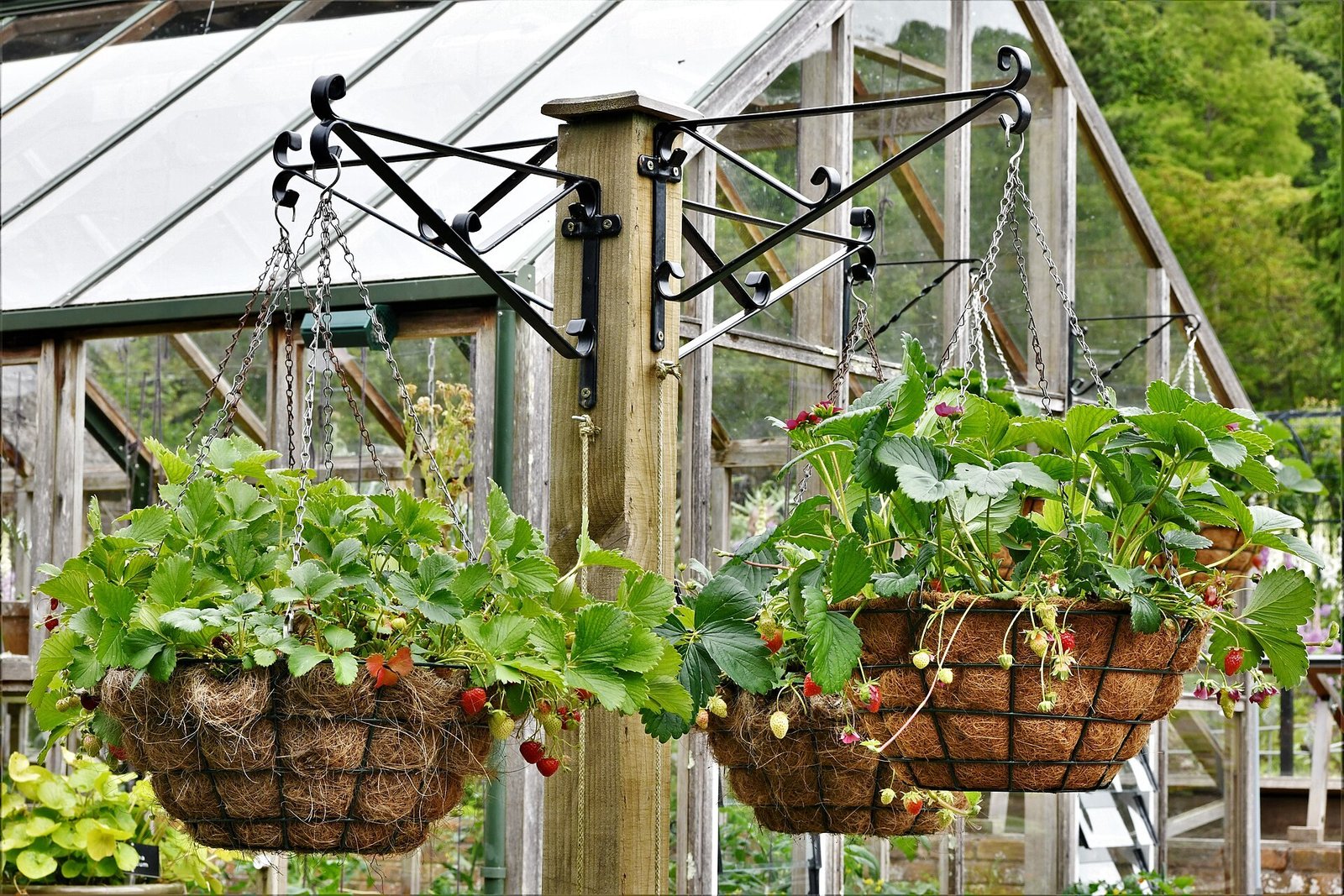
If you have no bed at all, you can still grow an excellent crop. In some ways containers are easier: no soil-borne disease history, no bending to ground level, and you can chase the sun around a small patio. Day-neutral varieties such as ‘Seascape’ and ‘Albion’ are the best choice here because they fruit steadily over a long season from a compact plant.
Use a container at least 8 to 10 inches deep with generous drainage holes, fill it with the mix described in the soil section, and plant at the same crown depth as in the ground — container growers bury crowns just as often as bed growers do. Hanging baskets are lovely for trailing fruit over the edge, but they dry out extremely fast in wind and sun, sometimes needing water twice a day in summer; a moisture-retentive mix and daily checking are not optional. Feed container plants more regularly than bed plants, because every watering washes a little goodness out of the pot.
In cold-winter areas in zones 5 and below, potted strawberries need protection once they are dormant: move pots into an unheated garage or against a sheltered wall and insulate them, because roots in a frozen pot are far more exposed than roots in the ground. In zones 6–9 most container plants overwinter outside with just that wall-side shelter.
A few small habits add up over a season. Pick a few varieties with different seasons rather than one big planting of a single type. A June-bearer for jam, plus a day-neutral for grazing through summer and autumn, turns a three-week event into a five-month habit — and spreads your risk if one variety dislikes a particular spring. Chill and heat both shape your crop, so work with them: strawberry flower buds for June-bearers form in autumn’s short days, which means autumn care is quietly next year’s harvest, and in hot climates in zones 9–10, afternoon shade during the fiercest weeks can keep day-neutral plants fruiting instead of sulking. Keep a simple rotation and a date on everything — label varieties, note planting years on the end of the bed or on pot labels, and you will know at a glance which crowns are due for replacement. Most strawberry disappointment in year three is simply old plants being asked to do a young plant’s job. And leave a few overripe berries on a saucer away from the bed for butterflies and other insects if you like — just not in the bed itself, where they invite mold. Finally, taste before you judge a variety. Flavour varies with sun, soil, and how ripe you dared to leave the fruit. A variety that tastes ordinary picked pink may be superb picked fully red, so give any new plant one proper season before deciding it is not for you.
Reading the Warning Signs
Strawberries are honest about what is wrong — you just have to read the signs. Start here before reaching for a spray.
| What you see | Most likely cause | What to do |
|---|---|---|
| Plants dying after planting; crowns buried or exposed | Crown planted at the wrong depth — the classic strawberry mistake | Recheck crowns after the first few waterings and after heavy rain. Gently lift and replant any that have sunk while plants are still young. |
| Fuzzy gray growth on ripening fruit | Gray mold (botrytis), worst in cool, wet, crowded conditions | Space plants for airflow, water at the base, mulch to prevent splash, and pick off affected fruit the moment you see it — do not drop it in the bed. |
| Small, sour berries in year two | Overcrowding from unchecked runners, too little sun, or old plants | Be decisive each summer: fruit or runners, not both from the same plant. Thin runners, check sun, and renew crowns every three to four years. |
| Pale, curled leaves in dry spells | Powdery mildew, or roots in waterlogged soil | Fix spacing, drainage, or watering first rather than reaching for a spray. |
| New bed fails with stunted, reddening plants | Soil-borne disease from previous strawberry or potato family crops | Move to fresh soil or containers rather than replanting the same spot and hoping. |
| Berries taste bland | Too little sun, over-watering, over-feeding, or picking too early | Look first at sun and ripeness before blaming the variety. Heavy nitrogen that pushes leaves over fruit can also dull flavour. |
Quick Answers
When is the best time to plant strawberries?
Bare-root crowns go in during early spring in cooler zones, typically a few weeks before the last frost once soil can be worked, and in autumn in mild zones 8–10. Potted plants can be planted throughout spring. Always check your local frost dates, because a newly planted crown tolerates cold soil better than a plant in full leaf tolerates a hard late frost.
How long before strawberry plants produce fruit?
Day-neutral and everbearing plants, with only their earliest flowers removed, can fruit in their first season, usually a few months after spring planting. June-bearing plants planted in spring are normally de-flowered for their first year and give their first real crop the following spring — a wait that pays back in much heavier harvests in years two and three.
Can I grow strawberries from seed instead of crowns?
You can, especially alpine strawberries, but seed is slow — plants may take many months to reach fruiting size and usually crop lightly in their first year. Most home growers plant bare-root crowns or young potted plants of named varieties such as ‘Seascape’ or ‘Albion’, which crop sooner and grow true to type. Save seed sowing for patient experimenting, not for your main crop.
How often should I water strawberries in pots?
Check daily in warm weather. Container strawberries need water whenever the top inch of mix feels dry, which in summer can mean every day, and in a heatwave or a hanging basket, twice a day. Water thoroughly until it runs from the drainage holes, at the base of the plant, and never let pots sit permanently in water.
Why are my strawberries small and sour?
The usual causes are overcrowding, too little sun, old plants past their productive years, or picking too early. Thin runners, make sure plants get at least six to eight hours of sun, renew crowns every three to four years, and leave fruit on the plant until it is fully red. Heavy nitrogen feeding that pushes leaves over fruit can also dull flavour.
Do strawberries come back every year?
Yes, strawberries are perennials and the same crown will regrow for several years in zones 3–10 depending on variety and winter protection. Productivity peaks in the second and third years and then declines, so treat each plant as a three- to four-year project with runners or fresh stock ready to replace it rather than expecting one planting to last forever.
Growing strawberries at home succeeds on a handful of simple things done carefully: sun, free-draining fertile soil, a crown planted at exactly soil level, steady water at the roots, and the discipline to manage runners and replace old plants. None of it is complicated, and most of it is quickly learned by doing it once.
Start modestly — a dozen healthy plants of a type that suits how you eat, whether that is a June glut for jam or day-neutral berries from pots all summer. Pick them ripe, eat the first one standing in the garden, and notice how little resemblance it bears to the ones in a plastic box. Next season’s bigger bed will plan itself.
Sources
- Royal Horticultural Society — How to grow strawberries (rhs.org.uk)
- Clemson Cooperative Extension, Home & Garden Information Center — Strawberry Basics (hgic.clemson.edu)