How to Grow Cucumbers in Pots
How to grow cucumbers in pots is a question a lot of balcony and patio gardeners ask after their first disappointing plant, and the honest answer is encouraging: cucumbers take to containers very well, as long as you respect three things they care about — warmth, water, and room for their roots. Give a cucumber plant a big pot, a sunny spot, and a steady supply of moisture, and it will reward you with more fruit than most people expect from a single container.
Cucumbers are not a windowsill crop and they are not a crop for a tiny pot. They grow fast, their leaves are large, and a thirsty plant in full sun on a hot afternoon can drink a surprising amount. That is the trade-off of container growing. You get to place the plant in the sunniest, most sheltered corner you have, you can move it if the weather turns, and you avoid many soil problems of open ground. In return, you have to water faithfully. Skip a day in a heatwave and the plant will tell you about it.
No special equipment is needed beyond a large pot, a trellis or cage, and a watering can you will actually use every day in hot weather. This guide starts with the one decision that shapes everything else — which type of cucumber to grow — and then follows the plant through the season.
Bush or Vining? Pick Your Plant First
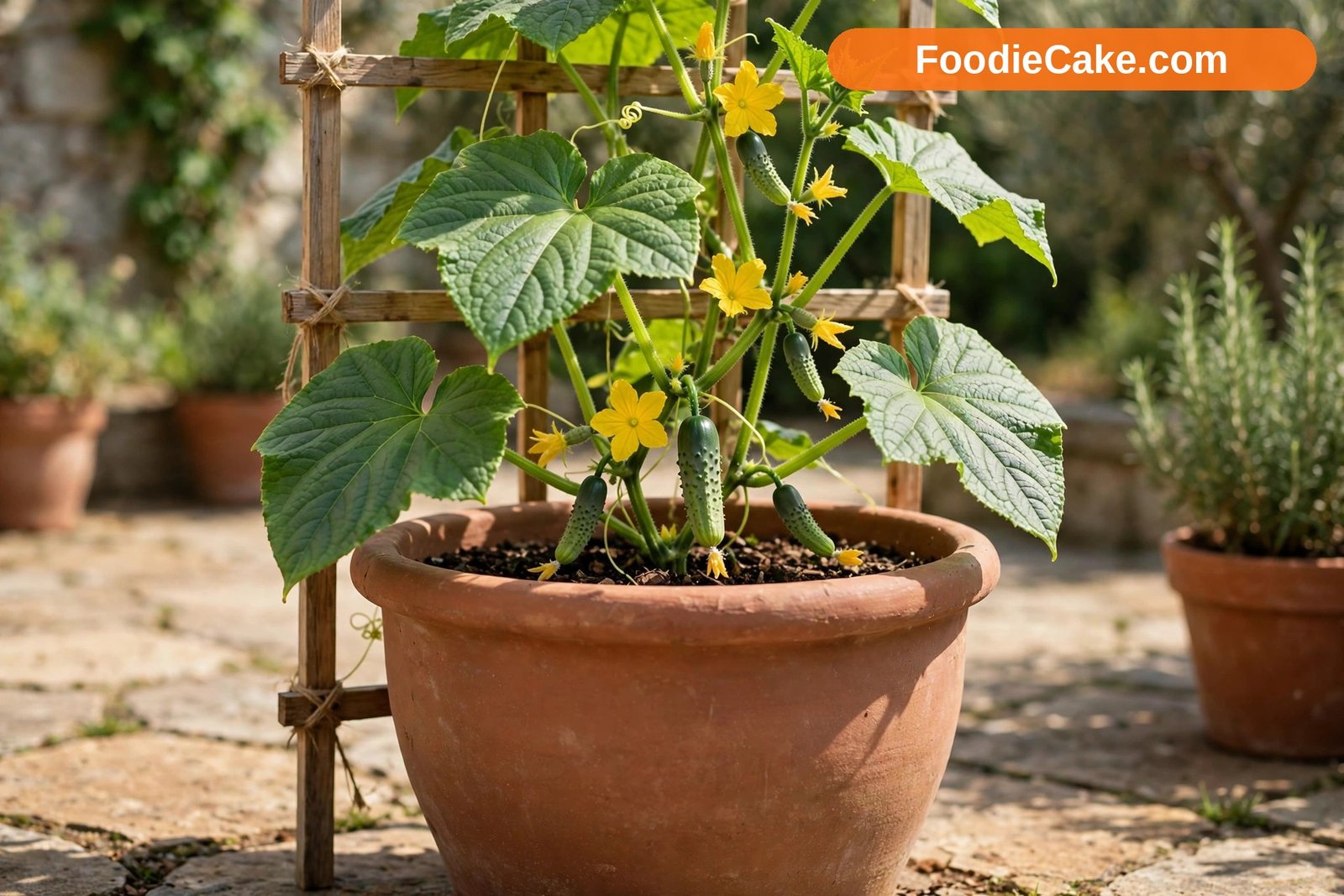
Variety choice decides how much work your cucumber plant will be. There are two broad groups to think about: bush or compact types that stay relatively small, and vining types that climb and need support but often produce more fruit from the same pot footprint.
| Type | Varieties | What you get |
|---|---|---|
| Bush / compact | Spacemaster, Bush Champion, Patio Snacker, Salad Bush, Bush Pickle | Full-size slicing cucumbers on compact plants that trail only modestly over the pot edge; snack-size fruit on very tight plants; good disease resistance in some types |
| Vining | Straight Eight, Marketmore 76, Lemon cucumber | The classic cucumber experience; a single vining plant trained up a trellis can be remarkably productive, and picking is easier because fruit hangs clean and visible |
| Parthenocarpic | Tennessee and other greenhouse types | Set fruit without pollination, which helps in enclosed spaces; for an outdoor pot the standard outdoor varieties usually perform best and taste excellent |
Bush and compact varieties were bred for containers and small gardens. Spacemaster is a long-standing favourite, producing full-size slicing cucumbers on plants that stay much more compact than standard vines. Bush Champion is another reliable slicing type with a tidy habit and good disease resistance for a bush variety. Patio Snacker does what its name suggests — it gives you crisp, snack-size fruit on a compact plant that still benefits from a short support, and it is a good choice where space is tight. Salad Bush and Bush Pickle are also worth a look if you see them in catalogues, particularly if you want picking cucumbers for jars rather than slicers for salads.
Check the seed packet for the words compact, bush, or patio if space is your priority, and check the expected vine length. A variety described as vigorous needs a real trellis and a bigger pot. Do not believe a label that promises a full-size vining plant will thrive in a small container. It will survive for a while. Thriving is different.
Think also about what you want to eat. Slicing cucumbers are best eaten fresh and picked at a moderate size. Pickling types are meant to be harvested small and firm and stay crisp. If you mostly want salads and sandwiches, grow a slicer. If you want both, one pot of each habit — a bush slicer and a vining pickler — is a satisfying combination for a sunny patio. If containers are new to you generally, our guide to the best vegetables to grow in pots is a useful companion for choosing what else will thrive alongside your cucumbers.
The Pot: Five Gallons Is the Floor
Pot size is where honesty matters most. A cucumber plant needs, at minimum, a 5-gallon container — roughly 19 litres — with a depth of at least 30 cm. That is a minimum for one bush plant, not an ideal. A 7- to 10-gallon pot, roughly 25 to 38 litres, gives a vining plant a much better buffer against drying out and will almost always produce a healthier plant and a longer harvest. If you want two plants in one container, go larger again, a 15-gallon grow bag or a wide half-barrel style planter, and be prepared to water very consistently. Crowding two thirsty vines into a single 5-gallon pot is the most common reason container cucumbers fail, and it is entirely avoidable.
Drainage is non-negotiable. The pot must have holes in the base. Cucumbers love water, but their roots rot quickly in compost that stays saturated with no way for excess to escape. Stand the pot on small feet, bricks, or a saucer with room for drainage, especially on a balcony where you may want to catch run-off. A thin layer of coarse material at the very bottom is less important than simply having clear holes and a free-draining mix, so spend your effort there rather than on elaborate drainage layers.
Material affects how often you water. Terracotta looks lovely and is stable in wind, but it wicks moisture through its walls and dries out fastest, which means daily — sometimes twice-daily — watering in hot weather. Plastic pots hold moisture longer and are lighter to move, which matters when a filled 10-gallon pot is surprisingly heavy. Fabric grow bags are an excellent practical choice. They drain freely, their roots are naturally air-pruned at the edges, and they fold away at the end of the season. Their downside is faster drying than plastic, so place them where you will notice a wilting plant quickly. Dark-coloured pots in full sun can heat the root zone a lot on a hot afternoon. If your patio is a sun trap, a lighter-coloured pot, or shading just the pot while the leaves stay in sun, can reduce root stress.
Whatever you choose, fill it where it will live. A large pot full of damp compost and a climbing plant on a trellis is not something you want to carry across the garden later.
The Mix and the First Fill
Use a good-quality, peat-free or peat-based multi-purpose potting mix as your base, not garden soil dug from a bed. Garden soil in a pot compacts, drains poorly, and can carry disease. It behaves completely differently in a container than it does in open ground. A bagged potting mix is formulated to hold air and moisture together, which is exactly what cucumber roots need.
To improve moisture holding and structure, mix in a few handfuls of garden compost or well-rotted manure if you have it, and a handful or two of perlite or vermiculite if your mix tends to stay heavy. Cucumbers are hungry plants, so mixing a slow-release general fertiliser into the compost at planting time, following the rate on the product label, gives seedlings a steady start. Avoid piling in strong fresh manure or a heavy dose of fertiliser in direct contact with young roots. More is not better at planting, and scorched roots set a fast-growing plant back badly.
Fill the pot to a few centimetres below the rim. That lip matters. It stops water and compost washing straight over the edge when you water, and it leaves room for a mulch layer later. Water the filled pot thoroughly once before sowing or transplanting, let it drain, and top it up if the mix settles. Starting with evenly moist compost makes the first week much easier for both seeds and transplants.
Sowing and Transplanting Without the Shock
Cucumbers are warm-season plants with no frost tolerance at all. A single frosty night can kill an unprotected plant, and cold, wet soil can rot seed before it germinates. Timing therefore depends on your zone and your last frost date, and it is better to be a week late than a week early.
As a general guide, sow or transplant outdoors only after all danger of frost has passed and night temperatures stay reliably above about 10°C, ideally warmer. In zones 8 to 10, that is often mid to late spring. In zones 5 to 7, it is commonly late spring, and in cooler parts of zone 5, early summer transplanting is safer than rushing. In zones 3 and 4, start plants indoors and transplant in early summer into your warmest, most sheltered spot, choosing a faster-maturing variety. Soil temperature matters as much as air temperature. Seeds germinate fastest in warm soil, roughly 20°C and above, and can sulk or rot in cold soil even if the air feels mild. Clemson Extension notes that cucumber seed will not germinate at soil temperatures below 50°F (10°C) and that soil should reach 70°F (21°C) before planting — see Cucumber | Clemson Cooperative Extension.
You have two good options. Direct sowing into the final pot is simple and avoids transplant shock, which cucumbers dislike. Sow two or three seeds about 2 cm deep in the centre of the pot, water gently, and keep the compost moist. When seedlings have their first true leaves, snip the weakest at soil level with scissors rather than pulling them, so you do not disturb the roots of the plant you are keeping. Starting in small pots indoors two to three weeks before your transplant date gives you a head start in short seasons. Sow one seed per small pot, keep them somewhere warm to germinate, then grow them on in bright light so they stay sturdy rather than leggy. Harden them off over a week — outside by day, in at night — before they live outdoors full time, and handle the root ball as little as possible at planting.
Plant transplants at the same depth they were growing in their pot, firm the compost gently, and water in well. If a cold night is forecast in the first week, cover the plant in the evening with a large cloche or a layer of fleece and remove it in the morning. That small effort protects the most vulnerable stage of the plant’s life.
Sun, Shelter and the Warmest Corner
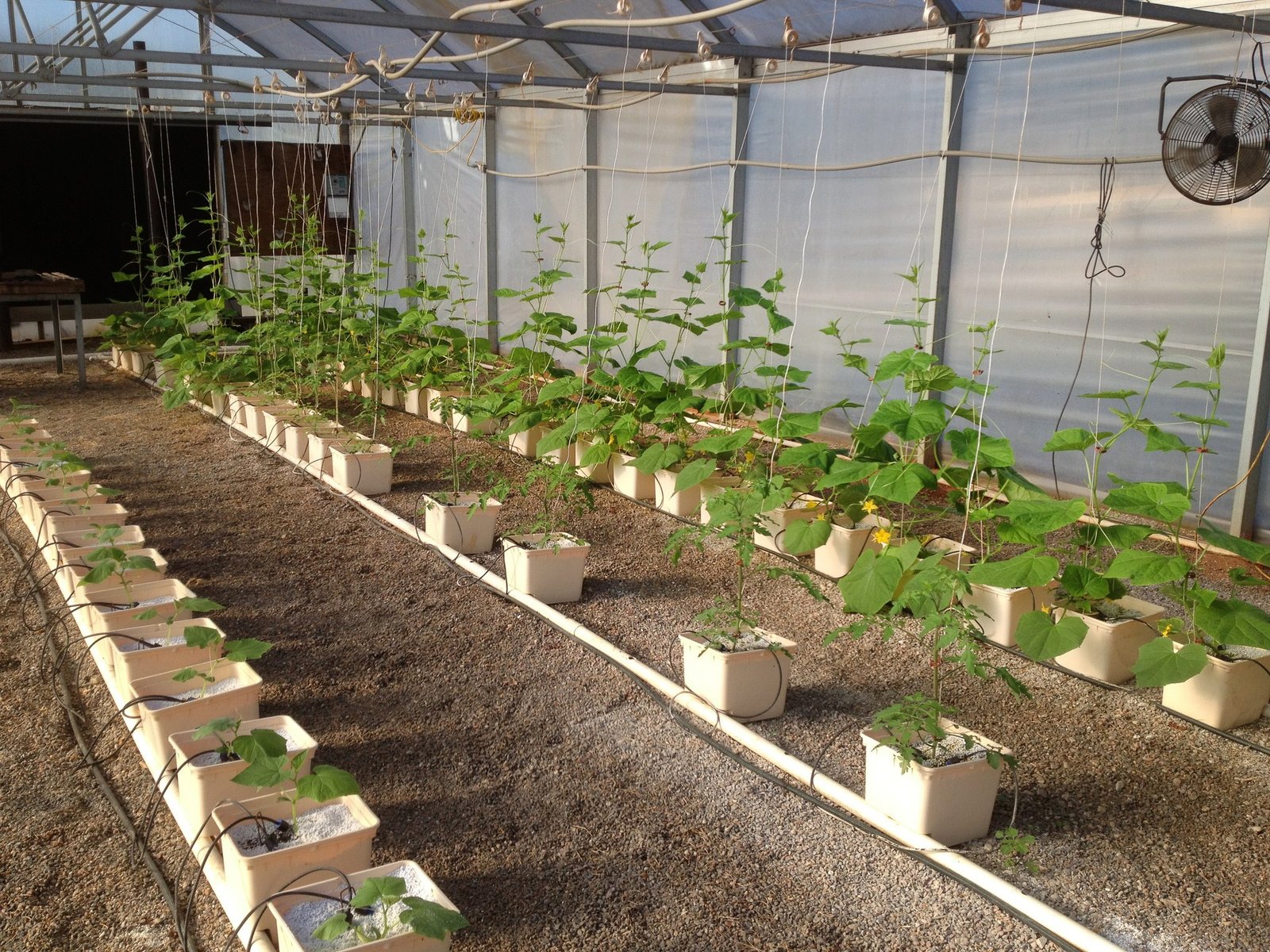
Cucumbers want full sun — at least six hours of direct sun a day, and more is better if you can water enough to match it. On a balcony, that usually means the sunniest rail or corner, not the convenient shady spot beside the door. A plant in too little sun grows pale, stretches towards the light, flowers poorly, and produces few fruit. If you only have a spot with morning sun and afternoon shade in a very hot climate, that can actually work well, because fierce afternoon heat stresses pots quickly. In cool climates, take all the sun you can get.
Shelter from strong wind matters almost as much. Large cucumber leaves tear in persistent wind, and a rocking vine works its roots loose in the compost. A spot against a sunny wall or fence gives you warmth reflected back onto the plant, wind protection, and often a slightly longer season at both ends. Just leave enough space around the pot for air to circulate, because still, damp air around crowded leaves invites mildew. That balance — sheltered but not stuffy — is what you are aiming for.
Remember that pots heat up and cool down faster than the ground. In a heatwave, move a pot a short distance into very light afternoon shade if the plant wilts despite wet compost, or shade the pot itself. At the start and end of the season, that same mobility is your advantage. You can chase the sun as its angle changes in autumn and squeeze out a few more fruit.
Watering: The Habit That Decides Flavour
If there is one section of this guide to follow closely, it is this one. Consistent watering is the difference between crisp, mild cucumbers and bitter, disappointing ones. A cucumber fruit is mostly water, and the plant grows so fast in warm weather that uneven moisture is a genuine stress, not a minor inconvenience. Stress from drought, followed by a flood of water, is closely linked to bitter fruit and to misshapen cucumbers that swell at one end and stay narrow at the other.
Water deeply and regularly, aiming to keep the compost evenly moist throughout, never bone dry and never permanently soggy. In warm weather, a large pot in full sun will usually need water every day, and smaller pots or fabric bags may need it morning and evening during a heatwave. Check with a finger pushed a few centimetres into the compost. If it feels dry at that depth, water. If it is still moist, wait and check again later. Guessing from the dry-looking surface alone leads to a lot of unnecessary stress, because the surface dries long before the root zone does.
Water at the base of the plant, in the morning if you can. Morning watering gives leaves that do get splashed time to dry in the sun, which reduces disease pressure, and it charges the pot with moisture before the heat of the day. Try to keep water off the foliage as a habit. A mulch of straw, shredded leaves, or even a layer of compost on the surface of the pot slows evaporation, keeps the compost temperature more even, and stops soil splashing onto lower leaves when you water. In mid-season, when the vine is large and fruiting, do not let up.
Up the Trellis: Training the Vine
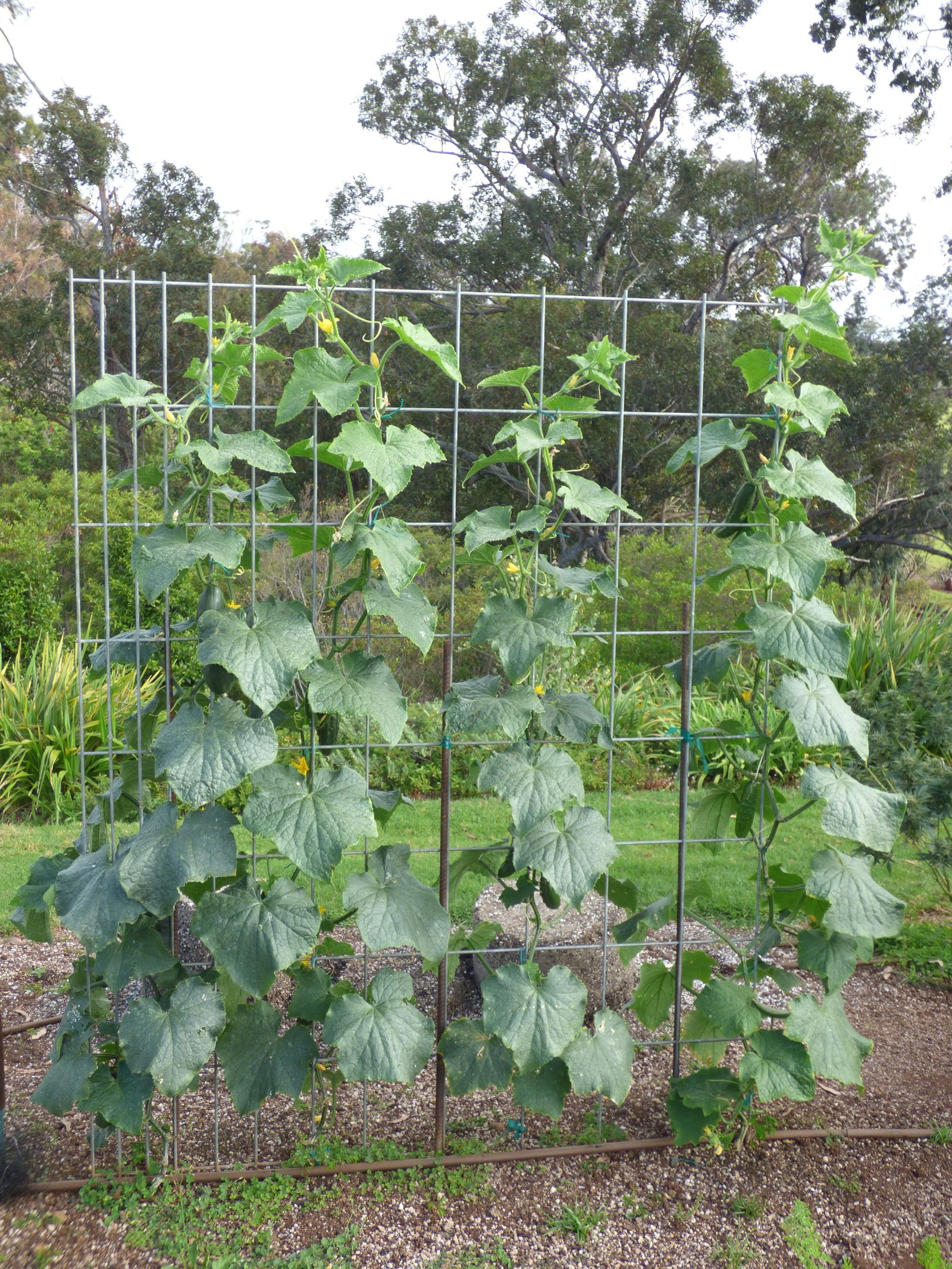
Vining cucumbers need support, and giving it to them early makes everything else easier. A trellis, a sturdy tomato cage, a section of wire mesh fixed to a wall, or even a tripod of bamboo canes tied at the top will all work, as long as the support is anchored firmly enough to hold a heavy, fruit-laden vine in a summer breeze. Push the support into the pot at planting time, not weeks later, so you do not drive canes through established roots.
Guide the main stem to the support as it grows. Cucumbers produce tendrils that grip on their own, but young vines often wander along the ground first. A soft tie, loosely looped in a figure of eight around stem and support, encourages them upwards without cutting into the stem. Once the vine is climbing, you can pinch out side shoots if you want a single tidy stem against a narrow trellis, or let two or three side shoots develop if your support is wide. There is no single correct method. A tidy single stem suits a small balcony trellis. A slightly bushier plant suits a wide cage. What matters is that fruit hangs where air and light reach it, because cucumbers left to ripen hidden in damp shade at soil level are more likely to yellow, rot at the blossom end, or be found a week too late and oversized.
Bush varieties need much less help. A short cane or a small cage stops the plant flopping over the edge of the pot under the weight of fruit and keeps leaves off wet compost. Even compact types appreciate that small kindness, and picking is cleaner for it. The RHS cucumber guide recommends putting supports in place at planting time and training stems up early — see How to grow cucumbers | RHS.
Flowers, Bees and Hand Pollination
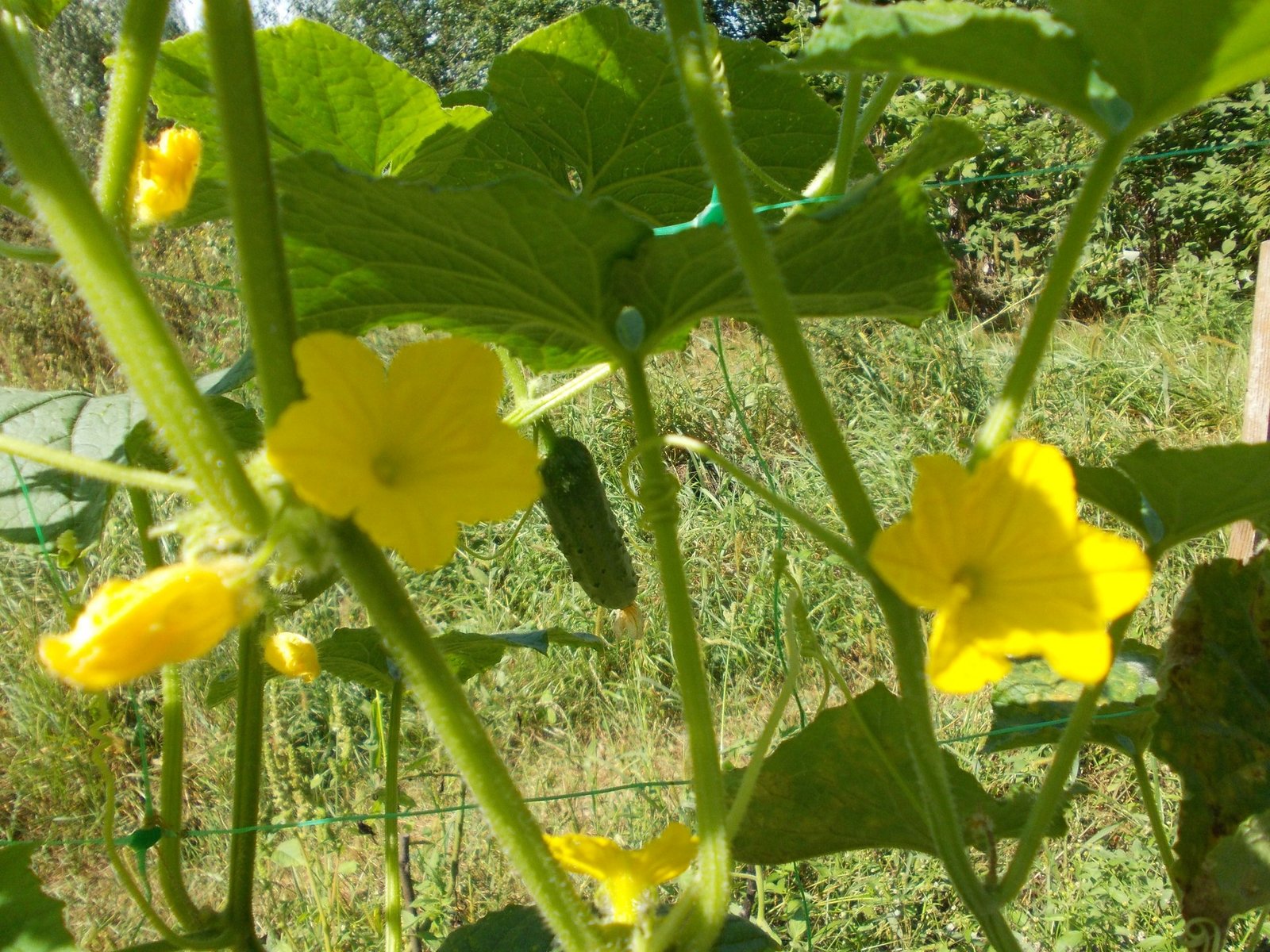
Most standard outdoor cucumber varieties produce separate male and female flowers on the same plant. Male flowers appear first, often in clusters, on thin stalks. Female flowers have a tiny, immature cucumber swelling just behind the petals. Bees and other insects carry pollen from male to female flowers, and only pollinated female flowers develop into full fruit. If you see plenty of flowers but small cucumbers that yellow and drop off while still tiny, poor pollination is the most likely explanation, especially on a high balcony, in a very enclosed yard, or during a spell when bees are scarce.
You can help in two simple ways. First, make the spot welcoming to pollinators. A pot of simple, open flowers nearby, no insecticide sprays on the cucumber plant, and flowering during warm, calm parts of the day all encourage visits. Second, hand-pollinate when fruit is dropping. Pick a male flower, fold back its petals, and dab its centre gently onto the centre of a freshly opened female flower, or use a small soft paintbrush to transfer pollen between them. Do this in the morning when flowers are newly open. It takes less than a minute and can transform a frustrating plant into a productive one.
One exception to know about: parthenocarpic varieties set fruit without pollination and are the ones usually recommended for greenhouses. Outdoors they work too and can be a sensible choice for a very enclosed balcony where bees rarely visit. And if all your early flowers seem to be male, do not panic. That is normal. Female flowers follow once the plant is growing strongly.
Feeding, Then Picking Small and Often
A cucumber in a pot cannot send roots out in search of food, so what you provide in that limited volume of compost is all it gets. The slow-release fertiliser mixed in at planting covers the early weeks. Once the plant starts flowering and setting fruit, switch to regular liquid feeding. A balanced liquid feed, or a tomato feed used at the rate on its label, given once a week, suits fruiting cucumbers well. Tomato feed’s higher potash supports fruiting, while a purely high-nitrogen feed pushes leafy growth at the expense of flowers, so read the label rather than grabbing whatever is open in the shed.
Feed onto moist compost, not dry compost, so the roots are not scorched and the feed spreads evenly through the pot. If leaves pale overall and growth slows despite regular watering, the plant is usually hungry or the compost has been washed out by weeks of heavy watering, and a consistent weekly feed will turn it around within a fortnight. Yellowing only of the lowest, oldest leaves, by contrast, is often just age. Remove them cleanly to improve airflow. Do not chase every yellow leaf with more feed. Observe the whole plant, not a single leaf, before you act.
Cucumbers are at their best picked young, and the plant agrees with you. Regular picking is not just about eating quality. It is the signal that keeps the vine producing new flowers and fruit. Leave an oversized cucumber to turn fat and yellow on the vine and the plant slows down, believing its job of making seed is done.
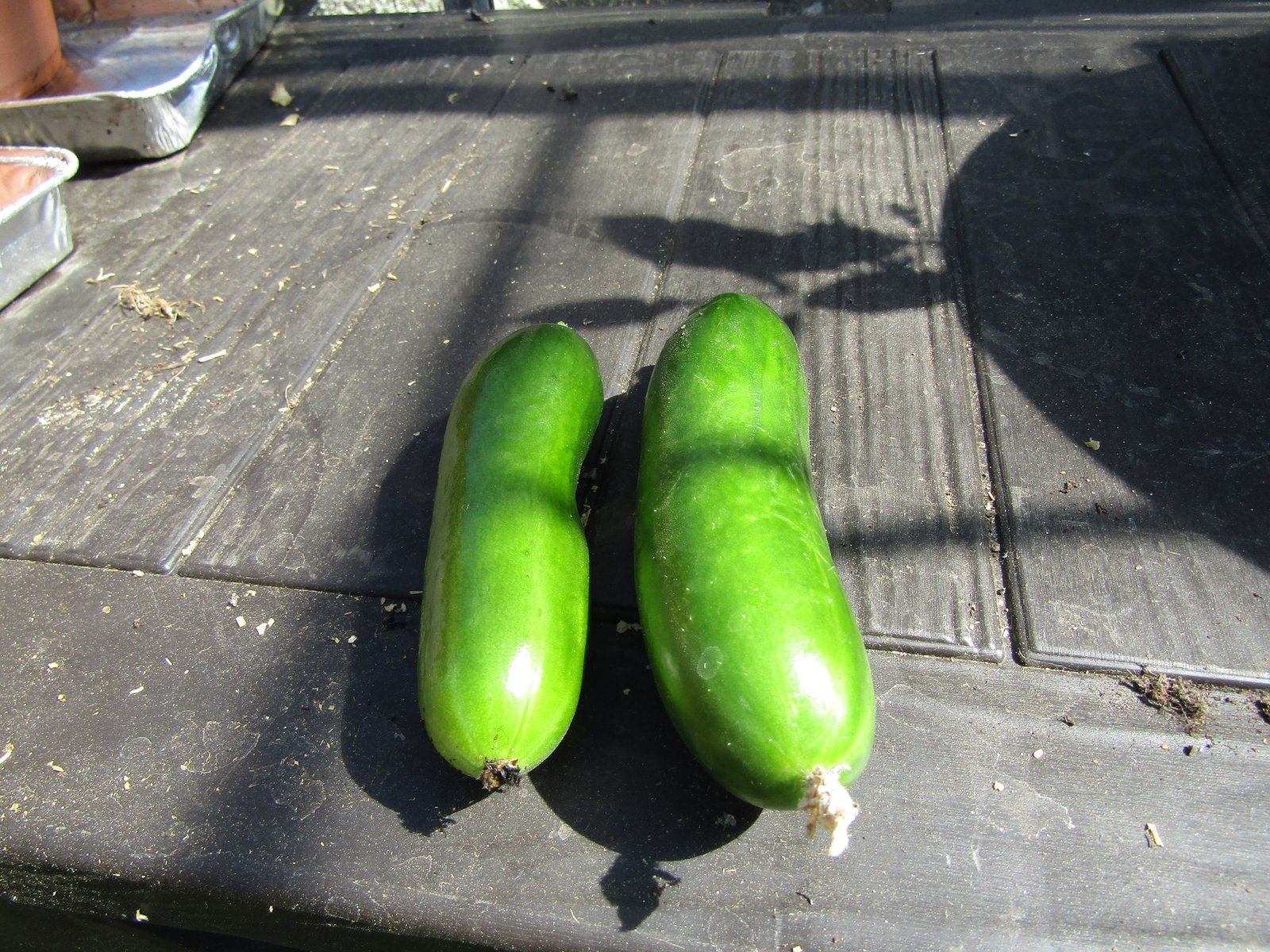
Pick slicing varieties when they are a moderate, even size, firm, and a good green colour throughout — for most types, roughly 15 to 20 cm long, though compact snacking types such as Patio Snacker are picked smaller. Pickling types come off smaller still, while they are crisp and bumpy, before they swell smooth. Check plants every day or two in warm weather, because a cucumber that looks a day away from ready in the morning can overshoot by the weekend. Cut fruit off with scissors or a knife, or twist gently while supporting the stem, rather than yanking, which tears the vine and stresses the plant.
Harvest in the morning if you can, when fruit is firmest and coolest. Eat fresh cucumbers soon after picking for the best crunch, and store spares in the fridge, where they keep for several days. If you find you are overwhelmed at the peak of the season, share them, make a quick fridge pickle, and keep picking anyway. The vine only keeps going if you keep harvesting. If you enjoy comparing container crops, our guide on how to grow carrots in containers shows how a very different root crop handles the same limited space.
Mildew, Beetles and Bitter Fruit: A Field Guide
Powdery mildew is the disease you are most likely to meet. It shows as white, powdery patches on leaves, usually from mid-season onwards, and spreads fastest in warm weather with poor air circulation around crowded leaves. You cannot always prevent it, but you can slow it a lot: space and support plants so air moves through them, water at the base, remove the worst-affected leaves promptly, and choose varieties described as mildew-resistant when you buy seed. Plants often keep cropping for a good while with mildew present on older leaves, so do not rip a productive plant out at the first white patch. Manage it, harvest what it gives you, and clear the plant away properly at the end.
Cucumber beetles — striped or spotted, depending on your region — chew leaves and flowers and can spread bacterial wilt, which makes vines wilt suddenly despite wet soil. Check plants regularly, pick beetles off by hand in the cool of the morning when they are sluggish, and cover young plants with fine mesh or row cover until flowering, removing it then so pollinators can reach the flowers. Keeping the area around the pot free of garden debris removes some of their shelter. If a plant wilts section by section while the compost is moist and other plants look fine, remove it rather than letting it stand as a source of infection for its neighbours.
Bitter fruit is usually a stress signal, not a variety defect. Heat stress, drought stress, and a pot that swings between dry and soaked all raise the bitter compounds concentrated near the stem end and under the skin. You cannot reliably fix bitterness in a fruit that already has it, though peeling and cutting away the stem end reduces it. You fix the next fruits, by watering consistently and shading the pot in extreme heat. That honest cause-and-effect is actually good news, because it puts the remedy in your hands.
Finally, do not let fruit hide. The missed cucumber that turns into a swollen yellow torpedo under the leaves slows the whole plant down, harbours slugs, and is nobody’s favourite to eat. Lift the leaves and look properly at every harvest round. It takes a minute, and it keeps the plant — and your salads — in good shape.
The Daily Rhythm That Keeps a Pot Producing
A few small habits separate a pot that produces a handful of cucumbers from one that keeps you supplied for weeks. Start with one healthy plant per large pot rather than squeezing in a crowd. A single well-grown vine, watered and fed properly, outproduces two starved, stressed plants sharing the same compost, and it is far less likely to turn bitter.
Keep a simple rhythm: water check in the morning, feed once a week on the same day, harvest round every other day. Cucumbers respond to rhythm better than to occasional intensive care. Most container failures happen in the gaps when life gets busy, so anything that makes care routine protects your harvest.
Sow a second pot a few weeks after the first if you have room. Cucumbers are not a long-lived perennial, and a plant that started in late spring can look exhausted by late summer. A younger plant sown four to five weeks later picks up where the first leaves off, and staggering two pots is the simplest way to avoid the feast-then-nothing pattern. In long, warm seasons in zones 8 to 10 this works especially well.
Wash and store pots at the end of the season. Old compost goes to the compost heap or the garden, not back into next year’s cucumber pot, because disease can carry over in used mix. A clean pot and fresh mix next spring start you ahead.
Questions Before You Sow
How big does a pot need to be for cucumbers?
At least 5 gallons, roughly 19 litres, for one compact bush plant, and 7 to 10 gallons is better, especially for a vining variety. Depth matters as well as volume, so choose a pot at least 30 cm deep with clear drainage holes. Bigger pots hold moisture more evenly and produce healthier, less stressed plants.
How often should I water cucumbers in pots?
In warm weather, expect to water every day, and sometimes twice a day for smaller pots or fabric grow bags in a heatwave. The reliable method is to check the compost with a finger a few centimetres down. If it feels dry at that depth, water deeply at the base. Keep moisture even rather than letting the pot dry out and then soaking it.
Do potted cucumbers need a trellis?
Vining varieties do, yes. A trellis, cage, or mesh support keeps fruit clean, saves space, and improves airflow, which reduces mildew. Train the main stem to the support early with soft ties. Bush varieties such as Spacemaster and Bush Champion need only light support, such as a short cane or small cage, to stop them flopping under the weight of fruit.
Why are my home-grown cucumbers bitter?
Bitterness is most often caused by stress, especially uneven watering, drought followed by soaking, and heat stress on the roots in a small or dark pot in full sun. It is concentrated near the stem end and the skin, so peeling helps a little with fruit you already have. For the next fruits, water consistently, mulch the surface of the pot, and use a larger container if yours dries out very fast.
Can I grow cucumbers on a shady balcony?
Not well, honestly. Cucumbers need at least six hours of direct sun a day to flower and fruit properly. A balcony with bright light but only two or three hours of sun will give you a leafy, unproductive plant. If your sunniest spot offers morning sun and light afternoon shade, it is worth trying with a compact variety. A fully shaded balcony is better used for leafy crops and herbs that tolerate low light.
When should I start cucumbers for my zone?
Only after your last frost, when nights stay reliably above about 10°C. That is mid to late spring in zones 8 to 10, late spring in zones 5 to 7, and early summer for transplants started indoors in zones 3 and 4. Soil warmth matters as much as the calendar, so wait for genuinely mild nights rather than gambling on the earliest possible date.
Growing cucumbers in pots is one of the most satisfying bits of container gardening, because the plant grows so visibly fast and the harvest, when it comes, arrives in a cheerful rush. It asks for no rare skill, just the right decisions made once — a compact or well-supported variety, a genuinely large pot, fresh potting mix — and one decision repeated daily, which is to water it well.
If your first pot is only partly successful, pay attention to why. In almost every case it will be pot size, watering rhythm, or a cold start, and all three are easy to fix next time. Start this season with one good pot in your sunniest sheltered spot, keep the compost evenly moist, pick the fruit smaller than you think you should, and you will very likely wonder why you ever bought cucumbers in a plastic wrapper at all.
Sources
- Royal Horticultural Society — How to grow cucumbers
- Clemson Cooperative Extension — Cucumber