Best Indoor Plants for Beginners
Most people who think they kill plants do not have a black thumb — they have the wrong first plant. A fiddle-leaf fig in a dark flat is a hard start for anyone, while a snake plant in the same spot will thrive on neglect. Choosing the right plant matters far more than any care routine.
This guide starts with how to pick a first plant honestly, then gives a shortlist of ten genuinely forgiving plants, a plain-English guide to reading the light in your rooms, and the watering and seasonal habits that keep them alive for years.

Start With the Forgiving Ones: How to Choose Your First Plant
A beginner plant should forgive three things: missed waterings, imperfect light, and a pot that is slightly too small. The plants on the shortlist below all do. They are also easy to find, cheap, and widely available, so a mistake costs a few pounds rather than a small fortune.
Before you buy, be honest about your home. How much direct sun does your brightest window get? Do you travel for weeks at a time? Is your flat hot and dry in winter, or cool and damp? The answers point to different plants, and matching the plant to the home is the whole skill.
Three quick rules for the first purchase:
- Buy small. A young plant in a 4- or 6-inch pot is cheaper, adapts faster to your home, and grows into the space. A large, mature plant is more expensive and more stressed by the move.
- Inspect before you buy. Look under the leaves for whiteflies or webbing, check for yellow or brown leaf edges, and lift the pot — roots pouring out of the drainage holes mean it is badly pot-bound. Choose the healthiest plant on the shelf, not the biggest.
- One plant at a time. Buy one, keep it alive for a month, learn its habits, then buy the next. A windowsill of ten new plants is ten problems at once; one plant is a lesson.
And keep expectations realistic: every plant drops a leaf now and then, and a yellow leaf is not a disaster. Plants are living things, not furniture, and a little imperfection is normal.
The Ten-Plant Shortlist
These ten are the most forgiving houseplants you can buy. They tolerate a missed watering, survive in average light, and tell you clearly when something is wrong.
| Plant | Light | Water | Why beginners love it |
|---|---|---|---|
| Snake plant (Sansevieria trifasciata) | Low to bright | Every 2–3 weeks | Thrives on neglect; stores water in leaves |
| Pothos (Epipremnum aureum) | Low to bright, indirect | When top inch dries | Trails beautifully; grows fast; hard to kill |
| ZZ plant (Zamioculcas zamiifolia) | Low to bright | Every 2–3 weeks | Glossy, architectural; tolerates dark corners |
| Spider plant (Chlorophytum comosum) | Bright, indirect | Weekly | Makes baby plantlets you can share |
| Peace lily (Spathiphyllum) | Low to medium | Weekly, keep moist | Flowers indoors; droops clearly when thirsty |
| Monstera (Monstera deliciosa) | Bright, indirect | When top 2 inches dry | Iconic split leaves; fast grower |
| Philodendron (heart-leaf) | Low to medium | When top inch dries | Trails or climbs; very tolerant |
| Rubber plant (Ficus elastica) | Bright, indirect | When top 2 inches dry | Bold, glossy leaves; grows into a small tree |
| Cast-iron plant (Aspidistra elatior) | Low | Every 2 weeks | The toughest of all; survives dark, cold, neglect |
| Succulents (echeveria, jade) | Bright, direct | Every 2–3 weeks | Small, sculptural; need sun but little water |
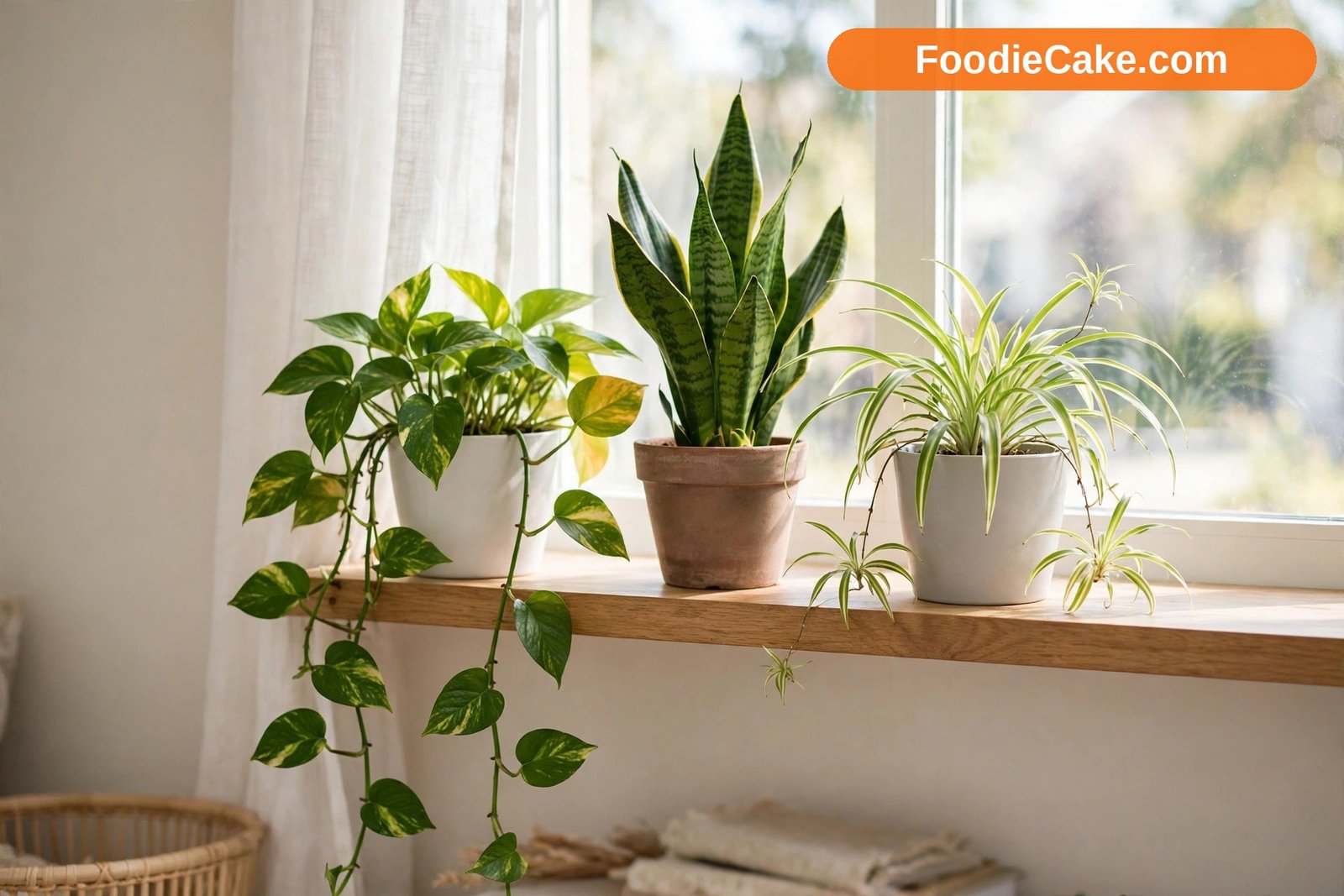
If you only buy three, make them a snake plant, a pothos and a spider plant. Between them they cover low light, trailing growth and easy propagation, and all three will still be alive in a year with minimal attention. The snake plant and pothos are also both listed by Clemson Extension among the easiest low-light plants for the home — Clemson University’s indoor plants fact sheet gives detailed light requirements in foot-candles for common houseplants, which is useful if you want to get precise about placement.
A note on the fiddle-leaf fig: it appears on many “best beginner plants” lists, and it should not. It is fussy about light, water, drafts and being moved, and it drops leaves at the slightest stress. Enjoy it in other people’s homes; start with something kinder.

Reading Your Light: The Window-Direction Guide
Light is the most important factor for indoor plants, and it is also the most misunderstood. A room that feels bright to you can be dim to a plant, because human eyes adjust to low light far better than leaves do. The practical way to judge light is by window direction and distance from the glass.
| Window | Light you get | Best plants for it |
|---|---|---|
| South-facing | Strong direct sun most of the day | Succulents, snake plant, rubber plant, monstera (a little back from glass) |
| West-facing | Strong afternoon sun | Snake plant, ZZ plant, pothos, spider plant |
| East-facing | Gentle morning sun | Peace lily, philodendron, spider plant, pothos |
| North-facing | Bright indirect light, no direct sun | Cast-iron plant, ZZ plant, snake plant, pothos |
| Several feet from any window | Low light | Cast-iron plant, snake plant, ZZ plant — and little else |
Clemson Extension puts numbers on this: low-light plants prefer 75 to 200 foot-candles, medium-light plants 200 to 500, and high-light plants 500 to 1,000. A well-lit home interior is often under 100 foot-candles, while outdoor sun on a clear day exceeds 10,000 — which is why “bright room” and “bright enough for plants” are two different things. About 100 foot-candles for 12 hours a day is enough just to maintain a plant, and at least 200 foot-candles for 12 hours is needed before fertiliser does any good.
The shadow test is a useful shortcut: hold your hand a foot above a white surface in the plant’s spot at midday. A sharp, dark shadow means bright light. A soft, fuzzy shadow means medium light. Barely any shadow means low light. Do the test in the morning and the afternoon — light changes a lot through the day.
If your home is genuinely dark, a grow light is a better answer than buying plant after plant and watching them fade. A simple LED grow bulb in a desk lamp, 12 inches above the plant for 12 to 14 hours a day, transforms what you can grow. Sixteen hours of light and eight hours of darkness is a good cycle for most houseplants, and a cheap timer keeps it consistent.

Watering: The Finger Test and the Two Mistakes Everyone Makes
More houseplants die from overwatering than from underwatering, and the reason is simple: wet roots cannot breathe, and they rot. The fix is also simple — check the soil before you water, every time.
Push your finger into the soil up to the second knuckle. If it feels damp, do not water. If the top inch or two is dry, water thoroughly until it runs out of the drainage holes, then empty the saucer. Never let a pot sit in water for days. That one habit prevents most root rot.
The two mistakes everyone makes:
Mistake one: watering on a schedule instead of checking the soil. “Every Sunday” ignores the weather, the season and the plant. In winter, when growth slows and days are short, most houseplants need water half as often as in summer. The finger test adjusts automatically; a calendar does not.
Mistake two: giving little sips instead of a thorough soak. A splash of water wets the top inch and leaves the lower roots dry, so the plant is thirsty and waterlogged at the same time. Water until it drains freely, let the pot drain completely, and then leave it alone until the soil dries again. Deep, infrequent watering grows deep, healthy roots.
Different plants want different rhythms. Snake plants, ZZ plants and succulents store water in their leaves or roots and prefer to dry out fully between waterings — every two to three weeks is plenty. Pothos, philodendron and monstera like the top inch or two to dry out. Peace lilies and ferns like steady moisture and will droop dramatically when thirsty — the peace lily’s droop is actually useful, because it tells you clearly when to water, and the plant recovers within hours.
Tap water is fine for most plants, but if your water is very hard, white crust on the soil surface or brown leaf tips can be salt build-up. Water thoroughly so excess drains away, which flushes salts out, and repot into fresh compost once a year if crust keeps appearing.

Feeding, Cleaning and Repotting: The Seasonal Jobs
Once watering is under control, three occasional jobs keep plants healthy for years: feeding in the growing season, cleaning the leaves, and repotting when the plant outgrows its pot.
Feeding: Houseplants need far less fertiliser than people think. In low indoor light, their growth is slow and their fertiliser needs are reduced — Clemson Extension notes that plants in a winter rest period should not be fertilised at all. Feed only in spring and summer, when plants are actively growing, with a balanced liquid fertiliser at half the label strength, once a month or every two to three months. A complete fertiliser with nitrogen, phosphorus and potassium — for example a 20-20-20 for foliage plants — is a good all-rounder. Water the plant first, then feed, and never fertilise a dry or stressed plant. Yellow leaves and salt crust on the soil surface are signs of overfeeding, not underfeeding.
Cleaning: Dusty leaves cannot photosynthesise properly, and dust also shelters pests. Wipe smooth leaves with a damp soft cloth, top and underside, every month or two. Hairy-leaved plants like African violets should be dusted with a soft brush instead — water on hairy leaves leaves marks. A shower or a rinse outdoors on a mild day works well for larger plants. Avoid leaf-shine products; the waxy residue can block the pores leaves breathe through.
Repotting: Most houseplants need repotting every one to two years, in spring. Signs it is time: roots circling out of the drainage holes, water running straight through the pot without wetting the soil, or growth stalling despite good light and feeding. Choose a pot only one size up — a pot much too large holds wet soil the roots cannot use, and rot follows. Fresh compost, a gentle teasing of circling roots, and a good watering-in is all it takes. Some plants, like the snake plant and ZZ plant, actually prefer to be slightly snug, so do not rush to repot them.

Choosing the Right Pot and the Right Spot in Each Room
The pot matters more than it looks. It controls drainage, drying speed and root temperature, and the wrong pot undoes good watering habits.
Drainage is non-negotiable. Every pot needs a hole in the bottom. Decorative pots without holes can still be used as outer covers — keep the plant in a plastic nursery pot inside, lift it out to water, let it drain, then set it back. This “double-potting” is what Clemson Extension recommends for decorative containers, and it is the easiest way to use a beautiful pot safely.
Material changes watering. Terracotta is porous, so soil dries faster and roots get more air — good for snake plants, ZZ plants and succulents, and forgiving if you overwater. Plastic and glazed ceramic hold moisture longer, which suits peace lilies and ferns. Match the pot to the plant’s thirst, not to the room’s colour scheme.
Size: a pot one size up from the nursery pot is right. Too big a pot stays wet; too small dries out daily and strangles growth.
Room by room, a few combinations work especially well:
- Living room: a monstera or rubber plant in a bright corner, a pothos trailing from a shelf, and a snake plant in the dim corner by the sofa. Three plants, three light levels, one room.
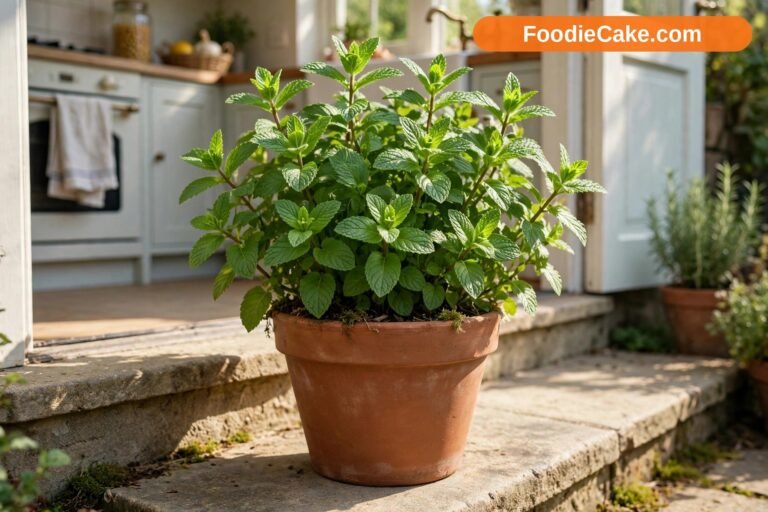
- Kitchen: herbs on the sunny sill — basil, mint and parsley — plus a spider plant in a hanging basket, where its plantlets dangle out of the way of cooking. Our guides to growing mint at home and growing lettuce indoors cover the edible side of the kitchen windowsill.
- Bedroom: a snake plant or peace lily, both of which tolerate lower light and do not mind a cooler room at night. Keep plants off the radiator and away from cold draughts.
- Bathroom: if it has a window, a bathroom is the best room in the house for humidity-loving plants — ferns, peace lilies and philodendrons love the steam. Without a window, only the toughest low-light plants survive, and even they will fade eventually.
- Hallway: usually the darkest spot in the house. A cast-iron plant or ZZ plant will cope, and they are the only honest recommendations for a windowless hall.
Keep plants away from radiators, which dry the air and the soil, and from cold draughts by doors and single-glazed windows in winter. A plant that sits in a draught will drop leaves even when everything else is right.
Propagation: Turning One Plant Into Many
Once your first plant is thriving, propagation is the free way to fill your home with green — and it is easier than most beginners expect. Three methods cover almost every houseplant on the shortlist.
Stem cuttings in water work for pothos, philodendron, monstera and spider plant. Cut a healthy stem just below a leaf node — the small bump where a leaf joins the stem — and stand it in a glass of water so the node is submerged and the leaves stay dry. Roots usually appear within one to two weeks. Change the water weekly to keep it fresh, and pot the cutting up once the roots are an inch or two long. Pothos is the classic beginner propagation: a single trailing stem can be cut into five or six pieces, each with a node and a leaf, and every one will root.
Division suits snake plants, peace lilies, cast-iron plants and spider plants. In spring, lift the plant from its pot and gently pull or cut the rootball into two or three sections, each with leaves and roots. Repot each section in fresh compost. A snake plant that has filled its pot divides into three or four plants in ten minutes, and each one will grow into a full specimen within a year.
Plantlets are the spider plant’s gift: it produces baby plants on long arching stems, complete with tiny roots. Pin a plantlet into a small pot of compost while it is still attached to the mother plant, wait two or three weeks for it to root, then snip the stem. You can also snip plantlets off and root them in water. One spider plant can produce a dozen new plants a year, which makes it the best plant in the house for gifts.
A few honest cautions: always use clean, sharp scissors or a knife — a ragged cut invites rot. Propagate in spring and summer, when plants are growing actively; cuttings taken in winter root slowly or not at all. And label your cuttings if you propagate several plants at once — a glass of water with a bare stem in it looks the same whatever the plant is.
Propagation changes how you think about houseplants. A plant stops being a purchase and becomes a renewable resource, and the windowsill fills up not from the garden centre but from your own plants. It is also the best cure for the fear of killing a plant: once you know you can make three more from the one you have, a yellow leaf stops feeling like a disaster.
Questions First-Time Plant Owners Ask
Why are the leaf tips turning brown?
The usual causes are dry air, salts from fertiliser or hard water, or inconsistent watering. Trim the brown tips with clean scissors, following the leaf’s shape, and fix the cause: water thoroughly so salts flush out, feed less often, and group plants together or set pots on a tray of pebbles and water to raise humidity.
How do I know if I am overwatering?
Yellow, soft lower leaves, soil that stays wet for a week, a musty smell, or black, mushy roots are the signs. Let the soil dry out fully, remove dead roots if you repot, and water only when the finger test says dry.
Do indoor plants really clean the air?
A little, but not much in a normal room. The famous NASA study used sealed chambers and very high plant densities. What houseplants genuinely do is raise humidity slightly, add life to a room, and give you a reason to pay attention to light and air — which benefits you too. Enjoy them for that, not for air purification.
Are any of these plants safe around pets?
Several on this list are toxic if eaten — pothos, philodendron, peace lily, monstera and ZZ plant are all mildly toxic to cats and dogs. Spider plants and cast-iron plants are considered safe. If you have a cat that chews leaves, favour the safe ones, hang trailing plants out of reach, and check the ASPCA list before buying anything new.
What is the single easiest indoor plant, honestly?
The snake plant. It tolerates low light, survives weeks without water, needs repotting rarely, and looks good in any room. If you want something edible too, the best herbs to grow indoors are the next step — same windowsill skills, plus dinner.
Start with one forgiving plant, learn to read its light and its soil, and let the collection grow slowly. The people with beautiful indoor jungles did not buy them in a weekend — they kept one plant alive, then another, and the jungle followed.
Sources
- Clemson Cooperative Extension, Home & Garden Information Center — Indoor Plants fact sheet: https://hgic.clemson.edu/factsheet/indoor-plants/