Best Vegetables to Grow in Raised Beds
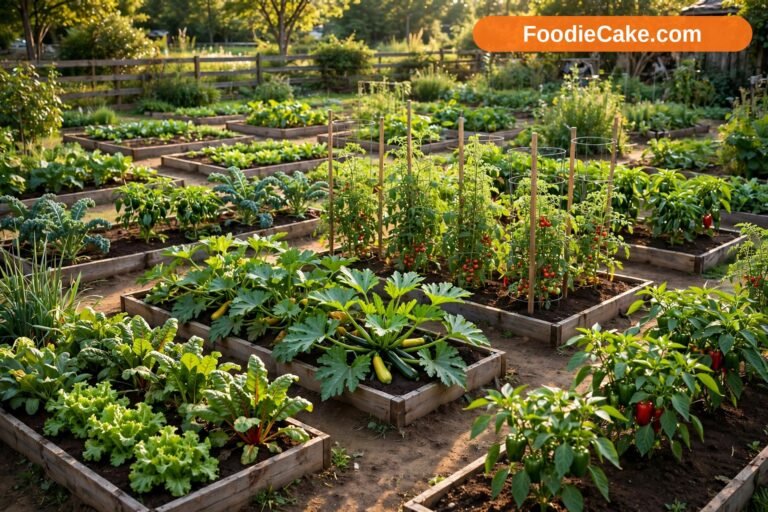
If your soil is heavy, stony, shallow, or simply hard work, raised beds can feel like a small miracle — and the best vegetables to grow in raised beds are often the same ones that struggle most in ordinary ground. Carrots that fork in clay grow long and straight. Lettuce that bolts in a dry border stays sweet a little longer. Tomatoes ripen against warm, free-draining soil instead of sitting in a puddle after every summer storm. A raised bed does not guarantee a harvest, but it removes a lot of the obstacles that stop vegetables from thriving.
This guide is organised the way a bed is actually built: the numbers first, then the soil, then a plan for what goes where, and only then the crops themselves — with honest notes on spacing, depth, support, and the plants that can take over if you let them. Whether you have one small bed on a patio edge or a whole row of them, the principles are the same.
Before You Plant: Three Numbers That Decide Everything
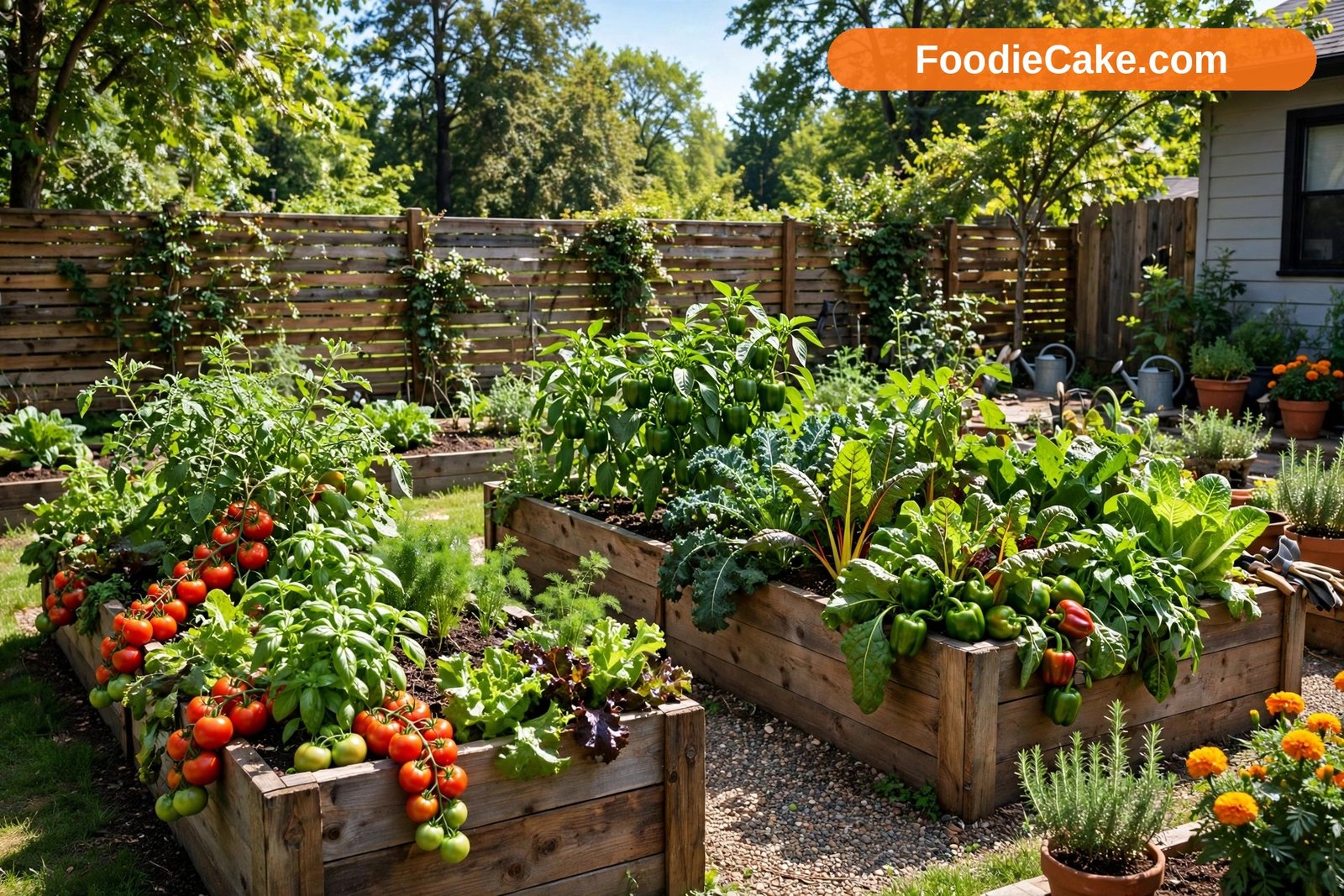
Width: about 1.2 metres (four feet). A bed is narrow enough when you can reach the centre from the paths on either side without stepping on the soil. In a normal vegetable patch, you walk on the soil to reach the middle, and every footstep squeezes out air and crushes the structure you worked to create. In a bed, your feet stay off, the soil stays loose and full of air pockets, and roots, worms, and microbes all get on with their work undisturbed. The RHS gives the same guidance: widths under 1.5 metres let you reach the centre without standing on the soil, and about 1.2 metres is the comfortable working width from both sides.
Depth: at least 30 centimetres (twelve inches) of good soil for most vegetables. That depth suits lettuce, beans, peppers, beetroot, and herbs comfortably, gives carrots room to develop a decent root, and holds enough moisture and nutrients to keep plants going between waterings. Shallower beds, around 15 to 20 centimetres, still work for quick salad crops, radishes, and herbs, especially if the soil underneath is loosened rather than solid clay or concrete. Go deeper — 40 centimetres or more — for long carrots, parsnips, and tomatoes if you can. Remember that soil settles: a freshly filled bed will drop by a few centimetres in its first season as the organic matter compresses, so fill it right to the top at the start.
Sun: at least six hours of direct sun a day. Place beds in the sunniest spot you have, and run longer beds roughly north to south if you can, so tall crops at one end cast less shade across the rest. If you are building from scratch, it is worth reading through a proper guide to how to build a raised garden bed before you order timber or soil, because getting the width, height, and placement right at the building stage saves a lot of rebuilding later.
The Soil Recipe
A bed is only as good as its fill. A practical mix is roughly 60 percent decent topsoil to 40 percent compost, well-rotted manure, or a blend of the two. Purely compost-based fills can dry out quickly and sink dramatically, while pure topsoil may be short on life and nutrients. If you are unsure what good vegetable soil looks like, the guide to the best soil for vegetable gardening walks through texture, drainage, and pH in more detail.
That first fill is only the beginning. Because you harvest from a bed intensively, you have to put goodness back. Each winter or early spring, spread a layer of compost or well-rotted manure 3 to 5 centimetres thick over the surface and either fork it in lightly or leave the worms to do the mixing for you. During the season, hungry crops need feeding on top of that. Tomatoes, peppers, and courgettes respond well to a liquid tomato feed every week or two once flowering starts, while leafy crops prefer a nitrogen-rich feed such as a seaweed or balanced liquid fertiliser. A general organic fertiliser raked in at planting time covers most other crops.
A Sample Bed, Drawn Out
Here is one workable layout for a standard 1.2 by 2.4 metre bed. The principle matters more than the exact measurements: tall things at the north end, low things at the edges, and the one plant that takes over — the courgette — in a corner where it can only spill outward.
| Position in the bed | What goes there | Why there |
|---|---|---|
| North end | Climbing beans on a 2-metre wigwam or row of canes | Tallest things at the north end so they do not shade everything else. |
| Centre | Tomatoes, spaced 45–50 cm apart, staked at planting time | The warmest, deepest soil in the bed; the crop that earns the prime spot. |
| Between the tomatoes | Lettuce and spring onions in the gaps | Fast, low, and harvested before the tomatoes need the room. |
| South end | Peppers and beetroot | Compact and sun-loving; they get the full sun at the low end. |
| One corner | A single courgette plant | It will spread a metre or more; in a corner it spills out of the bed, not across it. |
| Edges | Herbs — chives, parsley, thyme, sage, oregano | Within snipping reach; mint stays out, in a pot sunk beside the bed. |
Because raised bed soil is deep and rich, you can grow vegetables a little closer together than packet instructions for open ground suggest — this is the idea behind square-foot gardening, where the bed is divided into a grid and each square holds a set number of plants. One tomato per square foot is too tight for most gardens, but the principle is sound: a lettuce per small square, sixteen spring onions, four bush beans, or a single pepper per square gives you a simple way to plan without measuring tapes and guesswork. Closer spacing has real advantages. Leaves meet sooner and shade the soil, which keeps moisture in, keeps weeds down, and keeps roots cooler in a heatwave.
The Crops, Ranked by How Much They Love a Bed
| Crop | Why it loves a bed | Spacing | Depth needed |
|---|---|---|---|
| Tomatoes | Warm, free-draining soil; loose ground lets roots spread wide and deep. | 45–50 cm | 30 cm minimum; deeper better |
| Carrots | Deep, stone-free soil means long, straight roots instead of forked stumps. | Thin to 5 cm | 30 cm; deeper for long types |
| Lettuce & salad leaves | Fast, forgiving, happy in the gaps between slower vegetables. | 25–30 cm for hearts | 15–20 cm |
| Kale & Swiss chard | Tough, productive workhorses over a very long season. | 40–45 cm | 30 cm |
| Peppers | Extra warmth can be the difference between ripening and staying green. | 40–45 cm | 30 cm |
| Courgettes | Rich, moist soil; spectacularly productive — one plant feeds a household. | 60–90 cm around | 30 cm |
| Beans | Fix nitrogen with root bacteria; climbers give far more per square foot. | 20–25 cm | 30 cm |
| Beetroot | Compact, quick, trouble-free — roots and young leaves both edible. | Rows 20–25 cm | 20–30 cm |
| Spring onions | Ideal edging and gap-filling crop; ready in about eight weeks. | Thin lightly | 15–20 cm |
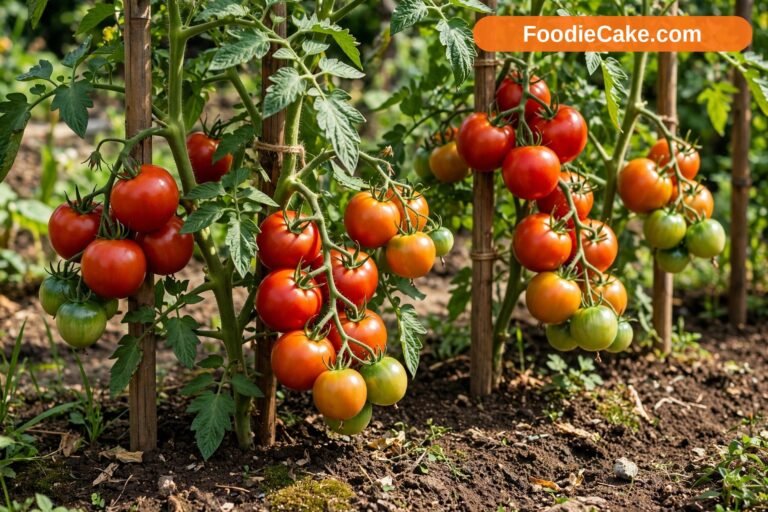
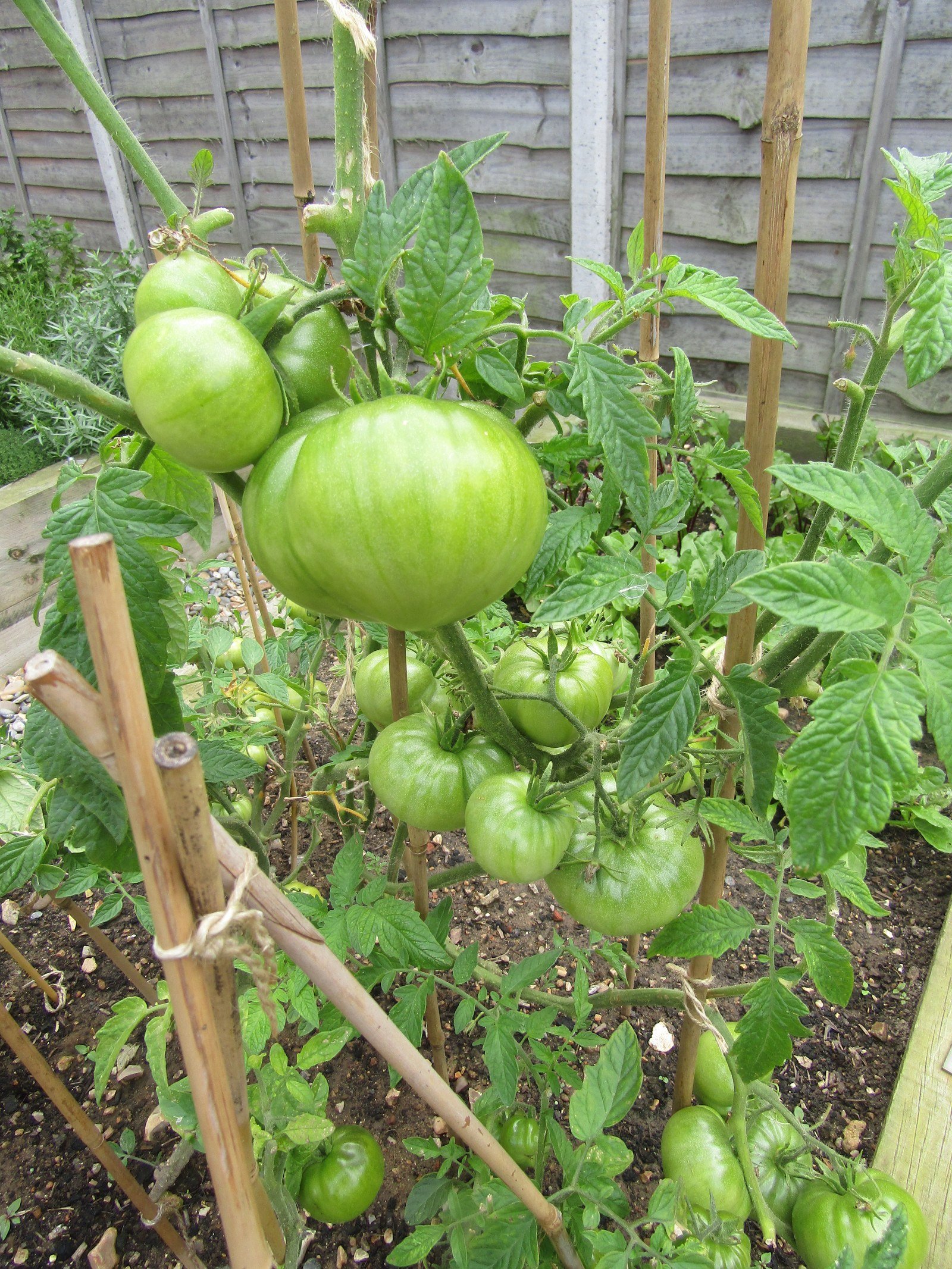
Tomatoes. Choose the type to suit your space: bush (determinate) varieties like ‘Roma’ or ‘Gardeners Delight’ grown as a bush type need less fuss, while cordon (indeterminate) varieties such as ‘Sungold’, ‘Gardener’s Delight’, and ‘Moneymaker’ give heavier crops over a longer season but must be tied to a cane or string and have their side shoots pinched out regularly. Plant them deep — bury the stem up to the first true leaves, because tomatoes root along the buried stem and build a stronger plant. Put the support in at planting time so you do not spear the roots later. Water consistently at the base of the plant, and start feeding with a tomato feed once the first truss of fruit has set.
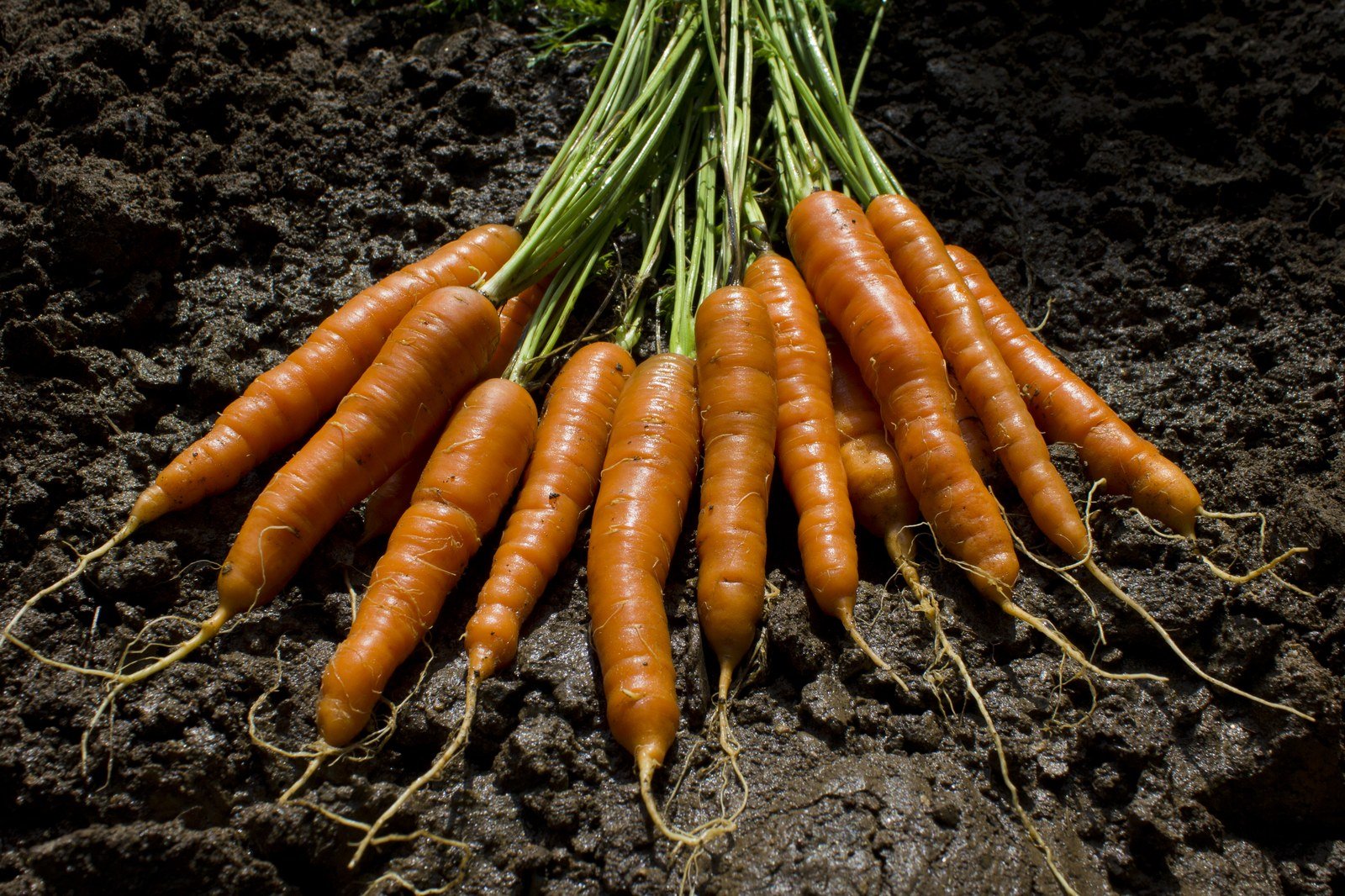
Carrots. If you have ever pulled a forked, stunted carrot from stony ground, a raised bed will feel like cheating. Reliable varieties include ‘Nantes 2’ for classic sweet, blunt-ended roots, ‘Chantenay’ for shorter, stockier carrots that cope with slightly shallower beds, and ‘Autumn King’ for late crops and storing. Sow thinly in shallow drills about 1 centimetre deep, in rows 15 to 20 centimetres apart, and thin the seedlings in stages to around 5 centimetres apart — crowded carrots stay skinny no matter how good the soil is. Keep the surface moist while seeds germinate, which can take two to three weeks, and consider covering the row with a board or fleece to stop it drying out.
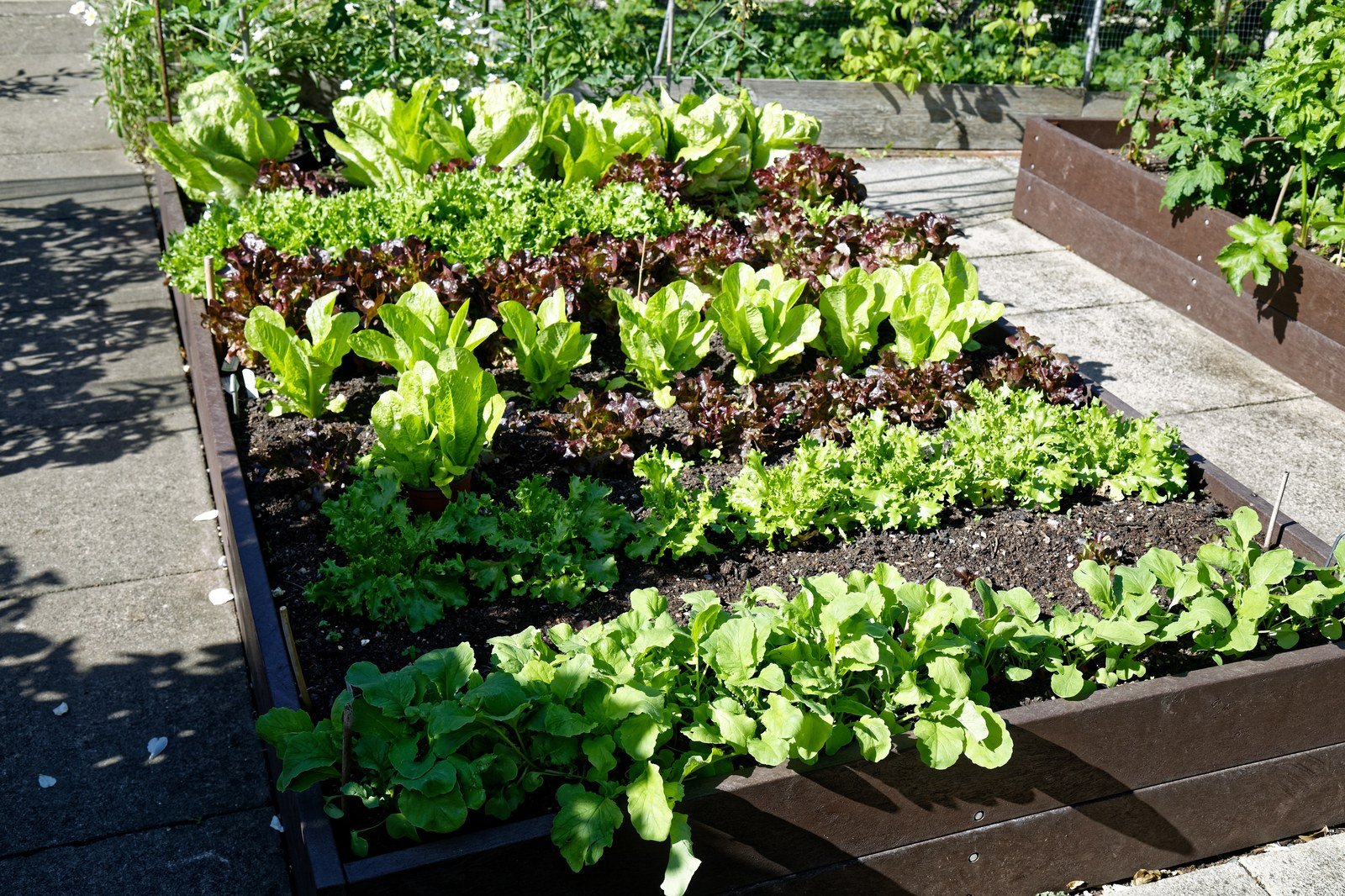
Lettuce, kale, and chard. Loose-leaf lettuces like ‘Saladin’ and ‘Lollo Rosso’, and cut-and-come-again salad mixes, are the most productive choice, because you pick outer leaves for weeks instead of harvesting one heart and leaving a gap. Butterhead types such as ‘Tom Thumb’ suit small beds and even the corners of larger ones. The secret is succession: sow a short row or a small patch every two to three weeks from spring to late summer rather than one big row all at once, and you will have a steady supply instead of a glut followed by nothing. Water in dry spells so the leaves stay crisp and mild, and give a little afternoon shade in the hottest weeks if you can — lettuce bolts quickly in heat.
Kale and chard are the workhorses: ‘Nero di Toscana’ (cavolo nero) gives handsome dark leaves with a rich flavour, ‘Curly Kale’ types like ‘Westland Winter’ stand through cold weather, and Swiss chard varieties such as ‘Bright Lights’ add stems in yellow, pink, and red that look as good as they taste. Space plants about 40 to 45 centimetres apart — they look small as seedlings and become substantial plants by midsummer. Pick leaves little and often from the outside of the plant (and for kale, from the bottom up) and it will keep producing for months; chard sown in spring can still be giving leaves the following spring if the winter is kind.
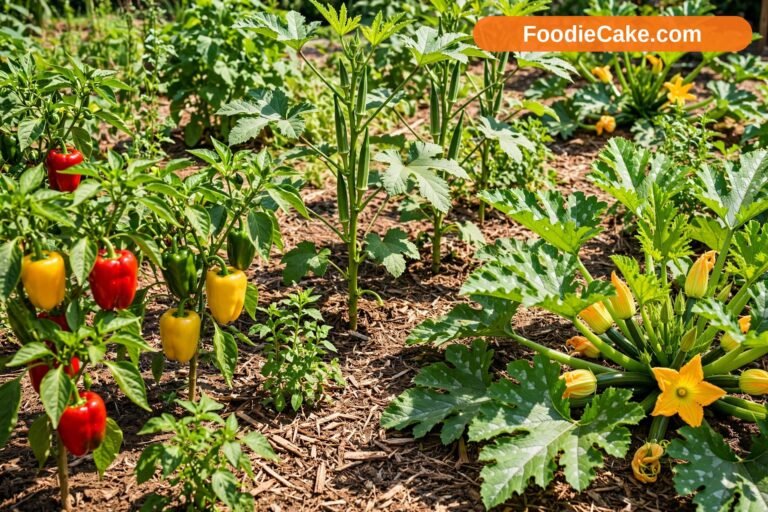
Peppers. Sweet peppers and chillies love the extra warmth a raised bed provides, and in cooler climates that warmth can be the difference between fruit that ripens and fruit that stays stubbornly green. Compact sweet varieties like ‘California Wonder’ and ‘Gypsy’ do well, while chillies such as ‘Jalapeño’, ‘Cayenne’, and the very productive ‘Hungarian Hot Wax’ are often easier and more forgiving than sweet peppers. Start plants indoors or buy sturdy young plants, because peppers need a long season, and do not plant them out until nights are reliably mild. Support taller plants with a short cane before they get heavy with fruit, and water steadily — erratic watering is a common cause of blossom end rot and dropped flowers.
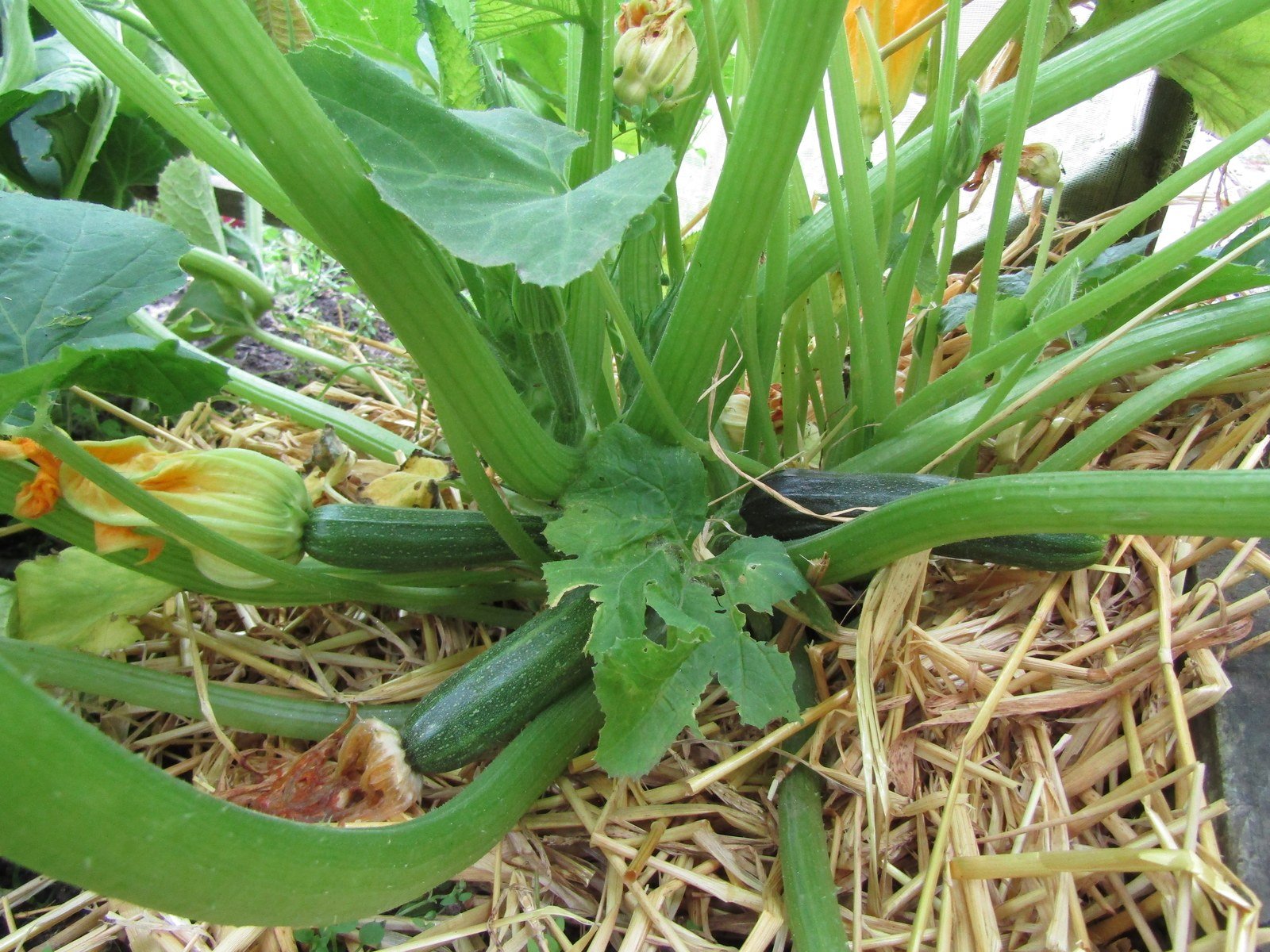
Courgettes. Courgettes (called zucchini in North America) are spectacularly productive in the rich, moist soil of a raised bed — one healthy plant can keep a household supplied for weeks. Reliable varieties include ‘Defender’, which has some virus resistance, ‘Costata Romanesco’ with its ribbed, flavourful fruit, and round types like ‘Ronde de Nice’ picked small for stuffing. The University of Minnesota Extension notes the same point for vine crops generally: forming raised beds ensures the good drainage these crops need, and the soil should be moisture-retentive yet well drained, with a pH between 6.0 and 6.5. Here is the warning, and it is an important one: a single courgette plant can spread a metre or more across and shade out everything around it. In a small bed, one plant is genuinely enough, and it belongs in a corner or at the end, never in the middle. Allow at least 60 to 90 centimetres around a plant, pick the fruit young and often at 10 to 15 centimetres long, and the plant will keep producing instead of diverting its energy into one enormous marrow.
Beans and beetroot. Bush (dwarf) French beans like ‘Tendergreen’ and ‘Purple Teepee’ — whose purple pods turn green when cooked and are easy to spot at picking time — crop quickly, need no support, and fit neatly in a row or a block. Climbing French beans and runner beans give far more beans per square foot because they grow upwards. Varieties like ‘Cobra’ (a climbing French bean) and runner beans ‘Scarlet Emperor’ or ‘Enorma’ need a wigwam or a row of canes about 2 metres tall. Put climbing beans at the north end of the bed so they do not shade everything else, sow or plant after the last frost, and pick every couple of days in season — beans left to swell with seed quickly stop the plant producing more flowers.
Beetroot is compact, quick, and almost trouble-free, and you get two crops in one: the roots and the young leaves, which are delicious in salads and stir-fries. ‘Boltardy’ is the classic reliable variety because it resists bolting when sown early; ‘Pablo’ gives smooth, round roots, and ‘Chioggia’ has beautiful pink-and-white rings when sliced. Sow clusters of seed about 2 centimetres deep in rows 20 to 25 centimetres apart, and thin each cluster to the strongest seedling. Beetroot seed is actually a cluster of seeds, so thinning is not optional if you want roots bigger than marbles. Harvest from golf-ball size onwards, twisting out the largest roots first and letting the rest grow on.
Spring onions and herbs. Spring onions (scallions) are the ideal edging and gap-filling crop. Varieties like ‘White Lisbon’ and the red-stemmed ‘Apache’ sow quickly, grow in almost any corner, and are ready in as little as eight weeks in warm weather. Sow in shallow drills, thin only lightly, and pull them as you need them rather than harvesting the whole row at once. A short row sown every few weeks alongside your lettuce keeps the salad bowl interesting all summer, and a late sowing often stands through a mild winter for an early spring harvest. Perennial herbs love the drainage of a raised bed, and planting them along the edges keeps them within snipping reach. Chives, parsley (flat-leaf types have the strongest flavour), thyme, sage, and oregano all do well; rosemary thrives in the dry, free-draining corner of a bed and can live for years. Basil is the exception among common herbs: it is tender, thirsty, and best grown among the tomatoes where it gets regular water and shelter.
Watering a Bed Is Different
Raised beds drain freely and dry out faster than open ground — that is their strength in spring and their weakness in a July heatwave. Water deeply and less often rather than sprinkling daily, aim the water at the soil rather than the leaves, and mulch the surface around plants with compost or straw once the soil has warmed up. Check the soil with a finger pushed a few centimetres down, not by looking at the surface, and mulch to slow the drying. Deep watering, a surface mulch, and a soaker hose or drip line keep this very manageable — most gardeners find the extra watering a fair trade for the better soil and earlier crops.
The Rotation That Keeps a Bed Honest
A simple way to think of it is in groups. Legumes (peas and beans) come first in many plans because they leave nitrogen behind. Brassicas (kale, cabbage, broccoli) follow and enjoy that fertility, though kale in a salad bed is flexible enough to break the rules occasionally. Roots (carrots, beetroot, parsnips) prefer soil that was not freshly manured, which suits them coming later in the sequence. Fruiting crops (tomatoes, peppers, courgettes) are hungry feeders that appreciate the freshly composted bed. Potatoes and tomatoes are relatives, so avoid following one with the other in the same bed, because they share diseases like blight. One bed can hold all four groups across a season if you plan the succession — salads and radishes first, beans and tomatoes in summer, kale and chard carrying into winter.
Five Ways a Good Bed Goes Wrong
Overcrowding. Seedlings look so small that it feels wasteful to space them properly, but a bed of stunted, competing plants yields less than half as many well-spaced ones — and the damp, airless tangle invites mildew, botrytis, and slugs. Thin bravely and space honestly.
Letting the bed dry out. Because beds drain freely and sit in the wind, they can go from damp to dusty faster than you expect, especially shallow beds in hot weather. Check with a finger, not your eyes, and mulch.
One huge courgette in the middle of a small bed. It happens every year in gardens everywhere. By August that single cheerful plant can cover half a small bed, shading out peppers, swamping lettuce, and turning harvesting into an expedition. One plant per small bed, in a corner — and if you grow two, give the spare plant to a neighbour.
Forgetting that soil settles. A bed filled in spring will be noticeably lower by the following year, and lower still the year after. If you never top it up, roots run out of room, the bed dries faster, and crops quietly disappoint. The annual compost layer in spring solves it completely, so build it into your routine.
Neglecting support and protection until it is too late. Canes put in after a tomato has flopped, or netting bought after the pigeons have stripped the kale, always arrive one storm or one breakfast too late. Put supports in at planting time and covers on at sowing time, and both jobs take minutes instead of an afternoon of rescue work.
Questions People Ask Before Building
Can I put a raised bed on concrete or paving?
Yes, but depth matters much more: on a hard surface the roots cannot reach into the ground below, so go deeper — 40 to 45 centimetres at least — and make sure water can drain away from the base rather than pooling under the bed. A bed on open soil can be shallower because roots use the ground beneath as well.
What should I not plant in a raised bed?
Very large or rampant plants are the main misfits: mint will invade the whole bed, Jerusalem artichokes spread aggressively and are hard to remove, and full-size sweetcorn blocks need more plants for good pollination than a small bed holds comfortably. Asparagus and rhubarb also occupy ground for many years, which wastes a bed you could be rotating crops through — give them a permanent corner of the garden instead.
Can I grow potatoes in a raised bed?
Yes, potatoes do well in raised beds, and the loose soil makes harvesting far easier than digging them out of clay. Plant seed potatoes about 15 centimetres deep, earth up the stems with extra soil or compost as they grow, and keep them well watered while the tubers swell. A deep bed suits them best, and remember to rotate them away from tomatoes.
A raised bed rewards almost any vegetable you give it, but the stand-out performers — tomatoes, carrots, salads, kale and chard, and beans — show off what a bed does best. Start with the vegetables your household loves, space them honestly, keep the soil topped up and watered, and learn from each season. You do not need a perfect bed or a perfect plan to begin. One bed, a handful of reliable varieties, and a summer of picking your own salads will teach you more than any book — and by the second year, you will understand why so many gardeners never go back to digging.
Sources
- Royal Horticultural Society — How to Make a Raised Bed (rhs.org.uk)
- University of Minnesota Extension — Growing summer squash and zucchini in home gardens (extension.umn.edu)